Introduction
Navigating the journey of skill development for children on the autism spectrum can be quite the adventure, but it often comes with its own set of challenges. One major hurdle? The ability to transfer learned skills from one environment to another. Picture this: a child shines in social interactions during therapy, yet those same skills might not shine as brightly in the bustling, less structured setting of a schoolyard.
This article dives into the importance of promoting skill transfer between home and school. We’ll explore effective strategies that empower caregivers, educators, and therapists alike. How can we all come together to break down barriers and ensure that children with autism not only learn but truly thrive in diverse settings? Let’s explore this together!
Understand Skill Generalization in Autism
Generalization of abilities is focused on promoting skill transfer between home and school for children on the autism spectrum, allowing them to apply what they’ve learned in different environments, such as transitioning from home to school or from therapy sessions to everyday life. It’s not uncommon for young people on the autism spectrum to master a skill in one setting but struggle to show that same skill in another. For example, a child might learn to greet friends during therapy but find it tough to do so during recess. This really highlights why are so important for promoting skill transfer between home and school for children on the autism spectrum, which is key for effective intervention.
Research shows that many individuals with autism face significant challenges when it comes to generalizing their abilities. Factors like limited exposure to different environments, not enough reinforcement in various settings, and hurdles in social communication can all play a role. A study with 248 autistic children found that social communication skills learned at home often contributed to promoting skill transfer between home and school for children on the autism spectrum in both school and clinic settings. Interestingly, the stronger transfer from home to school than the other way around highlights the importance of promoting skill transfer between home and school for children on the autism spectrum in supporting skill use.
Experts emphasize how important it is for parents and educators to recognize these barriers to ability generalization. By using strategies like weaving interventions into daily routines, employing social narratives, and encouraging peer interactions, caregivers can effectively contribute to promoting skill transfer between home and school for children on the autism spectrum. For instance, role-playing after reading social stories can really reinforce learning and help kids apply their skills in real-life situations. Plus, peer-mediated interventions can promote positive responses among typically developing peers, further supporting social skill development.
Caregivers who want to empower their children with autism must understand the dynamics of ability generalization, especially when promoting skill transfer between home and school for children on the autism spectrum. By addressing the unique challenges they face and using effective strategies, parents and educators can significantly enhance the transfer of skills, thereby promoting skill transfer between home and school for children on the autism spectrum, ultimately fostering greater independence and social success for these kids. Let’s explore this together!

Implement Structured Strategies for Skill Transfer
To encourage ability transfer, caregivers can implement organized strategies that focus on promoting skill transfer between home and school for children on the autism spectrum, creating consistency across different environments. Here are some effective methods to consider:
- Visual Supports: Think about using like charts, schedules, and social stories to reinforce skills. For example, a visual schedule can help a young person grasp the sequence of activities at home and school, making it easier for them to predict and navigate transitions. Research shows that students with autism often learn better visually than through auditory means, so these supports can be especially helpful (Rao & Gagie, 2006).
- Role-Playing: Engaging youngsters in role-playing scenarios that mimic real-life situations can be a game changer. This practice allows them to hone their skills in a safe space before stepping out into the world, significantly boosting their social interaction abilities. Studies suggest that regular role-playing can enhance behavior and communication skills in up to 70% of kids. Plus, social skills group therapy led by a qualified therapist can further enrich these interactions, helping them build confidence and friendships.
- Consistent Reinforcement: It’s crucial to provide positive reinforcement consistently across different settings. For instance, if a child gets praise for greeting peers at home, the same encouragement should happen at school. This consistency helps strengthen their confidence and encourages them to repeat the behavior.
- Generalization Training: Teaching skills in various contexts and with different people can really enhance generalization. Practicing social skills with family, friends, and therapists can make these abilities more applicable in everyday situations. The patient-focused approach of ABA therapy ensures that these skills are tailored to each individual’s unique needs, making them even more effective.
- Routine Integration: Try to weave learned skills into daily routines. For example, if a young person learns to ask for help during therapy, encourage them to use that skill during homework time at home. This reinforces their ability to generalize the behavior across different settings, which is essential for promoting skill transfer between home and school for children on the autism spectrum.
By using these organized approaches, caregivers can create a nurturing environment that is focused on promoting skill transfer between home and school for children on the autism spectrum, encouraging the application of behaviors and enhancing a young person's ability to generalize learned actions effectively. And let’s not forget the importance of early intensive behavioral intervention (EIBI) - it plays a vital role in boosting learning, verbal, and social skills in children with autism.
Let’s explore this together! We’re here to help you every step of the way!

Foster Collaboration Among Parents, Educators, and Therapists
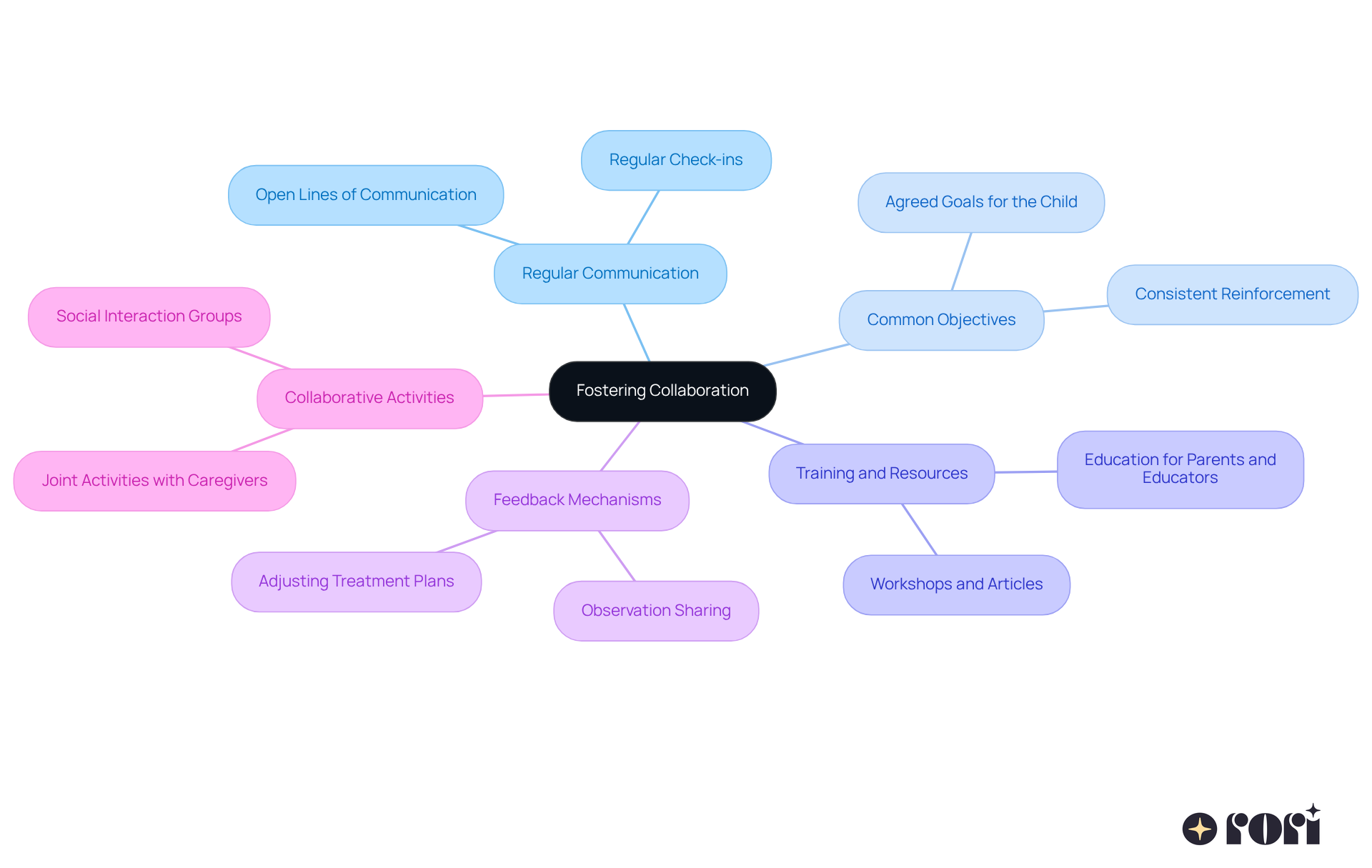
Collaboration is essential for promoting skill transfer between home and school for children on the autism spectrum. Let’s dive into some effective strategies that can really foster teamwork among caregivers:
- Regular Communication: Keeping the lines of communication open between parents, educators, and therapists is so important! Regular check-ins or meetings help everyone stay on the same page about the child’s progress and the strategies being used.
- Common Objectives: When everyone involved agrees on common goals for the child, it creates a consistent approach to reinforcement across different settings. Effective skill sharing is essential for promoting skill transfer between home and school for children on the autism spectrum.
- Training and Resources: Providing education for parents and educators on can really boost their ability to support knowledge transfer. Sharing helpful resources, like articles and workshops, can deepen understanding and enhance the implementation of best practices.
- Feedback Mechanisms: Setting up feedback loops allows parents and educators to share observations about the child’s behavior and skill application. This information is super valuable for therapists as they adjust treatment plans to better meet the child’s needs.
- Collaborative Activities: Encouraging joint activities that involve parents, educators, and therapists working together with the child can really strengthen skills in a supportive environment. For instance, organizing a social interaction group that includes everyone can enhance the child’s learning experience.
By fostering teamwork, caregivers can create a robust support system that significantly boosts the child’s ability, thereby promoting skill transfer between home and school for children on the autism spectrum. Let’s explore this together!
Evaluate and Adapt Strategies for Continuous Improvement
To really make a difference for individuals with autism, it’s so important to keep assessing and tweaking our techniques. Let’s dive into some key steps to make this happen:
- Regular Assessments: It’s essential to check in often to see how the student is progressing with their skills. This could mean observing them in action, chatting with parents, or using standardized measures. The goal? To get a full picture of how they’re developing.
- Data Monitoring: Keeping track of performance across different settings is a game changer. By analyzing this data, we can spot patterns and identify areas that need a little extra love. Research shows that effective methods like frequency recording and ABC data tracking are super helpful for tailoring interventions to fit individual needs.
- Adjusting Strategies: Sometimes, things don’t go as planned. If a particular approach isn’t hitting the mark, don’t hesitate to switch it up! Regular evaluations help us see trends and make the necessary adjustments to keep things on track.
- Soliciting Feedback: Gathering insights from everyone involved in the individual’s care is key. Parents, educators, and therapists can share valuable perspectives on what’s working and what might need a tweak. This collaborative approach really supports the young one’s growth.
- Celebrating Successes: Let’s not forget to celebrate every achievement, no matter how small! Positive reinforcement can be a huge motivator, encouraging ongoing effort and involvement in skill development.
By committing to ongoing evaluation and adaptation, caregivers can ensure their strategies stay effective and responsive to the child’s changing needs. Together, we can enhance the chances of by promoting skill transfer between home and school for children on the autism spectrum. Let’s explore this journey together!

Conclusion
Promoting skill transfer between home and school for children with autism is so important for helping them become independent and socially successful. When caregivers understand how skills can be generalized, they can create supportive environments that allow children to use what they've learned in different settings. This not only makes learning more meaningful but also connects therapy with everyday life, ensuring that skills aren’t just stuck in one place.
Throughout this article, we’ve highlighted some key strategies that can make a real difference. Think about using:
- Visual supports
- Role-playing
- Consistent reinforcement
- Encouraging collaboration among parents, educators, and therapists
Each of these methods is vital in tackling the unique challenges that children on the autism spectrum face, helping them generalize their skills more effectively. By sticking to structured approaches and keeping communication open, caregivers can build a strong support system that really boosts a child’s learning and social interactions.
Ultimately, promoting skill transfer is a journey we take together. It requires dedication and a willingness to adapt. By regularly checking in and refining our strategies, caregivers can meet the changing needs of children with autism, ensuring they thrive both at home and in school. Embracing this commitment to skill generalization not only empowers children but also builds a supportive community that enhances their overall development and success. Let’s explore this together!
Frequently Asked Questions
What is skill generalization in autism?
Skill generalization in autism refers to the ability of children on the autism spectrum to apply skills they have learned in one environment, such as home or therapy, to different settings, like school or everyday life.
Why is skill generalization important for children with autism?
It is important because it allows children to effectively use the skills they have learned across various situations, which is crucial for their independence and social success.
What challenges do individuals with autism face in generalizing their abilities?
Individuals with autism may face challenges such as limited exposure to different environments, insufficient reinforcement in various settings, and difficulties in social communication.
How can parents and educators promote skill transfer between home and school for children with autism?
They can promote skill transfer by integrating interventions into daily routines, using social narratives, encouraging peer interactions, and employing role-playing techniques to reinforce learning.
What role do social communication skills play in skill generalization?
Social communication skills learned at home can facilitate the transfer of skills between home and school, as research has shown that these skills contribute significantly to effective skill application in different environments.
What is the significance of peer-mediated interventions in promoting skill transfer?
Peer-mediated interventions help foster positive responses among typically developing peers, which can further support social skill development for children on the autism spectrum.
How can caregivers empower children with autism regarding ability generalization?
Caregivers can empower children by understanding the challenges of ability generalization and employing effective strategies to enhance skill transfer, ultimately promoting greater independence and social success.
List of Sources
- Understand Skill Generalization in Autism
- Promoting social skill use and generalization in children with autism spectrum disorder (https://sciencedirect.com/science/article/abs/pii/S1750946714000646)
- 10 inspiring quotes from people with autism | Autism Speaks (https://autismspeaks.org/life-spectrum/autism-quotes)
- Generalisation of Social Communication Skills by Autistic Children During Play-Based Assessments Across Home, School and an Unfamiliar Research Setting - PMC (https://pmc.ncbi.nlm.nih.gov/articles/PMC12167233)
- Social Skills Interventions: Considering Generalization (https://autismspectrumnews.org/social-skills-interventions-considering-generalization)
- Brief Report: Generalization weaknesses in verbally fluent children and adolescents with autism spectrum disorder - PMC (https://pmc.ncbi.nlm.nih.gov/articles/PMC4573235)
- Implement Structured Strategies for Skill Transfer
- The Effectiveness of Visual Supports for Students with Autism Spectrum Disorder - (https://naset.com/publications/autism-spectrum-disorders-series/the-effectiveness-of-visual-supports-for-students-with-autism-spectrum-disorder)
- The use of visual schedules to increase academic-related on-task behaviors of individuals with autism: a literature review (https://tandfonline.com/doi/full/10.1080/20473869.2024.2402124)
- How Scripting and Role-Playing Enhance ABA Therapy Outcomes - Up & Up ABA (https://upandupaba.com/faqs-resources/how-scripting-and-role-playing-enhance-aba-therapy-outcomes)
- Q&A: Can Role-Play Games Help Improve Autistic Teens’ Social Skills? (https://education.virginia.edu/news-stories/qa-can-role-play-games-help-improve-autistic-teens-social-skills)
- Unlocking Social and Communication Skills through Role-Playing in ABA Therapy | Step Ahead ABA (https://stepaheadaba.com/blog/the-benefits-of-role-playing-scenarios-in-aba-therapy-sessions)
- Foster Collaboration Among Parents, Educators, and Therapists
- How to Collaborate with Parents of Autistic Students: A Comprehensive Guide for Educators | Links (https://linksaba.com/how-to-collaborate-with-parents-of-autistic-students)
- The Role of Collaborative Goal-Setting in Autism Support | Advanced Autism Services (https://advancedautism.com/post/the-role-of-collaborative-goal-setting-in-autism-support)
- Research on Parent-Teacher Collaboration for Autism - Guiding Growth (https://guidinggrowth.app/research-on-parent-teacher-collaboration-for-autism)
- The Importance of Collaboration Between Therapists and Parents in Autism Treatment (https://buildingblockstherapy.org/blog/the-importance-of-collaboration-between-therapists-and-parents-in-autism-treatment)
- Evaluate and Adapt Strategies for Continuous Improvement
- The Numbers Don't Lie: Revealing Autism Therapy Statistics | Above and Beyond Therapy (https://abtaba.com/blog/autism-therapy-statistics)
- Ongoing Assessment in ABA Therapy: A Data-Driven Approach (https://brightpathwaysaba.com/ongoing-assessment-in-aba-therapy-a-data-driven-approach)
- Tracking Progress Effectively in ABA Therapy (https://ambitionsaba.com/resources/how-to-track-progress-in-aba)
- The Benefits of Data-Driven Decision Making in ABA Therapy | Advanced Autism Services (https://advancedautism.com/post/the-benefits-of-data-driven-decision-making-in-aba-therapy)
- Applied Behavior Analysis (ABA) Statistics: Data, Effectiveness, and Evidence-Based Practices (https://nexoaba.com/applied-behavior-analysis-statistics)