Children with autism often encounter communication hurdles that can make it tough for them to express themselves and connect with others. This can be a challenging reality for many families, but it also opens the door for caregivers and professionals to explore effective strategies that can enhance interactions and understanding.
So, what techniques can truly bridge the gap between these challenges and meaningful communication? By empowering children to thrive socially and emotionally, we can help them find their voice. Let’s explore this together! 😊
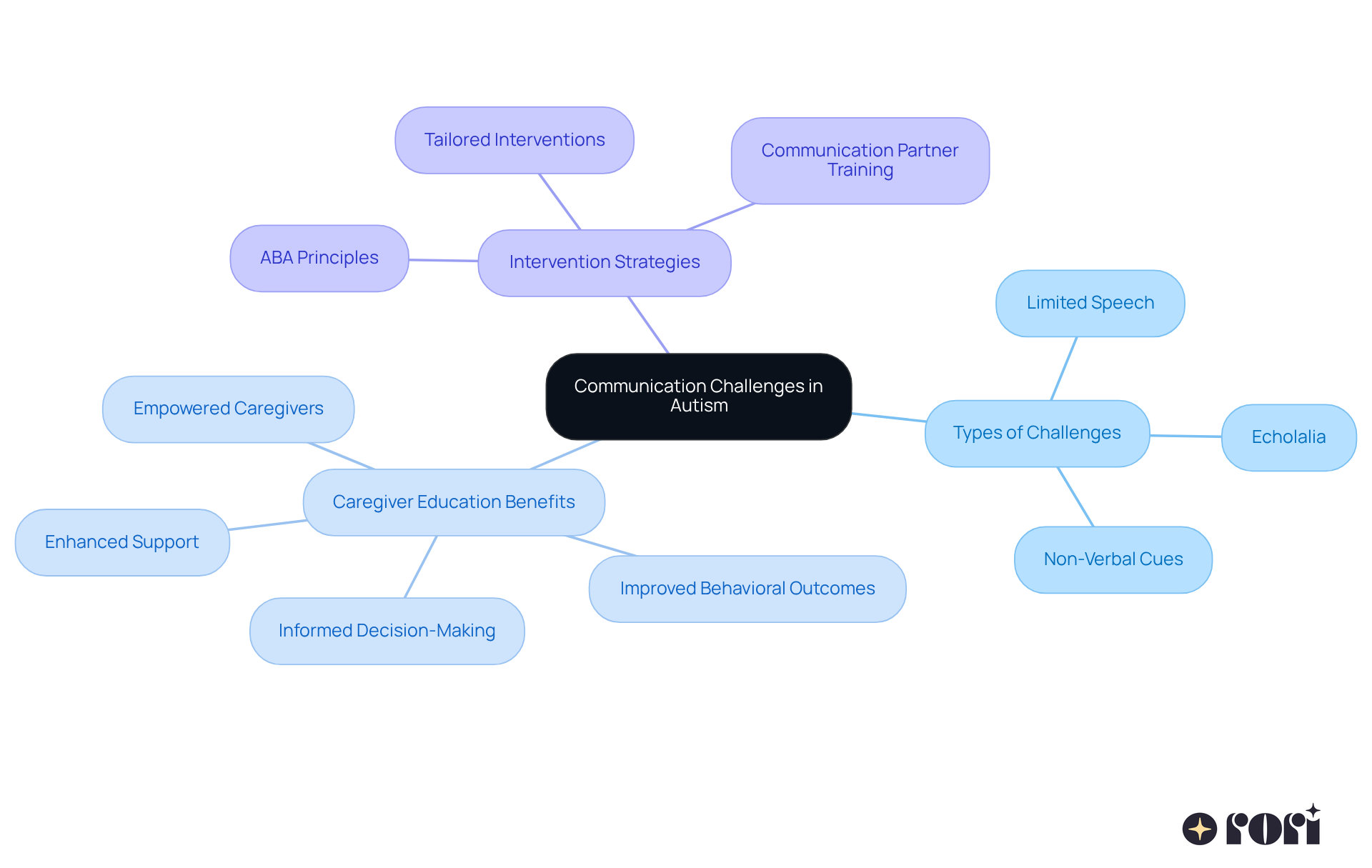
Children with autism often encounter various interaction challenges that can make it tough for them to express their needs, understand others, and engage socially. These difficulties can show up in different ways, like having limited speech or repeating phrases (echolalia), and struggling with non-verbal cues, such as reading body language and facial expressions. Did you know that about 30% of individuals with autism don’t develop enough speech for everyday interactions? This really highlights how common these challenges are.
Understanding these hurdles is crucial for parents and specialists who want to develop successful communication techniques for autism care. For example, many autistic kids might find it hard to process language quickly. This means that caregivers should use clear, simple language and give them extra time to respond. Research shows that children who didn’t develop word combinations often scored lower in cognitive, social, adaptive, and motor imitation assessments, which can make communication even trickier.
By recognizing these challenges, parents can adjust their communication styles by utilizing successful communication techniques for autism care, fostering a more supportive environment for their child. Educator training is key here, equipping caregivers with ABA principles and techniques that enhance their ability to help their children reach their behavioral goals. Here are some benefits of caregiver education:
Speech-language pathologists emphasize the need for tailored interventions that incorporate successful communication techniques for autism care to address these specific interaction challenges. Many current methods focus mainly on teaching requesting skills rather than broader social interactions. By understanding and addressing these interaction hurdles, caregivers can significantly enhance social engagement and overall quality of life for children with autism.
Let’s explore this together! We’re here to help you every step of the way!
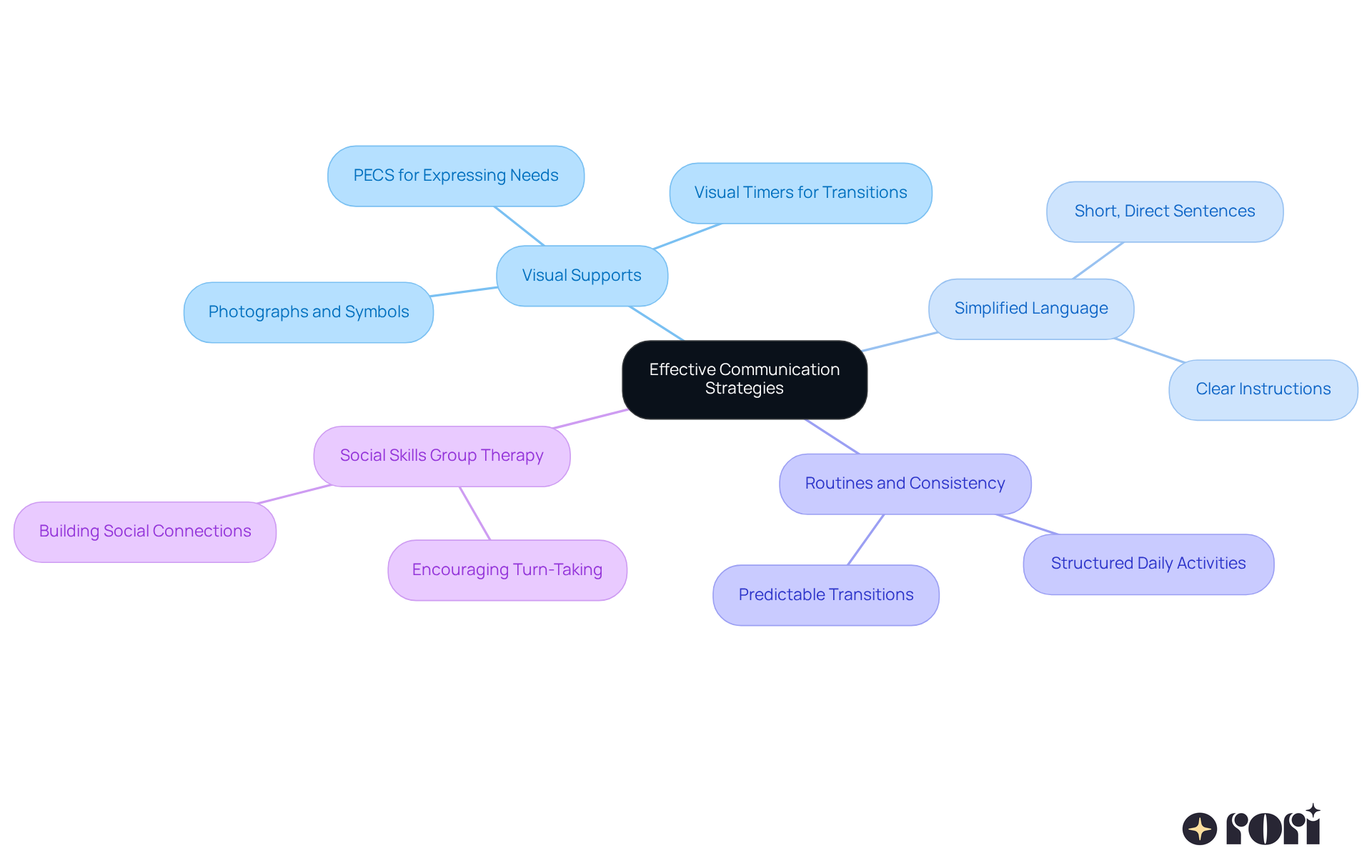
Improving interactions with kids on the autism spectrum can feel like a big task for caregivers, but there are some effective strategies that can really help! One great way to clarify messages is by using visual supports, like pictures or symbols. For instance, the Picture Exchange Communication System (PECS) lets children express their needs by swapping images. This method has shown to lead to significant improvements in communication. In fact, a study with two boys on the spectrum found that visual supports not only boosted their communication skills but also reduced aggressive behaviors during transitions. How amazing is that?
Another tip is to simplify language and stick to short, direct sentences. Instead of saying, 'Can you please put your toys away?', try saying, 'Put toys away.' This straightforward approach aligns with what we know: kids with autism often respond better to visual learning than to auditory instructions.
Integrating routines and consistency in interactions can also help kids understand what’s expected of them, making their responses even better. Research shows that visual aids prepare learners for transitions and enhance their understanding of different situations, which is super important for those who might struggle with changes in routine.
And let’s not forget about social skills group therapy! Participating in these sessions, led by qualified therapists, can really boost interactions and social engagement among kids. These group settings foster skill development and connections, giving caregivers valuable ABA principles that align with their child’s behavioral goals. Plus, encouraging turn-taking during conversations helps kids grasp the dynamics of interaction, supporting language development and building confidence in social settings.
By applying these strategies, caregivers can create a nurturing environment that promotes effective communication and independence for children with autism. Let’s explore this together! We’re here to help you every step of the way!
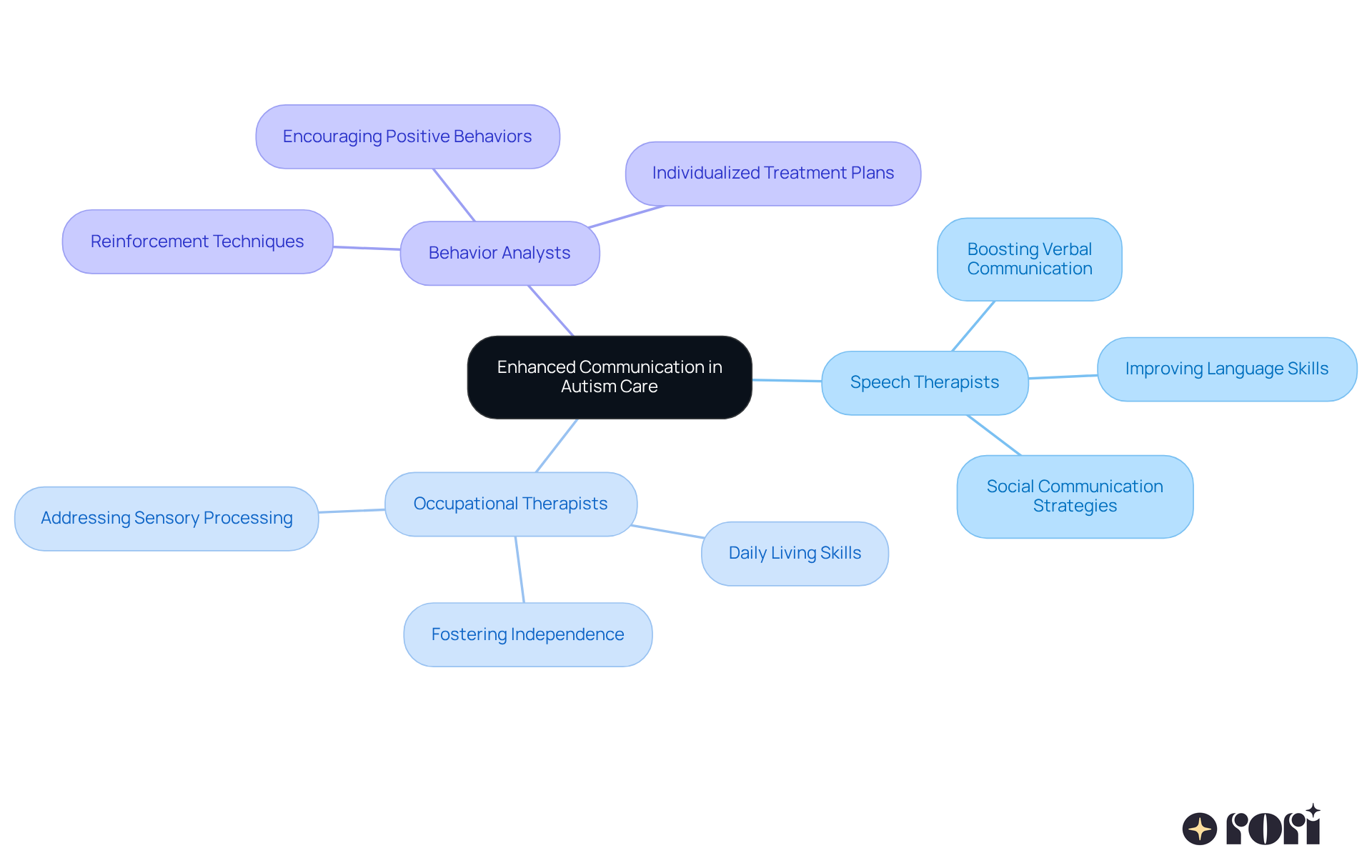
Cooperation among specialists, including speech therapists, occupational therapists, and behavior analysts, is crucial for employing successful communication techniques for autism care to help kids thrive. At Rori Care, our amazing clinicians are here to guide your family through a warm and compassionate [Applied Behavior Analysis journey](https://rori.care/services). When these specialists collaborate, they can share insights and successful communication techniques for autism care that are tailored to each child's unique needs. For instance, speech therapists might offer specific strategies to boost verbal communication, while behavior analysts use reinforcement techniques to encourage positive behaviors.
And here’s something to think about: when caregivers are educated on ABA principles, it really empowers them to support their child's behavioral goals. Regular meetings and open communication between professionals and families are essential for implementing successful communication techniques for autism care. This way, everyone stays aligned on goals and strategies. It’s all about creating a supportive network that not only enhances interpersonal skills but also builds a sense of community and shared responsibility among caregivers and professionals. Research shows that kids involved in integrated care programs often reach developmental milestones faster, highlighting just how effective this collaborative approach can be. Plus, at Rori Care, we also offer individual therapy and program development services to further support families.
Let’s explore this together! We’re here to help you every step of the way!
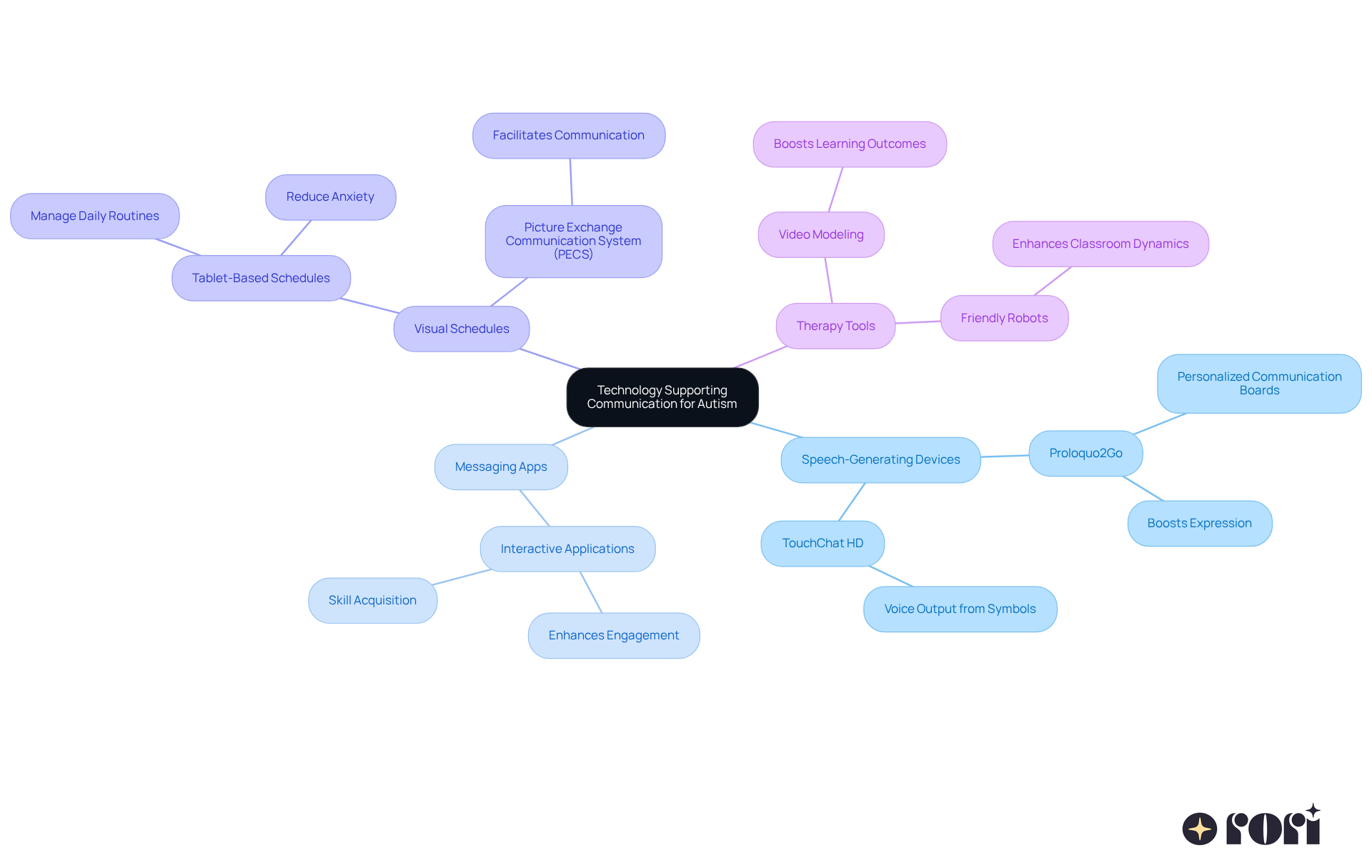
Technology plays a vital role in helping kids with autism connect, especially for those who might not use their voices. Tools like speech-generating devices (SGDs) and messaging apps really boost their ability to express what they need and how they feel. For instance, Proloquo2Go is a fantastic app that lets users build personalized communication boards, making it easier to chat in real-time. Did you know that over 35% of non-verbal or minimally verbal autistic individuals find SGDs helpful? These tools allow them to communicate effectively by choosing symbols that represent their thoughts.
But it’s not just about apps! Visual schedules and reminders can be game-changers for kids, helping them grasp daily routines and what’s expected of them. This understanding can really cut down on anxiety and improve compliance. Tablets equipped with messaging software not only support these functions but also make therapy sessions more engaging.
At Rori Care, our clinical leadership team is all about creating a space that values neurodiversity. We equip support providers with ABA principles and strategies to make a real difference. By weaving in these tech tools, caregivers can implement successful communication techniques for autism care, fostering a more interactive and supportive communication environment tailored to each child’s unique needs. This approach ultimately encourages greater independence and social interaction. Let’s explore this together!
Effective communication is so important for supporting children with autism, and using the right strategies can really boost their interactions and overall quality of life. By understanding the unique communication challenges these kids face, caregivers can adopt tailored approaches that encourage meaningful engagement and independence.
Let’s dive into four key strategies:
Each of these plays a vital role in creating a supportive environment where children can truly thrive. From simplifying language and using visual supports to emphasizing teamwork among specialists, these practices help ensure that caregivers are well-equipped to meet the diverse needs of children with autism.
Ultimately, embracing successful communication techniques for autism care not only empowers caregivers but also enriches the lives of children on the spectrum. By actively seeking out resources, engaging in professional collaboration, and incorporating innovative tools, families can create a nurturing atmosphere that promotes effective communication and social connection. Remember, the journey toward better communication is a shared responsibility, and every step taken can lead to significant improvements in the lives of those affected by autism. Let’s explore this together!
What communication challenges do children with autism face?
Children with autism often experience difficulties expressing their needs, understanding others, and engaging socially. These challenges may include limited speech, echolalia (repeating phrases), and trouble interpreting non-verbal cues like body language and facial expressions.
How prevalent are speech difficulties in individuals with autism?
Approximately 30% of individuals with autism do not develop sufficient speech for everyday interactions, highlighting the commonality of these challenges.
Why is it important to understand communication challenges in autism?
Understanding these challenges is crucial for parents and specialists to develop effective communication techniques and create a supportive environment for children with autism.
What strategies can caregivers use to improve communication with children with autism?
Caregivers should use clear, simple language and allow extra time for the child to respond, as many autistic children may struggle to process language quickly.
How does a child's language development impact their overall assessment scores?
Research indicates that children who do not develop word combinations often score lower in cognitive, social, adaptive, and motor imitation assessments, making communication more difficult.
What are the benefits of caregiver education in autism care?
Caregiver education enhances support at home, informs decision-making, improves behavioral outcomes, and empowers caregivers, ultimately reducing stress and improving family dynamics.
What role do speech-language pathologists play in addressing communication challenges for children with autism?
Speech-language pathologists emphasize the need for tailored interventions that incorporate successful communication techniques to address specific interaction challenges faced by children with autism.
What is the focus of many current communication methods for children with autism?
Many current methods primarily focus on teaching requesting skills rather than broader social interactions, which can limit social engagement and overall quality of life for children with autism.