Introduction
Understanding the complexities of Autism Spectrum Disorder (ASD) opens up a world where unique behaviors and challenges shape the experiences of many children. As caregivers, you’re on a journey to support these amazing young individuals, and finding effective strategies is key to nurturing positive behavior and emotional growth. But what are the best ways to navigate the intricate landscape of autism and turn potential behavioral challenges into opportunities for development?
Let’s explore this together! It’s important to recognize that you’re not alone in this journey. Many parents face similar challenges, and sharing experiences can make a world of difference. By understanding the nuances of ASD, we can better support our children and help them thrive. So, let’s dive in and discover how we can transform these challenges into stepping stones for growth!
Understand Autism's Impact on Behavior
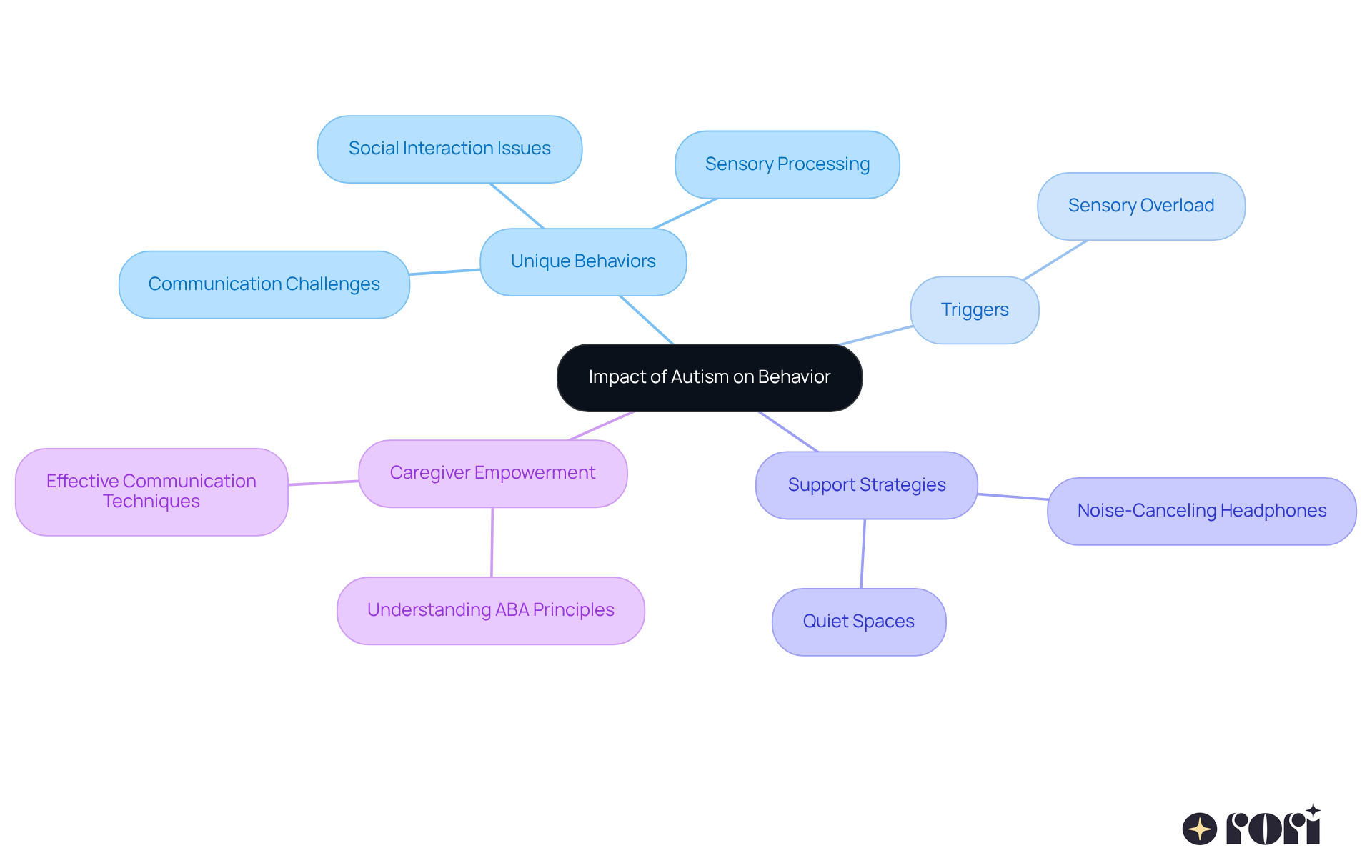
Autism Spectrum Disorder (ASD) can really shape how young people see and interact with the world around them. It often leads to unique behaviors that can be challenging. Many kids with autism struggle with communication, social interactions, and sensory processing. This can sometimes result in behaviors like meltdowns, aggression, or even withdrawal. For example, imagine a child feeling overwhelmed in a noisy, busy place-this sensory overload might trigger a meltdown. Recognizing these triggers is super important for caregivers. It helps them find effective ways to ease that sensory stress.
Simple techniques, like using noise-canceling headphones or setting up a quiet space, can provide a safe haven for kids when they feel overwhelmed. By understanding what causes certain behaviors, caregivers can better support their children, which is vital for supporting positive behavior in children on the autism spectrum, as well as for developing essential coping skills and social abilities. Did you know that 1 in 31 kids in the U.S. has a developmental disorder? This highlights just how common these challenges are and the need for tailored support strategies, particularly for supporting positive behavior in children on the autism spectrum.
Understanding behavioral patterns in children with developmental disorders is key to supporting positive behavior in children on the autism spectrum and fostering effective communication and interactions. This, in turn, can greatly enhance their overall development and well-being. By empowering caregivers with knowledge of ABA principles, we can boost their ability to provide effective support. This leads to better behavioral outcomes and informed decisions that positively influence their child's growth. Let’s explore this together! We’re here to help you every step of the way!
Implement Effective Strategies for Positive Behavior
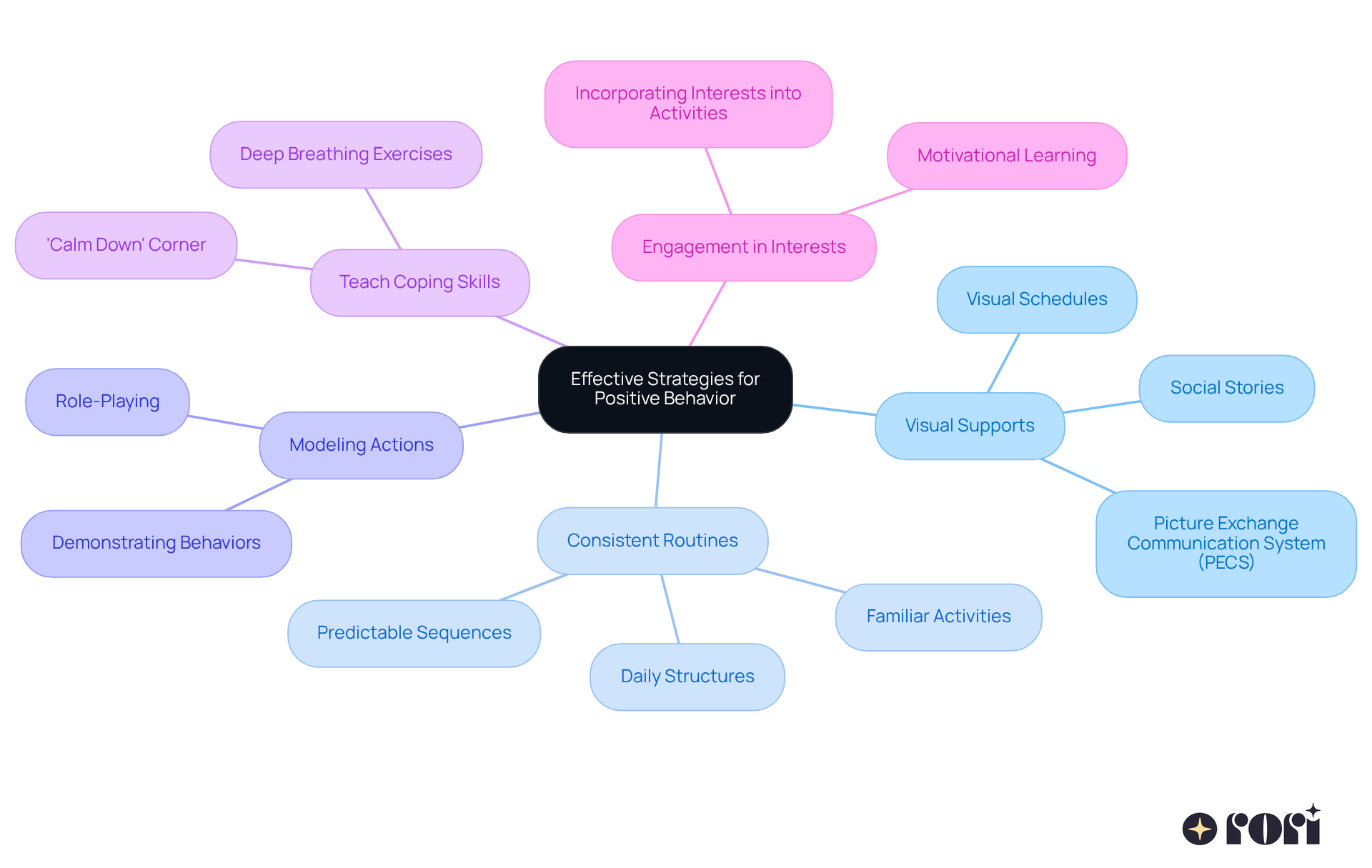
To foster supporting positive behavior in children on the autism spectrum, caregivers can try out some effective strategies that align with the principles of Applied Behavior Analysis (ABA) therapy. Let’s explore this together!
- Visual Supports: Using visual schedules and charts can really help young learners understand their daily routines and what’s expected of them. These visual aids not only ease anxiety but also provide clarity, helping kids anticipate what comes next. Research shows that tools like the Picture Exchange Communication System (PECS) and social stories can boost communication and prepare young ones for transitions, ultimately encouraging independence.
- Consistent Routines: Establishing reliable routines is key to helping kids feel secure and know what to expect throughout their day. Consistent daily structures can reduce anxiety and behavioral issues by setting clear expectations. For example, when children engage in familiar routine activities, they can handle transitions better, leading to smoother experiences and improved emotional regulation.
- Modeling Actions: Demonstrating desired behaviors through role-playing or social narratives can be super effective. Kids often learn by watching others, so showing appropriate responses in different situations can reinforce positive behavior. This approach really highlights the importance of visual learning for children with autism.
- Teach Coping Skills: It’s essential to equip kids with tools to manage their emotions. Techniques like deep breathing exercises or creating a 'calm down' corner can give them strategies to cope when they feel overwhelmed. This proactive approach supports emotional regulation and helps reduce the chances of meltdowns.
- Engagement in Interests: Incorporating a child’s interests into learning and behavioral activities can boost motivation and involvement. By aligning activities with what excites them, caregivers can encourage positive interactions and lessen instances of challenging behavior.
By consistently applying these strategies and focusing on ongoing assessment and adjustment, caregivers can create an environment that is essential for supporting positive behavior in children on the autism spectrum and supports their overall growth. Plus, the personalized planning and evidence-based methods found in ABA therapy can enhance these efforts, ensuring that each child’s unique needs are met effectively. We’re here to help you every step of the way!
Create Supportive Environments for Growth
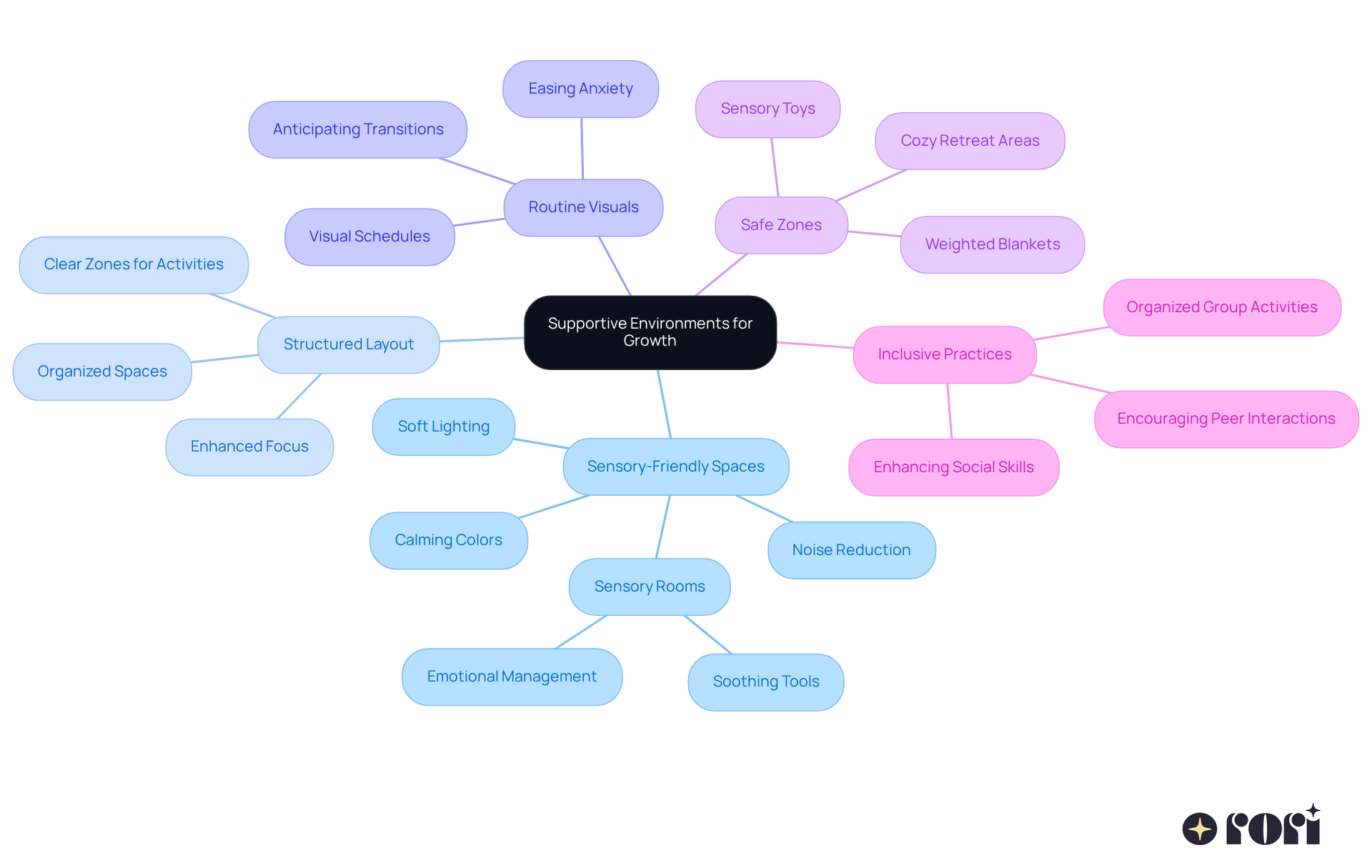
Creating a supportive environment is so important for individuals with autism to truly thrive. Let’s dive into some key elements that can make a big difference:
- Sensory-Friendly Spaces: Think about establishing areas that help minimize sensory overload. Soft lighting, noise reduction, and calming colors can work wonders. Sensory rooms filled with soothing tools can really help young individuals manage their emotions, making them feel safe and comfortable.
- Structured Layout: Organizing spaces to cut down on distractions can really enhance focus. When there are clear zones for different activities, young learners can easily recognize where to engage in specific tasks. This not only encourages focused behavior but also boosts educational outcomes.
- Routine Visuals: Visual schedules can be a game-changer for outlining daily activities. They help young individuals anticipate transitions, which can ease anxiety around changes in routine. Research shows that visual supports can improve understanding and make navigating daily tasks smoother.
- Safe Zones: It’s crucial to have designated areas where young individuals can retreat when they feel overwhelmed. These spaces should be cozy, with comforting items like weighted blankets or sensory toys, allowing them to self-soothe and manage sensory input effectively.
- Inclusive Practices: Fostering an inclusive atmosphere is key! Encourage peer interactions and provide chances for social engagement. Organized settings that create specific spaces for play and group activities can really enhance social skills and friendships among individuals with developmental differences.
By creating supportive and organized surroundings, caregivers can significantly boost a young person's ability to learn while also supporting positive behavior in children on the autism spectrum. This ultimately supports their overall growth. Let’s explore this together!
Utilize Positive Reinforcement Techniques
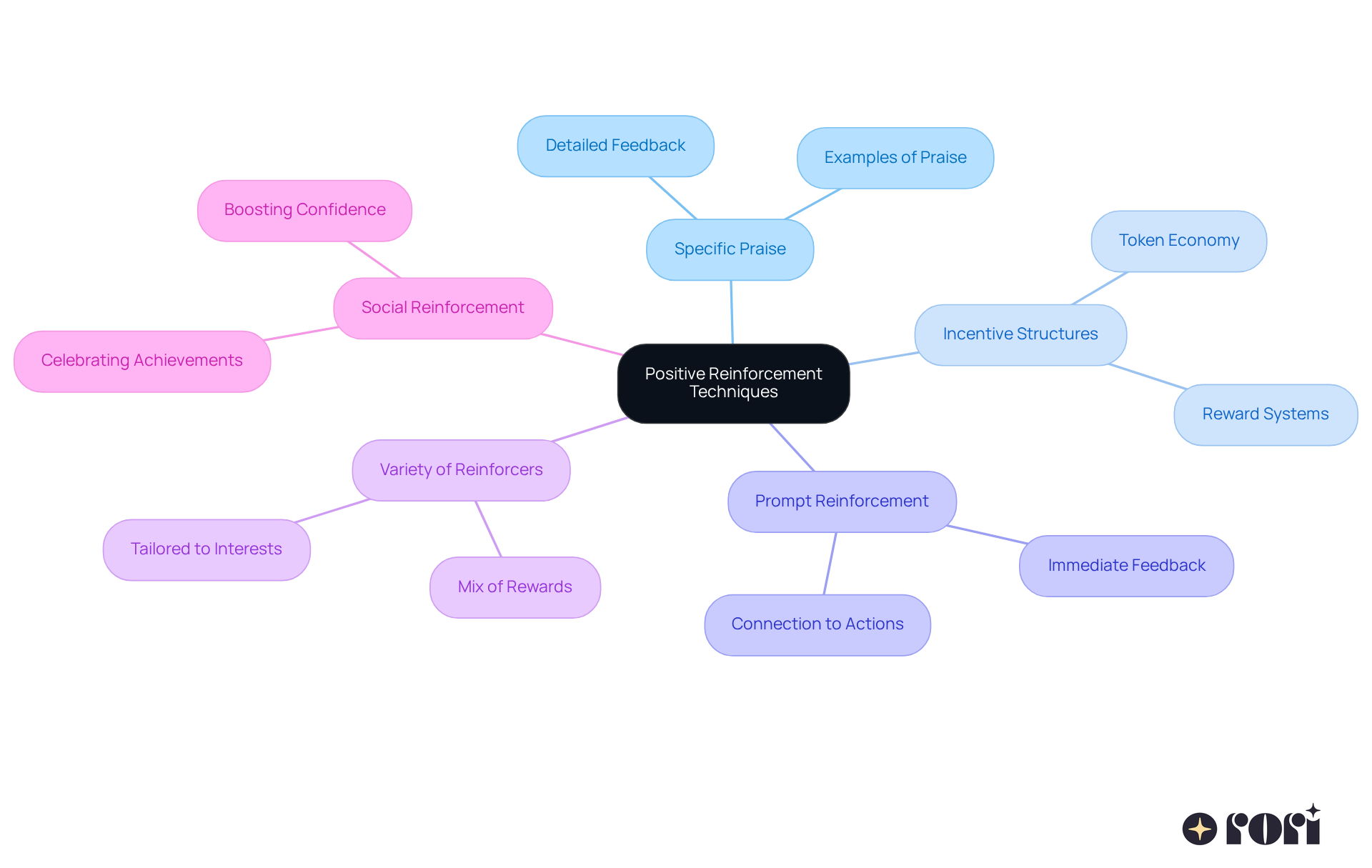
Positive reinforcement is an invaluable tool for supporting positive behavior in children on the autism spectrum! Let’s dive into some effective techniques you can use:
- Specific Praise: When a child does something great, give them detailed feedback. Instead of just saying 'good job,' try something like, 'I love how you shared your toys with your friend!' This helps them understand exactly what they did right, making their learning experience even better.
- Incentive Structures: Set up a fun reward system where kids can earn tokens or points for showing positive behaviors. They can trade these for their favorite activities or treats, which really boosts their motivation. Research shows that token economies work wonders for supporting positive behavior in children on the autism spectrum.
- Prompt Reinforcement: It’s super important to reinforce those good behaviors right after they happen! This immediate feedback helps kids connect their actions with the rewards, making it more likely they’ll repeat those behaviors in the future.
- Variety of Reinforcers: Keep things exciting by using a mix of reinforcers! This could be verbal praise, tangible rewards like stickers or toys, or even extra playtime. Tailoring these rewards to what your child loves will make them even more effective and keep them engaged.
- Social Reinforcement: Celebrate your child’s achievements in front of friends or family! This not only reinforces their good actions but also boosts their confidence and social skills, creating a supportive environment for their growth.
By using these positive reinforcement techniques, you can create a nurturing atmosphere that is effective in supporting positive behavior in children on the autism spectrum, motivating them to engage. This leads to better outcomes in their development and social interactions. Let’s explore this together!
Conclusion
Supporting positive behavior in children on the autism spectrum is so important for their growth and happiness! By understanding the unique challenges these kids face, caregivers can adopt tailored strategies that really help with communication and positive interactions. Recognizing triggers and using structured approaches can make a big difference in how a child navigates their world.
Some key strategies include:
- Using visual supports
- Keeping consistent routines
- Modeling behaviors
- Teaching coping skills
These methods empower caregivers to create nurturing environments that not only reduce anxiety but also encourage positive behaviors. Plus, incorporating a child’s interests and using positive reinforcement can motivate them and reinforce those desired behaviors, leading to even better outcomes.
Ultimately, creating supportive environments and applying evidence-based practices are crucial steps in promoting positive behavior in children with autism. By investing in these strategies, caregivers can help foster growth, independence, and social skills, enabling these children to truly thrive. Embracing the importance of tailored support not only enhances individual development but also contributes to a more inclusive and understanding society for all children on the autism spectrum.
Let’s explore this together! We’re here to help you every step of the way!
Frequently Asked Questions
How does Autism Spectrum Disorder (ASD) affect behavior in young people?
ASD shapes how young people perceive and interact with the world, often leading to unique behaviors that can be challenging, such as difficulties with communication, social interactions, and sensory processing.
What types of behaviors might children with autism exhibit?
Children with autism may exhibit behaviors like meltdowns, aggression, or withdrawal, particularly when they experience sensory overload, such as being in a noisy or busy environment.
Why is it important for caregivers to recognize triggers for challenging behaviors?
Recognizing triggers is crucial for caregivers as it helps them find effective ways to alleviate sensory stress and support their children in managing their behaviors.
What techniques can caregivers use to help children with autism during overwhelming situations?
Simple techniques include using noise-canceling headphones or creating a quiet space, which can provide a safe haven for children when they feel overwhelmed.
How common are developmental disorders among children in the U.S.?
Approximately 1 in 31 kids in the U.S. has a developmental disorder, highlighting the prevalence of these challenges and the need for tailored support strategies.
What role does understanding behavioral patterns play in supporting children with autism?
Understanding behavioral patterns is key to fostering positive behavior and enhancing communication and interactions, which can significantly improve the overall development and well-being of children on the autism spectrum.
How can knowledge of ABA principles benefit caregivers of children with autism?
Empowering caregivers with knowledge of Applied Behavior Analysis (ABA) principles enhances their ability to provide effective support, leading to better behavioral outcomes and informed decisions that positively influence their child's growth.
List of Sources
- Understand Autism's Impact on Behavior
- Autism statistics and facts | Autism Speaks (https://autismspeaks.org/autism-statistics-asd)
- Data and Statistics on Autism Spectrum Disorder (https://cdc.gov/autism/data-research)
- Prevalence and Early Identification of Autism Spectrum ... (https://cdc.gov/mmwr/volumes/74/ss/ss7402a1.htm)
- ‘Autism Epidemic Runs Rampant,’ New Data Shows 1 in 31 Children Afflicted (https://hhs.gov/press-room/autism-epidemic-runs-rampant-new-data-shows-grants.html)
- 2026 Autism Statistics - Insights for Families and Advocates (https://prosperahealthcare.com/autism-statistics)
- Implement Effective Strategies for Positive Behavior
- 12 Benefits of Predictable Routines for Kids with Autism (https://aimhigheraba.com/12-benefits-of-predictable-routines-for-children-with-autism)
- The Effectiveness of Visual Supports for Students with Autism Spectrum Disorder - (https://naset.com/publications/autism-spectrum-disorders-series/the-effectiveness-of-visual-supports-for-students-with-autism-spectrum-disorder)
- The use of visual schedules to increase academic-related on-task behaviors of individuals with autism: a literature review (https://tandfonline.com/doi/full/10.1080/20473869.2024.2402124)
- Create Supportive Environments for Growth
- The Importance of Structure for Kids with Autism (https://crossrivertherapy.com/articles/autism-and-the-importance-of-structure)
- Inspirational Autism Quotes (https://magnetaba.com/blog/inspirational-autism-quotes)
- The Importance of Creating Structured Environments for Children with Autism (https://mastermindbehavior.com/post/the-importance-of-creating-structured-environments-for-children-with-autism)
- The Impact Of Sensory Rooms In Public Facilities For Autism (https://allaboutaba.com/blog/the-impact-of-sensory-rooms-in-public-facilities-for-autism)
- The use of Multi-Sensory Environments with autistic children: Exploring the effect of having control of sensory changes - PMC (https://pmc.ncbi.nlm.nih.gov/articles/PMC9340127)
- Utilize Positive Reinforcement Techniques
- The Impact of Positive Reinforcement on ABA Therapy Outcomes (https://crossrivertherapy.com/articles/the-impact-of-positive-reinforcement-on-aba-therapy-outcomes)
- (PDF) Effect of Positive Reinforcement on Social Skills of Students with Autism Spectrum Disorder at Primary Level 2431 LINGUISTICA ANTVERPIENSIA (https://researchgate.net/publication/357646609_Effect_of_Positive_Reinforcement_on_Social_Skills_of_Students_with_Autism_Spectrum_Disorder_at_Primary_Level_2431_LINGUISTICA_ANTVERPIENSIA)
- TOP 23 POSITIVE REINFORCEMENT QUOTES | A-Z Quotes (https://azquotes.com/quotes/topics/positive-reinforcement.html)
- Effects of behavior-specific and general praise, on acquisition of tacts in children with pervasive developmental disorders (https://sciencedirect.com/science/article/abs/pii/S1750946710001261)
- Further analysis of the effects of positive reinforcement on working memory in children with autism (https://sciencedirect.com/science/article/abs/pii/S1750946710001601)