Introduction
As a parent, navigating your child's fears can feel like a daunting journey, especially when autism is part of the picture. ABA therapy provides a helpful framework for kids to face their fears and build confidence along the way. So, how can you tap into the principles of ABA therapy to help your child grow and thrive? In this guide, we’ll explore practical tips and insights that can help you take an active role in your child’s journey to conquer their fears.
Understand the Principles of ABA Therapy
Have you ever felt lost trying to help your child deal with anxiety? Applied Behavior Analysis (ABA) is built on some key principles that can really make a difference in supporting children with autism in overcoming fears through ABA therapy. Let’s explore this together!
- Behavior is Learned: It’s important to remember that behaviors are picked up from our surroundings. This means that anxieties can be learned, but the good news is they can also be unlearned!
- Reinforcement: Think of it this way - when you cheer your child on after they face a fear, you’re helping them build confidence! [Positive reinforcement](https://rori.care/post/10-aba-strategies-for-everyday-situations-every-parent-should-know), like giving praise or a small treat, encourages them to tackle that fear again.
- Prompting: This technique is all about giving gentle nudges to help kids show the behaviors we want to see. For instance, if your child is nervous around dogs, a therapist might guide them to slowly approach a calm, friendly pup, using prompts to make it easier.
- Shaping: It’s all about taking baby steps! When your child faces a fear, celebrate each little victory along the way. By gradually exposing them to less scary parts of a situation, you help them gain confidence over time.
- [Data-Driven Decision Making](https://nexoaba.com/applied-behavior-analysis-statistics): ABA really emphasizes keeping track of progress. By observing how your child reacts to fear-inducing situations, you can tailor your approach to fit their unique needs.
But with these principles in your toolkit, you can engage in supporting children with autism in overcoming fears through ABA therapy in a supportive way! Imagine the relief of seeing your child face their fears with newfound courage!

Explore ABA Strategies for Fear Management
It can be tough to watch your child struggle with fears that seem so overwhelming, but there are effective ways, such as supporting children with autism in overcoming fears through ABA therapy, to help them manage these feelings. Here are some ABA strategies that can make a real difference:
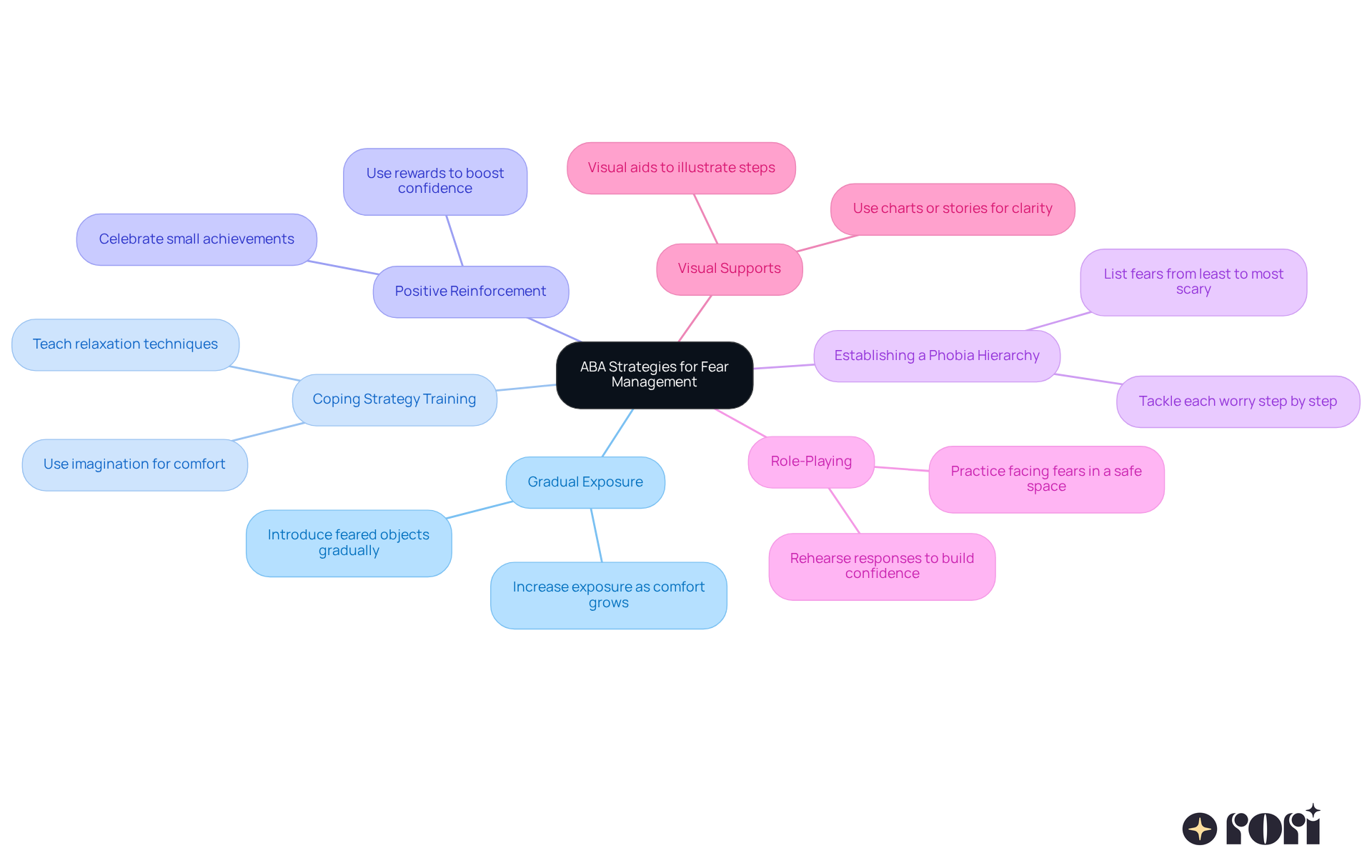
- Gradual Exposure: Start by introducing the feared object or situation in a gentle way. Begin with something less intimidating and slowly increase exposure as your child becomes more comfortable. This approach helps kids get used to their fears little by little.
- [[Coping Strategy Training](https://rori.care/post/10-effective-examples-of-naturalistic-teaching-in-aba-therapy)](https://rori.care/post/10-effective-examples-of-naturalistic-teaching-in-aba-therapy): Teach your child some fun relaxation techniques, like deep breathing or imagining their favorite place, to help them when they feel anxious. Research shows that kids who learn these strategies often feel much better when facing challenges.
- [[Positive Reinforcement](https://rori.care/post/10-essential-aba-therapy-resources-for-parents-of-children-with-autism)](https://rori.care/post/10-essential-aba-therapy-resources-for-parents-of-children-with-autism): Celebrate your child's bravery, no matter how small the step. Whether it’s a high-five, a sticker, or a fun activity, positive reinforcement boosts their confidence and encourages them to keep trying.
- Establishing a Phobia Hierarchy: Work with your child to list their fears from least to most scary. This way, they can tackle each worry one step at a time, making it feel a lot less scary.
- Role-Playing: Use role-playing to practice facing fears in a safe space. This lets kids rehearse their responses and build confidence, making it easier to handle real-life situations.
- Visual Supports: Use fun visuals, like charts or stories, to show them how to face their fears, making it easier to understand. Visual aids can really help clarify the steps they need to take.
By applying these strategies, you will be supporting children with autism in overcoming fears through ABA therapy, allowing your child to learn to face their fears gradually and successfully, nurturing a sense of achievement and strength. By supporting children with autism in overcoming fears through ABA therapy, they can manage their anxieties better, leading to improved social skills and overall well-being. Plus, when you, as a caregiver, understand these principles, you’ll be better equipped to support your child’s journey, leading to happier family dynamics. Imagine the relief of seeing your child tackle their fears and grow in confidence!
Engage Parents in the Therapy Process
Many parents wonder how they can best support their child by supporting children with autism in overcoming fears through ABA therapy, and it starts with getting involved! Here are some effective strategies to actively engage parents:
- Attend Therapy Sessions: Let’s encourage parents to join therapy sessions at Rori Care! It’s a great way to see the techniques in action and understand how to reinforce these strategies at home, which can really enhance their child’s progress.
- Regular Communication: Getting regular updates about your child’s progress can really help you feel involved and connected. Open lines of communication between Rori Care therapists and parents keep everyone informed about their child’s development.
- Training and Resources: We can provide parents with [[training on ABA techniques](https://rori.care/services/caregiver-education)](https://rori.care/services/caregiver-education) and handy materials to use at home! Workshops, handouts, and online resources empower caregivers with the knowledge they need to support their child’s learning effectively.
- Set Goals Together: Let’s team up with parents to set realistic goals for their child’s growth! This partnership ensures everyone is on the same page and fosters a unified approach to therapy.
- Encourage Consistency: It’s so important for parents to keep things consistent at home, just like we do in therapy! By mirroring the language and reinforcement techniques used by Rori Care therapists, parents create a cohesive therapeutic environment that supports skill generalization.
- Celebrate Progress: Let’s remind parents to celebrate every little victory with their child - it makes a big difference! Recognizing progress, no matter how small, can greatly boost a child’s confidence and motivation.
By actively participating in the therapy process, parents can significantly aid in supporting children with autism in overcoming fears through ABA therapy and cultivate effective coping mechanisms. When parents take an active role, they not only help their child but also build a stronger bond that lasts a lifetime.

Implement Exposure Therapy Techniques
It can be tough to see your child struggle with fears that seem so overwhelming, but exposure therapy can be a game-changer. Here’s how to implement it effectively:
- Recognize the Concern: Let’s work together with your child to pinpoint their specific anxieties. Understanding these fears is key to tackling them head-on.
- Establish a Stress Hierarchy: Together, we can create a list of situations that cause anxiety, starting from the least scary to the most daunting. For instance, if your child is afraid of dogs, we might start with looking at pictures of dogs and gradually work up to petting one.
- Start Small: Begin with the least intimidating item on the list. Allow your child to experience this in a safe space where they feel comfortable.
- Gradual Exposure: Only move on to the next level when your child is ready. This could mean visiting a friend who has a dog or watching a dog from a distance.
- Use Coping Strategies: Teach your child some coping techniques, like deep breathing or counting, to help manage their anxiety during these exposures.
- Reinforce Success: Celebrate every little victory! After each successful exposure, give them positive reinforcement. Acknowledge their bravery and progress, encouraging them to keep facing their fears.
- Monitor Progress: Keep track of how your child responds to each exposure and adjust the pace based on their comfort level. [[Family involvement makes a huge difference](https://rori.care/post/partner-with-an-autism-care-specialist-for-phobia-management-using-aba)](https://rori.care/post/partner-with-an-autism-care-specialist-for-phobia-management-using-aba) in how well the therapy works!
Studies show that exposure therapy can really help kids feel better about their fears, with success rates for specific phobias ranging from 80-90% after just 8-12 sessions. It often works better than medication alone and provides longer-lasting results. By taking these steps, you’re not just helping your child face their fears; you’re empowering them for a brighter future. As Dr. Lisa Damour wisely points out, 'If we permit children to evade the things they dread, they'll experience the short-term comfort of remaining close to home and the long-term issue of persisting in feeling anxious.

Utilize Technology to Enhance ABA Therapy
Navigating your child's fears can feel like a daunting task, but technology might just be the ally you need! At Rori Care, we’re all about embracing neurodiversity and supporting children with autism in overcoming fears through ABA therapy on every child’s unique journey. By incorporating technology into anxiety management strategies, we can free up 50% more time for direct treatment of young individuals, which includes supporting children with autism in overcoming fears through ABA therapy using AI-driven automation of progress reports. Here are some friendly ways to integrate technology into fear management strategies:
- Apps for Tracking Progress: Use behavior tracking apps to monitor your child's responses to fear-inducing situations. This data helps therapists and parents adjust strategies as needed, ensuring personalized care while also contributing to the automation of progress reports.
- Virtual Reality (VR): Implement VR technology to create controlled environments where kids can confront their anxieties in a secure and engaging manner. For instance, a child afraid of heights can experience virtual elevations gradually, supported by our clinical leadership team's expertise.
- Interactive Games: Utilize educational games that incorporate fear management strategies. These can make learning about coping mechanisms enjoyable and captivating for your child, particularly in supporting children with autism in overcoming fears through ABA therapy, thereby fostering their development.
- Telehealth Services: Use telehealth platforms for remote therapy sessions, enabling kids to receive support in familiar settings, which can lessen anxiety and improve treatment effectiveness.
- Visual Supports: Utilize digital visual aids, like social stories or visual schedules, to help children understand and anticipate fear-inducing situations, empowering you to be actively involved in your child's progress.
- Digital Materials: Offer access to digital materials and videos that showcase coping strategies and relaxation methods, ensuring they are easily reachable for youth and guardians, and assisting families in overcoming difficulties.
By embracing these innovative tools, we can work together to create a more dynamic and effective approach to supporting children with autism in overcoming fears through ABA therapy, ultimately freeing up more time for what truly matters-direct support for your little one!

Conclusion
Supporting children with autism on their journey to overcome fears can be both challenging and rewarding. When we dive into the principles of Applied Behavior Analysis, we can really help our kids navigate those tough, anxiety-filled moments, building their resilience and confidence along the way. This approach not only helps them unlearn fears but also empowers them to face challenges with newfound courage.
Key strategies include:
- Gradual exposure
- Positive reinforcement
- Active parental involvement
Each technique contributes to a comprehensive framework that encourages children to tackle their fears step by step, ensuring we celebrate every little victory along the way. Plus, integrating technology into therapy can make these efforts even more engaging and effective.
At the end of the day, helping our kids with autism tackle their fears through ABA therapy is truly invaluable. It not only improves their ability to manage anxieties but also enriches their social skills and overall well-being. By fostering a collaborative environment with parents and utilizing innovative tools, this journey becomes a shared experience that strengthens family bonds and nurtures personal growth. By embracing these strategies, we can help our children not just cope, but truly thrive in their everyday lives.
Frequently Asked Questions
What is Applied Behavior Analysis (ABA) therapy?
ABA therapy is a method designed to support children with autism in overcoming fears and anxieties by utilizing key principles of behavior management.
What are the key principles of ABA therapy?
The key principles of ABA therapy include understanding that behavior is learned and can be unlearned, using reinforcement to encourage positive behavior, prompting to guide desired actions, shaping behavior through gradual steps, and making data-driven decisions to tailor approaches to individual needs.
How does reinforcement work in ABA therapy?
Reinforcement involves providing positive feedback, such as praise or small rewards, to encourage children to face their fears and build their confidence.
What is prompting in the context of ABA therapy?
Prompting is a technique that provides gentle cues or nudges to help children exhibit the desired behaviors, making it easier for them to engage with their fears.
What does shaping mean in ABA therapy?
Shaping refers to the process of celebrating small victories as a child gradually faces their fears, allowing them to gain confidence over time by exposing them to less intimidating aspects of a situation.
How is data-driven decision-making utilized in ABA therapy?
Data-driven decision-making involves tracking a child's progress and reactions to fear-inducing situations to customize the approach based on their unique needs.
What is gradual exposure in ABA strategies for fear management?
Gradual exposure is the strategy of gently introducing a feared object or situation, starting with less intimidating aspects and slowly increasing exposure as the child becomes more comfortable.
What are coping strategy training techniques in ABA therapy?
Coping strategy training involves teaching children relaxation techniques, such as deep breathing or visualization, to help them manage anxiety when facing challenges.
How can a phobia hierarchy assist children in managing their fears?
Establishing a phobia hierarchy helps children list their fears from least to most scary, allowing them to tackle each fear step by step, which makes the process feel less overwhelming.
What role does role-playing play in ABA strategies?
Role-playing allows children to practice facing their fears in a safe environment, helping them rehearse their responses and build confidence for real-life situations.
How can visual supports aid children in facing their fears?
Visual supports, like charts or stories, can clarify the steps needed to confront fears, making the process easier to understand for children.
List of Sources
- Understand the Principles of ABA Therapy
- ABA Therapy Success Rate: Real Outcomes for Children (https://championsaba.com/aba-therapy-success-rate)
- Success Rates of ABA Therapy (https://besteveraba.com/blog/success-rates-of-aba-therapy)
- The Numbers Don't Lie: Revealing Autism Therapy Statistics | Above and Beyond Therapy (https://abtaba.com/blog/autism-therapy-statistics)
- Applied Behavior Analysis (ABA) Statistics: Data, Effectiveness, and Evidence-Based Practices (https://nexoaba.com/applied-behavior-analysis-statistics)
- Explore ABA Strategies for Fear Management
- The Numbers Don't Lie: Revealing Autism Therapy Statistics | Above and Beyond Therapy (https://abtaba.com/blog/autism-therapy-statistics)
- Graduated Exposure for Autism | Shelton, Fairfield County (CT) | Solstice Behavioral Health & Consulting (https://solsticebhc.org/blog/graduated-exposure-for-autism)
- Attwood & Garnett Events (https://attwoodandgarnettevents.com/blogs/news/anxiety-in-young-autistic-children-part-2)
- ABA Therapy Success Rate | How Successful Is ABA Therapy (https://stepforwardaba.com/what-is-the-success-rate-of-aba-therapy)
- Success Rates of ABA Therapy | Advanced Autism Services (https://advancedautism.com/post/success-rates-of-aba-therapy)
- Engage Parents in the Therapy Process
- Why Parent Involvement In ABA Shapes Outcomes More Than Hours Alone (https://kidsclubaba.com/the-missing-piece-why-parent-involvement-shapes-aba-outcomes-more-than-hours-alone)
- The Importance of Parent Training in ABA Therapy Programs: Evidence-Based Benefits for Children with Autism - RightWay ABA (https://rightwayaba.com/the-importance-of-parent-training-in-aba-therapy)
- The Benefits of Parent Training in ABA Therapy Programs (https://magnetaba.com/blog/the-benefits-of-parent-training-in-aba-therapy-programs)
- 30 Quotes on Parenting (https://psychologytoday.com/us/blog/here-there-and-everywhere/201209/30-quotes-parenting)
- 10 Thought-Provoking Quotations for Parents | Family Spring Psychology, P.C. (https://myfamilyspring.com/10-thought-provoking-quotations-for-parents)
- Implement Exposure Therapy Techniques
- The Numbers Don't Lie: Revealing Autism Therapy Statistics | Above and Beyond Therapy (https://abtaba.com/blog/autism-therapy-statistics)
- Success Rates of Different Anxiety Therapies: Comparative Outcomes, Evidence, and Clinical Implications | Tides Mental Health (https://tidesmentalhealth.com/success-rates-of-different-anxiety-therapies-2)
- Exposure Therapy Guide 2026 - How It Works & Results (https://careersinpsychology.org/exposure-therapy)
- 17 Quotes on Helping Kids Navigate Anxiety (https://ybgr.org/17-quotes-on-helping-kids-navigate-anxiety)
- 20 Insightful Quotes About Overcoming a Child's Anxiety (https://blog.thecrayoninitiative.org/20-insightful-quotes-about-overcoming-a-childs-anxiety)
- Utilize Technology to Enhance ABA Therapy
- Applied Behavior Analysis (ABA) Statistics: Data, Effectiveness, and Evidence-Based Practices (https://nexoaba.com/applied-behavior-analysis-statistics)
- The Impact of AI in ABA Therapy Data Collection & Outcomes - Step It Up ABA (https://stepitupaba.com/ai-in-aba-therapy-data-collection)
- Behavior Progress Monitoring: Data That Makes a Difference (https://branchingminds.com/blog/behavior-progress-monitoring)
- Youth and Provider Perspectives on Behavior-Tracking Mobile Apps: Qualitative Analysis - PMC (https://pmc.ncbi.nlm.nih.gov/articles/PMC8103306)
- Understanding Monitoring Behavior Through Data in ABA: Why Data Matters | Behavioral Consulting for Autism (https://behavioralconsultingnc.com/blog/understanding-monitoring-behavior-through-data-in-aba-why-data-matters)