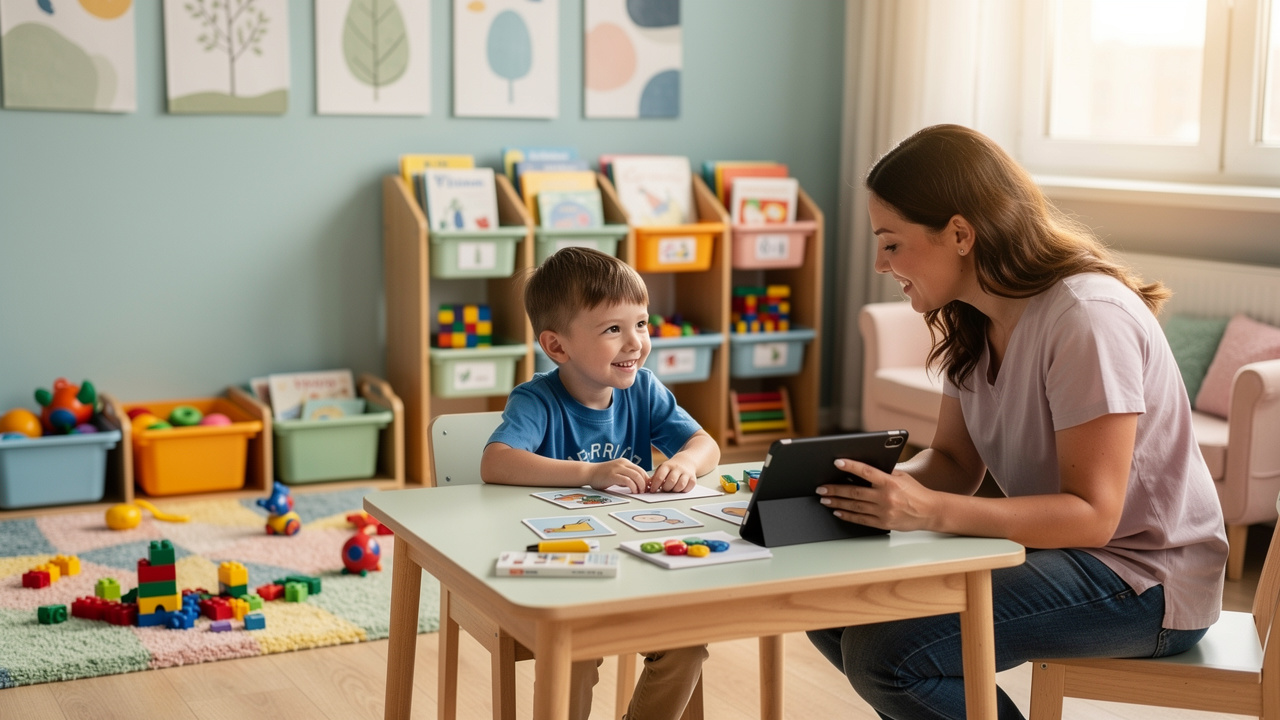
An empathetic parent blogger who understands the challenges and emotions of being a parent. They provide support, guidance, and relatable stories to help parents navigate the complexities of raising a child with autism.
Understanding autism is not limited to knowing its definition. It involves recognizing the unique strengths and challenges that come with it, and understanding that every child with autism is unique, with their own set of abilities and struggles. Patience and understanding are key in supporting them effectively.
In this article, we will delve into various topics related to autism, including understanding the basics and beyond, recognizing early indicators of autism in children, the role of Applied Behavior Analysis (ABA) therapy in autism care, strategies to build trust and establish routines, techniques to promote positive interactions and enhance social skills, empowering parents to be advocates for their children with autism, harnessing technology for autism care, preparing children with autism for the future, and strategies to encourage self-reliance and independence. We will explore these topics through the lens of an empathetic parent blogger who provides practical advice and valuable insights for parents raising children with autism.
Autism, or , is a complex neurodevelopmental condition that affects , communication, interests, and behavior. It's called a 'spectrum' disorder because the symptoms and severity vary widely from person to person. goes beyond knowing the definition. It involves recognizing the that come with it. It's about understanding that every child with autism is unique, with their own set of abilities and struggles. Remember the phrase ',' as patience is key in understanding and .
can make a significant difference in a child's development. Some early include , , not responding to their name, and repetitive behaviors. However, these signs can vary greatly from one child to another. It's important to remember that these are just indicators, not definitive diagnoses. If you notice these signs in your child, it's advisable to seek professional help for a .
is a widely recognized method for supporting children with autism. It uses to encourage desired behaviors and reduce challenging ones. is , meaning each child's progress is tracked and analyzed to ensure the therapy is effective. It's a flexible approach that can be tailored to each child's and goals. is one company that utilizes , integrating it with to optimize each child's therapy journey.
Patience is a powerful tool when . can take time, but it's crucial for a child's . Remember the phrase ',' as it's a reminder that understanding and is a journey that .
in children with autism can be achieved through various strategies. These include breaking down tasks into manageable steps, using , and . It's important to and progress, as this can and motivation to try new tasks. Remember, 'be patient I have autism,' as is a gradual process.
are often a challenge for children with autism. Techniques to enhance these skills include role-playing, , and with peers. It's also beneficial to model and provide when a child engages in positive social interactions. Remember, 'be patient I have autism,' as developing is a journey, not a destination.
As a parent, you are your child's biggest advocate. Empowerment comes from knowledge, so educate yourself about autism and the . Collaborate with professionals, join , and don't hesitate to . Remember, ',' as is a that requires patience and perseverance.
Technology has revolutionized autism care, with leading the way. These therapies, like those offered by Rori Behavioral Innovations Inc., use data to . They can , and provide insights that can . Remember, ',' as is a process that requires time and adaptation.
Preparing your child with autism for the future involves equipping them with , , and . It's about setting realistic goals, celebrating progress, and being there to support them every step of the way. Remember, 'be patient I have autism,' as preparing for the future is a journey that unfolds one day at a time.
In conclusion, understanding autism goes beyond knowing its definition. It involves recognizing the unique strengths and challenges that come with it, and understanding that every child with autism is unique, with their own set of abilities and struggles. Patience and understanding are key in supporting them effectively. The article explored various topics related to autism, including the basics and beyond, early indicators of autism in children, the role of Applied Behavior Analysis (ABA) therapy in autism care, strategies to build trust and establish routines, techniques to promote positive interactions and enhance social skills, empowering parents to be advocates for their children with autism, harnessing technology for autism care, preparing children with autism for the future, and strategies to encourage self-reliance and independence.
The ideas discussed in the article have broader significance as they provide valuable insights and practical advice for parents raising children with autism. By understanding the unique strengths of individuals with autism and nurturing those strengths, we can help them thrive in various aspects of life. The article also emphasizes the importance of early intervention, personalized support, and creating inclusive environments that cater to the specific needs of children with autism. By implementing strategies such as ABA therapy, visual supports, social stories, and technology-enhanced interventions, we can enhance their communication skills, social interactions, independence, and overall quality of life.
To make a meaningful impact on the lives of children with autism and support their development effectively