Social cues are the silent, yet powerful, nonverbal signals that convey our intentions, emotions, and attitudes to others. These cues encompass a range of behaviors such as facial expressions, gestures, eye contact, and tone of voice. Understanding and interpreting these cues are crucial for effective communication and can reveal insights into an individual's personality, relationships, and emotional state.
Moreover, social cues play a significant role in cross-cultural interactions, where cultural sensitivity is essential. In this article, we will explore the importance of social cues, the different types of cues, their role in effective communication, strategies to develop social cue awareness, and the impact of social cues in various settings. By honing our ability to recognize and interpret social cues, we can enhance our communication skills, build better relationships, and navigate the complexities of human interaction.
Social cues are the silent, yet powerful, that convey our intentions, emotions, and attitudes to others. These encompass a range of behaviors such as facial expressions, gestures, the proximity between converse, eye contact, and the tone and volume of our voice. The importance of non-verbal communication in particular has been a topic of public fascination, especially since Julius Fast's book on the subject gained popularity in the 1970s. is often considered a more authentic form of communication than spoken words, believed to reveal truths about an individual's personality, motives, and current state of mind.
The way we interpret these can differ greatly depending on . For instance, gestures considered respectful in one culture may be seen as offensive in another, highlighting the importance of in international and cross-cultural interactions. Furthermore, in circumstances where are present, such as when utilizing English as a global language in business, individuals depend even more on nonverbal signals and collaborate to establish shared comprehension.
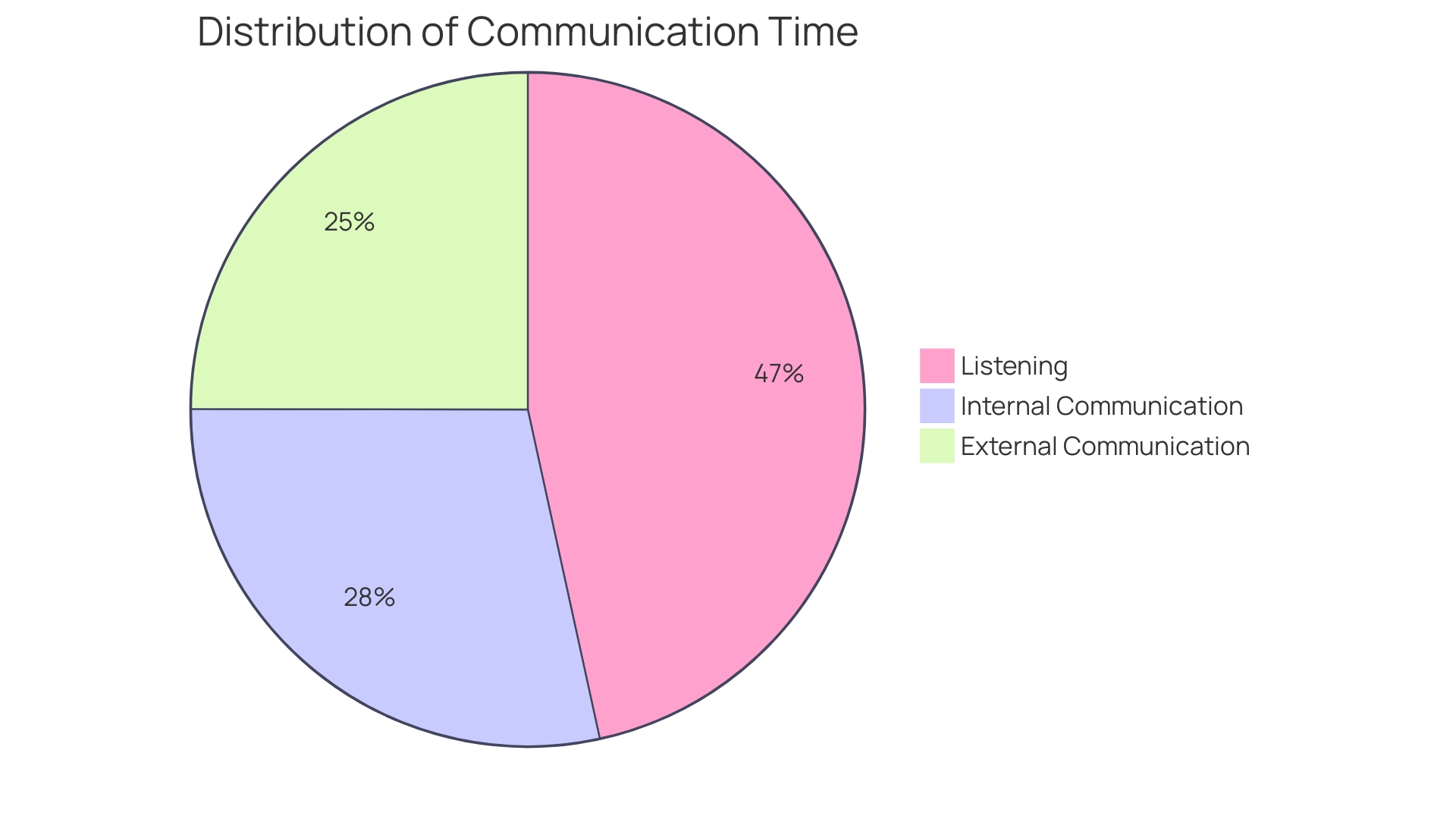
Research has shown that we spend approximately 55% of communication time listening, which involves paying attention not just to words, but to these nonverbal cues. This dependence on extends to all forms of communication, whether it's politicians' gestures scrutinized by the media, or the silent, perplexing scenes of a movie without dialogue. Misinterpretations can lead to miscommunications, highlighting the need for a of both verbal and nonverbal messages to effectively combat misinformation and foster accurate understanding.

Comprehending , such as body movements, is essential to . These silent signals can reveal insights into an individual's personality, relationships, and emotional state, often conveying more authenticity than words alone. For example, public figures and media personalities are often examined based on their , with experts providing commentary on their potential moods and attitudes. This scrutiny extends to day-to-day exchanges where interpreting can influence how we perceive and engage with others.
Despite the widespread belief in body language as a universal language, it's important to recognize . What might be deemed as positive engagement in one culture could be inappropriate in another. This is especially crucial in , where understanding these differences can prevent misinterpretations and foster better relationships.
Research indicates that individuals dedicate approximately 55% of their communication time to listening, underscoring the significance of effectively . Observing someone's attention patterns can inform us about their thoughts and intentions, a concept known as 'theory of mind.' This capability, though, can be disturbed in certain conditions, impacting behavior in society.
Recent research by Johns Hopkins University reveals that we can discern what others are trying to learn from their environment by watching their actions, a neglected aspect of human cognition with significant implications. As we keep dealing with the intricacies of human engagement, it's evident that nonverbal signals are more than just a complement to spoken communication; they represent a language on their own, essential for comprehending and establishing connections with individuals in our vicinity.
are essential tools for with others. They are the that we give and receive, forming the essence of our exchanges. Facial expressions, for instance, are immediate indicators of our emotional state: a smile can show pleasure, while a frown might indicate displeasure. The subtlety of can signal surprise or skepticism.
extends beyond our facial expressions to encompass our posture, gestures, and overall movements. A confident stance, open gestures, and directed movements can convey a sense of assurance and interest, whereas crossed arms or a slouched posture might suggest discomfort or a lack of engagement.
When we speak, our tone of voice adds another layer of meaning. Pitch, volume, and intonation can all reveal nuances in our mood and attitude that our words alone might not convey. A gentle tone might soothe, while a sharp one can betray irritation or anger.
Comprehending cues is a form of understanding others' experiences. This enables us to anticipate and respond to the behaviors within our societal surroundings. As Damon Centola explains, this modeling encompasses a comprehension of societal norms, which are vital for cohesive communal engagement and are not always explicitly instructed but rather implicitly comprehended.
Groundbreaking studies, like those highlighted by David Broniatowski and his team at George Washington University, emphasize the importance of . Their research illuminates how both accurate and misleading information can be made more persuasive when presented clearly and simply. This principle applies not only to online information but also to interpreting , where clarity can significantly influence our perceptions and interactions.
Maintaining , one of the most powerful forms of nonverbal communication, can convey a wide range of emotions from joy to distress. It is often seen as a sign of forthrightness and honesty. However, it is important to note that interpretations of , including , can vary dramatically across cultures. What might be considered genuine and engaging in one cultural context could be perceived as inappropriate or offensive in another.
Our ability to differentiate between truth and deception can also be enhanced by understanding nonverbal behavior. Research has indicated that specific can suggest whether an individual is telling the truth or being dishonest, especially in critical circumstances where there are repercussions for not being believed. This understanding is crucial for professionals like interviewers, investigators, therapists, and negotiators who rely on accurate assessments of behavior.
Essentially, social signals are the unsaid conversation that enhances our spoken communication, allowing us to express and comprehend emotions and intentions in a intricate social environment.
Social signals are crucial for our capacity to communicate efficiently. They are the unspoken elements of communication that provide insight into what someone is really thinking or feeling, beyond their spoken words. These indications, which can be facial expressions, tone of voice, or , add depth to our conversations and help us gauge the and intent behind the words shared. Identifying and interpreting these signals accurately can aid in avoiding misinterpretations, fostering a feeling of comprehension and connection, and constructing more resilient, empathetic relationships.
For example, Ellen Taaffe, an experienced executive and currently a clinical associate professor, examines the function of in the workplace. In her book, The Mirrored Door, she explores how gendered expectations can impact one's presentation, including the choice of attire, which can be a potent societal signal. Likewise, the study conducted by Sievers and his associates, which included film scenes, showed that individuals could comprehend intricate interpersonal relationships solely through visual indications, even in the absence of sound.
In a world where misinformation can spread rapidly online, it's clear that simplicity and clarity in messaging are paramount. This principle is not only true for written or spoken content but also for . Research has indicated that individuals are more prone to trust and distribute data that is delivered in a direct and comprehensible manner, which encompasses the non-verbal communication of the individual transmitting the message.
The significance of cues in interactions is further emphasized by the work of Chaz Firestone at Johns Hopkins University. His research found that by observing someone's actions, we can discern what they are trying to learn from their environment, a concept known as 'pragmatic actions.' This ability to interpret body movements is so ingrained in our daily lives that it affects everything from predicting someone's next move to understanding their intentions.
Our fascination with and its implications for conveying truth and authenticity has only increased with media's attention and the rise of social media. It's essential to appreciate that body language can vary significantly across cultures, and what may be considered engaging and genuine in one culture could be seen as inappropriate or offensive in another. By being aware of these differences, we can navigate cross-cultural interactions more effectively and avoid misinterpretations.
Understanding is not just about observing others; it's also about and how we present ourselves. As social creatures, we define ourselves by our groups and relationships, and our nonverbal behavior often reflects our sense of belonging or exclusion. This awareness can help us understand the intricacies of interpersonal interactions and enhance our ability to communicate with diverse groups of people.
Ultimately, the way we interpret and use cues from our interactions with others is a testament to our intricate nature as beings who live and interact in society. By refining our capacity to comprehend these signals, we can improve our communication abilities, establish stronger connections, and navigate the constantly evolving landscapes of both our personal and work lives.
Developing the ability to identify and understand is a continuous journey that can greatly improve our communication skills. By closely observing these signals in different situations, we can gain a better understanding and connect with the people around us. is crucial—it's about more than just hearing words; it's about grasping the full message and its underlying intent. This involves and setting aside our own thoughts and emotions to focus on the speaker. Feedback plays a vital role too; it allows us to and fine-tune our understanding of dynamics. Moreover, being aware of our own can help us become more . By consistently practicing and reflecting on ourselves, we can enhance our skill to perceive subtle cues in interactions, ultimately nurturing deeper and more significant relationships with others.
Improving one's capacity to understand and react to cues is a complex process that includes a variety of techniques. A useful approach is engaging in , which act as a practice area to rehearse in a controlled setting. This approach is exemplified by a digital learning program where learners encounter ambiguous scenarios and must navigate them effectively, learning to discern when to take action. In addition, programs that enhance interpersonal abilities, like the one offered to Master of Social Work students, integrate virtual reality experiences to replicate real-life engagements, enabling prompt response and the opportunity to examine different strategies.
Another strategy lies in the observation of skilled communicators. By studying their and interaction styles, one can glean insights into effective cue usage. The significance of this observational learning is supported by research indicating that humans are skilled at detecting natural patterns of attention in others, which is crucial for understanding dynamics.
Seeking the assistance of or therapists can also be highly beneficial. These professionals can offer , drawing upon their expertise in listening and responsiveness. As described by Graham Bodie of the University of Mississippi, competent listening involves attending to all available information to preserve both the content and relational intent of messages. This skill is essential for comprehending and reacting to interpersonal cues accurately.
Furthermore, the notion of 'loss aversion,' recognized by psychologists Daniel Kahneman and Amos Tversky, plays a part in interactions. It suggests that the emotional impact of potential losses can significantly influence decision-making. Understanding this principle can help individuals better navigate exchanges by being more attuned to the stakes involved for themselves and others.
To further support the development of interpersonal cue skills, the highlights the importance of (SES) in education systems worldwide. Acknowledging and reacting to societal signals is vital to SES, which are considered crucial for individual and societal achievement. Therefore, integrating these techniques into one's routine can result in more sophisticated interpersonal connections and enhanced communication skills.
Successfully navigating human connections necessitates a sharp comprehension of , which play a crucial role in various settings such as professional, communal, and academic contexts. In professional settings, understanding these signals is essential to promoting successful collaborations and leadership. It enables clear communication and strengthens relationships among colleagues and clients. During gatherings, identifying these signals assists individuals in following conventions, understanding the subtleties of , and establishing significant relationships. Within educational contexts, are vital for following instructions, participating effectively in group work, and honing .
These exchanges are frequently subtle and can be affected by . For example, appropriate nonverbal signals—such as eye contact, hand gestures, touch, and the space maintained between individuals—can differ significantly across cultures. Misinterpretations in these contexts can lead to misunderstandings or even offense. It's crucial to approach international and cross-cultural business interactions with an awareness that 'appropriate' is not universal.
The significance of cues in the realm of design and public spaces is also evident. Accessibility and inclusivity are key factors that contribute to the comfort and usability of a place, going beyond mere physical mobility. Spaces that are truly accessible foster a sense of belonging and engagement, which are essential for a vibrant community.
Understanding the dynamics of influence is also crucial. Concepts such as conformity, compliance, and obedience are not only psychological phenomena but also mechanisms by which societies reinforce behaviors. While these may carry negative connotations, they play a fundamental role within any group or society.
In brief, nonverbal signals and their understandings are intricate yet necessary elements of human communication. Whether it's through body language, cultural sensitivity, or the design of public spaces, can lead to more inclusive and , ultimately enriching our social fabric.
In conclusion, social cues are powerful nonverbal signals that convey our intentions, emotions, and attitudes to others. Understanding and interpreting these cues are crucial for effective communication, revealing insights into personality, relationships, and emotional states. Cultural sensitivity is essential in cross-cultural interactions, where interpretations of social cues can vary greatly.
Different types of social cues, such as facial expressions, body language, and tone of voice, add depth and authenticity to our communication. Developing social cue awareness involves active listening, feedback, and self-reflection.
The impact of social cues extends to various settings, including the workplace, social events, schools, and public spaces. In professional settings, social cues foster successful collaborations and clear communication. Social cues at social events help us adhere to norms and form meaningful connections.
In education, social cues are vital for effective participation and interpersonal skills. Inclusive and accessible public spaces also rely on understanding social cues.
By honing our ability to recognize and interpret social cues, we enhance our communication skills, build better relationships, and navigate the complexities of human interaction. Valuing and respecting social cues create a more inclusive and effective communication environment, enriching our social fabric.
What are social cues?
Social cues are nonverbal signals that convey our intentions, emotions, and attitudes to others. They include behaviors such as facial expressions, gestures, eye contact, body language, and tone of voice.
Why are social cues important?
Social cues are essential for effective communication as they often reveal more about an individual’s feelings and intentions than spoken words. They help in building connections and understanding others' emotional states.
How do cultural contexts affect social cues?
Cultural differences can significantly influence how social cues are interpreted. A gesture that is respectful in one culture may be considered offensive in another, making cultural sensitivity crucial in international interactions.
What percentage of communication time is spent listening?
Research indicates that we spend approximately 55% of our communication time listening, which includes paying attention to both verbal and nonverbal cues.
What are some common types of social cues?
Common types of social cues include: Facial expressions: Indicators of emotional states (e.g., smiles for pleasure, frowns for displeasure). Body language: Posture and gestures that convey confidence or discomfort. Tone of voice: Variations in pitch, volume, and intonation that reveal mood and attitude.
How can nonverbal communication help in professional settings?
Understanding nonverbal communication can enhance collaboration and leadership in professional environments. It aids in clear communication and strengthens relationships among colleagues and clients.
How can one improve their awareness of social cues?
Improving social cue awareness involves active listening, observing others, engaging in role-playing exercises, and seeking feedback. Practicing self-awareness regarding one’s own nonverbal signals is also beneficial.
What role does eye contact play in communication?
Eye contact is a powerful form of nonverbal communication that can convey a range of emotions, from joy to distress. It is often associated with honesty and engagement, though interpretations can vary across cultures.
What is 'theory of mind' in relation to social cues?
'Theory of mind' refers to the ability to understand others' thoughts and intentions, which can be informed by observing their nonverbal signals. This skill is crucial for effective social interactions.
How do social cues impact interactions in educational settings?
In educational contexts, social cues help students follow instructions, engage in group work, and develop interpersonal skills. Understanding these cues is vital for effective learning and collaboration.
Why is clarity important in conveying social cues?
Clarity in communication, both verbal and nonverbal, is crucial to avoid misunderstandings. Research shows that clear and simple messages are more persuasive and can enhance the effectiveness of social interactions.
How can emotional and relational skills (SES) be developed in education?
Integrating emotional and relational skills into education can enhance students' abilities to acknowledge and react to social signals, fostering better interpersonal interactions and communication skills.