Navigating the complexities of autism spectrum disorder can be a daunting journey for families, particularly when it comes to understanding the varying levels of support needs. With approximately 1 in 44 children diagnosed, recognizing the signs and symptoms early is crucial for effective intervention and support. This article delves into the intricacies of mild autism, emphasizing the importance of early detection, tailored therapeutic approaches, and active caregiver involvement.
By exploring expert insights and practical steps, parents can empower themselves with the knowledge necessary to foster their child's development and enhance their overall quality of life. Through a comprehensive understanding of autism and the resources available, families can create a supportive environment that encourages independence and growth.
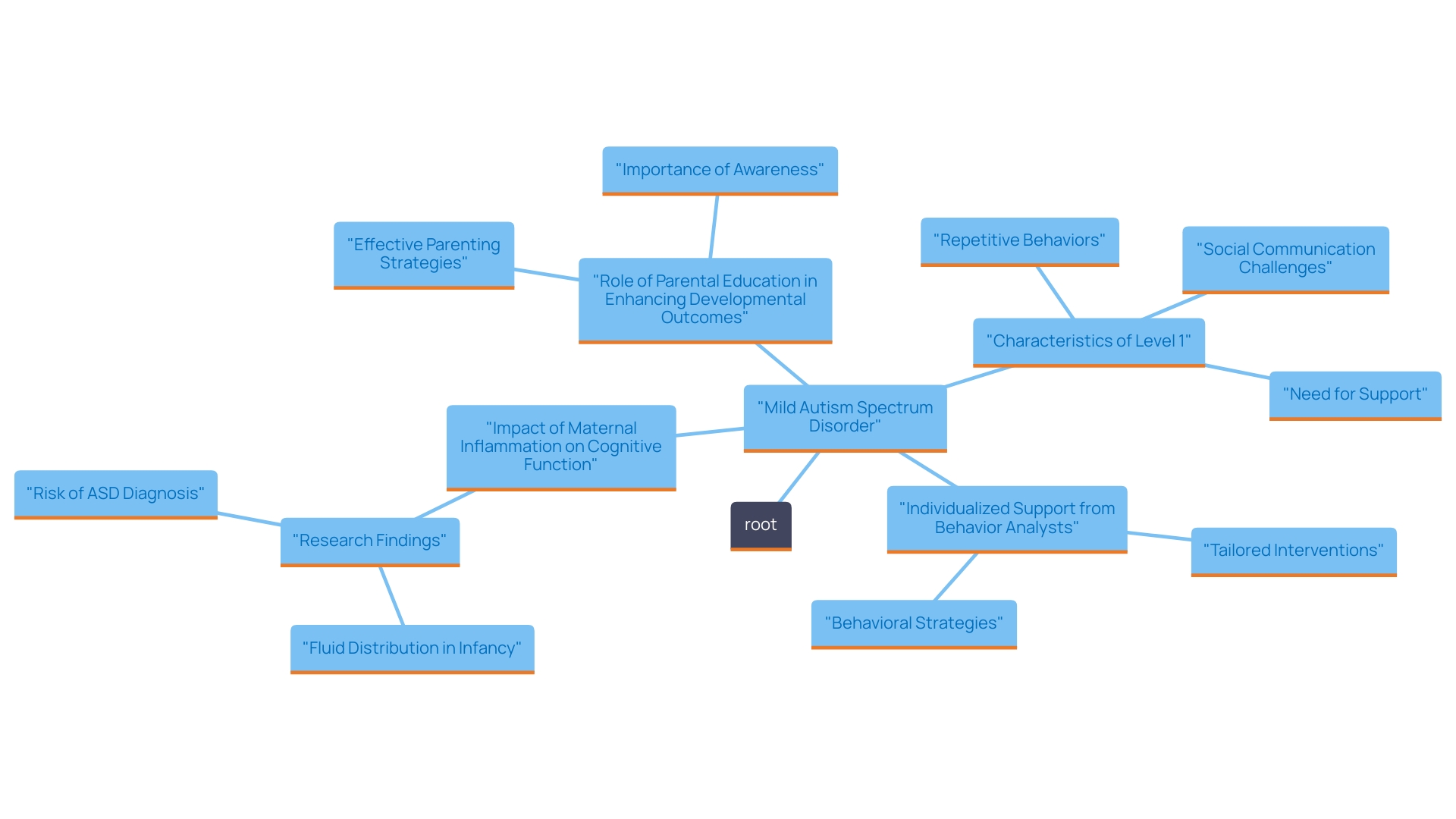
Autism spectrum disorder is frequently categorized into various levels according to the assistance needs of the individual. Mild developmental disorder, typically categorized as Level 1, indicates that while individuals may require some support, they are often capable of functioning independently in many areas of life. Recognizing this classification is crucial for parents, as it underscores the importance of . Qualified behavior analysts play a vital role in this process, designing that incorporate measurable goals and evidence-based strategies tailored to each individual's unique needs.
Recent research has emphasized the importance of a particular hippocampal area in social memory, which may assist in comprehending conditions such as developmental disorders. This insight can be especially beneficial when taking into account the nuanced requirements of young individuals with mild developmental differences. Dr. Ann Wagner, the National Autism Coordinator, emphasizes the importance of these classifications in customizing effective assistance.
Statistics suggest that elevated levels of maternal inflammation during pregnancy can affect cognitive function and impulse control, potentially relating to the support requirements of youngsters with mild developmental disorders. could be essential for addressing these challenges. Additionally, emerging studies show that this condition shares some patterns of gene expression with other disorders such as depression and schizophrenia, which may inform future research and interventions aimed at better supporting young individuals with mild forms of the disorder.
Parents should become acquainted with the traits of each spectrum level to better comprehend their offspring's specific needs. may manifest through traits such as challenges in , difficulty with organization, and the need for specific routines. By actively participating in their offspring's development through caregiver education, parents can enhance their support at home, make informed decisions, and improve . This proactive involvement ultimately fosters their offspring's ability to .
Identifying the indicators of mild developmental disorders early can significantly influence a young one's growth. Research indicates that the most noticeable symptoms often become apparent by the age of two, with studies showing that approximately 1 in 44 individuals are diagnosed with autism spectrum disorder, highlighting the importance of . These signs may include:
Parents should be attentive to how their offspring communicates and engages with others, as early identification is crucial. Documenting these behaviors can be incredibly useful when discussing concerns with healthcare professionals. The American Academy of Pediatrics advises, 'Don't wait. Acting early can make a big difference in your offspring's development.'
At Rori Care, our clinical leadership team is dedicated to neurodiversity and the success of young individuals, equipping caregivers with the knowledge and skills to assist their . Family participation in therapy is crucial; caregivers who grasp can offer consistent assistance that enhances professional interventions. For instance, helped an individual develop essential social skills, leading to improved interactions and independence.
Active caregiver involvement and alignment with therapeutic strategies often result in more effective and lasting behavioral improvements, empowering families and enhancing overall family dynamics. By partnering with pediatricians and pursuing early assistance, parents can ensure their offspring receive the essential resources to flourish. Initial evaluations are essential, as they assist in identifying the suitable level of assistance needed and promote different levels of independence for individuals on the spectrum. Additionally, caregivers can implement strategies such as and establishing predictable routines to further support their offspring's development.

If you suspect your offspring is showing , consulting a pediatrician or qualified specialist in the field is essential. Early diagnosis is especially crucial, as statistics indicate that male individuals are diagnosed with autism more frequently. A will determine the appropriate diagnosis and guide the next steps, including considering related conditions such as ADHD (Attention-Deficit/Hyperactivity Disorder), social communication disorder, specific learning disorder, and intellectual disability. This comprehensive awareness of your offspring's needs is essential for effective assistance.
Dr. Daniel Moreno De Luca, a specialist in youth and adolescent psychiatry, underscores the significance of , stating, 'Early and precise diagnosis is vital for effective intervention and assistance.' Once a diagnosis is made, parents should proactively seek out , such as those offered by Rori Care, where our world-class clinicians provide comprehensive and compassionate . Research shows that achieving recommended hours—with active caregiver involvement—results in , ensuring optimal development without overwhelming them.
Furthermore, connecting with assistance groups and advocacy organizations can be immensely beneficial. A case study on family assistance illustrates that engaging with these resources can provide essential information and emotional guidance, helping families navigate the challenges of developmental disorders. At Rori Care, we empower caregivers with ABA principles to support their child's behavioral goals through knowledge, strategy alignment, and data collection, establishing a robust support network that includes educational resources.
To summarize, parents should take the following steps if they suspect mild autism symptoms in their child:
Additionally, for tailored developmental plans in response to new diagnoses, we invite parents to sign up for a free consultation with our compassionate experts. By taking these steps, parents can ensure they are well-equipped to support their offspring and access the necessary resources and interventions to foster their development.

Therapeutic methods like have shown considerable success in assisting young individuals with mild developmental disorders. ABA emphasizes strengthening positive behaviors and cultivating essential daily living and social interaction skills through . Our program development service sets clear, measurable goals, ensuring transparent benchmarks for progress. According to recent studies, success rates for ABA in mild developmental disorders can reach up to 80%, with many youngsters showing remarkable improvements in communication and social skills.
Expert opinions further emphasize the value of ABA. Manhattanville University, a leading institution in , highlights that their programs 'set the gold standard in .' This endorsement underscores the credibility and efficacy of ABA as a therapeutic approach.
In addition to ABA, therapies that include and play a crucial role in helping young individuals navigate social situations more effectively and build confidence. Social skills group therapy, led by trained therapists, enhances individuals' social interactions within a group setting, fostering improved competence and relationships.
Recent developments in therapeutic approaches for mild autism have expanded to include innovative techniques and personalized interventions. For instance, the use of technology, such as apps designed for skill development, provides new ways for young learners to engage with educational materials. Caregiver education enhances support by equipping parents with ABA principles and strategies for informed decision-making, leading to improved behavioral outcomes. Engaging in these therapeutic interventions not only aids the young one's development but also empowers parents, equipping them to facilitate their offspring's progress in a supportive environment. As one therapist remarked, 'Unlocking new opportunities in behavior analysis can significantly improve the quality of life for young individuals with mild developmental challenges and their families.'
Overall, the diverse range of therapeutic approaches available today, coupled with active caregiver involvement, offers promising outcomes and opportunities for children with mild autism to thrive, both in their personal and social lives.

Understanding the complexities of mild autism is essential for parents seeking to support their children effectively. Early detection of signs and symptoms can greatly enhance intervention outcomes, allowing for tailored therapeutic approaches that meet the unique needs of each child. By recognizing the characteristics associated with mild autism, such as difficulties in social interactions and a preference for routines, parents can take proactive steps to foster their child's development.
Engaging with qualified professionals and seeking early intervention programs are critical actions that can make a significant difference. The importance of caregiver involvement cannot be overstated; active participation in therapeutic strategies not only reinforces learning but also helps create a supportive home environment. By collaborating with healthcare providers and utilizing available resources, families can ensure their children receive the comprehensive care they need.
In summary, navigating the journey of mild autism requires awareness, education, and a commitment to supporting the child's growth. With the right tools and strategies in place, parents can empower their children to thrive, cultivate independence, and enhance their overall quality of life. As families embrace these approaches, they contribute to a broader understanding of autism and its complexities, fostering a more inclusive environment for all.
What is autism spectrum disorder (ASD) and how is it categorized?
Autism spectrum disorder is often categorized into various levels based on the individual's assistance needs. Level 1, known as mild developmental disorder, indicates that individuals may require some support but can often function independently in many areas of life.
Why is understanding the classification of autism important for parents?
Recognizing the classification of autism is crucial for parents as it highlights the importance of targeted interventions. It helps them understand their child's specific needs and seek appropriate support.
What role do behavior analysts play in supporting individuals with ASD?
Qualified behavior analysts design individualized plans that incorporate measurable goals and evidence-based strategies tailored to each individual's unique needs, facilitating effective interventions.
How can maternal health during pregnancy affect autism spectrum disorder?
Elevated levels of maternal inflammation during pregnancy can impact cognitive function and impulse control, potentially influencing the support needs of children with mild developmental disorders.
What are common traits of mild autism?
Common traits may include challenges in social interactions, difficulty understanding nonverbal cues, a strong preference for routines, repetitive behaviors, intense interests in specific subjects, and challenges coping with changes in their environment.
When do symptoms of mild developmental disorders typically become noticeable?
Symptoms often become apparent by the age of two, with research indicating that approximately 1 in 44 individuals are diagnosed with autism spectrum disorder.
What steps should parents take if they suspect their child has mild autism symptoms?
Parents should consult with a pediatrician or autism specialist for a comprehensive evaluation, consider related conditions, seek early intervention programs, and connect with assistance groups and advocacy organizations.
What therapeutic methods are effective for young individuals with mild developmental disorders?
Applied Behavior Analysis (ABA) is a highly effective therapeutic method, with success rates for mild developmental disorders reaching up to 80%. Other helpful therapies include social skills training and occupational therapy.
How can caregiver involvement impact the effectiveness of interventions for children with ASD?
Active caregiver involvement, including understanding ABA principles, enhances support and leads to more effective and lasting behavioral improvements for children with autism.
What resources are available for parents seeking support for their children with mild developmental disorders?
Parents can access early intervention programs, connect with assistance groups and advocacy organizations, and utilize educational resources provided by specialists like those at Rori Care.