Registered Behavior Technicians (RBTs) play a vital role in the field of autism therapy, working closely with Board Certified Behavior Analysts (BCBAs) to provide effective interventions for children with autism. Their expertise lies in implementing Discrete Trial Training (DTT), a systematic approach aimed at enhancing the learning process for children with autism. RBTs meticulously collect data, assess progress, and ensure that therapy sessions meet the highest standards of consistency and efficacy.
By employing interventions like DTT, RBTs help address the complex needs of autistic children, promoting inclusivity in educational and community settings. In this article, we will explore the significance of these interventions, the key terms used in ABA therapy, the components of effective ABA session notes, and common techniques and strategies employed in ABA therapy. Join us as we delve into the world of autism therapy and gain valuable insights to empower parents and caregivers with expert advice.
(RBTs) serve as essential practitioners within the realm, operating under the guidance of (BCBAs). Their primary responsibility includes the application of , a methodical approach designed to enhance the learning process for children with autism. RBTs meticulously collect data and contribute to the assessment and evaluation of the intervention's progress, ensuring that each therapy session adheres to the highest standards of consistency and efficacy.
RBTs are rigorously trained to adhere to established protocols, fostering an environment conducive to effective therapy. Their role is instrumental in addressing the complex needs of autistic children, particularly those experiencing concurrent emotional and behavioral challenges. By implementing interventions such as DTT, RBTs help mitigate the risk of social exclusion and promote equitable participation in educational and community settings.
The importance of these interventions is underscored by the fact that (ASD) not only affects social communication and behavior but also includes a significant percentage of individuals with co-occurring intellectual disabilities. With the right support, children can thrive across various domains—school, home, and leisure—contributing to their mental health and the overall well-being of their families.
In alignment with best practices, some BCBAs are innovating the intersection of clinical expertise and technology, enhancing the quality and coordination of care. This modern approach streamlines the therapy process, ensuring that interventions like DTT are delivered effectively and that the outcomes are closely monitored for continuous improvement.

is a cornerstone of , designed to foster learning and growth in children with autism. To effectively utilize DTT, one must grasp the that are used within ABA therapy to measure and encourage progress. A stimulus, for instance, refers to any event or object that triggers a response.
This could range from a simple visual cue to a more complex auditory instruction. A response, then, is the behavior that follows the stimulus, like verbalizing a word or completing a task.
, which is the act of encouraging a behavior to make it more likely to recur. This can be something as straightforward as praising a child for correctly identifying a color or as specific as providing a favorite toy after a successful task completion. Alongside reinforcement, used to guide an individual towards the desired behavior, which is then gradually withdrawn through a process called .
This methodical reduction of assistance is crucial for nurturing independence.
The effectiveness of DTT and its components has been validated by professionals like New York state-licensed and Board-Certified Behavior Analysts. They contribute years of clinical expertise to enhance technology solutions that support best practice care. Moreover, recent research syntheses highlight the necessity of to better understand the impact on children with autism, emphasizing the importance of well-designed DTT programs.
These terms and their application in DTT are not just theoretical; they are born out of extensive experience and research, underscoring their significance in the development and success of children receiving ABA therapy.

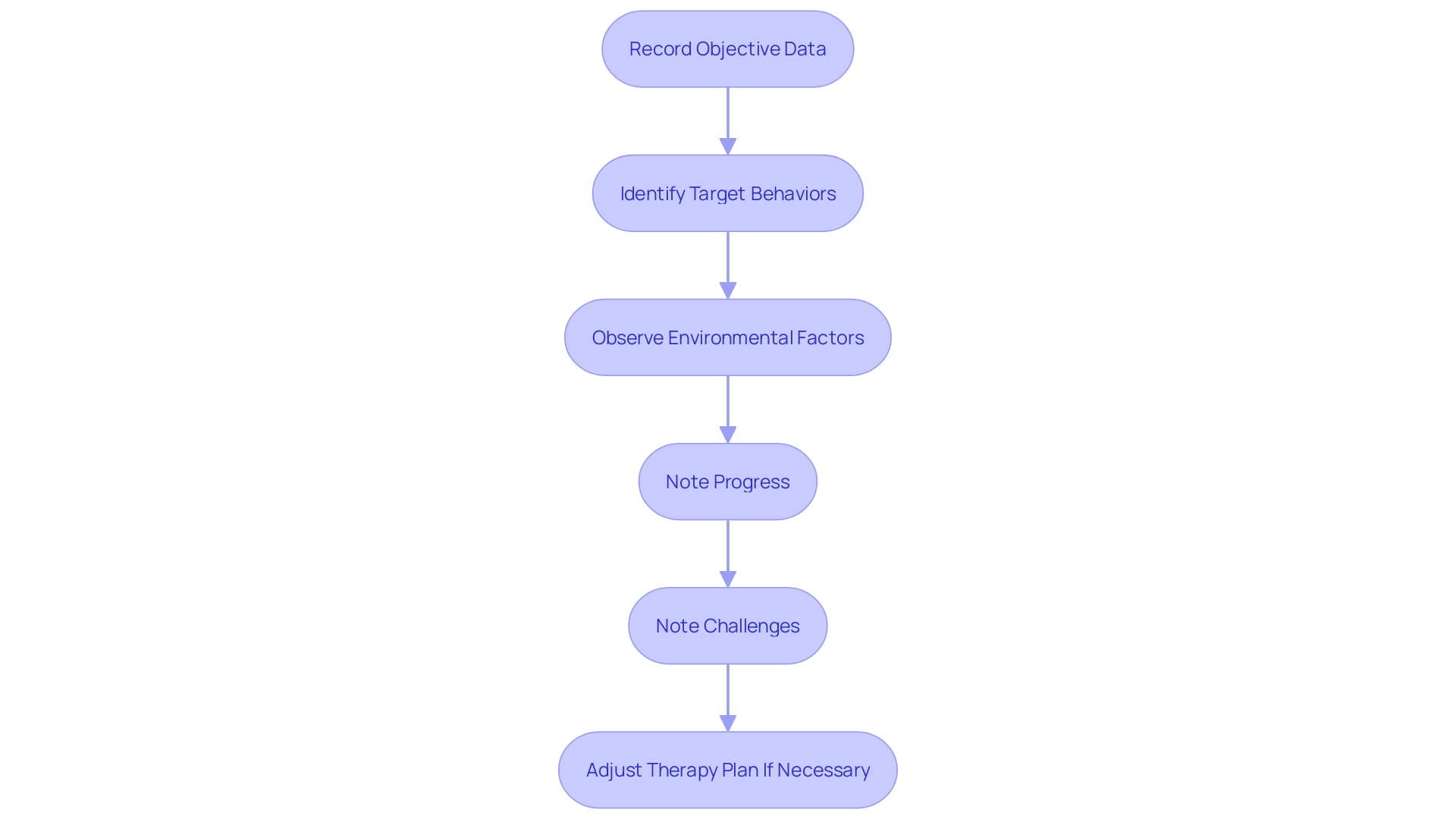
Effective documentation is a cornerstone of , providing a roadmap for understanding a child's progress and adapting strategies as needed. Session notes should be meticulously crafted with the following elements:
Incorporating these components into session notes not only enhances the therapeutic process but also fosters a collaborative environment where caregivers are well-informed and equipped to support their child's development. As we learn from the healthcare sector, where professionals like a New York state-licensed and Board-Certified Behavior Analyst emphasize the importance of , the same principles apply to to ensure each child's unique needs are met with precision and care.
Applied Behavior Analysis (ABA) therapy offers a suite of strategies to support individuals with autism. is a cornerstone among these, designed to teach skills by breaking them into smaller tasks and using repeated trials for mastery. Each component of DTT is crafted to meet the unique needs and objectives of the learner, ensuring a personalized approach to development.
Beyond DTT, strategies like leverage a person's interests within their daily surroundings to encourage learning, while visual aids such as schedules and cues aid in comprehension and task execution. play a pivotal role by offering positive rewards to reinforce desired behaviors.
The methods of Prompting and Prompt Fading are valuable in teaching new skills, providing the necessary cues and gradually reducing them to foster independence. is another critical technique, structured to minimize mistakes and bolster successful learning outcomes.
Recent updates from the Council of Autism Service Providers have underscored the necessity for . These guidelines serve as a beacon for delivering effective autism treatment across varied settings. As the incidence of autism diagnoses rises, with current figures suggesting 1 in 36 individuals, the evolving understanding of autism necessitates adaptable and respectful intervention strategies.
This is reflected in the amplified focus on intervention research, which seeks to identify the most effective, harm-minimizing approaches that respect the diverse needs within the autism community.
As the landscape for autism treatment and research advances, professionals in the field continue to innovate. Specialists are creating technology solutions to enhance care coordination and streamline processes, ensuring that ABA strategies like DTT are administered with the highest quality and respect for individual needs. Through such dedication to best practices and continuous improvement, ABA therapy remains a dynamic and influential tool in the support and development of individuals with autism.
Registered Behavior Technicians (RBTs) are vital practitioners in autism therapy, employing Discrete Trial Training (DTT) to enhance learning for children with autism. Their meticulous data collection and adherence to high standards promote inclusivity in educational and community settings.
Understanding key terms like stimulus, response, reinforcement, and prompting is crucial in measuring and encouraging progress in ABA therapy. Clinical experts validate the effectiveness of DTT and emphasize the importance of well-designed programs.
Effective ABA session notes are essential in understanding a child's progress and adapting strategies. Objective data, target behaviors, environmental factors, and progress and challenges should be documented, empowering caregivers to support their child's development.
ABA therapy offers various strategies, with DTT as a cornerstone. Techniques like Natural Environment Teaching (NET), visual aids, reinforcement, prompting, prompt fading, and Errorless Teaching foster independence and teach new skills. Professionals innovate with technology solutions to enhance care coordination and streamline processes.
In conclusion, RBTs play a crucial role in autism therapy, implementing interventions like DTT to address the complex needs of autistic children. Understanding key terms and incorporating effective session notes are essential for measuring progress and adapting strategies. ABA therapy offers a range of techniques, and professionals continue to innovate for improved outcomes.
ABA therapy remains a dynamic tool in supporting the development of individuals with autism.
What is a Registered Behavior Technician (RBT)?
An RBT is a professional who works under the supervision of Board Certified Behavior Analysts (BCBAs) to provide therapy for children with autism. They apply specialized methods such as Discrete Trial Training (DTT) to enhance learning and collect data to assess the progress of the intervention.
What is Discrete Trial Training (DTT)?
DTT is a structured teaching approach used in Applied Behavior Analysis (ABA) therapy to teach children with autism. It involves breaking down skills into smaller tasks and using repeated trials to teach each step of the skill.
Why is DTT important in the context of autism?
DTT is important because it helps address the learning needs of children with autism spectrum disorder (ASD), a condition that affects social communication and behavior. It also assists children with co-occurring intellectual disabilities, promoting their participation in educational and community settings.
How are RBTs trained?
RBTs undergo rigorous training to adhere to established ABA therapy protocols and to create an effective therapeutic environment. Their training equips them to address the complex needs of autistic children, including those with concurrent emotional and behavioral challenges.
What are some key terms used in ABA therapy?
Key terms include 'stimulus,' which triggers a response; 'response,' the behavior following a stimulus; 'reinforcement,' the act of encouraging a behavior to make it more likely to recur; and 'prompting,' a technique used to guide an individual towards the desired behavior.
What components should effective ABA session notes include?
Effective ABA session notes should include objective data, target behaviors, environmental factors, and notes on progress and challenges. These elements help track the child's development and adapt strategies as needed.
What other ABA techniques and strategies are used alongside DTT?
Alongside DTT, ABA therapy includes strategies like Natural Environment Teaching (NET), visual aids, reinforcement strategies, Prompting and Prompt Fading, and Errorless Teaching. These techniques help support individuals with autism in different ways.
How has technology impacted ABA therapy?
Technology has enhanced the quality and coordination of ABA therapy by streamlining processes and ensuring that interventions like DTT are delivered effectively. It also aids in monitoring outcomes for continuous improvement.
Why is high-quality intervention important in ABA therapy?
High-quality intervention is crucial because it ensures that ABA therapy is implemented correctly and effectively, respecting the diverse needs within the autism community and minimizing harm.
What is the current focus of autism intervention research?
Autism intervention research is focused on identifying the most effective strategies that respect the individual needs of those with autism. This includes understanding the impact of various approaches and improving the quality of intervention studies.