Navigating the world of autism care can feel like a maze, especially with all the new technology popping up every day. As tools like Augmentative and Alternative Communication (AAC) devices and AI-driven applications become more common, families are discovering exciting new ways to communicate and find support.
But you might be wondering, how do you choose the right tech for your child? With so many options out there, it’s easy to feel lost and unsure of where to start. But don’t worry, there are ways to simplify this journey and find what truly works for your child.
Have you ever felt the struggle of trying to communicate when words just won't come? The future of technology in autism care offers a variety of tools designed to help individuals with autism spectrum disorder (ASD) and their families. One of the most important tools is Augmentative and Alternative Communication (AAC) devices. These devices are game-changers for non-verbal individuals, allowing them to express their needs effectively. Kids with AAC devices often speak more than those without them! Families have noticed that when their children use AAC devices, communication skills improve, and frustration levels drop. It’s amazing to see how these tools can make such a difference.
But that’s not all! Mobile apps are also playing a crucial role in tracking behavioral progress and giving real-time feedback to parents and therapists. These handy apps help keep an eye on behavioral patterns, making it easier to adjust treatment plans when needed. Plus, virtual reality environments are stepping in for social skills training, providing safe spaces for kids to practice interactions.
Here at Rori Care, we use smart technology to make ABA therapy even better for your child. Our behavior care engine automates progress reports, freeing up 50% more time for treatment. This means our qualified behavior analysts can focus on creating personalized plans that cater to each child's unique needs. As Charlotte DiStefano observed, 'These devices can make a significant impact on a young person's life.' By embracing these tools, we can support the future of technology in autism care, enabling every child to find their voice and thrive. It's essential for families, especially those from minority backgrounds, to learn about AAC devices and other supportive tools, ensuring that every child has the chance to flourish.

Have you ever felt overwhelmed by the complexities of autism treatment? Let’s take a moment to appreciate how far we’ve come in autism treatment, shall we? In the early 20th century, the focus was mainly on behavioral interventions. But then, in the 1980s, computers started to change the game. With the rise of software for tracking progress, therapists can now keep a closer eye on how kids are doing, which is a game changer!
Fast forward to the 2000s, and mobile technology and apps opened up new ways for communication and learning. It’s exciting to think about how these tools can help kids connect and grow! And now, with advancements in AI and machine learning, we’re seeing customized treatment plans that cater to each child’s unique needs.
One standout example is Rori Care, which has harnessed advanced AI to automate progress report creation. This is huge because, let’s face it, 50% of ABA intervention time is often spent just writing reports! Imagine how much more time therapists can spend with kids instead.
It’s amazing to see how these innovations are making a real difference in the lives of families navigating the future of technology in autism care! With these advancements, parents can feel more supported and empowered in their journey with their child.

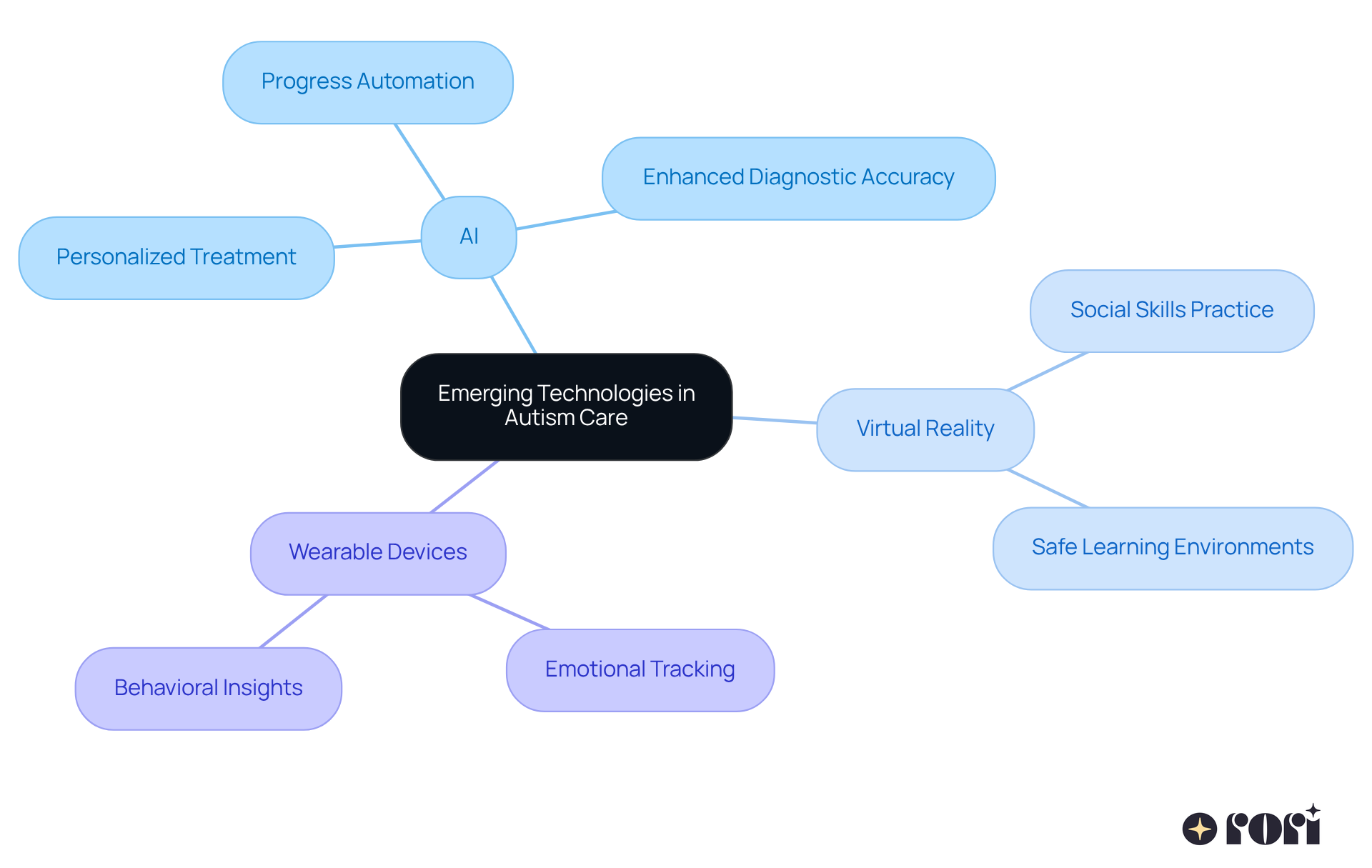
Navigating autism care can feel like a daunting journey for many parents, but exciting changes are on the horizon! The future of technology in autism care looks bright, thanks to innovative technologies that promise to enhance therapeutic outcomes. AI is stepping up to help personalize treatment by looking at lots of data to find what works best for each child! At Rori Care, we’re using advanced AI to automate progress reports, which usually take up half the time during ABA sessions. This means we can spend more time on direct treatment, ultimately leading to better results.
Many parents feel overwhelmed by the complexities of autism care and unsure of where to turn for help. But studies show that using AI can help make diagnoses more accurate and tailor interventions, especially where resources are tight. For example, a study with 360 participants over a year showed big improvements in attention, memory, and problem-solving skills when kids used AI-based personalized learning systems. It’s heartening to see how these tools can lead to real cognitive gains!
Alongside AI, virtual reality (VR) is becoming a fantastic resource, creating safe spaces for kids to practice their social skills, making it easier for them to connect with others! Plus, wearable devices that track how kids are feeling can give us quick insights into their emotional state, allowing us to address behavioral issues right away. Of course, we need to be mindful of challenges like data quality and privacy concerns to ensure these innovations are used responsibly.
These advancements not only improve the effectiveness of care for individuals on the spectrum but also represent the future of technology in autism care by making it more accessible and customized to each person's journey. Imagine a future where every child with developmental differences receives the tailored support they truly deserve! As we move forward, embracing these innovations will be key to helping every young individual flourish.
Navigating autism care can feel overwhelming for parents, especially when it comes to finding the right support for their child. At Rori Care, we know that’s why our therapists use data-driven technologies to create personalized treatment plans that fit each child's unique needs.
By leveraging analytics tools, our therapists can keep track of a young person's progress over time. They identify behavioral patterns and adjust interventions as necessary. For example, our behavior care engine updates behavior intervention and skill acquisition plans after each session based on achieved progress. This personalized approach not only boosts the effectiveness of interventions - did you know ABA therapy has an impressive success rate of over 89%? - but it also gives parents clear insights into their child's growth and the reasons behind treatment choices.
As technology continues to evolve, the future of technology in autism care holds great potential for developing better data-driven solutions to support individuals with developmental disorders. This means more positive outcomes and a chance for families to be more involved in the therapy process! We take your privacy seriously at Rori Care, using HIPAA-compliant technology to keep your data safe and secure. Plus, we use some pretty cool advanced models to boost our analytics capabilities, making sure we’re always on top of the latest insights for your child’s care.
With autism impacting about 1 in 36 kids in the U.S., it’s no wonder there’s a growing need for certified ABA therapists who can provide effective, personalized care. We’re here to help you every step of the way!

Navigating the world of technology in autism care can feel overwhelming for many parents, but it also opens up a world of possibilities! By using innovative tools like Augmentative and Alternative Communication (AAC) devices and mobile apps, families can see real improvements in communication and personalized treatment plans.
Throughout this article, we’ve explored key advancements, from the history of autism therapy to the exciting applications of AI and virtual reality. These technologies not only help with communication and learning but also give parents valuable insights into their child's progress. Organizations like Rori Care show us how smart technology can save therapists time, allowing them to focus on what really matters-effective treatment.
As we look ahead, staying informed about these advancements can really empower families to make the best choices for their children! Embracing these tools means a more tailored approach to autism care, ensuring every child gets the support they need to thrive. With a commitment to innovation and personalized care, you’re paving the way for your child’s brighter future!
What is the role of Augmentative and Alternative Communication (AAC) devices in autism care?
AAC devices are important tools that help non-verbal individuals with autism spectrum disorder (ASD) express their needs effectively, leading to improved communication skills and reduced frustration.
How do AAC devices impact children with autism?
Children using AAC devices often speak more than those without them, and families have reported improvements in communication skills and a decrease in frustration levels when their children use these devices.
What other technological tools are used in autism care?
Mobile apps are used to track behavioral progress and provide real-time feedback to parents and therapists, while virtual reality environments are utilized for social skills training, allowing kids to practice interactions in safe spaces.
How does Rori Care enhance autism therapy with technology?
Rori Care utilizes smart technology to automate progress reports in Applied Behavior Analysis (ABA) therapy, which frees up 50% more time for treatment, allowing behavior analysts to focus on creating personalized plans for each child.
Why is it important for families, especially from minority backgrounds, to learn about AAC devices and other supportive tools?
It is essential for families to be informed about AAC devices and supportive tools to ensure that every child has the opportunity to thrive and find their voice in autism care.