Introduction
Understanding the nuances of data analysis in Applied Behavior Analysis (ABA) therapy is key to improving autism care. By using data, therapists can make informed decisions, track progress, and tailor interventions to fit each child's unique needs. But as the field grows, challenges in data collection and analysis still pop up, raising important questions about how effective our current practices really are.
So, what can we do about it? 🤔 There are strategies we can explore to overcome these barriers and ensure that data-driven methods truly benefit individuals with autism. Let’s dive into this together and see how we can make a difference!
Define Data Analysis in ABA Therapy and Its Importance
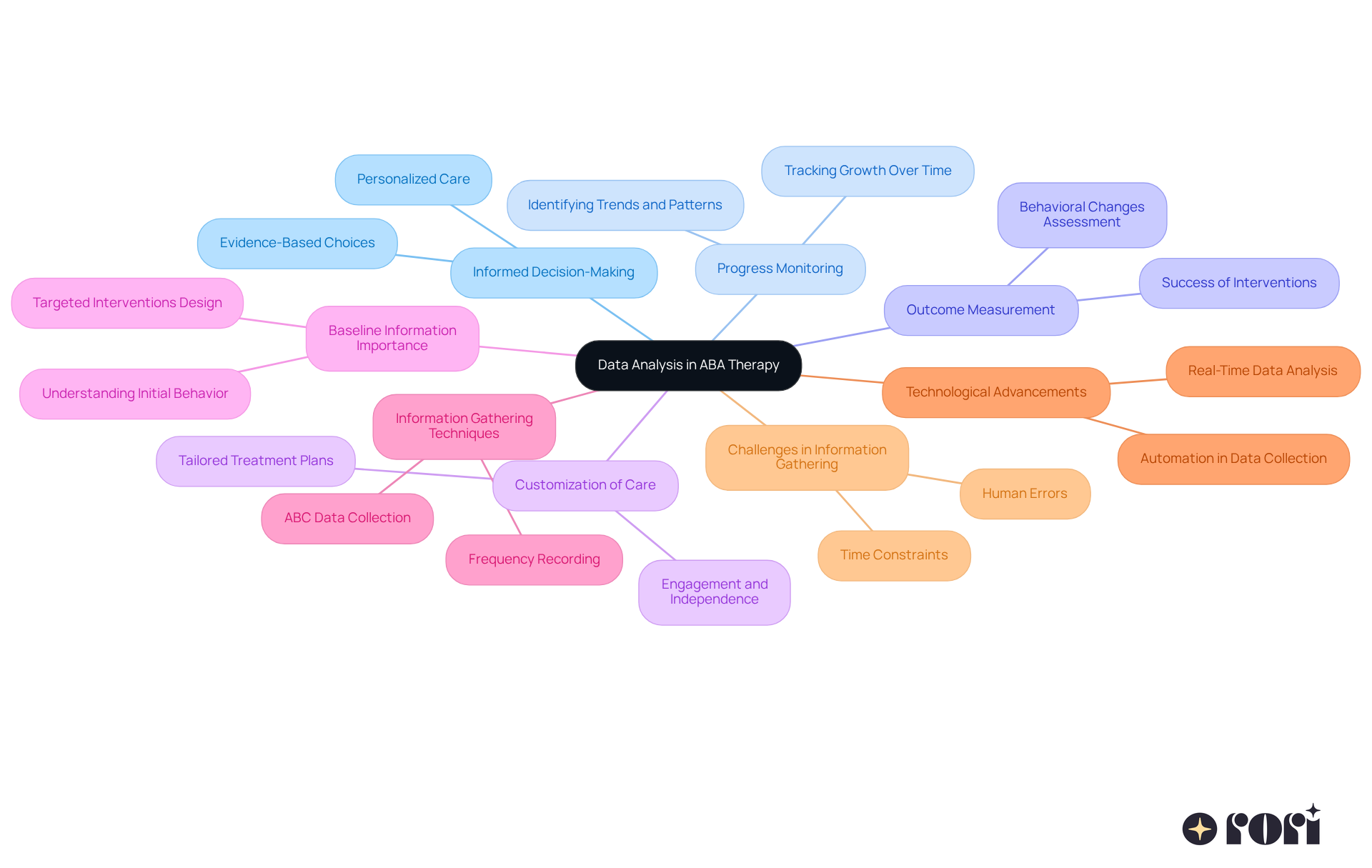
When we talk about Analysis in Applied Behavior Analysis (ABA), it’s all about taking a close look at the information gathered during sessions. This helps us figure out how well our techniques are working. And let me tell you, this process is super important for a bunch of reasons:
- Informed Decision-Making: By analyzing data, therapists can make choices based on real evidence. This means we can tweak treatments to fit each child’s unique needs. It’s all about personalizing care so that strategies really resonate with how each child responds.
- Progress Monitoring: Keeping an eye on the data allows therapists to track a child’s growth over time. We can spot trends and patterns that guide future therapy sessions. Regular data collection means we can adjust strategies quickly based on what we see happening.
- Outcome Measurement: Data gives us a clear way to measure how successful our interventions are. It helps us see if we’re hitting specific goals. This objective measurement is key for understanding how effective ABA treatment is, giving us insights into behavioral changes and skill development.
- Customization of Care: Analyzing information lets therapists tailor treatment plans to fit individual responses. This means therapy can be more effective and engaging. Plus, it helps foster greater independence and a better quality of life for individuals with autism.
- Baseline Information Importance: Establishing a baseline is crucial for understanding a child’s behavior before we start any interventions. It gives us a clear picture of how often certain behaviors occur, how long they last, and how intense they are. This info is vital for crafting targeted interventions.
- Information Gathering Techniques: We use various techniques like frequency recording, duration recording, and ABC collection in ABA treatment. These methods provide a comprehensive view of client behaviors, ensuring that treatment is tailored and continuously monitored.
- Technological Advancements: Technology has really changed the game in ABA therapy. It allows us to gather and analyze information more accurately and in real-time. At Rori Care, we use cutting-edge AI to automate progress report generation, which gives therapists 50% more time to focus on child treatment. This not only makes data collection more efficient but also reduces the administrative load on therapists.
- Challenges in Information Gathering: Even though it’s super important, collecting information in ABA can come with challenges like human errors and time constraints. It’s essential to tackle these issues to maintain the quality of information and ensure effective interventions.
In conclusion, the impact of data analysis on ABA therapy for autism care serves as a cornerstone of effective support. The impact of data analysis on ABA therapy for autism care helps clinicians provide personalized, responsive care that maximizes positive outcomes for children with autism. And let’s not forget, collaboration between therapists and parents is vital! It fosters a mutual understanding of progress and boosts the overall effectiveness of treatment. Let’s explore this together!
Explore Data Collection Methods in ABA Therapy
ABA therapy are super important for capturing specific behaviors and tracking progress effectively. Let’s take a look at some common methods used in autism interventions:
- Frequency Recording: This method tracks how often a specific behavior happens within a set time frame. It gives us valuable insights into behavior patterns. For instance, it can help us see how often a child raises their hand during class, which allows for focused support.
- Duration Recording: Here, we measure how long a behavior lasts. This is especially helpful for understanding behaviors that might need some extra help, like tantrums. By keeping an eye on how long these behaviors go on, therapists can assess how well calming techniques are working and adjust their strategies as needed.
- Interval Recording: In this approach, observers note whether a behavior occurs during specific intervals. This gives a broader view of behavior trends over time. It’s practical for busy settings, letting therapists gather data without needing to watch constantly.
- ABC Data Collection: This method records the Antecedent, Behavior, and Consequence of specific incidents. It helps us identify triggers and outcomes linked to behaviors. Understanding these components is key for functional behavior evaluations and helps guide necessary changes to strategies.
- Permanent Product Recording: This technique measures the results of a behavior after it happens, like completed assignments or tasks. It provides tangible evidence of progress, allowing therapists to evaluate how effective interventions are based on what’s observable.
Each of these methods has its own strengths and can be chosen based on the specific goals of therapy. It’s exciting to note that achieving full participation from caregivers has led to remarkable advancements in 90% of youth! By using these techniques, therapists can make informed decisions that enhance treatment outcomes for individuals with autism, highlighting the impact of data analysis on ABA therapy for autism care.
At Rori Care, we use a behavior care engine that updates intervention and skill acquisition plans after each session based on progress made. This ensures that treatment plans are flexible and responsive to each individual’s needs. Plus, integrating digital systems for data collection makes this process even smoother by allowing real-time entry and automatic graphing, which helps manage data and reduce errors. Our AI-driven progress report automation also frees up 50% more time for youth treatment, which greatly enhances the impact of data analysis on ABA therapy for autism care.
Let’s explore this together! We’re here to help you every step of the way!

Analyze How Data Personalizes ABA Therapy Plans
Understanding the impact of data analysis on ABA therapy for autism care is essential for customizing ABA plans. It helps make sure that interventions are tailored to meet the unique needs of each individual. Let’s take a look at how data analysis plays a role in this personalization:
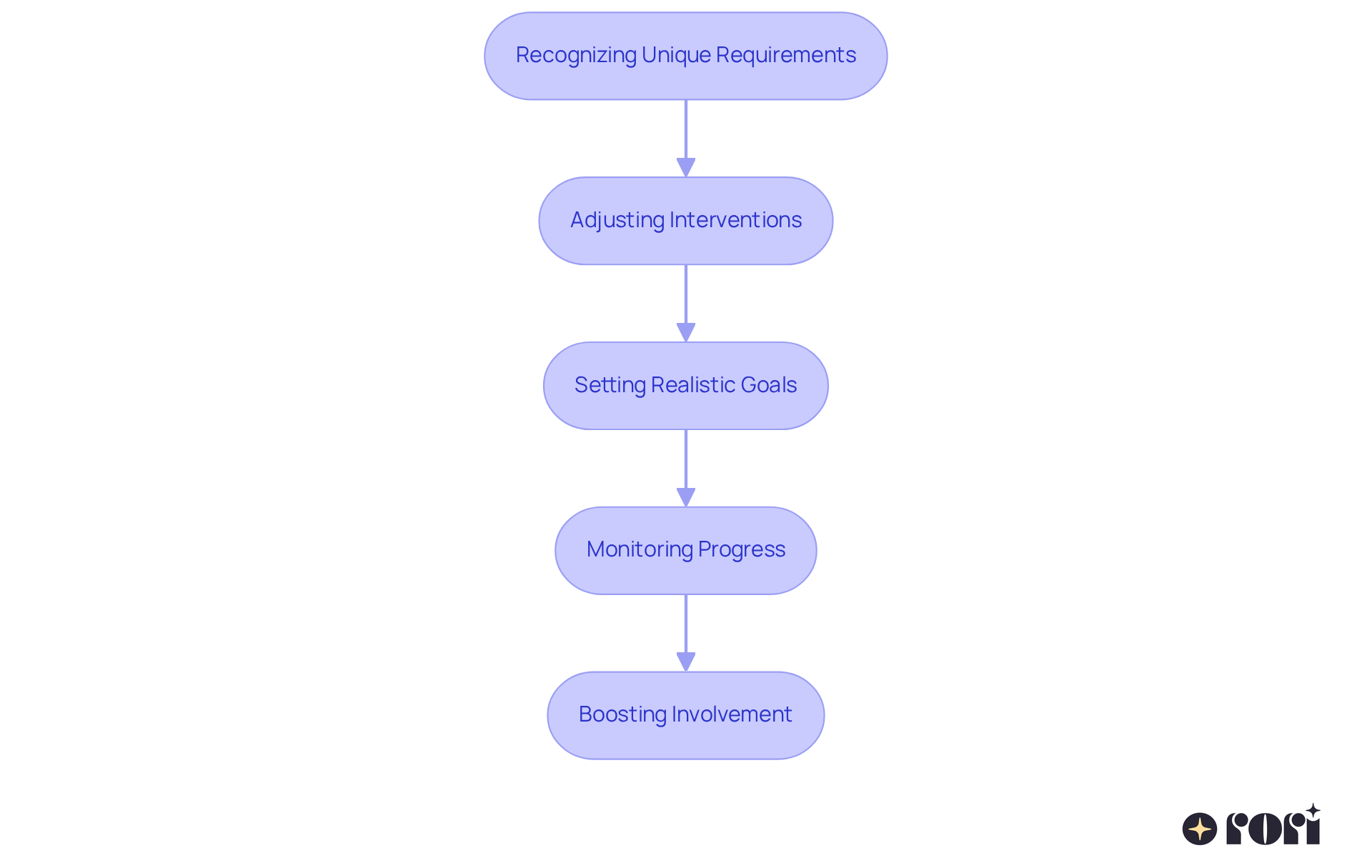
- Recognizing Unique Requirements: By looking at information gathered from various evaluations and therapy sessions, therapists can identify specific areas where a child might need a little extra help, like social skills or communication. It’s all about understanding what each child needs!
- Adjusting Interventions: Data gives therapists the ability to tweak interventions based on real-time feedback. For example, if a child isn’t responding to a certain strategy, the data can guide the therapist to try something different. It’s all about finding what works best!
- Setting Realistic Goals: With data, therapists can set achievable goals that reflect the child’s current performance levels. This ensures that the objectives are both challenging and attainable, making progress feel rewarding.
- Monitoring progress involves assessing the impact of data analysis on ABA therapy for autism care, which helps therapists keep track of progress toward goals. This means they can celebrate achievements and adjust strategies as needed. With Rori Care’s advanced AI technology, which includes automatic data gathering and secure storage, 50% of the time usually spent on writing reports is now redirected towards direct treatment. This really boosts overall efficiency in care!
- Boosting Involvement: When treatment plans are based on data, they can lead to more engaging and relevant sessions for kids. This enhances their motivation and participation, making the whole experience more enjoyable.
In conclusion, data-driven personalization is key for effective ABA support. It enables interventions that respond to each child's changing needs while maximizing the time practitioners can dedicate to treatment. Let’s explore this together! We’re here to help you every step of the way!
Identify Challenges in Data Collection and Analysis
Data collection is super important for effective ABA therapy, but there are a few bumps in the road that can make it tricky. Let’s take a look at some of these challenges together:
- Observer Bias: Sometimes, human observers can unintentionally let their biases slip into the information they collect. This can lead to inaccuracies, often stemming from personal expectations or inconsistent recording practices. It’s like trying to see the world through a foggy window - everything gets a bit blurry, right?
- Technical Issues: We all know how frustrating it can be when technology doesn’t cooperate! Information collection tools can face software glitches or hardware hiccups, which can disrupt the whole process. Regular maintenance and updates are key to keeping everything running smoothly.
- Time Constraints: Therapists often juggle tight schedules, which can lead to rushed or incomplete entries. This is where efficient information collection systems come into play! For instance, Rori Care uses cutting-edge AI to automate progress report generation, freeing up 50% more time for child treatment. Imagine what that extra time could mean for your child!
- Training Gaps: If staff members aren’t fully trained on information collection methods, it can lead to inconsistencies and mistakes. That’s why ongoing training sessions are so important - they help ensure everyone is on the same page and boost interrater reliability.
- Information Overload: Gathering too much information without a clear focus can lead to analysis paralysis. It’s like trying to find your way in a maze! A focused approach to information gathering, like the one used at Rori Care, helps prioritize what really matters and adjust treatment plans based on progress reports and caregiver input.
To tackle these challenges, therapists should focus on comprehensive training, reliable technology, and clear protocols for data collection. By embracing AI-driven solutions and honing in on adaptive treatment plans, Rori Care is enhancing the precision and efficiency of data-driven methods, illustrating the impact of data analysis on ABA therapy for autism care. This ultimately leads to better outcomes for children with autism.
Let’s explore this together! We’re here to help you every step of the way!

Discuss Future Trends in Data-Driven ABA Therapy
The landscape of ABA therapy is changing fast, and it’s exciting to see how new trends are shaping data-driven practices in this field! Let’s take a look at some of these developments that could make a real difference for families:
- Integration of AI and Machine Learning: Imagine having artificial intelligence help analyze information to make therapy more accurate and efficient! AI tools can quickly handle tons of data, allowing for real-time adjustments to therapy plans based on what’s predicted. This is super important for spotting subtle behavioral changes and tailoring interventions just right. For example, Rori Care uses advanced AI to automate progress report creation, which means therapists can spend more time focusing on the child while also improving how they gather information and customize treatment.
- Telehealth and Remote Monitoring: Telehealth is really shaking things up by letting therapists gather insights from the comfort of home. This means they can observe behaviors in natural settings, making it easier to tweak strategies on the fly. Research shows that kids getting ABA services through telehealth are doing just as well as those in traditional settings, proving that remote support can be effective. Plus, it opens up access to behavioral support for families, especially those in remote areas.
- Wearable Technology: Have you heard about wearable devices that track physiological responses and behaviors in real-time? These gadgets are becoming more common and provide therapists with valuable insights, helping them understand individual needs better. For instance, smart wearables can capture biometric data, allowing practitioners to see trends and adjust treatment plans accordingly. This tech is a game-changer, enabling continuous monitoring and evaluation of a child’s progress.
- Information Visualization Tools: Advanced visualization software is becoming a must-have for therapists, making it easier to interpret complex data. These tools help spot trends and patterns, which means practitioners can make informed decisions about treatment adjustments. Better visualization also improves communication among care teams and families, fostering collaboration and transparency in the therapeutic process.
- Collaborative Information Exchange: There’s a growing trend of collaboration among therapists, families, and educators, creating a culture of sharing information. This teamwork boosts the effectiveness of treatment plans by keeping everyone informed and engaged. Research shows that when families actively participate in treatment, it leads to better outcomes for kids, highlighting how important collective information is for success.
These trends indicate a shift towards more personalized, effective, and responsive ABA therapy, showcasing the impact of data analysis on ABA therapy for autism care, driven by advancements in technology. The Autism Treatment market is projected to grow at a CAGR of 6.6% from 2025 to 2032, reflecting the increasing demand for data-driven practices. As the field evolves, integrating AI and data-driven methods, like those at Rori Care, will be key to improving treatment outcomes for children with autism. But let’s not forget the importance of ethical considerations-protecting sensitive data with strict privacy protocols is essential.
Let’s explore this together and see how these advancements can support your journey!

Conclusion
Understanding how data analysis impacts ABA therapy for autism care really highlights its vital role in providing effective and personalized treatment. By using data, therapists can make informed decisions that meet each child's unique needs, ensuring that interventions are not just evidence-based but also responsive to individual progress.
Throughout this article, we’ve explored key aspects of data analysis, like its importance in informed decision-making, progress monitoring, and customizing care. Think about how therapists use various data collection methods, such as frequency and duration recording, to capture specific behaviors that can lead to meaningful change. We also touched on the challenges in data collection and analysis, along with exciting future trends like AI integration and telehealth, showing how ABA therapy is evolving and continuously improving.
As ABA therapy moves forward, embracing data-driven practices is essential for enhancing treatment outcomes for children with autism. The teamwork between therapists, families, and technology is paving the way for more effective, engaging, and personalized therapy experiences. By prioritizing data analysis, we can all work together to understand each child's journey better, ultimately leading to improved support and quality of life.
Let’s explore this together! If you have any thoughts or experiences to share, we’d love to hear from you!
Frequently Asked Questions
What is data analysis in ABA therapy?
Data analysis in Applied Behavior Analysis (ABA) therapy involves closely examining information collected during therapy sessions to assess the effectiveness of techniques and personalize care for each child.
Why is data analysis important in ABA therapy?
Data analysis is crucial for informed decision-making, progress monitoring, outcome measurement, customization of care, and establishing baseline information, all of which enhance the effectiveness of interventions for individuals with autism.
How does data analysis facilitate informed decision-making?
By analyzing data, therapists can make evidence-based choices, allowing them to adjust treatments to meet each child's unique needs and ensure that strategies resonate with their responses.
What role does progress monitoring play in ABA therapy?
Progress monitoring through data collection helps therapists track a child's growth over time, identify trends and patterns, and make timely adjustments to therapy strategies based on observed outcomes.
How is outcome measurement conducted in ABA therapy?
Outcome measurement involves using data to objectively assess the success of interventions, helping therapists understand behavioral changes and skill development in relation to specific goals.
What is the significance of establishing baseline information?
Establishing a baseline is essential for understanding a child's behavior before interventions begin, providing a clear picture of behavior frequency, duration, and intensity, which informs targeted intervention strategies.
What data collection techniques are commonly used in ABA therapy?
Common techniques include frequency recording, duration recording, interval recording, ABC data collection, and permanent product recording, each offering insights into specific behaviors and progress.
How has technology impacted data collection in ABA therapy?
Technological advancements have improved the accuracy and efficiency of data collection and analysis, with tools like AI automating progress report generation and reducing the administrative workload on therapists.
What challenges exist in information gathering for ABA therapy?
Challenges include human errors and time constraints that can affect the quality of collected information, making it essential to address these issues for effective interventions.
How does collaboration between therapists and parents enhance ABA therapy?
Collaboration fosters mutual understanding of progress and treatment goals, boosting the overall effectiveness of therapy and ensuring that care is personalized and responsive to the child's needs.
List of Sources
- Define Data Analysis in ABA Therapy and Its Importance
- The Importance of Data-Driven Decision-Making in ABA Therapy (https://ambitionsaba.com/resources/the-importance-of-data-driven-decision-making-in-aba-therapy)
- Applied Behavior Analysis (ABA) Statistics: Data, Effectiveness, and Evidence-Based Practices (https://nexoaba.com/applied-behavior-analysis-statistics)
- The Role of Data in Measuring Progress in ABA Therapy (https://ambitionsaba.com/resources/the-role-of-data-in-measuring-progress-in-aba-therapy)
- The Benefits of Data-Driven Decision Making in ABA Therapy | Advanced Autism Services (https://advancedautism.com/post/the-benefits-of-data-driven-decision-making-in-aba-therapy)
- Data Analysis in ABA: A Guide to the Analytic Dimension (https://alpacahealth.io/provider-resources/analytic-aba-guide)
- Explore Data Collection Methods in ABA Therapy
- ABA Data Collection Methods: Types, Techniques, and Examples - Pops ABA Therapy (https://popstherapy.com/aba-data-collection-methods)
- Frequency Recording in ABA: Methods and Benefits | Bright Bridge ABA (https://brightbridgeaba.com/frequency-recording-in-aba-methods-and-benefits)
- ABA Data Collection Methods: What They Are and Why They Matter (https://abamatrix.com/what-are-aba-data-collection-methods-why-they-matter)
- ABA Data Collection Examples: Methods & Best Practices - Nurturing Nests (https://nurturingnests.com/aba-data-collection-examples)
- ABA Data Collection Methods: Types and Examples | Motivity | Motivity (https://motivity.net/blog/aba-data-collection-methods-types-and-examples)
- Identify Challenges in Data Collection and Analysis
- Observer Bias: Definition, Examples & Prevention (https://simplypsychology.org/observer-bias-definition-examples-prevention.html)
- Troubleshooting ABA Data Collection Issues (https://striveabaconsultants.com/troubleshooting-aba-data-collection-issues)
- 5 Common Challenges in Behavioral Data Collection for Special Education and How to Solve Them (https://abatoolbox.com/post/5-common-challenges-in-behavioral-data-collection-for-special-education-and-how-to-solve-them)
- Applied Behavior Analysis (ABA) Statistics: Data, Effectiveness, and Evidence-Based Practices (https://nexoaba.com/applied-behavior-analysis-statistics)
- 81 ABA Therapy Statistics You Need to Know - apricott ABA (https://apricott.com/resources/aba-therapy-statistics)
- Discuss Future Trends in Data-Driven ABA Therapy
- Applied Behavior Analysis Statistics 2025: Key Outcomes & Trends (https://blog.therapylake.com/applied-behavior-analysis-statistics-2025)
- 10 Data-Driven Advancements in ABA Therapy for Autism Care – Rori Blog (https://rori.care/post/10-data-driven-advancements-in-aba-therapy-for-autism-care)
- The Impact of AI in ABA Therapy Data Collection & Outcomes - Step It Up ABA (https://stepitupaba.com/ai-in-aba-therapy-data-collection)
- AI in ABA Therapy: What Behavior Analysts Need to Know (https://appliedbehavioranalysisedu.org/2024/01/integration-of-aba-with-artificial-intelligence-ai)
- Using AI in ABA Progress Monitoring | Links (https://linksaba.com/using-ai-in-aba-progress-monitoring)