Mindfulness has become a wonderful tool for helping kids with autism spectrum disorder (ASD) manage their emotions and improve their social skills. By encouraging a non-judgmental awareness of thoughts and feelings, mindfulness practices can really help ease sensory sensitivities. This means that young people can feel more comfortable and confident in their surroundings.
But here’s the big question: how can parents and caregivers effectively use these techniques to tackle the unique sensory processing challenges their children face? 🤔 In this article, we’ll dive into the amazing impact mindfulness can have on sensory issues in autism. We’ll share practical strategies and insights to support families on this journey together. Let’s explore this together!
Mindfulness is all about being fully present and engaged in the moment. It’s characterized by a non-judgmental awareness of our thoughts, feelings, and bodily sensations. For parents of children with autism, awareness practices can be especially helpful. They promote self-awareness and emotional regulation, which are crucial for navigating daily challenges.
Studies show that mindfulness-based interventions (MBIs) can significantly enhance social responsiveness in youths with autism spectrum disorder (ASD). Imagine your child being better equipped to handle overwhelming stimuli and navigate tricky environments! By cultivating mindfulness, young individuals can develop better coping mechanisms, leading to improved emotional regulation and social skills.
This practice not only helps with sensory sensitivities but also demonstrates the impact of mindfulness on sensory issues in autism, allowing kids to engage more effectively with their surroundings. It fosters a greater sense of independence and well-being. At Rori Care, we’re dedicated to supporting neurodiversity and the success of youth through our therapeutic services. We offer:
All aimed at improving communication and relationships.
As Qiyan Peng pointed out, 'MBIs significantly enhanced social responsiveness in youth with autism.' This highlights the transformative potential of these practices! However, it’s important to adjust mindfulness approaches to fit the unique sensitivities of each child, ensuring these techniques work effectively for everyone.
Let’s explore this together! We’re here to help you every step of the way!

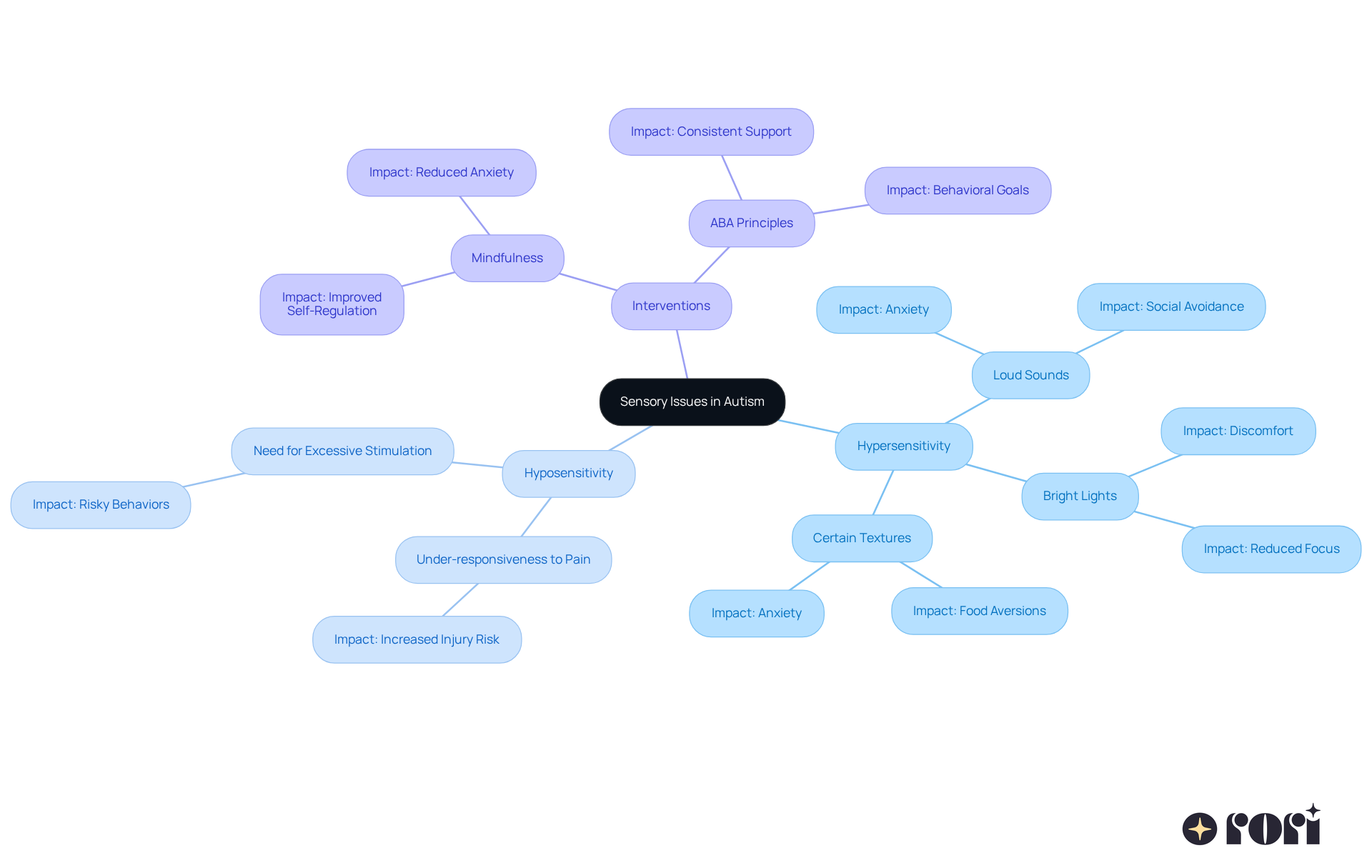
Processing issues are pretty common for individuals with autism, often showing up as hypersensitivity (over-responsiveness) or hyposensitivity (under-responsiveness) to different stimuli. Did you know that studies suggest up to 90 percent of kids with autism face processing difficulties? This can look like aversions to loud sounds, bright lights, or certain textures. These sensitivities can lead to significant anxiety and behavioral challenges, making daily life and social interactions tough. For instance, kids who struggle to filter out background noise might avoid social situations, which can really affect their social skills and confidence. In fact, around 95% of parents of children with ASD notice unusual reactions in their child.
Understanding these perceptual sensitivities is key to creating effective interventions. Mindfulness can greatly improve awareness of stimuli, demonstrating the impact of mindfulness on sensory issues in autism by allowing individuals to manage overwhelming sensations and reduce anxiety. By pinpointing their triggers, autistic individuals can learn to respond more adaptively to their surroundings. This approach not only promotes better self-regulation but also demonstrates the impact of mindfulness on sensory issues in autism, enabling young people to navigate their sensory environments with more confidence and resilience. Plus, when caregivers are equipped with the right knowledge and skills to support their child's behavioral goals through ABA principles - like data collection and strategy alignment - it creates a consistent and supportive environment, maximizing the impact of the intervention.
Let’s explore this together! We’re here to help you every step of the way!
To effectively implement mindfulness techniques for sensory regulation, let’s explore some friendly strategies together:
Let’s take these steps together and see how they can make a difference!
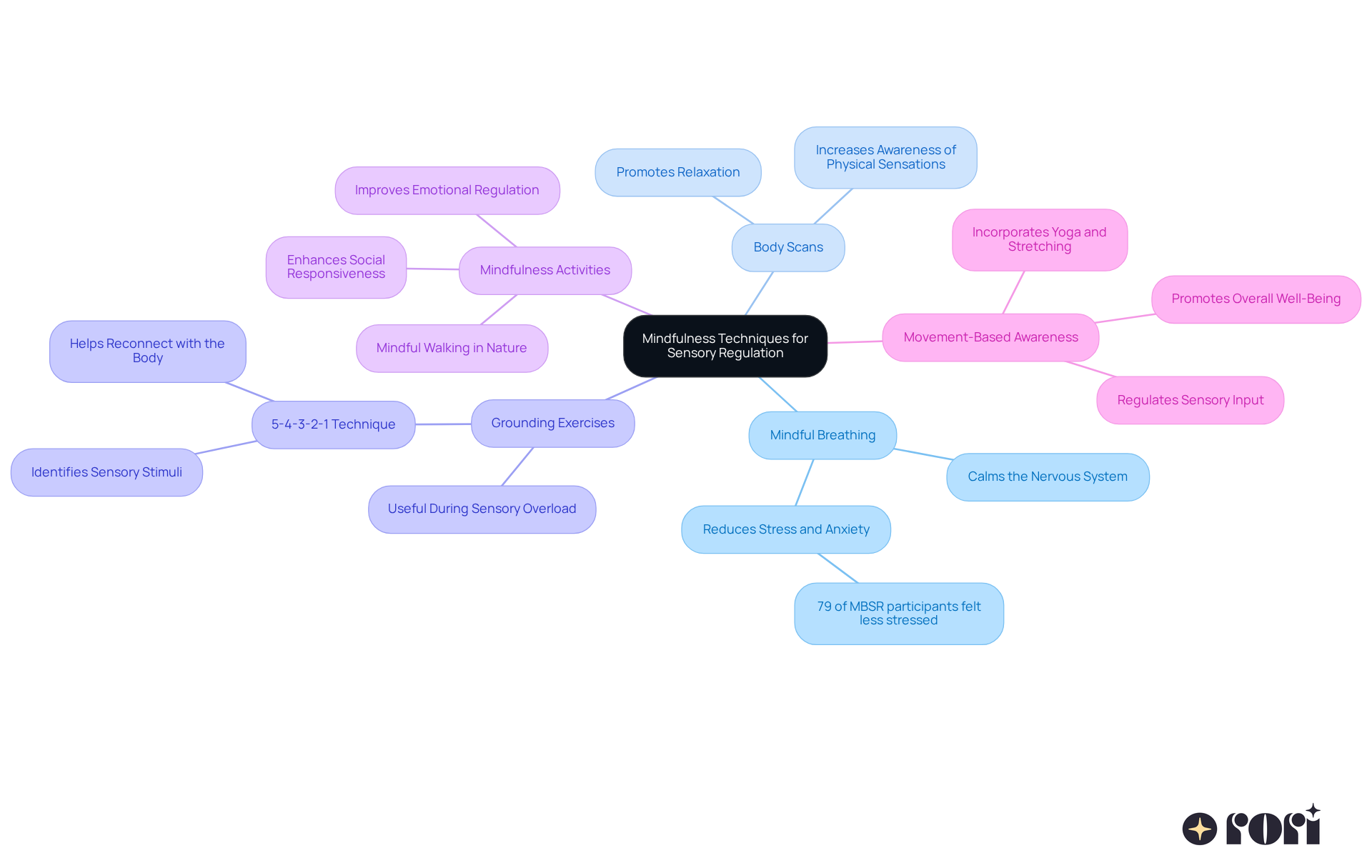
Research shows that mindfulness-based interventions (MBIs) can really make a difference for individuals with autism, especially when it comes to managing emotions and easing anxiety. In a recent meta-analysis involving 233 individuals with autism spectrum disorder (ASD) and 241 caregivers, there were some impressive improvements in emotional regulation, self-control, and overall well-being after practicing awareness techniques. Isn’t that encouraging?
These awareness practices not only help enhance social responsiveness but also tackle behavioral challenges in children with autism. Plus, they provide handy coping strategies for those overwhelming moments, making it easier for individuals to handle intense stimuli.
At Rori Care, we’re all about supporting mental health! We offer a range of services like:
All designed to boost those awareness practices. It’s clear that incorporating these techniques into autism care is essential - not just for emotional stability, but also for addressing the impact of mindfulness on sensory issues in autism and improving coping strategies.
Let’s explore this together! We’re here to help you every step of the way!

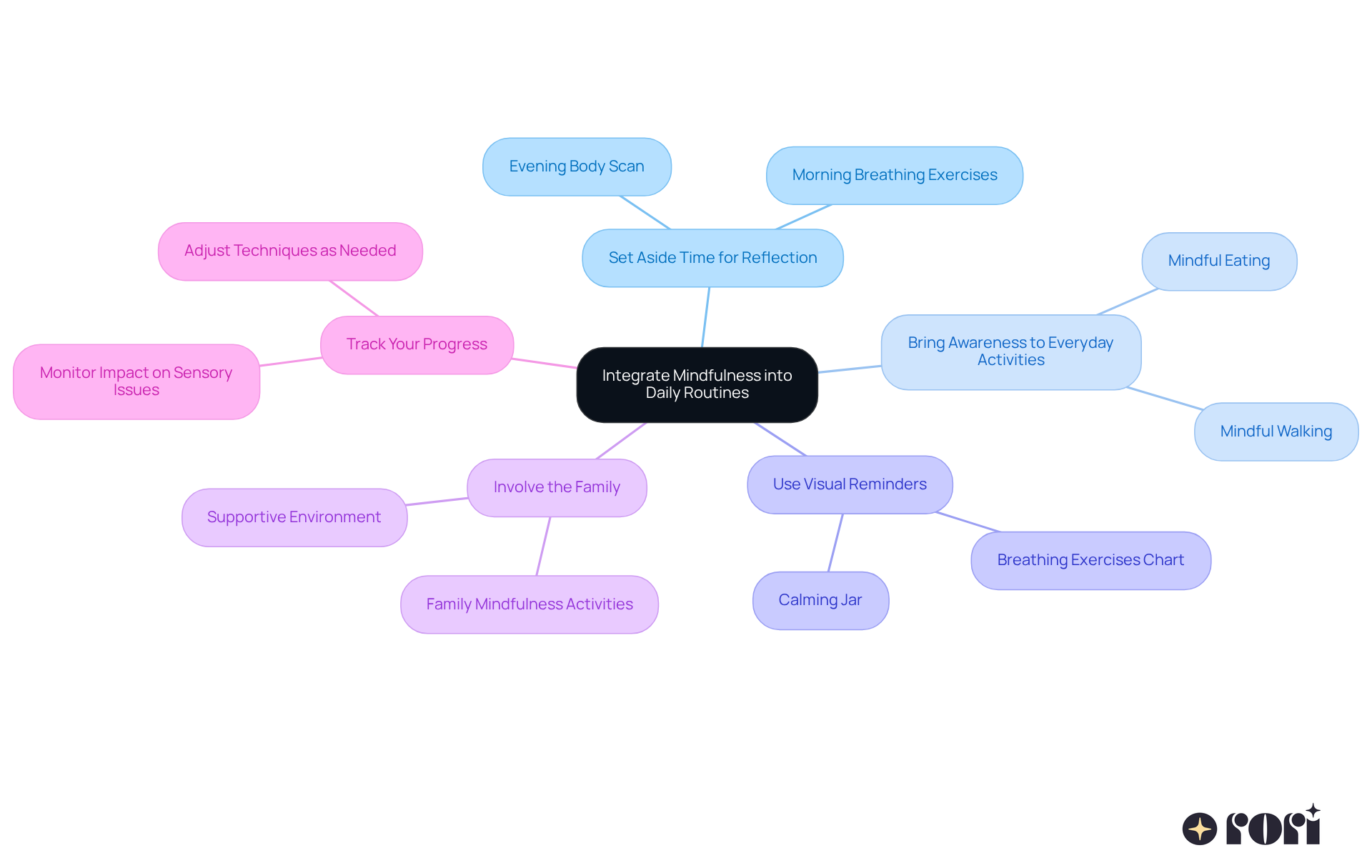
To effectively weave mindfulness into your daily life, let’s explore some friendly approaches:
Let’s take this journey together! Your experiences and insights are valuable, so feel free to share your thoughts or ask questions. We’re here to help you every step of the way!
Mindfulness is such a powerful tool for individuals with autism! It promotes awareness and emotional regulation, which can really enhance daily experiences. When children cultivate mindfulness, they can better navigate sensory sensitivities and develop essential coping mechanisms. This leads to improved social skills and greater independence. Plus, it supports caregivers in creating nurturing environments that foster growth and understanding.
The article shares some key insights into how mindfulness-based interventions (MBIs) can help with sensory processing challenges that many on the autism spectrum face. Techniques like mindful breathing, body scans, and grounding exercises have shown promising results in reducing anxiety and improving emotional regulation. Integrating mindfulness into daily routines can create a consistent practice that leads to lasting positive changes in behavior and emotional well-being.
But embracing mindfulness isn’t just about individual practice; it’s a collective journey! Families and caregivers can join in, too. By weaving mindfulness into everyday life, individuals with autism can build resilience and confidence in managing their sensory experiences. The transformative potential of these practices really highlights the importance of mindfulness in supporting neurodiversity. It’s essential for families to explore and implement these techniques together. Taking that first step toward mindfulness can lead to a brighter, more connected future for everyone navigating the complexities of autism. Let’s explore this together!
What is mindfulness and how is it relevant to autism?
Mindfulness is the practice of being fully present and engaged in the moment, characterized by non-judgmental awareness of thoughts, feelings, and bodily sensations. For parents of children with autism, mindfulness practices can enhance self-awareness and emotional regulation, which are crucial for managing daily challenges.
How do mindfulness-based interventions (MBIs) benefit youths with autism?
Studies show that MBIs can significantly enhance social responsiveness in youths with autism spectrum disorder (ASD), helping them handle overwhelming stimuli and navigate challenging environments. This practice leads to improved emotional regulation and social skills.
What specific outcomes can mindfulness practices lead to for children with autism?
Mindfulness practices can help children with autism manage sensory sensitivities, engage more effectively with their surroundings, and foster a greater sense of independence and well-being.
What services does Rori Care offer to support neurodiversity?
Rori Care offers group therapy, caregiver education, program development, and supervision, all aimed at improving communication and relationships for youths with autism.
What are common sensory issues faced by individuals with autism?
Individuals with autism often experience processing issues, which can manifest as hypersensitivity (over-responsiveness) or hyposensitivity (under-responsiveness) to various stimuli, such as loud sounds, bright lights, or certain textures.
How prevalent are sensory processing difficulties in children with autism?
Studies suggest that up to 90 percent of children with autism face processing difficulties, which can lead to anxiety and behavioral challenges in daily life and social interactions.
How can mindfulness help with sensory issues in autism?
Mindfulness can improve awareness of stimuli, helping individuals manage overwhelming sensations and reduce anxiety. It allows autistic individuals to identify their triggers and respond more adaptively to their environments.
What role do caregivers play in supporting children with autism?
Caregivers equipped with knowledge and skills to support their child's behavioral goals can create a consistent and supportive environment, maximizing the impact of interventions based on Applied Behavior Analysis (ABA) principles.