Understanding the nuances of early intervention in autism care is so important for helping children diagnosed with autism spectrum disorder (ASD) thrive. By using tailored therapeutic strategies early on, families can really boost their child's communication, social skills, and daily living abilities. But here’s the thing: many kids miss out on these crucial early supports, and that’s a real concern.
So, how can families make sure they get the resources they need and advocate effectively for their children’s needs in a system that often overlooks early intervention? Let’s explore this together! It’s all about finding the right support and knowing you’re not alone in this journey.
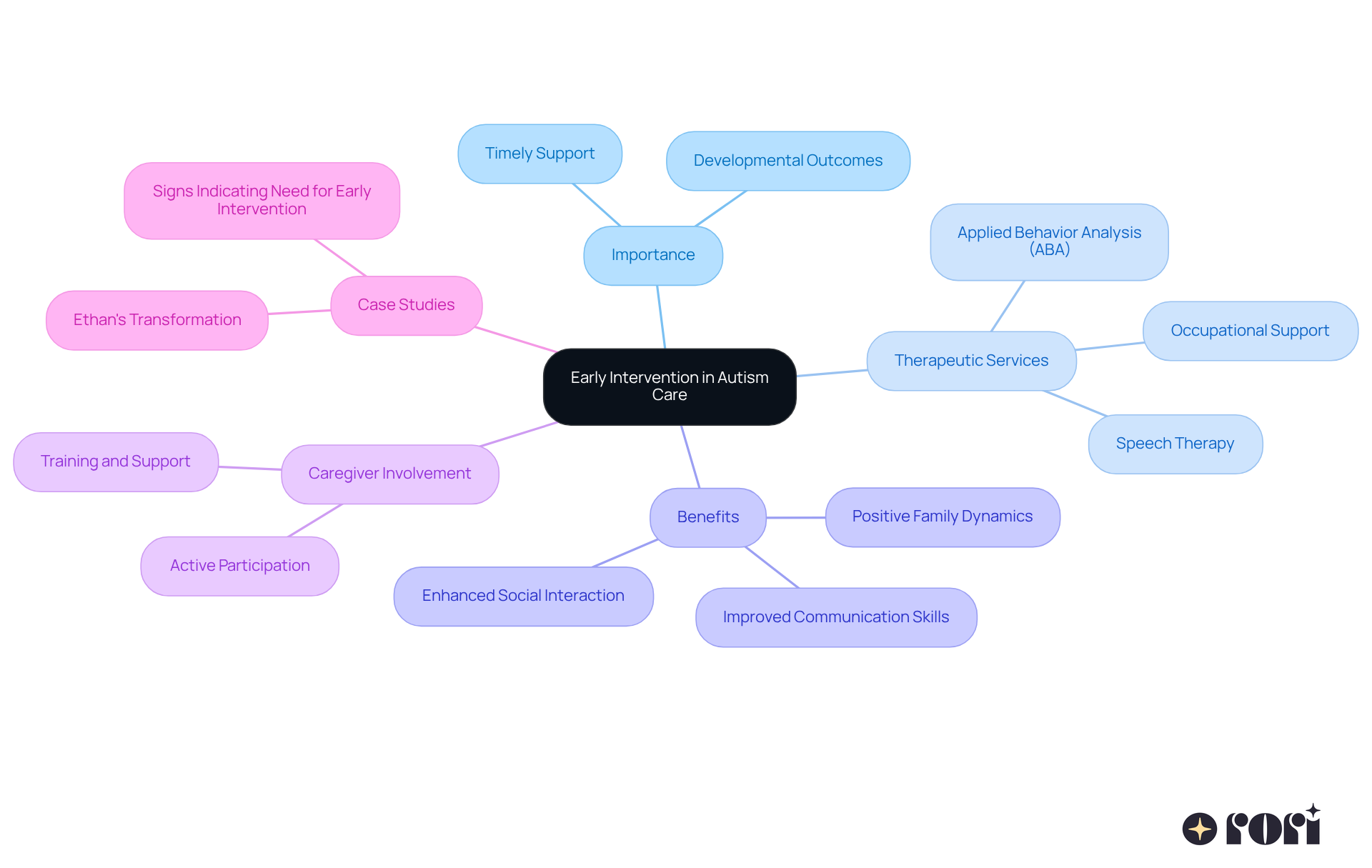
The importance of early intervention in autism care lies in providing the right services and support to address developmental delays in children diagnosed with autism spectrum disorder (ASD) as early as possible, typically before they turn three. This proactive approach aims to boost a young person's development through tailored therapeutic services like applied behavior analysis (ABA), speech therapy, and occupational support. At Rori Care, we’re here to empower your loved one with the skills they need to navigate the world independently, focusing on key areas such as communication, social interaction, and daily living skills. Our personalized strategies, crafted by certified analysts, ensure that each child's unique needs, strengths, and challenges are met, promoting positive change and skill development through evidence-based methods. We base our strategies on the latest research, so you can trust that we’re using the most effective methods for behavior change.
Studies show that timely support can significantly reduce the intensity of autism symptoms and enhance a young person's ability to thrive in different settings. For instance, kids who start programs around 18 months have an impressive 87% success rate in improving developmental outcomes. This really highlights the importance of early intervention in autism care! Plus, active participation from caregivers is key; research indicates that with the right support and education, caregivers can make informed choices that positively impact their child’s progress, leading to better behavioral outcomes. Regular assessment and adjustment of support plans are also essential, as they allow for changes based on the individual’s progress and response to treatment.
Take the case of Ethan, for example. He made remarkable strides after joining an ABA-based initial support program at Rori Care. By fostering a nurturing educational environment and involving parents in the process, timely support not only benefits the individual but also positively impacts family dynamics. It’s clear that this support demonstrates the importance of early intervention in autism care.
Let’s explore this together! We’re here to help you every step of the way!
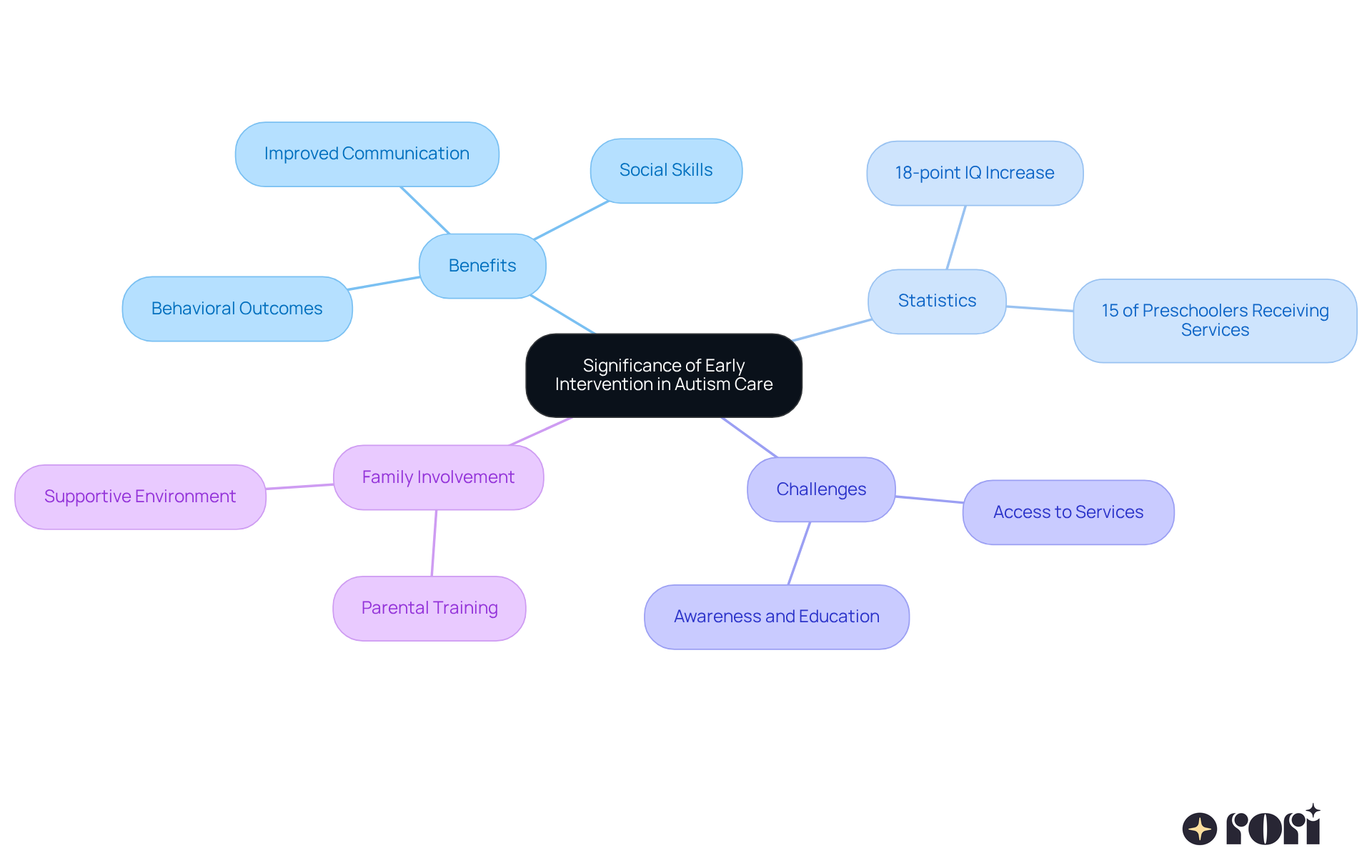
In autism care, one cannot overstate the importance of early intervention in autism care. Studies show that kids who get early support services tend to make greater strides in communication, social skills, and everyday behavior compared to those who don’t. For instance, research indicates that children who start focused support before they turn three are more likely to improve their verbal skills and engage in meaningful social interactions.
But that’s not all! Quick assistance can also help reduce challenging behaviors, paving the way for a more positive journey in a child’s overall development. It’s pretty impressive that kids in the Early Start Denver Model (ESDM) program saw an average IQ increase of about 18 points, and 29.2% of them even experienced a diagnostic change from autism to PDD-NOS. By addressing each child’s unique needs right from the start, families can lay the groundwork for lifelong success. This makes the importance of early intervention in autism care a crucial part of effective support.
However, it’s alarming to note that only 15% of preschoolers with ASD received early support services before age two. This highlights the urgent need for better access to these essential services. Plus, when caregivers are equipped with knowledge about ABA principles, they can provide the right support at home. This leads to informed decision-making and better behavioral outcomes for their little ones.
This active involvement not only boosts professional support but also fosters a more positive family environment, ultimately helping the child thrive. Let’s explore this together! We’re here to help you every step of the way!
When it comes to early support for autism, there are some fantastic therapeutic methods out there, all backed by solid evidence. These practices are designed to meet the unique needs of each child. Let’s take a look at some key approaches:
By weaving these methods into a comprehensive support strategy, we can highlight the importance of early intervention in autism care to ensure that young individuals receive the diverse assistance they need to thrive. This ultimately leads to significant improvements in communication, social skills, and adaptive behaviors. At Rori Care, we define success in therapy as meaningful progress in communication, adaptive behavior, and daily living skills, all of which help a young person engage fully in life.
Let’s explore this together! We’re here to help you every step of the way!

When discussing the importance of early intervention in autism care, the bond between families and treatment teams is absolutely essential for achieving positive outcomes. Families often spot developmental issues first, so their advocacy is key in addressing their child's needs. Plus, when they actively participate in therapy sessions, it not only boosts learning at home but also creates a nurturing environment for their little one.
Treatment teams usually include behavior analysts, speech therapists, occupational therapists, and educators who work together to craft personalized support plans. This team approach means that every aspect of a child's development is taken into account, leading to a better understanding of their unique needs. Open communication and teamwork between families and professionals are crucial for recognizing the importance of early intervention in autism care.
Did you know that research highlights the importance of early intervention in autism care, showing that children in early intervention programs can see a 60% reduction in challenging behaviors within just six months? That really highlights how important a united treatment strategy is! And it gets better - over 80% of families report feeling a better quality of life and less stress after joining these programs. It’s clear that teamwork makes a big difference in autism care!
So, let’s explore this together! If you’re a parent navigating this journey, remember that you’re not alone. Your involvement is vital, and there are resources out there to help you every step of the way!

The significance of early intervention in autism care is truly profound, laying the groundwork for a child's future development and success. By addressing developmental delays and providing tailored support before the age of three, children diagnosed with autism spectrum disorder (ASD) can see remarkable improvements in communication, social skills, and daily living activities. This proactive approach not only boosts individual outcomes but also creates a nurturing environment for families, showcasing the vital role of early intervention in autism care.
Throughout this journey, we see key points that highlight the benefits of early support. Research shows that children who receive timely intervention - like applied behavior analysis (ABA), speech therapy, and occupational therapy - make significant strides in various developmental areas. And let’s not forget the essential role of caregivers! When parents are informed and actively involved, it leads to better behavioral outcomes and a loving atmosphere for the child. Just think of success stories like Ethan’s; they remind us of the incredible impact early intervention can have on young lives.
So, what’s the takeaway? Families must advocate for and seek out early intervention services to ensure their children get the support they need. By teaming up with treatment professionals and using evidence-based practices, families can build a strong foundation for their child's development. Sure, the journey might have its challenges, but the rewards of early intervention - improved skills, reduced challenging behaviors, and enhanced family dynamics - are absolutely priceless. Embracing this approach not only benefits the child but enriches the entire family unit, paving the way for a brighter future. Let’s explore this together!
What is early intervention in autism care?
Early intervention in autism care involves providing services and support to address developmental delays in children diagnosed with autism spectrum disorder (ASD) as early as possible, typically before they turn three.
What types of therapeutic services are included in early intervention?
Early intervention includes tailored therapeutic services such as applied behavior analysis (ABA), speech therapy, and occupational support.
How does Rori Care approach early intervention?
Rori Care focuses on empowering children with the skills they need to navigate the world independently, concentrating on areas like communication, social interaction, and daily living skills through personalized strategies crafted by certified analysts.
What is the success rate of early intervention programs?
Studies show that children who start early intervention programs around 18 months have an impressive 87% success rate in improving developmental outcomes.
Why is caregiver participation important in early intervention?
Active participation from caregivers is crucial as it allows them to make informed choices that positively impact their child's progress, leading to better behavioral outcomes.
How often should support plans be assessed and adjusted?
Regular assessment and adjustment of support plans are essential to accommodate changes based on the individual’s progress and response to treatment.
Can you provide an example of successful early intervention?
An example is Ethan, who made significant progress after joining an ABA-based initial support program at Rori Care, demonstrating the positive impact of timely support on individual development and family dynamics.