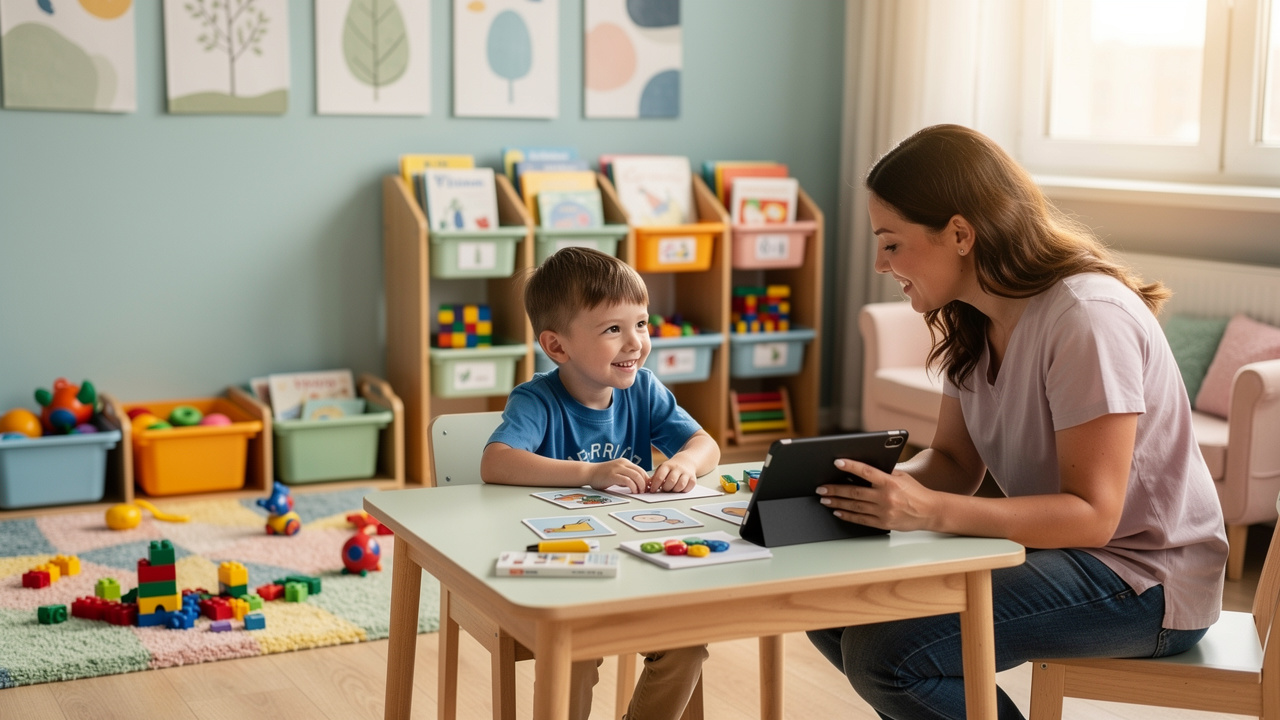
Social-emotional reciprocity is a fundamental aspect of human interaction, but for children with autism, it can be a challenge. These children often struggle with initiating social interactions, understanding others' feelings, and sharing experiences. As parents and caregivers, it's crucial to understand the significance of social-emotional reciprocity in their development and provide the necessary support to help them navigate their social world.
In this article, we will explore various aspects of social-emotional reciprocity in children with autism and practical strategies to enhance their social skills and emotional understanding. We will discuss the importance of teaching empathy, the role of joint attention in social-emotional reciprocity, the impact of imitation on social engagement, and the relevance of non-verbal communication in reciprocal engagement. Additionally, we will examine the role of Applied Behavior Analysis (ABA) therapy and technology in developing social-emotional reciprocity and empowering parents to support their child's social-emotional development. By understanding these key concepts and implementing effective strategies, parents can play a crucial role in fostering positive behavior, independence, and meaningful relationships for their children with autism.
refers to the between individuals. In the context of autism, it involves the child's ability to , , and . Children with autism often struggle with , which can .
Joint attention, the ability to share focus on an object or event with another person, plays a crucial role in . It lays the foundation for and . For children with autism, developing can be challenging, but it's an essential step towards .
Imitation is a fundamental aspect of . It allows children to learn and understand social norms and behaviors. may struggle with imitation, which can hinder their . However, with , they can and enhance their .
, including , body language, and gestures, significantly impacts . Children with autism often find it challenging to understand and use , which can affect their . By helping them decode and use , we can .
Social reciprocity is not just about ; it's also closely tied to . By improving , we can help children with autism better understand and manage their emotions, leading to improved .
is a proven intervention for improving in children with autism. It uses to encourage and reduce challenging ones. By focusing on , can help children with autism improve their and .
Technology can be a powerful tool in enhancing . For instance, can and , leading to . By integrating technology into , we can further in children with autism.
Parents play a crucial role in their child's development of . By understanding the importance of and how to support it, parents can significantly contribute to their . with can help them effectively .
Enhancing can lead to and in children with autism. include using to support understanding, practicing social scenarios, and reinforcing . By implementing these strategies, we can encourage positive behavior and independence through enhanced .
The main points discussed in this article include the challenges children with autism face in social-emotional reciprocity, the importance of teaching empathy, the role of joint attention, the impact of imitation on social engagement, and the relevance of non-verbal communication. It also highlights the significance of Applied Behavior Analysis (ABA) therapy and technology in developing social-emotional reciprocity.
In conclusion, while children with autism may struggle with social-emotional reciprocity, with the right support and consistent teaching, they can develop these skills and form meaningful relationships. Teaching empathy is crucial for their emotional well-being and fosters pro-social behavior. Joint attention lays the foundation for shared experiences and emotional bonding. Imitation is a key aspect of social engagement and helps children learn from others. Non-verbal communication plays a vital role in understanding emotions and connecting with others. ABA therapy and technology provide effective interventions for enhancing social-emotional reciprocity. By understanding these key concepts and implementing effective strategies, parents can play a crucial role in fostering positive behavior, independence, and meaningful relationships for their children with autism.