Introduction
Helping children with autism find their independence is a journey filled with both challenges and exciting opportunities. One powerful tool in this journey is Applied Behavior Analysis (ABA) therapy. It’s designed to meet each child’s unique needs while building essential skills for everyday life. As families embark on this path, it’s important to grasp the core principles and benefits of ABA therapy.
So, how can parents tap into these strategies to empower their children toward greater autonomy and fulfillment? Let’s explore this together! By understanding the ins and outs of ABA, you can help your child thrive and navigate their world with confidence.
Understand the Core Principles of ABA Therapy
Applied Behavior Analysis (ABA) intervention is based on key principles that demonstrate the in helping individuals with autism. Let’s take a closer look at these principles:
- Individualization: Every young person is unique, right? That’s why ABA therapy is tailored just for them. It starts with a thorough evaluation of their strengths and challenges, leading to a that helps them shine.
- : At the heart of ABA is positive reinforcement. This means encouraging desired behaviors by offering rewards or incentives. It’s a fantastic way to motivate young individuals and helps them learn new skills more effectively. Research shows that kids who receive personalized ABA interventions often make , including communication and social skills.
- : ABA relies on continuous data collection and analysis to keep track of progress and fine-tune interventions. This approach ensures that therapy stays effective and responsive to each individual’s changing needs, allowing for timely adjustments that really enhance outcomes.
- : , but task analysis breaks them down into smaller, manageable steps. This technique makes learning smoother and showcases the by helping kids gradually acquire essential skills.
- Generalization: ABA emphasizes the importance of generalization, encouraging kids to use the skills they’ve learned in different settings. This principle helps them apply what they’ve learned in real-life situations, which demonstrates the benefits of ABA therapy for independence.
By understanding these foundational principles, parents can actively support their children’s learning and development through ABA intervention. It’s all about creating a more effective and personalized approach to their care. Let’s explore this together!

Identify Key Benefits of ABA Therapy for Independence
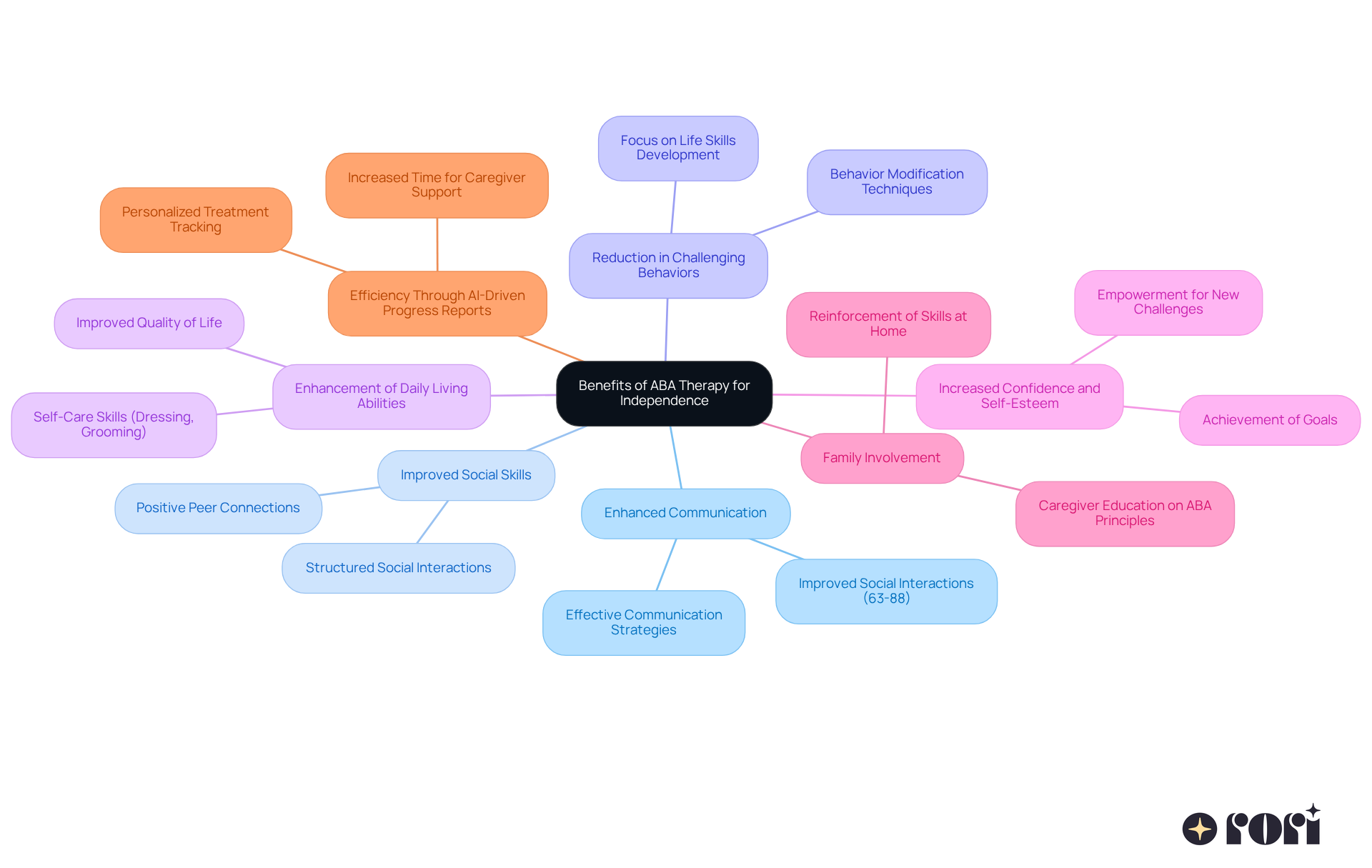
The include a variety of advantages that can really boost a young person's independence. Let’s take a look at some of the key advantages:
- Enhanced Communication Abilities: With ABA intervention, kids learn that help them express their needs and engage in meaningful conversations. Research shows that 63% to 88% of participants in studies reported improvements in social interactions thanks to ABA therapy. That’s pretty impressive, right?
- : Through structured social interactions, young people get to practice navigating different social situations, making friends, and enjoying cooperative play. These skills are essential for independence, showcasing the benefits of ABA therapy for independence, as they help foster positive peer connections and social engagement.
- : ABA techniques play a crucial role in identifying and changing behaviors that might hinder a young person’s ability to function independently, like tantrums or aggression. By addressing these challenges, children can focus on developing important life skills.
- : ABA treatment emphasizes teaching essential self-care skills, such as dressing, grooming, and hygiene. Mastering these skills is vital for independent living and showcases the benefits of ABA therapy for independence, which can significantly improve overall quality of life.
- : As children achieve their goals with ABA support, they often experience a boost in confidence and self-esteem. This newfound assurance empowers them to take on new challenges with enthusiasm.
- : Involving parents and caregivers in the therapy process is key to achieving effective outcomes. Their participation helps reinforce learned skills in everyday situations, highlighting the benefits of ABA therapy for independence. Rori Care enhances this involvement by educating caregivers on ABA principles and strategies, enabling them to actively support their child’s behavioral goals. This education leads to informed decision-making and better behavioral outcomes, ultimately benefiting the young person’s development.
- : Rori Care combines personalized treatment with advanced AI to track and prepare progress reports, freeing up 50% more time for youth care. This innovative approach not only streamlines the treatment process but also allows caregivers to focus more on supporting their child’s progress.
Together, these advantages showcase the benefits of ABA therapy for independence, to lead more independent and fulfilling lives through . Plus, it’s worth noting the financial commitment involved, as the average cost of supporting someone with autism can reach around $60,000 per year. This underscores the long-term investment in their development and independence.
Let’s explore this journey together!
Customize Treatment Plans for Individual Needs
Creating a customized treatment plan is essential for the success of ABA therapy. Let’s dive into some key steps to ensure that the plan truly meets the unique needs of each child:
- : Start with a by qualified professionals. This helps identify the child’s strengths, challenges, and specific needs. Think of it as laying the foundation for a that addresses the unique aspects of their development.
- Goal Setting: Collaborate with caregivers to set clear, that reflect the child’s unique abilities and dreams. Research shows that kids involved in personalized goal-setting tend to be more dedicated to therapy, which can really boost their overall development.
- : Choose evidence-based strategies that align with the child’s goals and learning style. Techniques like task analysis, modeling, and positive reinforcement are often used to help with skill acquisition and behavioral change.
- : Keep an eye on the child’s progress by collecting data through methods like frequency and duration recording. This allows for quick adjustments to the treatment plan, ensuring it remains effective and relevant to the child’s evolving needs.
- : Involve family members in the treatment planning process. This ensures that strategies are practical and can be reinforced at home. has been shown to enhance the effectiveness of ABA interventions by creating a supportive environment for skill generalization.
By personalizing treatment plans through thorough evaluations and collaborative goal-setting, the can effectively address the unique needs of children. This approach demonstrates the benefits of ABA therapy for independence by leading to better outcomes. Let’s explore this together!

Engage Parents in the ABA Therapy Process
is crucial for the success of . Let’s explore some to engage parents in the therapy process:
- Education and Training: It’s so important for parents to . This knowledge empowers caregivers, boosting their confidence and helping them support their child’s treatment goals at home. When parents feel informed, they can make decisions that lead to better behavioral outcomes.
- Regular Communication: between therapists and parents is key. Regular chats about progress, challenges, and reinforcement strategies help parents stay in the loop and actively contribute to their child’s development. This ongoing dialogue fosters a that benefits everyone.
- Involvement in Sessions: Encouraging parents to join therapy sessions can be a game-changer. It allows them to see techniques in action, ask questions, and truly understand how to apply strategies. This firsthand experience reinforces their role in supporting their child’s growth.
- : Working together with parents to set specific, achievable objectives is essential. When goals align with both the child’s needs and the family’s priorities, it encourages commitment and ensures that . This customization enhances the effectiveness of interventions.
- Support Networks: Connecting parents with or resources can provide extra guidance and encouragement during the healing journey. These networks offer valuable insights and emotional support, making the overall experience more enriching and empowering for caregivers.
By actively involving parents in these ways, ABA treatment can achieve greater effectiveness, leading to improved outcomes for children with autism and showcasing the benefits of ABA therapy for independence. We’re here to help you every step of the way!

Leverage Technology to Enhance ABA Therapy
Technology can really boost the effectiveness of ABA practices, offering innovative solutions that help young individuals thrive. Let’s take a look at some key ways to use technology in the therapeutic process:
- : Think about using apps and software for . This way, therapists can keep an eye on progress and make quick, informed decisions. By continuously measuring behaviors, we gain valuable insights into each child's development, ensuring that interventions are tailored just for them. With Rori Care's approach, means secure storage and post-analysis deletion, which enhances both efficiency and confidentiality.
- : Have you considered telehealth services? They allow treatment to happen remotely, making it easier for families to access care without interruptions. Research shows that telehealth can effectively provide functional analyses and , keeping the quality of interventions high. In fact, studies suggest that telehealth can achieve results similar to face-to-face counseling, making it a fantastic option for families.
- : Let’s not forget about ! These can make learning fun and engaging for young learners while reinforcing skills acquired in therapy. Interactive tools can teach essential skills like emotion recognition and conversation tactics, enhancing the overall therapeutic experience.
- Visual Supports: through digital platforms can really help young learners understand routines and expectations. This approach boosts their ability to follow through with tasks, fostering independence in daily activities.
- : Have you explored AI-driven tools? They can customize treatment based on individual progress and needs. Rori Care combines personalized treatment with advanced AI to monitor and prepare progress reports, giving 50% more time for youth care. These technologies can optimize treatment plans, ensuring interventions are tailored for maximum effectiveness. For instance, research has shown that AI can significantly enhance young people's social skills by providing targeted feedback and engagement strategies.
By embracing technology, we can enhance the benefits of ABA therapy for independence, making it more efficient, engaging, and tailored to meet each child's unique needs. This ultimately , leading to a better quality of life. Plus, involving clients and caregivers in the planning and evaluation process fosters a sense of ownership and empowerment, making the therapeutic experience even better.
Let’s explore this together! We’re here to help you every step of the way!

Conclusion
The potential of ABA therapy to help children gain independence is truly remarkable. By focusing on personalized approaches, positive reinforcement, and data-driven strategies, ABA therapy gives kids the essential skills they need to navigate daily life. This tailored method not only boosts their communication and social skills but also helps them face challenges with newfound confidence.
Key insights from the article remind us how important personalized treatment plans, active parental involvement, and technology integration are in the therapeutic process. Each of these elements plays a vital role in maximizing the effectiveness of ABA therapy, ensuring that children get the support they need to thrive. Plus, the collaboration between caregivers and therapists highlights the importance of a holistic approach to child development.
Ultimately, embracing the benefits of ABA therapy is a crucial step toward empowering children with autism to lead more independent and fulfilling lives. As families and professionals come together to implement these strategies, the positive impact on children's development becomes clearer. The journey toward independence isn’t just about acquiring skills; it’s about creating a supportive environment that nurtures growth and resilience, paving the way for a brighter future. Let’s explore this together!
Frequently Asked Questions
What is Applied Behavior Analysis (ABA) therapy?
ABA therapy is an intervention based on key principles aimed at helping individuals with autism achieve greater independence through personalized treatment plans tailored to their unique strengths and challenges.
How is ABA therapy individualized for each person?
ABA therapy starts with a thorough evaluation of an individual's strengths and challenges, leading to a personalized treatment plan designed to meet their specific needs.
What role does positive reinforcement play in ABA therapy?
Positive reinforcement encourages desired behaviors by offering rewards or incentives, which motivates individuals to learn new skills more effectively.
How does ABA therapy utilize data-driven decision making?
ABA relies on continuous data collection and analysis to track progress and adjust interventions as needed, ensuring therapy remains effective and responsive to each individual's changing needs.
What is task analysis in the context of ABA therapy?
Task analysis breaks complex skills down into smaller, manageable steps, making learning smoother and helping children gradually acquire essential skills.
Why is generalization important in ABA therapy?
Generalization encourages children to apply the skills they've learned in different settings, helping them use these skills in real-life situations, which supports their independence.
What are some key benefits of ABA therapy for independence?
Key benefits include enhanced communication abilities, improved social skills, reduction in challenging behaviors, enhancement of daily living abilities, increased confidence and self-esteem, and family involvement in the therapy process.
How does ABA therapy improve communication abilities?
ABA intervention teaches effective communication strategies, helping children express their needs and engage in meaningful conversations, with many participants reporting improvements in social interactions.
In what ways does ABA therapy improve social skills?
ABA therapy provides structured social interactions that allow young people to practice navigating different social situations, making friends, and engaging in cooperative play.
How does ABA therapy address challenging behaviors?
ABA techniques identify and modify behaviors that hinder independence, such as tantrums or aggression, allowing children to focus on developing important life skills.
What daily living skills does ABA therapy emphasize?
ABA treatment focuses on teaching essential self-care skills such as dressing, grooming, and hygiene, which are vital for independent living.
How does family involvement impact the effectiveness of ABA therapy?
Involving parents and caregivers in the therapy process reinforces learned skills in everyday situations, leading to better behavioral outcomes and supporting the child's development.
What innovative approach does Rori Care use in ABA therapy?
Rori Care combines personalized treatment with advanced AI to track progress and prepare reports, which streamlines the treatment process and allows caregivers to focus more on supporting their child's progress.
What is the average financial commitment for supporting someone with autism?
The average cost of supporting someone with autism can reach around $60,000 per year, highlighting the long-term investment in their development and independence.