Introduction
Art has always been a wonderful way for people to express themselves, but for individuals with autism, it can be an especially powerful tool for communication. Through art therapy, children can explore their feelings and thoughts in ways that words sometimes just can’t capture. But many parents might ask: how can we weave art into our daily lives to boost communication and emotional growth?
Let’s dive into some practical techniques and activities that not only help enhance communication skills but also strengthen the bond between children and their caregivers. By doing this, we can create a more expressive and connected home environment. Together, we can explore this journey!
Define Art Therapy and Its Role in Autism Communication
Art therapy is a wonderful way to help young individuals express themselves and communicate, especially for those with autism who might struggle with verbal interaction, by using art as a communication tool for autism therapy. This creative approach offers a non-verbal outlet, letting kids share their feelings and thoughts through drawing, painting, and sculpting. Engaging in these art activities not only helps with emotional regulation but also boosts social skills and self-awareness.
Imagine a young person using art to express emotions that are tough to put into words. This can really ease frustration and support emotional health. Many case studies show that kids involved in art therapy often see significant improvements in their non-verbal communication, which enhances their interactions with friends and family.
Art therapy also serves as a bridge for parents and therapists, helping them understand the inner world of their child. Through creating art, kids can share their experiences and feelings, leading to stronger family bonds and better communication dynamics. Plus, Rori Care offers a range of services like group therapy, caregiver education, and program development, all aimed at helping families navigate challenges and support youth development with compassion.
The supportive environment of art therapy, designed to minimize distractions, is key to keeping kids focused and making the sessions effective. Overall, using art as a communication tool for autism therapy not only aids in emotional expression but also plays a crucial role in developing essential interaction skills for youth with autism. Let’s explore this together!

Explore Techniques for Using Art to Enhance Communication Skills
To effectively use art as a communication tool, let’s explore some fun techniques together:
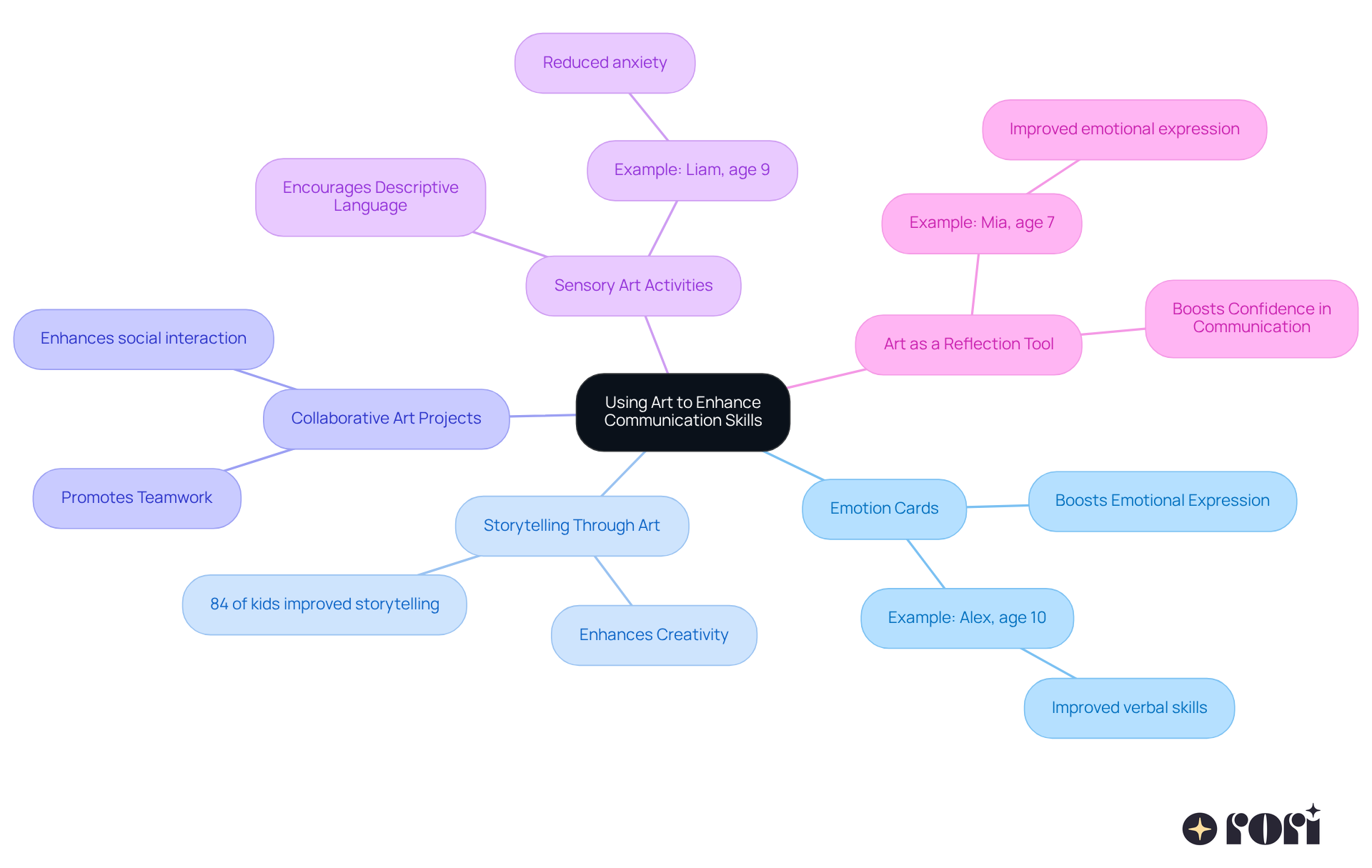
- Emotion Cards: How about creating some cards with different emotions illustrated through simple drawings? Encourage your child to pick a card that shows how they feel during art sessions. This little practice can really boost their ability to express emotions! Just look at Alex, age 10, who improved his verbal skills through similar exercises.
- Storytelling Through Art: Encourage your little one to make a series of drawings that tell a story. This not only sparks creativity but also helps them improve their storytelling skills. A study found that 84% of kids showed significant improvements in their storytelling abilities after six months of consistent practice. Isn’t that amazing?
- Collaborative Art Projects: Why not join in on some art activities where both you and your child work on a single piece? This collaborative approach promotes teamwork and allows your child to share their ideas while creating together. Research shows that these shared projects can really enhance social interaction and teamwork.
- Sensory Art Activities: Incorporate different textures and materials like clay, fabric, or sand into your art projects. Sensory experiences can really help kids communicate by encouraging them to describe what they feel and see. For instance, Liam, age 9, found that using mixed media art helped reduce his anxiety and made him more eager to join group tasks. [[Art therapy can significantly lower stress and promote relaxation](https://kidsfirstservices.com/first-insights/art-therapy-for-autism-enhancing-communication-and-expression)](https://kidsfirstservices.com/first-insights/art-therapy-for-autism-enhancing-communication-and-expression), making sensory activities super beneficial!
- Art as a Reflection Tool: After finishing an art project, take some time to chat about the artwork with your child. Ask open-ended questions about their color choices, shapes, and themes. This reflective practice not only boosts emotional expression but also builds their confidence in communication. Just like Mia, age 7, who showed great progress in expressing her feelings through similar discussions.
Let’s keep exploring these ideas together! Your journey using art as a communication tool for autism therapy can be both rewarding and fun!
Implement Art Activities to Foster Communication at Home
Here are some fun art activities you can try at home to spark communication with your little ones:
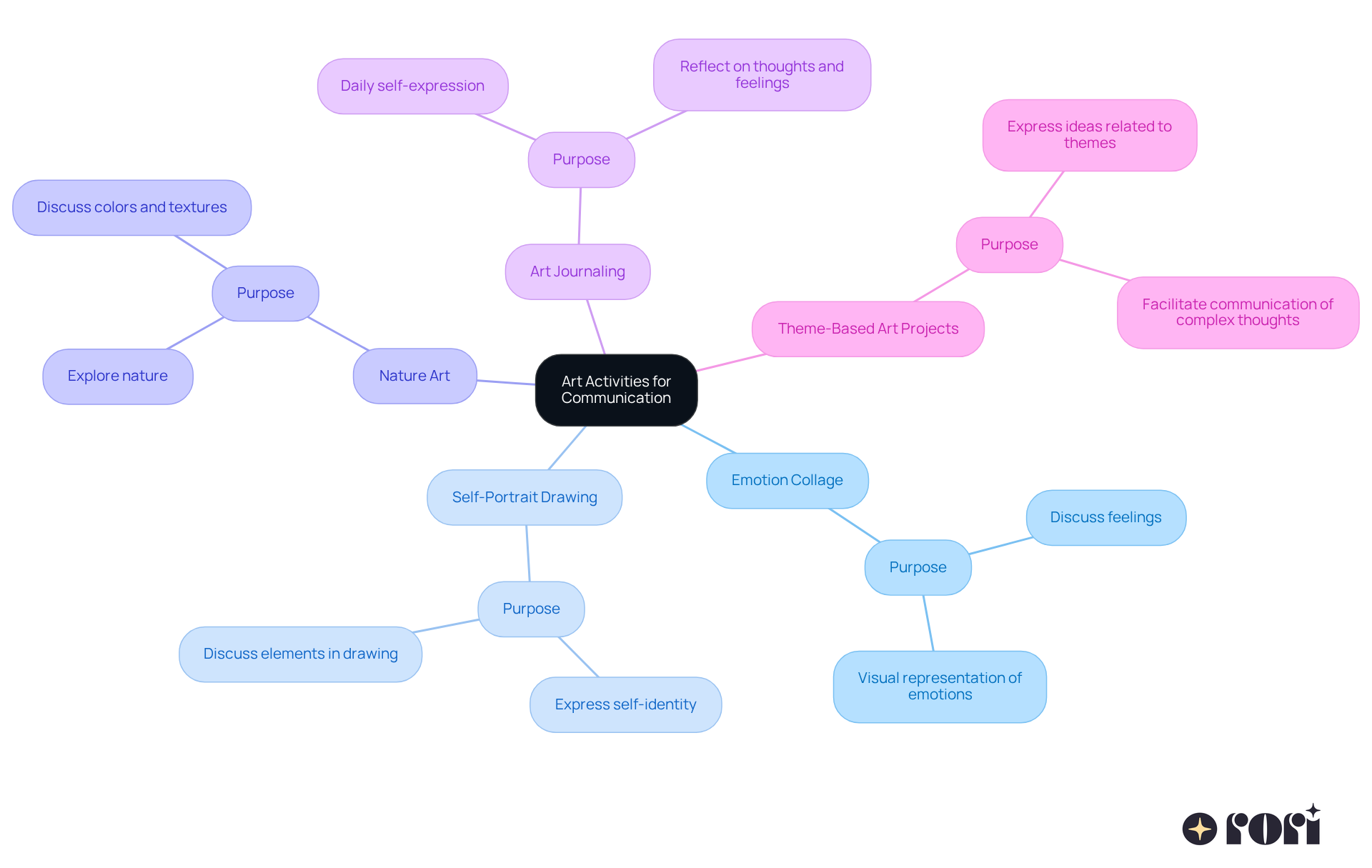
- Emotion Collage: Grab some magazines, scissors, and glue! Ask your child to cut out images that show different emotions and create a collage. It’s a great way to chat about feelings and why they picked those images.
- Self-Portrait Drawing: Encourage your child to draw a self-portrait. This can help them express how they see themselves and their feelings. After they’re done, talk about the elements in their drawing and what they mean to them.
- Nature Art: Go outside and collect natural materials like leaves, flowers, and stones. Use these to create art pieces together. This activity can lead to fun discussions about nature, colors, and textures, helping to boost their vocabulary.
- Art Journaling: Suggest that your child keeps an art journal where they can draw or paint every day. This can be a personal space for them to express themselves, and you can look through it together to talk about their thoughts and feelings.
- Theme-Based Art Projects: Pick themes like seasons, family, or dreams, and create art around these topics. This can help your child express their ideas and emotions related to the theme, making it easier for them to communicate complex thoughts.
Let’s explore these activities together, focusing on using art as a communication tool for autism therapy, and see how they can help your child express themselves!
Assess Progress and Adapt Strategies for Continued Improvement
To effectively assess progress and adapt strategies in art therapy for children with autism, let’s consider a few friendly steps:
- Set Clear Goals: Start by establishing specific communication objectives related to art activities. Think about using descriptive language or expressing emotions. These goals act as benchmarks for measuring progress and can align with assessment tools like the VB-MAPP or ABLLS-R. Personalized behavior intervention plans crafted by qualified analysts can really enhance these goals, making sure they fit each child’s unique needs.
- Regular Check-Ins: It’s helpful to schedule consistent times to review the artwork and chat about their thoughts and feelings regarding the activities. This practice can help pinpoint areas for improvement and any challenges they might face. Using data-driven methods during these check-ins can provide objective measurements of progress, making the strategies even more effective. Plus, having caregivers involved during these evaluations is key! It fosters alignment with therapeutic strategies and promotes consistency in support at home.
- Document Progress: Keep a record of the young artist's creations along with any verbal or non-verbal communication during art sessions. This documentation is crucial for tracking changes over time and informing future strategies. Graphical representations of this data can help families visualize their child’s progress, fostering collaboration between therapists and caregivers. This way, everyone is empowered with the knowledge needed to support their child’s behavioral goals effectively.
- Request Input: Encourage your child to share their thoughts on the art projects. Ask them what they enjoy or find challenging, and use this feedback to tailor future tasks to better match their interests and needs. Engaging families in this feedback process is vital for ensuring that interventions resonate with the child's developmental journey, ultimately leading to better behavioral outcomes.
- Collaborate with Professionals: If you can, connect with therapists or educators to evaluate how effective the art activities are. Their insights and recommendations can really enhance communication strategies based on their expertise. Regular assessments and collaboration with professionals can significantly improve the outcomes of art therapy, particularly when using art as a communication tool for autism therapy. Did you know that 46% of children referred for ABA services continue for 24 months? This highlights the importance of ongoing evaluations and the benefits of caregiver education in supporting child development.
Let’s explore this together! We’re here to help you every step of the way!

Conclusion
Using art as a communication tool for autism therapy opens up a wonderful opportunity for children to express themselves in ways that words often can’t capture. This creative outlet not only helps with emotional expression but also boosts communication skills, bridging the gap between young individuals and their families. By weaving art into therapeutic practices, families can create a nurturing environment that encourages dialogue and understanding.
Throughout this journey, we’ve explored various techniques and activities, like emotion cards, storytelling through art, and collaborative projects. Each of these methods not only enhances a child's ability to express feelings but also improves their social skills and self-awareness. Regular assessments and adapting strategies are key to ensuring that the approach remains effective and tailored to each child's unique needs, promoting continuous growth and development.
Ultimately, embracing art as a communication tool can truly enrich the lives of children with autism and their families. By actively engaging in these art activities, caregivers can foster a deeper connection with their children, enhancing their emotional well-being and communication abilities. Remember, the journey of using art in therapy isn’t just about creating; it’s about understanding, connecting, and nurturing the unique voices of children with autism. Let’s explore this together!
Frequently Asked Questions
What is art therapy?
Art therapy is a creative approach that helps individuals, especially those with autism, express themselves and communicate through art, such as drawing, painting, and sculpting.
How does art therapy benefit individuals with autism?
Art therapy provides a non-verbal outlet for individuals with autism to share their feelings and thoughts, aiding in emotional regulation, boosting social skills, and enhancing self-awareness.
In what ways can art therapy support emotional health?
By allowing young individuals to express emotions that are difficult to articulate verbally, art therapy can ease frustration and support overall emotional well-being.
What improvements can be seen in children who participate in art therapy?
Many case studies indicate that children involved in art therapy often experience significant improvements in their non-verbal communication, which enhances their interactions with friends and family.
How does art therapy facilitate communication between parents and children?
Art therapy acts as a bridge for parents and therapists, helping them understand the inner world of their child through the art created, which can lead to stronger family bonds and improved communication dynamics.
What services does Rori Care provide related to art therapy?
Rori Care offers services such as group therapy, caregiver education, and program development, all aimed at helping families navigate challenges and support youth development with compassion.
Why is the environment important in art therapy sessions?
The supportive environment of art therapy is designed to minimize distractions, which is key to keeping kids focused and making the sessions effective.
What role does art play in developing interaction skills for youth with autism?
Using art as a communication tool in therapy not only aids in emotional expression but also plays a crucial role in developing essential interaction skills for youth with autism.
List of Sources
- Define Art Therapy and Its Role in Autism Communication
- A Review of the Effectiveness of Art Therapy for Children with Autism Spectrum Disorder
| Journal of Student Research (https://jsr.org/hs/index.php/path/article/view/7448)
- The Effectiveness of Art Therapy on Children and Adolescents with ASD: A Systematic Review of RCTs - PMC (https://pmc.ncbi.nlm.nih.gov/articles/PMC12652869)
- Art Therapy for Autism: Enhancing Communication and Expression - Kids First (https://kidsfirstservices.com/first-insights/art-therapy-for-autism-enhancing-communication-and-expression)
- Explore Techniques for Using Art to Enhance Communication Skills
- The Effectiveness of Art Therapy on Children and Adolescents with ASD: A Systematic Review of RCTs - PMC (https://pmc.ncbi.nlm.nih.gov/articles/PMC12652869)
- Art Therapy for Autism: Enhancing Communication and Expression - Kids First (https://kidsfirstservices.com/first-insights/art-therapy-for-autism-enhancing-communication-and-expression)
- Autism Art Therapy Improves Communication (https://integrityinc.org/autism-art-therapy-improves-communication)
- The Power of Storytelling in Autism Development | Links (https://linksaba.com/the-power-of-storytelling-in-autism-development)
- Art Therapy as Social skills and Emotional Regulation Intervention for Children with Autism by Aashni Jain | Published by Critical Debates in Humanities, Science and Global Justice (https://criticaldebateshsgj.scholasticahq.com/post/3136-art-therapy-as-social-skills-and-emotional-regulation-intervention-for-children-with-autism-by-aashni-jain)
- Implement Art Activities to Foster Communication at Home
- The Benefits of Art and Crafting for Children with Autism - Cultivate BHE (https://cultivatebhe.com/location_blog/the-benefits-of-art-and-crafting-for-children-with-autism)
- Engaging Art Therapy Activities for Children with Autism (https://emorahealth.com/resources/art-therapy-activities-for-children-with-autism)
- The Benefits of Art Therapy for Autistic Children | Links (https://linksaba.com/the-benefits-of-art-therapy-for-autistic-children)
- Benefits of Art Therapy for Children with Autism (https://blossomchildrenscenter.com/benefits-of-art-therapy-for-children-with-autism)
- Art Therapy as Social skills and Emotional Regulation Intervention for Children with Autism by Aashni Jain | Published by Critical Debates in Humanities, Science and Global Justice (https://criticaldebateshsgj.scholasticahq.com/post/3136-art-therapy-as-social-skills-and-emotional-regulation-intervention-for-children-with-autism-by-aashni-jain)
- Assess Progress and Adapt Strategies for Continued Improvement
- The Importance of Tracking Progress in ABA Therapy Programs - Big Dreamers ABA (https://bigdreamersaba.com/blog/the-importance-of-tracking-progress-in-aba-therapy-programs)
- The Importance of Regular Assessments in ABA Therapy for Autism Treatment | Advanced Autism Services (https://advancedautism.com/post/the-importance-of-regular-assessments-in-aba-therapy-for-autism-treatment)
- The Importance of Tracking Progress in ABA Therapy Programs (https://magnetaba.com/blog/the-importance-of-tracking-progress-in-aba-therapy-programs)
- Tracking Progress in ABA Therapy: The Importance of Data and Monitoring | Autism Therapy Services (https://hiddengemsaba.com/articles/tracking-progress-in-aba-therapy-the-importance-of-data-and-monitoring)
- Measuring Progress In ABA Therapy: A Guide To Tracking Success (https://kidsclubaba.com/how-to-measure-progress-in-aba-therapy-tracking-success-guide)