Introduction
Have you ever wondered how a little praise can make a big difference for kids with autism? Understanding the power of positive reinforcement can truly change the game for families navigating these complexities. But figuring out how to use these techniques in a way that fits your child's unique needs can feel overwhelming. So, what are some great ways to make sure that positive reinforcement helps your child learn and grow?
Define Positive Reinforcement in Autism
Have you ever wondered how a simple sticker or extra playtime can make a world of difference for your child? Positive encouragement is all about promoting those preferred actions by offering a little reward right after they happen. For instance, when your little one successfully communicates their needs, they might get a sticker or some extra playtime as a treat. This kind of support really boosts the chances that they'll want to do it again!
Studies show that using positive reinforcement to promote desired behaviors in autism can really help in therapy, as it aligns with the principles of Applied Behavior Analysis (ABA). This approach focuses on observable actions and how they relate to the environment. By recognizing and rewarding those positive actions, you can create a nurturing space that encourages communication and social skills development. Setting clear, measurable goals for these actions ensures that your support strategies are effective and tailored to your child's unique needs.
You might be surprised at just how crucial using positive reinforcement to promote desired behaviors in autism is for effective treatment! It not only helps shape behaviors but also builds your child's confidence and motivation. As specialists often say, 'Behavior is communication,' highlighting the need for effective strategies that help kids express themselves. By consistently applying positive encouragement, families can significantly enhance their child's learning experiences and overall happiness, paving the way for greater independence and success. So, let’s explore this together and see how you can make a difference!

Implement Positive Reinforcement Techniques
While implementing positive reinforcement techniques can feel overwhelming at times, using positive reinforcement to promote desired behaviors in autism doesn’t have to be! Here’s a friendly guide to help you navigate this journey with your child.
- Identify Target Actions: Start by figuring out the specific actions you want to encourage. For example, if you want your child to ask for help instead of getting frustrated, focus on that behavior. It’s all about making it clear what you’re looking for!
- Choose Effective Reinforcers: Pick rewards that really resonate with your child. This could be their favorite snack, some extra screen time, or a fun activity together. Knowing what makes your child tick is key because positive reinforcement works best when the rewards are meaningful to them. Just remember, don’t overuse the same reward, or it might lose its magic!
- Provide Prompt Reinforcement: When your child does the desired action, give them the chosen reward right away. For instance, if they ask for help appropriately, praise them and offer a small treat immediately. This quick connection helps them understand what actions you’re encouraging. Aim to provide support within 1-2 seconds for the best results!
- Be Consistent: Consistency is super important in reinforcement. Make sure to reinforce the desired actions every time they happen, especially at the beginning. This helps your child build those behaviors into their routine. And be careful not to reinforce unwanted actions, as that can lead to confusion and frustration.
- Measure Progress and Adjust Strategies: Keep an eye on how your child is doing with these behaviors! This way, you can see what’s working and what might need a little tweak. If a reward isn’t doing the trick anymore, think about introducing new ones or mixing up the types of incentives you use. This aligns with personalized planning and measurable objectives, ensuring that your strategies fit your unique needs.
- Gradually Fade Reinforcement: Once your child has the action down, you can start to reduce how often you reinforce it. Instead of rewarding every time they ask for help, try rewarding every second or third time. This encourages your child to engage in the behavior without always expecting a reward, helping them become more independent and self-motivated. By equipping caregivers with these techniques, you can effectively support your child’s behavioral goals using positive reinforcement to promote desired behaviors in autism.
Imagine the joy of seeing your child thrive and ask for help confidently, knowing you’re right there to support them! Let’s explore this together!

Monitor and Adjust Reinforcement Strategies
Keeping an eye on your child's progress can feel overwhelming, but it’s so important for their growth! Here are some friendly tips to help you along the way:
- Monitor Conduct Changes: Keep a thorough log of your child's actions, noting how often they engage in preferred activities. Using simple charts or fun apps can really help you see how your child is doing! This fits right in with Rori Care's focus on tracking progress, making it easier for everyone to see where improvements are happening.
- Evaluate Reinforcer Effectiveness: Take some time to check in on how well those rewards are working for your child! Kids' preferences can change, so be open to introducing new rewards if the current ones aren’t exciting anymore. This flexibility in therapy can enhance their motivation and engagement by using positive reinforcement to promote desired behaviors in autism.
- Adjust Reinforcement Schedules: As your child consistently shows the desired behaviors, think about changing up the reinforcement schedule. Moving from rewarding every instance to just some can help keep the behavior going strong. This is part of the personalized support that Rori Care provides, tailored to fit each child's unique needs.
- Solicit Feedback: Talk to your child about what they enjoy and what motivates them! Their insights can be super helpful in fine-tuning your reinforcement strategies. Involving family members in this process can also make a big difference, giving everyone the tools they need to support your child's development.
- Be Patient and Flexible: Remember, changing behavior takes time. If a certain plan isn’t working, don’t hesitate to try something new until you find what clicks with your child. Keep in mind, your active involvement can lead to amazing improvements in communication and behavior, especially when using positive reinforcement to promote desired behaviors in autism, highlighting how important caregiver participation is in the therapeutic journey.
Remember, every small step counts, and your involvement makes a world of difference!

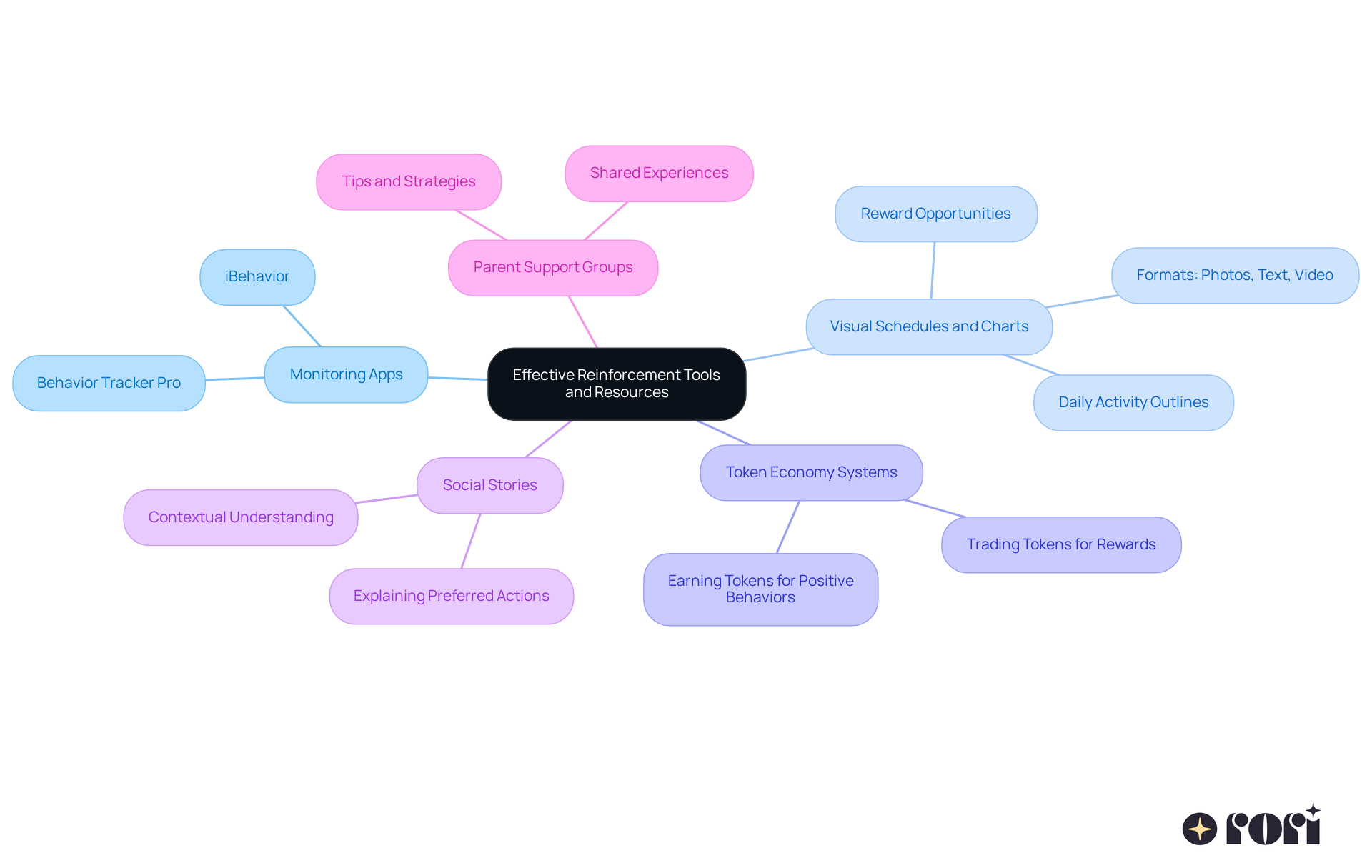
Keeping track of your child's behavior can feel like a juggling act, can't it? To enhance your positive reinforcement strategies, consider utilizing some handy tools and resources:
- Monitoring Apps: Why not try some handy apps that help you track your child's progress and celebrate their wins? Apps like 'Behavior Tracker Pro' and 'iBehavior' can make this a breeze!
- Visual Schedules and Charts: Creating visual schedules can really help! They outline daily activities and include chances for rewards. Visual aids make it easier for kids to understand what’s expected and what they can earn.
- Token Economy Systems: Have you thought about a token economy? Kids can earn tokens for showing positive behaviors, which they can trade for fun rewards. It’s a structured way to reinforce good actions and helps everyone stay on track.
- Social Stories: Social stories are a great way to explain what actions are preferred and what rewards come with them. They help kids grasp the context and importance of their behavior, reinforcing the strategies used by behavior analysts.
- Parent Support Groups: Joining a support group can be a game-changer! You’ll find shared experiences and tips that really help. Engaging with other parents not only boosts your knowledge but also strengthens your ability to support your child's goals.
With the right tools, you’re not just managing behavior; you’re building a brighter future for your child. Let’s explore this together!
Conclusion
Navigating the world of autism can feel overwhelming, but using positive reinforcement can truly make a difference! When caregivers offer rewards for specific actions, it’s amazing how it encourages communication and social skills, creating a warm environment where kids can learn and grow!
Throughout this article, we’ve explored key strategies for implementing positive reinforcement. Identifying target actions, selecting meaningful rewards, providing prompt reinforcement, and maintaining consistency are all important steps in this journey. And let’s not forget how vital caregiver involvement is - it really helps reinforce those positive behaviors and makes communication so much easier!
Ultimately, using positive reinforcement is all about patience, flexibility, and celebrating those little victories along the way! By leveraging tools like monitoring apps, visual schedules, and parent support groups, caregivers can enhance their strategies and build a brighter future for their children. By embracing this approach, you’re not just helping your child; you’re also creating a joyful journey of growth and connection together!
Frequently Asked Questions
What is positive reinforcement in the context of autism?
Positive reinforcement is a method of encouraging preferred actions by offering rewards, such as stickers or extra playtime, immediately after those actions occur. This approach helps increase the likelihood that the child will repeat the desired behavior.
How does positive reinforcement relate to Applied Behavior Analysis (ABA)?
Positive reinforcement aligns with the principles of Applied Behavior Analysis (ABA), which focuses on observable behaviors and their relationship to the environment. It promotes desired behaviors by recognizing and rewarding positive actions.
What benefits does positive reinforcement provide for children with autism?
Positive reinforcement helps shape behaviors, builds confidence and motivation, and enhances communication and social skills. It creates a nurturing environment that supports the child's development.
How can families effectively implement positive reinforcement strategies?
Families can implement positive reinforcement by setting clear, measurable goals for desired behaviors and consistently applying rewards when those behaviors are exhibited. This tailored approach ensures that support strategies meet the child's unique needs.
Why is positive reinforcement important for children with autism?
Positive reinforcement is crucial because it not only helps shape behaviors but also improves the child's learning experiences and overall happiness, fostering greater independence and success in their development.
List of Sources
- Define Positive Reinforcement in Autism
- Current Statistics and Rates of Autism - Positive Reinforcement (https://positivereinforcement.net/current-statistics-and-rates-of-autism)
- Inspirational ABA and Autism Quotes - Mrs. Moe's Modifications (https://mrsmoesmodifications.com/inspirational-aba-and-autism-quotes)
- 80 Inspiring Quotes on Autism Awareness and Support - Empower ABA (https://empoweraba.com/80-inspiring-quotes-on-autism-awareness-and-support)
- 10 inspiring quotes from people with autism | Autism Speaks (https://autismspeaks.org/life-spectrum/autism-quotes)
- Implement Positive Reinforcement Techniques
- Current Statistics and Rates of Autism - Positive Reinforcement (https://positivereinforcement.net/current-statistics-and-rates-of-autism)
- How Positive Reinforcement Empowers Autism Progress (https://trueprogresstherapy.com/blog/positive-reinforcement-in-autism-treatment)
- Positive Reinforcement for Autism: What Every Parent Should Know - Lighthouse (https://thelighthousech.com/positive-reinforcement-for-autism-what-every-parent-should-know)
- The Role Of Reinforcement In ABA Therapy Success: A Evidence-Based Approach - True U ABA (https://trueuaba.com/the-role-of-reinforcement-in-aba-therapy-success)
- The Impact of Positive Reinforcement on ABA Therapy Outcomes (https://crossrivertherapy.com/articles/the-impact-of-positive-reinforcement-on-aba-therapy-outcomes)
- Monitor and Adjust Reinforcement Strategies
- The Importance Of Autism Therapy Outcomes Tracking For You | Radiant Autism Center (https://radiantautismcenter.com/autism-therapy-outcomes-tracking)
- The Importance of Tracking Progress in ABA Therapy Programs (https://magnetaba.com/blog/the-importance-of-tracking-progress-in-aba-therapy-programs)
- Tracking Progress in ABA Therapy - Cultivate BHE (https://cultivatebhe.com/tracking-progress-in-aba-therapy-methods-and-milestones)
- The Value of Tracking Data to Celebrate ABA Therapy Progress: Why Data-Driven Decisions Transform Lives - True U ABA (https://trueuaba.com/value-of-tracking-data-to-celebrate-aba-therapy-progress)
- The Role of Data Collection in ABA Therapy for Autism | Grateful Care ABA (https://gratefulcareaba.com/blog/the-role-of-data-collection-in-aba-therapy-for-autism)
- Explore Tools and Resources for Effective Reinforcement
- SEPARATE AND COMBINED EFFECTS OF VISUAL SCHEDULES AND EXTINCTION PLUS DIFFERENTIAL REINFORCEMENT ON PROBLEM BEHAVIOR OCCASIONED BY TRANSITIONS - PMC (https://pmc.ncbi.nlm.nih.gov/articles/PMC2695333)
- The use of visual schedules to increase academic-related on-task behaviors of individuals with autism: a literature review (https://tandfonline.com/doi/full/10.1080/20473869.2024.2402124)
- Visual Schedules for Children with Autism | Links (https://linksaba.com/visual-schedules-for-children-with-autism)
- Helpful strategies to promote positive behavior | Autism Speaks (https://autismspeaks.org/tool-kit-excerpt/helpful-strategies-promote-positive-behavior)
- Effects of activity schedules on challenging behavior exhibited in children with autism spectrum disorders: A systematic review (https://sciencedirect.com/science/article/abs/pii/S1750946711001334)