Introduction
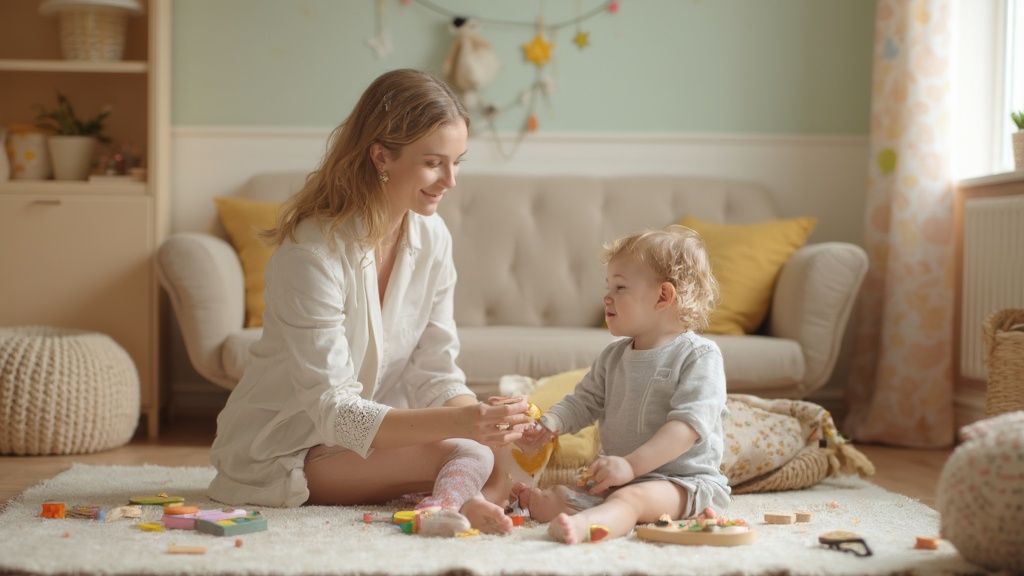
Have you ever wondered how role-playing can help your child with autism build social skills? This engaging approach turns therapy into a fun experience, allowing kids to practice social interactions in a safe space. It’s all about fostering empathy, communication, and confidence. But here’s the thing: how can we, as parents and therapists, make role-playing work for our kids? Let’s explore this together!
Understand the Role of Role-Playing in ABA Therapy
Have you ever wondered about the benefits of using role-playing to improve social interactions in individuals with autism spectrum disorder for helping your child navigate social situations? Role-playing is a fun and engaging way of using role-playing to improve social interactions in individuals with autism spectrum disorder, helping kids learn important social skills! Children can practice appropriate responses in a safe environment by using role-playing to improve social interactions in individuals with autism spectrum disorder. This method allows them to explore different community situations using role-playing to improve social interactions in individuals with autism spectrum disorder while enhancing their ability to handle complex interactions.
Research shows that when kids join in on role-playing games, they are using role-playing to improve social interactions in individuals with autism spectrum disorder, providing great opportunities to practice their social skills in a safe space. By stepping into various roles, they learn to recognize social cues, develop empathy, and enhance their communication skills, all of which are essential for successful interactions in everyday life, especially when using role-playing to improve social interactions in individuals with autism spectrum disorder.
Therapists often say that using role-playing to improve social interactions in individuals with autism spectrum disorder allows kids to act out different scenarios, helping them break down social interactions into smaller, easier steps, which can really boost their confidence! Plus, when parents are actively involved, the success rate of ABA therapy can soar above 90%. That’s a powerful reason to give role-playing a try!
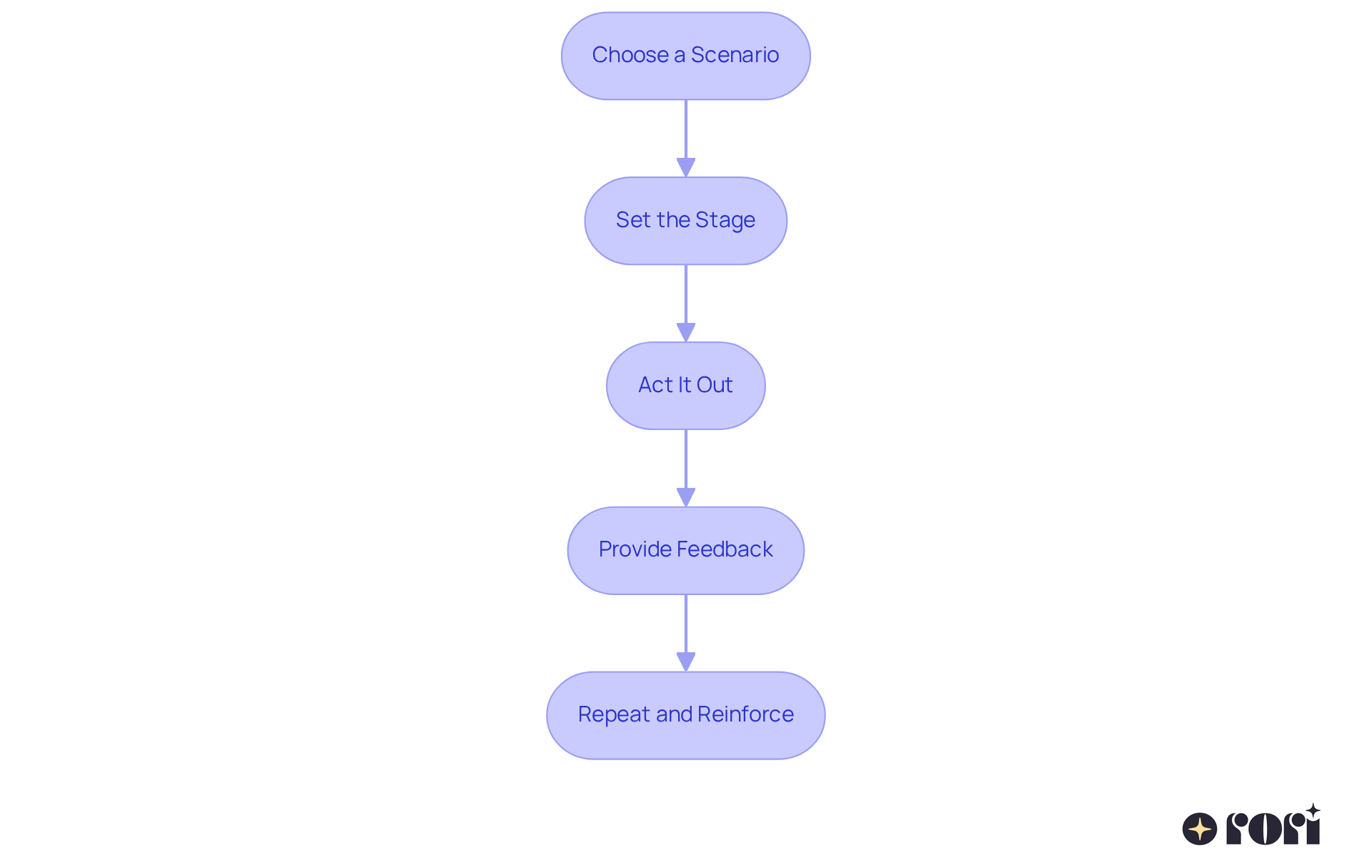
To implement role-playing effectively, here are some simple steps you can follow:
- Choose a Scenario: Pick a common social situation, like greeting a friend or sharing toys.
- Set the Stage: Create a safe and comfortable environment where your child feels secure to express themselves.
- Act It Out: Take turns performing the scenario, allowing your child to practice their responses.
- Provide Feedback: After the role-play, chat about what went well and what could be improved, reinforcing positive behaviors.
- Repeat and Reinforce: Regularly practice different scenarios to build confidence and adaptability.
By using role-playing to improve social interactions in individuals with autism spectrum disorder, you’re not just helping your child learn; you’re empowering them to thrive in social settings. Let’s explore this together!
Implement Structured Role-Playing Techniques for Skill Development
Navigating the world of ABA therapy can feel overwhelming for parents, especially when trying to find the right approach for their child. Let’s talk about some friendly methods that can really help your child develop their skills!
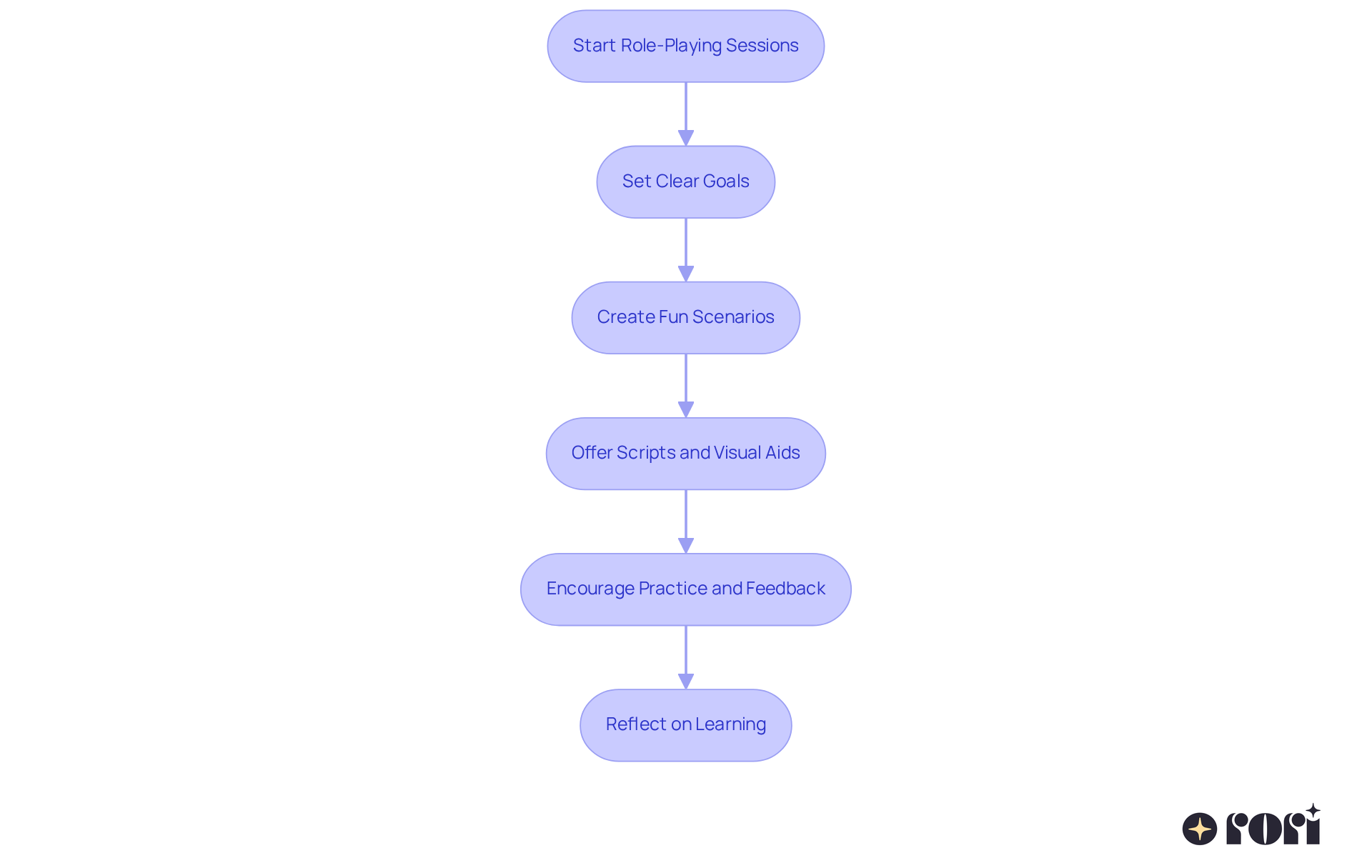
- Start by setting clear goals for your role-playing sessions, especially when using role-playing to improve social interactions in individuals with autism spectrum disorder. Before you dive in, think about specific skills you want to focus on, like greeting others or sharing. This way, your child knows what to expect and why it matters.
- Consider real-life situations your child might encounter and create fun scenarios around them using role-playing to improve social interactions in individuals with autism spectrum disorder! For instance, making friends at school or asking for help can be great starting points. Tailor these scenarios to what your child loves to keep them engaged.
- Offering scripts can really help! Scripts give your child a clear idea of their role and what to say. You can also use visual aids, like pictures or stories, to make everything more relatable and memorable.
- Encourage your child to practice their roles a few times, using role-playing to improve social interactions in individuals with autism spectrum disorder, and share some friendly feedback afterward! This repetition not only builds confidence but also helps them learn effectively. Many kids show great progress when they practice with their caregivers.
- After using role-playing to improve social interactions in individuals with autism spectrum disorder, chat with your child about what they learned and how they felt! This reflection is key. It helps them connect the dots and gives you insights into how to support them better.
And remember, ABA therapy is the only proven method for autism that many insurance plans cover! Group therapy can also be a fantastic way to boost social skills, guided by skilled therapists who create a supportive environment. By embracing these strategies, you’re not just helping your child; you’re also building a stronger connection with them that lasts a lifetime.
Explore the Benefits of Role-Playing for Social Skills Enhancement
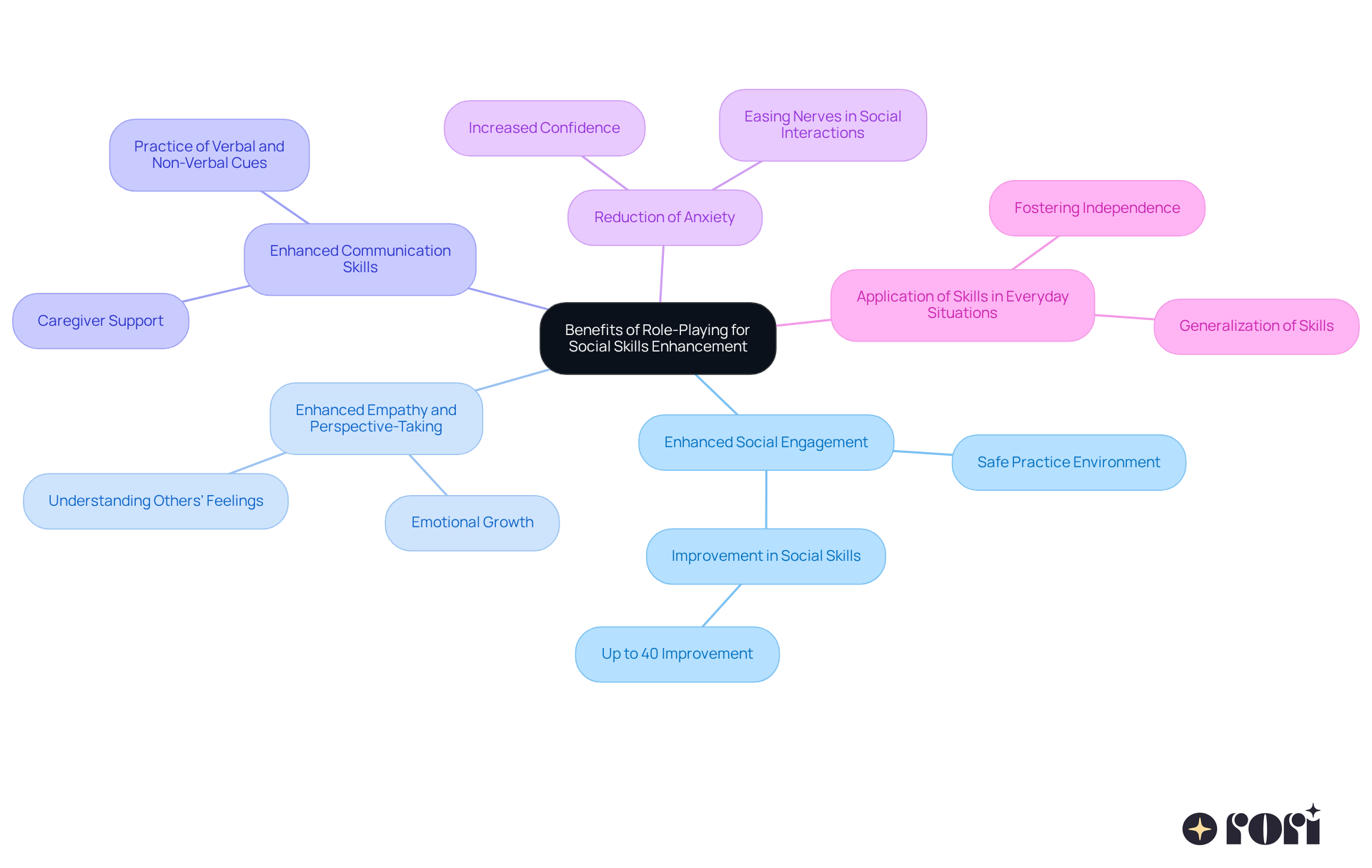
Parents may find it challenging to know how to get started with using role-playing to improve social interactions in individuals with autism spectrum disorder, even though it can be a game-changer for kids. Here are some of the fantastic benefits that come from this engaging activity:
- Enhanced Social Engagement: When kids dive into imaginative play, they get to practice social interactions in a safe space. This can lead to greater ease and confidence in real-life situations. In fact, kids with autism can see improvements of up to 40% in their social skills by using role-playing to improve social interactions in individuals with autism spectrum disorder!
- Enhanced Empathy and Perspective-Taking: Stepping into different roles helps kids understand and appreciate how others feel. This is so important for developing empathy! As they learn to see the world through others' eyes, they grow emotionally, which is vital for building strong relationships.
- Enhanced Communication Skills: Role-playing gives kids a chance to practice both talking and non-verbal cues. It’s a fun way for them to express their thoughts and feelings! Plus, when caregivers are involved, they can support their kids' goals and ensure everyone is on the same page.
- Reduction of Anxiety: Acting out different scenarios can really help ease the nerves that come with social interactions. By practicing various situations, kids can approach real-life encounters with more confidence, feeling more in control of their reactions.
- The skills learned through using role-playing to improve social interactions in individuals with autism spectrum disorder can be applied to everyday situations, helping kids navigate social interactions outside of therapy. This is key for fostering independence! When caregivers are actively involved and trained in ABA principles, it strengthens this ability to generalize skills.
Case studies show that role-playing not only helps kids practice their social skills but also improves their emotional control. This means they can engage in situations that mirror real-life experiences. By combining role-play with other ABA techniques, therapy becomes more flexible and effective, paving the way for lifelong social skills and better communication.
When you see your child thriving in social situations, it’s a reminder that every little step counts in their journey toward independence. Let’s explore this together!
Engage Parents and Therapists in Collaborative Role-Playing Activities
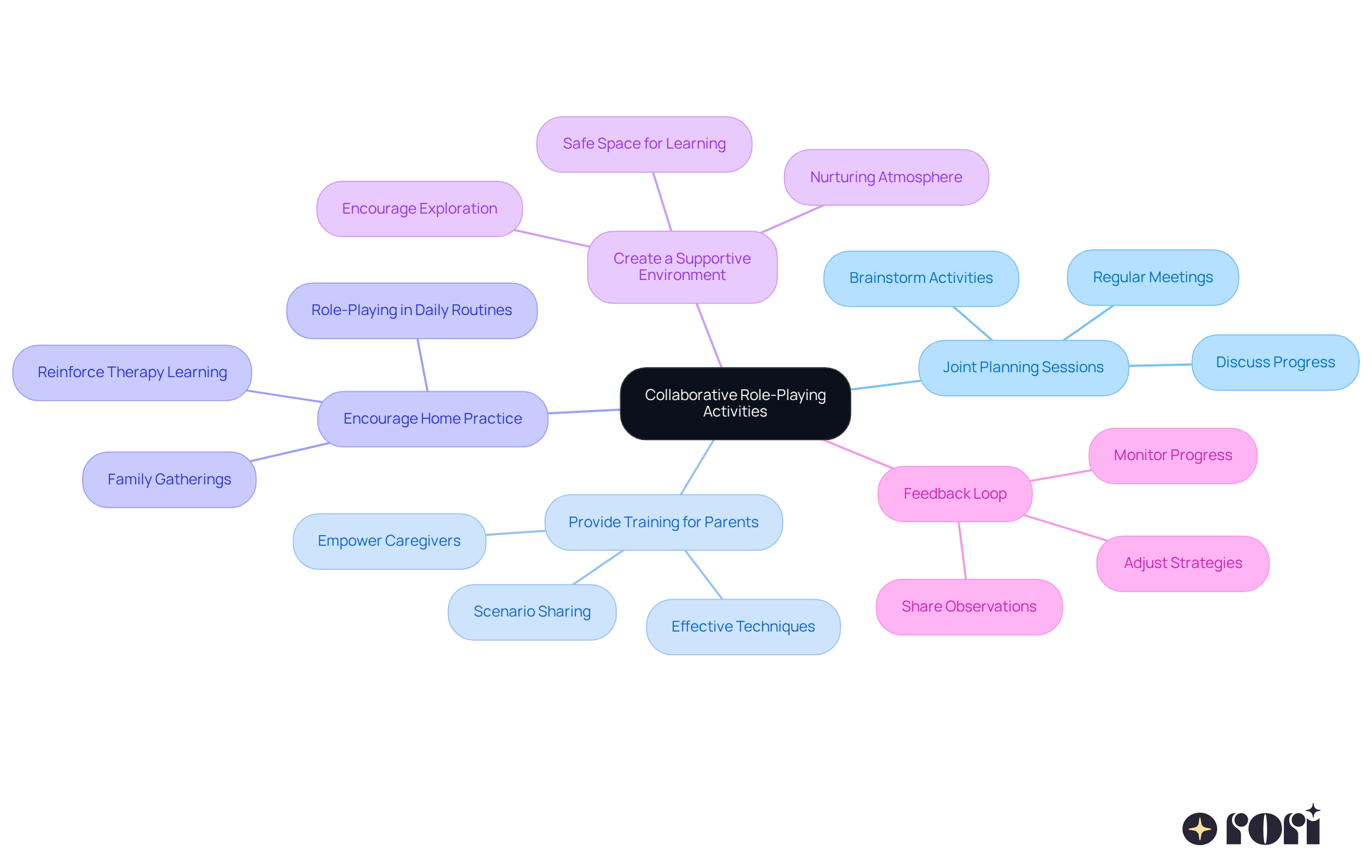
Navigating the world of therapy can feel overwhelming for parents, especially when it comes to supporting their child's social skills. When parents and therapists team up, it opens up a world of possibilities for kids to shine in their social skills! Let’s dive into some friendly strategies that can help everyone get involved:
- Joint Planning Sessions: Regular get-togethers can be a great way to chat about your child's progress and brainstorm fun activities to try at home. This keeps parents in the loop and makes sure everyone’s on the same page, which is super important in ABA therapy.
- Provide Training for Parents: It’s so helpful when parents have the right tools to support their kids at home. Sharing effective techniques and scenarios from therapy can empower caregivers to help their little ones reach their goals.
- Encourage Home Practice: Why not sprinkle some role-playing into your daily routines? Whether it’s during playtime or family gatherings, using role-playing to improve social interactions in individuals with autism spectrum disorder can really help reinforce what your child learns in therapy and make it stick in different situations.
- Create a Supportive Environment: Let’s create a cozy and supportive space where kids can feel safe to develop their social skills without any worries! This nurturing atmosphere is key for effective learning and growth.
- Feedback Loop: Setting up a way for parents to share feedback with therapists about home practice can be a game-changer. This helps therapists tweak their strategies and ensures that kids are consistently progressing, leading to better outcomes.
When parents and therapists work hand in hand, the journey toward social skill development becomes a shared adventure, leading to brighter futures for our kids. Ralph Moller reminds us that 'Parental involvement is a cornerstone of effective ABA therapy,' showing just how vital parents are in this journey! Plus, research shows that starting early with ABA therapy can lead to amazing results, especially when parents are actively involved. With the average cost of supporting an individual with autism reaching around $60,000 a year, working together becomes even more essential to make the most of therapy. We’re here to help you every step of the way!
Conclusion
Have you ever wished for a fun way to help your child with autism build social skills? Role-playing might just be the answer! This engaging method gives kids a safe space to practice social skills and helps them tackle real-life situations with more confidence. By integrating role-playing into therapy, children can not only improve communication but also develop empathy skills that are so important for making friends.
Key insights from the article show how structured techniques and teamwork between parents and therapists can really boost the effectiveness of role-playing:
- Setting clear goals
- Creating tailored scenarios
- Practicing consistently
These form a solid foundation for skill development. Plus, when parents get involved, it amplifies the benefits, ensuring that kids get support both in therapy and at home.
Ultimately, embracing role-playing enriches the therapeutic experience and strengthens the bond between children and their caregivers. As parents and therapists collaborate, they open doors for children to thrive socially. Imagine the joy of watching your child connect with others - let's make that a reality together!
Frequently Asked Questions
What is the role of role-playing in ABA therapy for individuals with autism spectrum disorder?
Role-playing is used in ABA therapy to improve social interactions in individuals with autism spectrum disorder by allowing children to practice appropriate responses in a safe environment and explore different community situations.
How does role-playing benefit children with autism?
Role-playing benefits children with autism by providing opportunities to practice social skills, recognize social cues, develop empathy, and enhance communication skills, which are essential for successful interactions in everyday life.
What do therapists say about the effectiveness of role-playing in therapy?
Therapists note that role-playing helps children act out different scenarios, breaking down social interactions into smaller, manageable steps, which can boost their confidence.
How can parental involvement impact the success of role-playing in ABA therapy?
When parents are actively involved in role-playing, the success rate of ABA therapy can exceed 90%, significantly enhancing the effectiveness of the therapy.
What are the steps to implement role-playing effectively?
The steps to implement role-playing effectively include: 1. Choose a scenario (e.g., greeting a friend). 2. Set the stage in a safe environment. 3. Act it out by taking turns. 4. Provide feedback after the role-play. 5. Repeat and reinforce by practicing different scenarios regularly.
Why is role-playing considered a fun and engaging method for improving social skills?
Role-playing is considered fun and engaging because it allows children to explore various roles and scenarios in a playful manner, making the learning process enjoyable while they develop important social skills.
List of Sources
- Understand the Role of Role-Playing in ABA Therapy
- Success Rates of ABA Therapy | Advanced Autism Services (https://advancedautism.com/post/success-rates-of-aba-therapy)
- Sticks & Stones Education (https://sticksandstoneseducation.com.au/blogs/ourstories/the-most-quotable-quotes-about-play-learning?srsltid=AfmBOopH9vYxDoFVEG7VmXOjovZ_pUmMM82Gccgzd5EIkfmx7GJlKDjh)
- Play Therapy Quotes | Core Wellness (https://corewellceu.com/blog/play-therapy-quotes)
- The Numbers Don't Lie: Revealing Autism Therapy Statistics | Above and Beyond Therapy (https://abtaba.com/blog/autism-therapy-statistics)
- The Role of Role-Playing in Developing Social Skills in ABA Therapy for Autism (https://buildingblockstherapy.org/blog/the-role-of-role-playing-in-developing-social-skills-in-aba-therapy-for-autism)
- Implement Structured Role-Playing Techniques for Skill Development
- The Role of Role-Playing in Developing Social Skills in ABA Therapy for Autism (https://buildingblockstherapy.org/blog/the-role-of-role-playing-in-developing-social-skills-in-aba-therapy-for-autism)
- The Numbers Don't Lie: Revealing Autism Therapy Statistics | Above and Beyond Therapy (https://abtaba.com/blog/autism-therapy-statistics)
- How to Teach Social Skills Using Role Play and ABA Techniques (https://mastermindbehavior.com/post/how-to-teach-social-skills-using-role-play-and-aba-techniques)
- The Role of Role-Playing Exercises in ABA Therapy (https://crossrivertherapy.com/articles/the-role-of-role-playing-exercises-in-aba-therapy)
- How Scripting and Role-Playing Enhance ABA Therapy Outcomes - Up & Up ABA (https://upandupaba.com/faqs-resources/how-scripting-and-role-playing-enhance-aba-therapy-outcomes)
- Explore the Benefits of Role-Playing for Social Skills Enhancement
- The Games They Play: Observations of Children with Autism Spectrum Disorder on the School Playground - PMC (https://pmc.ncbi.nlm.nih.gov/articles/PMC6509020)
- The Role of Role-Playing in Developing Social Skills in ABA Therapy for Autism (https://buildingblockstherapy.org/blog/the-role-of-role-playing-in-developing-social-skills-in-aba-therapy-for-autism)
- 22 Inspiring Quotes on Empathy from Emotion Researchers (https://veronikatait.com/posts/2019-02-24-quotes-on-empathy.html)
- 15 Quotes on Communicating with Empathy (https://ybgr.org/15-quotes-on-communicating-with-empathy)
- Engage Parents and Therapists in Collaborative Role-Playing Activities
- The Importance of Collaboration Between ABA Therapists and Parents (https://magnetaba.com/blog/the-importance-of-collaboration-between-aba-therapists-and-parents)
- The Numbers Don't Lie: Revealing Autism Therapy Statistics | Above and Beyond Therapy (https://abtaba.com/blog/autism-therapy-statistics)
- The Role of Parent Involvement in Autism Therapy Success | Advanced Autism Services (https://advancedautism.com/post/the-role-of-parent-involvement-in-autism-therapy-success)
- The Importance of Collaboration Between Parents and ABA Therapists | Intellistars - ABA Therapy (https://intellistarsaba.com/blog/the-importance-of-collaboration-between-parents-and-aba-therapists)
- The Importance of Collaboration Between Therapists and Parents in ABA Therapy - Big Dreamers ABA (https://bigdreamersaba.com/blog/the-importance-of-collaboration-between-therapists-and-parents-in-aba-therapy)