In the world of Applied Behavior Analysis (ABA) therapy, Discrete Trial Training (DTT) stands out as a structured approach tailored to facilitate skill development in individuals with autism. By breaking down complex abilities into smaller, digestible pieces, DTT enhances learning through a repetitive yet highly focused process. Each session begins with a clear instruction or cue, followed by the individual's response and appropriate reinforcement.
This technique not only promotes the acquisition of new skills but also fosters an inclusive environment where children with autism can thrive. Recent updates to ABA Practice Guidelines reflect the importance of implementing DTT with the highest standards, ensuring equitable access to mental health and well-being for all children.
In the methodical world of Applied Behavior Analysis (ABA) therapy, stands out as a structured approach tailored to facilitate . By deconstructing complex abilities into smaller, digestible pieces, DTT enhances learning through a repetitive yet highly focused process. Each session begins with a clear instruction or cue, which is followed by the individual's response.
The learner's efforts are then met with , strengthening the connection between behavior and positive outcomes. This technique is not only about promoting the acquisition of new skills but also about where children with autism can thrive across various facets of life—be it at school, home, or during leisure activities. As underscored by child psychiatrist Dr. David (Dan) R. Offord, creating a fair and supportive 'race' for children, particularly those facing the challenges of autism and associated emotional and behavioral problems, is crucial.
It's about acknowledging their unique needs and the value they add to their communities, mitigating persistent stressors, and providing caregivers with the necessary resources to nurture their growth. The recent updates to by the reflect this ethos, aiming to ensure that ABA, including DTT, is implemented with the highest standards, thereby paving the way for equitable access to mental health and well-being for all children.

(DTT) is an educational strategy that operates on the principles of (ABA), primarily tailored for children with autism spectrum disorder (ASD). The method is defined by its structured approach, breaking down learning into discrete trials that consist of three foundational components:
DTT's meticulous design aims to foster and , providing a fair and supportive learning race for children with ASD. With an emphasis on , as noted by The Autism Community in Action, the sooner behavioral therapy like DTT commences, the more favorable the progress for the child.
As research underscores the importance of high-quality, coordinated care, professionals like with extensive clinical knowledge are key in implementing DTT. They work to ensure that the practice is executed with the highest standards, reflecting a deep respect for the individual needs of children with autism. By integrating DTT into a child's routine, it contributes to their meaningful participation in daily social activities, promoting their mental health and overall well-being.
offers a well-orchestrated approach to instruction, crucial for children with autism to thrive in their learning environment. The methodology is meticulously designed to break down complex tasks into manageable steps, enhancing the child's ability to learn and retain new skills. Each consists of a series of trials with distinct components:
This predictable pattern is vital, as are often comforting for individuals with autism, reducing anxiety related to uncertainty and change. The poignant words of Dr. David (Dan) R. Offord resonate here, emphasizing the importance of creating a fair and supportive environment: "I do not mind if my children are in a race as long as the race is fair." to make the learning 'race' fair for children with autism by tailoring the educational approach to their unique needs.
Recent advancements contemplate the integration of to alleviate teacher workload, allowing for a more focused and personalized teaching approach. By applying these innovations, educators can dedicate more time to fine-tune interventions like DTT and ensure each child receives the attention they deserve, fostering an environment where all students, particularly those with special needs, can partake in the 'race' of education equitably and successfully.
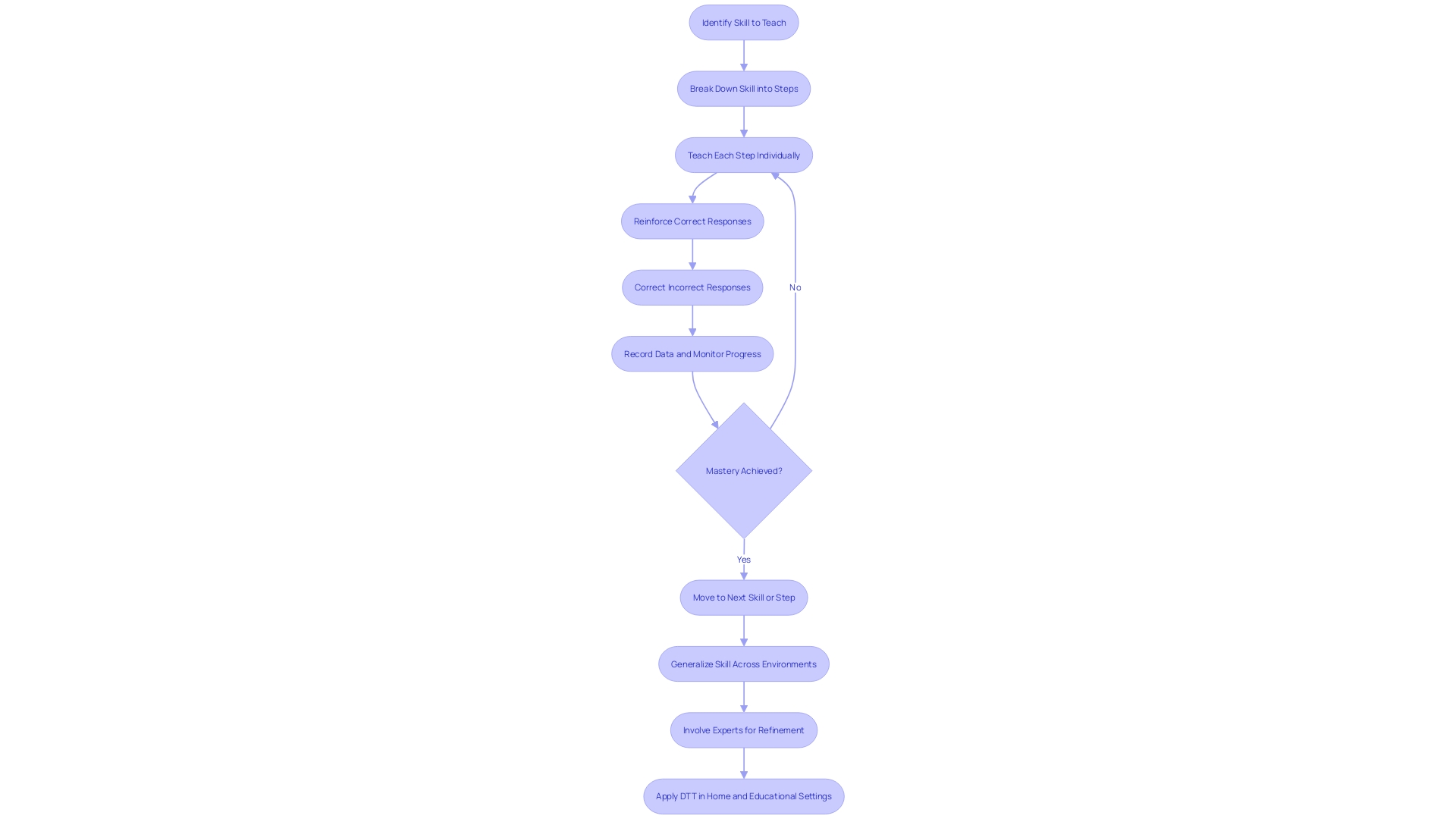
To optimize the effectiveness of for individuals with autism, it is essential to incorporate several key factors into the program design:
By integrating these elements, DTT can be an effective method to enhance learning and promote the development of individuals with autism.

In conclusion, Discrete Trial Training (DTT) is a structured approach within Applied Behavior Analysis (ABA) therapy that enhances learning and promotes skill development in individuals with autism. By breaking down complex abilities into smaller, digestible pieces, DTT provides a repetitive yet highly focused process that fosters the acquisition of new skills.
The recent updates to ABA Practice Guidelines highlight the significance of implementing DTT with high standards, ensuring equitable access to mental health and well-being for all children. By recognizing the unique needs of children with autism and providing caregivers with the necessary resources, we can create a fair and supportive environment where they can thrive.
DTT operates on the principles of ABA, consisting of three foundational components: antecedent, behavior, and consequence. This structured design aims to foster skill development and behavioral improvement, providing a fair and supportive learning environment for children with autism. The involvement of professionals, such as Board-Certified Behavior Analysts, is crucial in implementing DTT with the utmost standards, reflecting a deep respect for individual needs.
DTT offers a well-orchestrated approach to instruction, breaking down complex tasks into manageable steps. The predictable pattern of DTT sessions, with clear instructions, prompting, response, reinforcement, and inter-trial intervals, provides consistency and routine that are comforting for individuals with autism. By tailoring the educational approach to their unique needs, DTT strives to create a fair "race" for children with autism, promoting their meaningful participation in daily activities.
To implement DTT successfully, customization, consistent application, data-driven progress tracking, and meaningful reinforcement are essential. By incorporating these elements, DTT can effectively enhance learning and support the overall development of individuals with autism.
In summary, DTT is a powerful and structured approach that facilitates skill development in individuals with autism. By implementing DTT with high standards, tailoring it to individual needs, and involving professionals, we can create a fair and supportive environment where children with autism can thrive. Through consistent application and customization, DTT enhances learning, promotes skill development, and empowers children with autism to reach their full potential.
What is Discrete Trial Training (DTT)?
Discrete Trial Training (DTT) is a structured educational strategy based on the principles of Applied Behavior Analysis (ABA), mainly used for children with autism spectrum disorder (ASD). It breaks down complex skills into smaller, manageable learning units and uses a repetitive process to teach behaviors and skills.
How does DTT work?
DTT works by conducting sessions consisting of a series of discrete trials, each with distinct components: a clear instruction (antecedent), the child's response (behavior), and the consequence, which includes positive reinforcement for correct responses or corrective feedback for incorrect ones.
What are the key components of DTT?
The key components of DTT include: 1. Antecedent: The initial prompt or instruction. 2. Behavior: The child's response to the antecedent. 3. Consequence: The feedback provided after the behavior, such as positive reinforcement for correct responses.
Why is DTT important for children with autism?
DTT is important because it provides a structured and supportive learning environment, helps in skill development, and enhances the ability of children with autism to participate meaningfully in daily social activities, promoting their mental health and overall well-being.
What does a typical DTT session involve?
A typical DTT session involves clear instructions, possible prompting to elicit the correct response, the child's response to the task, positive reinforcement to commend correct behavior, and brief inter-trial intervals for rest and preparation for the next trial.
How does consistency play a role in DTT?
Consistency is crucial in DTT, as it helps make the learning process predictable and comfortable for individuals with autism, reducing anxiety related to uncertainty and change.
What recent advancements have been made in DTT and education for children with autism?
Recent advancements include the integration of AI tools in educational settings, which can reduce teacher workload and offer a more focused and personalized approach to interventions like DTT.
What are the essential factors to successfully implement DTT?
To successfully implement DTT, it's essential to tailor instruction to the individual's unique strengths and preferences, consistently apply the method across all environments and instructors, track progress with data-driven methods, and use meaningful reinforcement that resonates with the individual.
Who is responsible for implementing DTT?
Professionals such as Board-Certified Behavior Analysts (BCBAs) with extensive clinical knowledge are key in implementing DTT to ensure that it is executed with the highest standards.
What is the aim of the recent updates to ABA Practice Guidelines?
The updates to ABA Practice Guidelines aim to ensure that ABA therapies, including DTT, are implemented with the highest standards to promote equitable access to mental health and well-being for all children, particularly those with autism.