Differential Reinforcement of Incompatible Behavior (DRI) is a powerful strategy within Applied Behavior Analysis (ABA) therapy aimed at enhancing positive behavioral outcomes for individuals with autism. This approach focuses on encouraging behaviors that directly conflict with undesired behaviors, effectively making it impossible for both actions to occur at the same time. By rewarding the appropriate behavior while not reinforcing the problematic one, DRI serves to diminish the frequency of undesired behaviors while fostering the development of suitable alternatives.
Recent advancements in ABA, such as the integration of technology and the understanding of underlying reasons for behavior, have further enhanced the effectiveness of interventions like DRI. The relevance of evidence-based interventions like DRI is highlighted by the challenges faced by individuals with autism, especially during the pandemic. Behavior analysts, with their expertise and commitment to best practices, are continuously innovating to ensure that high-quality interventions like DRI are accessible and efficiently implemented, offering hope for continuous improvement in the lives of individuals with autism and their families.
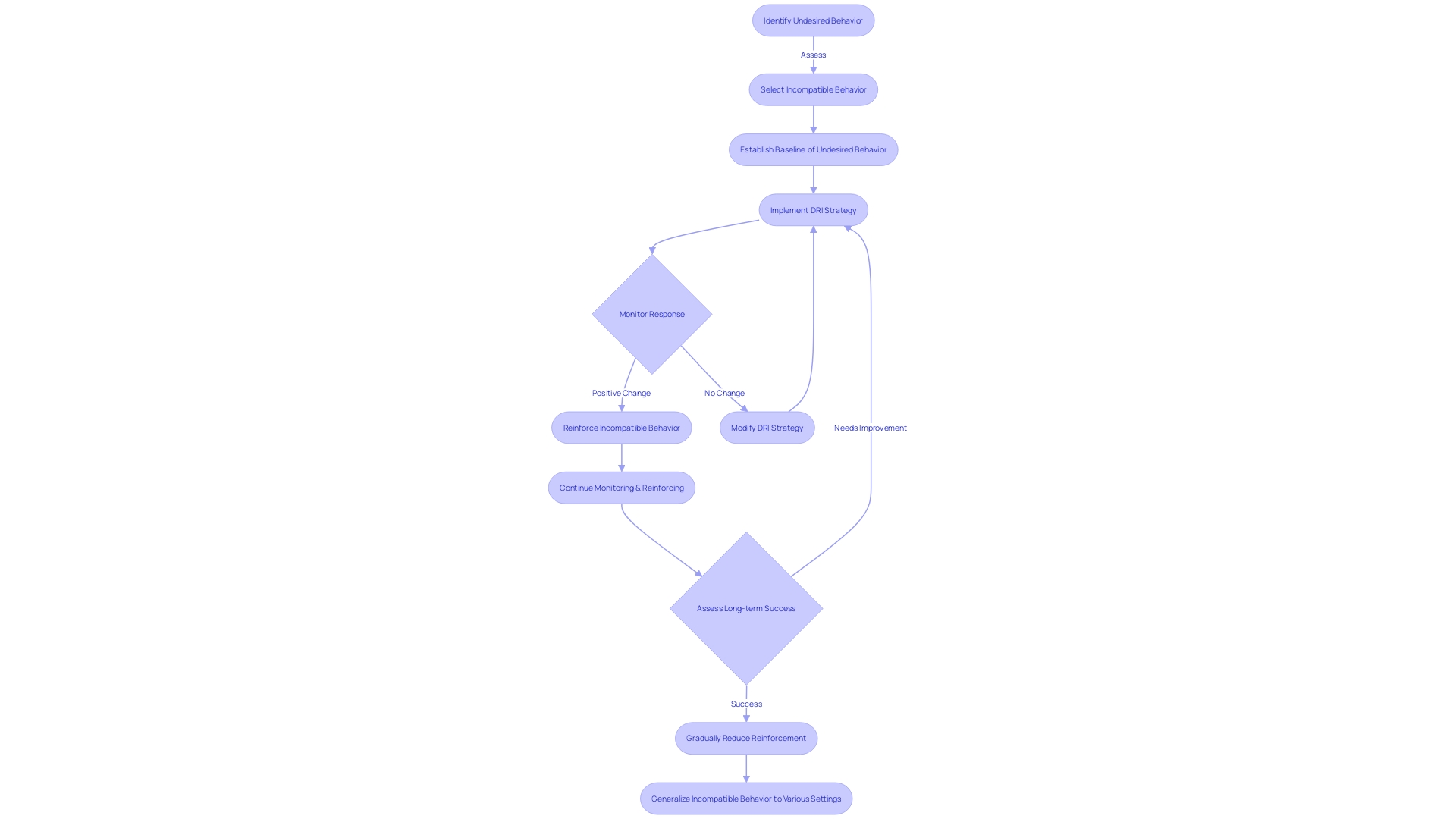
Differential Reinforcement of Incompatible Behavior (DRI) is a powerful strategy within Applied Behavior Analysis (ABA) therapy aimed at enhancing positive behavioral outcomes for individuals with autism. This approach focuses on encouraging behaviors that directly conflict with undesired behaviors, effectively making it impossible for both actions to occur at the same time. For instance, if a child frequently engages in hand-flapping, a therapist might reinforce the child for playing with a toy, which requires the use of their hands, and is thus incompatible with hand-flapping.
By rewarding the appropriate behavior while not reinforcing the problematic one, DRI serves to diminish the frequency of undesired behaviors while fostering the development of suitable alternatives.
Recent advancements in ABA, such as the Interview Informed Synthesized Functional Analysis (IISCA), emphasize the importance of understanding the underlying reasons for a behavior. This approach tailors interventions to , enhancing the effectiveness of treatments like DRI. Moreover, the application of technology in ABA, such as the development of Augmented Reality (AR) tools, caters to the unique sensory needs of individuals with autism, transforming environmental stimuli into manageable visual and auditory signals.
In light of an online survey by Colizzi et al., which revealed that over one-third of individuals with autism experienced exacerbated behavior problems during the pandemic, the relevance of such evidence-based interventions is underscored. The necessity for these interventions becomes critical, not just in clinical settings but for ensuring success and well-being at home and in educational environments.
Behavior analysts, equipped with a decade or more of clinical expertise, are innovating to streamline care coordination. Their efforts are ensuring that best practices and high-quality interventions, such as DRI, are accessible and efficiently implemented, offering hope for continuous improvement in the lives of individuals with autism and their families.
In the realm of Applied Behavior Analysis (ABA) therapy, various differential reinforcement strategies are employed to shape and modify behaviors in children with autism. These strategies are meticulously tailored to address distinct behavioral challenges and are instrumental in reinforcing desired behaviors while reducing undesired ones.
The application of these strategies is not without its complexities. For instance, an online parent survey revealed that more than one-third of individuals with autism experienced exacerbated behavioral issues during the pandemic, underscoring the dynamic nature of ABA therapy's challenges. Moreover, the introduction of the Interview Informed Synthesized Functional Analysis (IISCA) in 2014 marked an evolution in identifying the functions of problem behaviors, allowing for a more nuanced and efficient approach to intervention.
New guidelines released by the Council of Autism Service Providers emphasize the importance of high-quality, evidence-based ABA practices. As the understanding of autism spectrum disorder deepens and evolves, so too must the strategies used to support individuals with autism. The commitment to best practices and coordinated care, as advocated by experienced Board-Certified Behavior Analysts, remains central to ensuring effective, individualized therapy that meets the unique needs of each child and their family.

Differential Reinforcement of Incompatible Behavior (DRI) is a key strategy in the toolkit of behavior analysts working with individuals on the autism spectrum. By emphasizing and reinforcing alternative behaviors that cannot coexist with the problematic behavior, DRI effectively diminishes challenging actions such as aggression, self-injury, and repetitive movements. It's not just about reducing the undesirable; DRI actively encourages the individual to adopt more suitable behaviors that serve similar functions but in a socially acceptable way.
Its versatility allows for implementation in diverse environments, from educational settings to the comfort of home, facilitating improved social integration and daily functioning.
The success of such interventions is supported by research and practical applications. For instance, innovative approaches like augmenting therapy with technology solutions, as developed by behavior analysts, have shown promise in complementing traditional methods. This includes the development of an AR application designed to translate tactile sensations into visual and auditory signals, catering to the unique sensory preferences of individuals with autism.
Moreover, , such as the study by clinicians at The Center for Discovery, utilizes AI and machine learning to predict significant behaviors, thereby enabling preemptive measures to mitigate their impact.
These advancements underscore the importance of personalized and responsive strategies in managing the complex behavioral needs associated with autism. As Dr. David (Dan) R. Offord pointed out, ensuring equitable participation in all aspects of life for children with disabilities is paramount. DRI, along with cutting-edge technological integrations and data-driven insights, embodies this commitment to equity, empowering individuals with autism and their caregivers with tools for positive change.
Discrete Trial Training (DTT) is an evidence-based teaching strategy that is particularly effective for children with autism. It involves breaking down skills into small, manageable steps and teaching each one individually, with positive reinforcement used to encourage desired behaviors. By using this method, parents and caregivers have reported impressive improvements in their children's ability to communicate and interact socially, which are critical developments for their overall quality of life.
The effectiveness of DTT is not only supported by anecdotal evidence but also by a substantial body of research. For instance, a study conducted by Colizzi et al. highlighted the exacerbation of behavioral problems in over one-third of individuals with autism during the pandemic.
This underscores the need for robust interventions like DTT, which can be adapted to address various challenging behaviors and promote success in both home and educational contexts.
The Interview Informed Synthesized Functional Analysis (IISCA), a modern approach developed by Hanley et al. in 2014, is a testament to the advancement of behavioral assessment. It allows for the identification of multiple reinforcing factors within a single assessment session, enhancing the personalization and effectiveness of interventions like DTT.
Moreover, the success of DTT and related interventions has been recognized in large-scale applications. The Early Start Denver Model (ESDM), which encompasses DTT principles and prioritizes communication and social interaction, has been validated through research at the MIND Institute. With , the potential for impacting autistic children's lives on a larger scale is significant.
This is echoed by the enthusiasm of experts like Aubyn Stahmer, who is looking forward to seeing how these practices fare when extended beyond clinical studies to community settings.
In parallel, the use of advanced technologies such as artificial intelligence and machine learning is revolutionizing our understanding and approach to autism. For example, The Center for Discovery has utilized these technologies to analyze complex datasets, leading to better predictions and interventions for significant behaviors in individuals with autism, as noted by Theresa Hamlin, Ed.D.
These advancements in autism intervention and research illustrate a clear trajectory towards more individualized, effective, and accessible support for children with autism and their families.

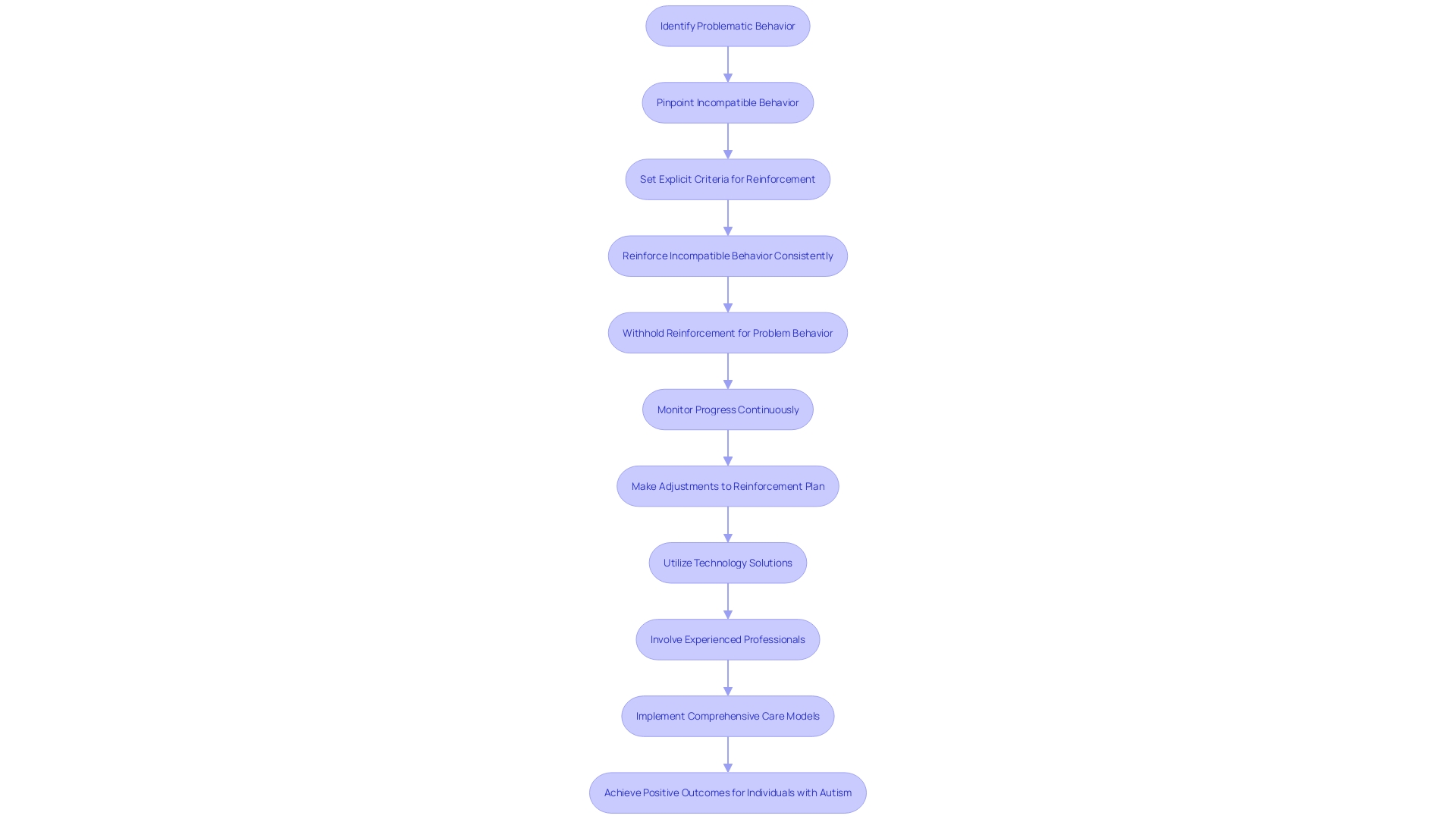
To implement effectively, one must be meticulous in planning and execution. Initially, the problematic behavior must be precisely identified, establishing what needs to be reduced. Then, a behavior that cannot coexist with the problem behavior—either because it's physically or functionally impossible—should be pinpointed.
It is essential to not only define the desired behavior but also to set explicit criteria for when reinforcement should be given.
Once these behaviors have been identified, the next step involves reinforcing the incompatible behavior consistently each time it is exhibited. Conversely, it is critical to withhold reinforcement when the problem behavior occurs. This approach helps to promote the occurrence of positive behavior while minimizing the negative.
Monitoring the individual's progress is a continuous process, and adjustments to the reinforcement plan may be necessary to ensure effectiveness. With the guidance of professionals who are experienced in behavior analysis and who are adept at creating technology solutions to streamline care, parents and caregivers can effectively use DRI to encourage positive behavioral changes in individuals with autism.
Recent advancements, such as the Early Start Denver Model, have shown promising results in enhancing communication and daily living skills through interventions that address all developmental areas. Meanwhile, the use of artificial intelligence in analyzing data sets from centers specializing in developmental disabilities like autism has shown potential in predicting behaviors, allowing for preemptive intervention strategies. These innovative approaches underscore the importance of utilizing cutting-edge technology and comprehensive care models to support individuals with autism in achieving the best possible outcomes.
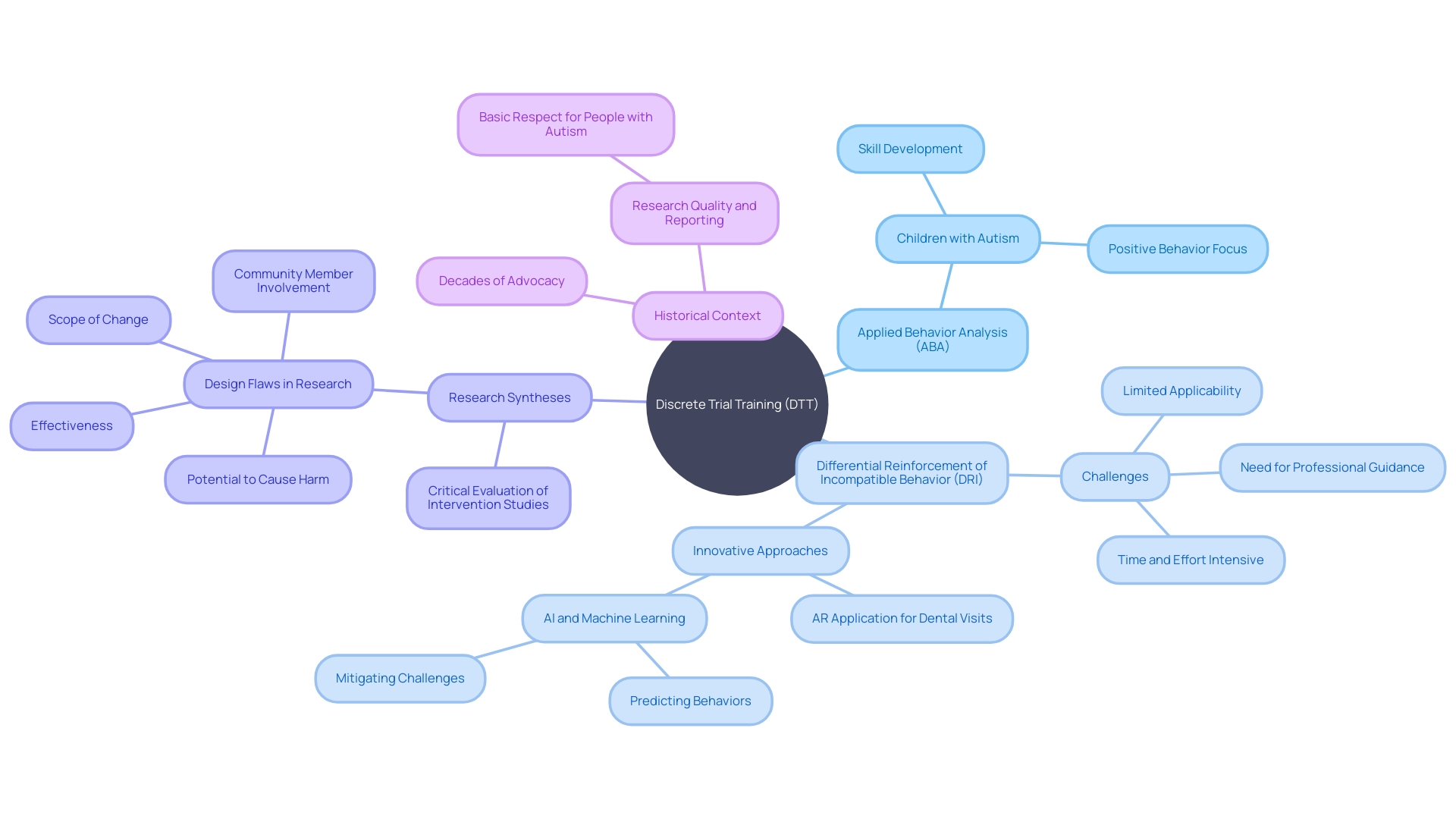
Discrete Trial Training (DTT) is a valuable technique within Applied Behavior Analysis (ABA) that focuses on the individual needs of children with autism to reinforce positive behavior and skill development. The is one such technique that pivots the attention from problematic behaviors to encouraging socially appropriate ones through positive reinforcement. It's a tailored approach that recognizes the unique behavioral patterns of each child, facilitating the transfer of learned skills across various environments.
However, the implementation of DRI is not without its challenges. It may not be universally applicable to all behaviors or individuals, and it demands a significant investment of time and consistent effort from parents, caregivers, and ABA professionals. Moreover, professional guidance is crucial to the successful application of DRI strategies to ensure they're adapted to the child's specific needs and circumstances.
An innovative example of adapting environmental stimuli to accommodate sensory sensitivities is seen in the development of an Augmented Reality (AR) application designed for dental visits. This application translates tactile sensations, which can be overwhelming for some individuals with autism, into visual and auditory cues, thus leveraging the strengths of those who may process visual and sound stimuli more effectively.
In light of the recent advancements and research, such as the extensive data analysis by The Center for Discovery, there is a growing recognition of the potential to predict and mitigate challenging behaviors in individuals with autism. The center's breakthrough study, co-authored by Theresa Hamlin, Ed.D., illustrates the power of AI and machine learning to transform complex data sets into actionable insights, aiming to preempt and reduce the impact of those behaviors.
It is essential for parents and caregivers to consider both the benefits and limitations of DRI. By doing so, they can make informed choices about incorporating DRI into their comprehensive behavior management strategies, ultimately enhancing the quality of care and support provided to individuals with autism.
In conclusion, Differential Reinforcement of Incompatible Behavior (DRI) is a powerful strategy in Applied Behavior Analysis (ABA) therapy for individuals with autism. It encourages behaviors that conflict with undesired actions, reducing problematic behaviors while promoting suitable alternatives. Recent advancements in ABA, like technology integration and understanding underlying reasons for behavior, have improved the effectiveness of interventions like DRI.
Evidence-based interventions like DRI are particularly relevant during the challenges faced by individuals with autism, especially in the pandemic. Behavior analysts continuously innovate to ensure accessible and efficient implementation of high-quality interventions, offering hope for continuous improvement in the lives of individuals with autism and their families.
Various differential reinforcement strategies, including Differential Reinforcement of Other Behavior (DRO), Differential Reinforcement of Alternative Behavior (DRA), Differential Reinforcement of Low Rates (DRL), and Differential Reinforcement of High Rates (DRH), shape and modify behaviors in children with autism. They address specific challenges and reinforce desired behaviors while reducing undesired ones.
To implement DRI effectively, precise identification of the problematic behavior and selection of an incompatible behavior are necessary. Consistently reinforcing the incompatible behavior while withholding reinforcement for the problem behavior promote positive behavior while minimizing the negative. Monitoring progress and making adjustments to the reinforcement plan may be necessary.
DRI has benefits, such as transferring learned skills across environments, but also limitations. It may not be universally applicable and requires significant time and effort from parents, caregivers, and ABA professionals. Professional guidance is crucial for successful application, tailored to the child's specific needs.
Recent advancements, including technology integration and data analysis, enhance the effectiveness of DRI. Augmented Reality (AR) tools and artificial intelligence provide personalized and responsive support for individuals with autism.
Parents and caregivers should consider the benefits and limitations of DRI, making informed choices for comprehensive behavior management strategies. This enhances the quality of care and support for individuals with autism.
What is Differential Reinforcement of Incompatible Behavior (DRI)?
Differential Reinforcement of Incompatible Behavior (DRI) is a strategy used in Applied Behavior Analysis (ABA) therapy to encourage positive behaviors that are incompatible with undesired behaviors. It works by reinforcing a behavior that cannot occur at the same time as the problematic behavior, thus reducing the undesired behavior.
How does DRI work in reducing undesired behaviors?
DRI works by identifying and reinforcing an appropriate behavior that directly conflicts with the undesired behavior. For instance, if a child flaps their hands, a therapist might reinforce the child for playing with a toy, which requires hand use and is incompatible with hand-flapping. This reinforcement diminishes the frequency of the undesired behavior.
What are some other types of differential reinforcement strategies?
Can DRI be used in different settings?
Yes, DRI is versatile and can be implemented in various environments, including educational settings and at home, to improve social integration and daily functioning for individuals with autism.
What role does technology play in enhancing the effectiveness of DRI?
Technology, such as Augmented Reality (AR) tools and artificial intelligence, is being used to tailor environmental stimuli to the unique sensory needs of individuals with autism and to predict significant behaviors for preemptive measures.
Has DRI been effective during the pandemic?
DRI and other ABA interventions have been critical, especially during the pandemic, as behavioral problems in individuals with autism have increased. These evidence-based interventions are essential for success and well-being at home and in educational environments.
What are some success stories and case studies of DRI?
Success stories include improvements in communication and social interaction through methods like Discrete Trial Training (DTT) and the Early Start Denver Model (ESDM). These strategies are backed by research and have been adapted to address various challenging behaviors.
How should DRI be implemented effectively?
To implement DRI effectively, one must first identify the problematic behavior, then determine an incompatible behavior to reinforce. Consistent reinforcement of the incompatible behavior while withholding reinforcement for the problematic behavior is key. Continuous monitoring and adjustments may be necessary for effectiveness.
Are there any limitations to using DRI?
While DRI is beneficial, it may not be suitable for all behaviors or individuals. It requires a considerable investment of time and effort from everyone involved and must be tailored to each child's specific needs with professional guidance.
How important is professional guidance in applying DRI strategies?
Professional guidance is crucial for the successful application of DRI. Behavior analysts with expertise ensure that interventions like DRI are tailored to the child's unique needs, coordinated efficiently, and integrated with technology when appropriate.