Detecting Autism Spectrum Disorder (ASD) at an early stage is crucial for initiating interventions that can greatly enhance a child's development in various areas. Recent research highlights the significant impact that early intervention can have on individuals with ASD. For parents and caregivers, recognizing the signs of ASD is the first step towards seeking professional assessment and embarking on a support journey.
Exciting advancements in machine learning are revolutionizing the diagnostic landscape, utilizing large datasets and intricate algorithms to identify patterns and forecast diagnoses with remarkable precision. These innovations offer hope for a future where ASD can be swiftly identified, reducing the often lengthy and distressing diagnostic process that families currently endure. Organizations dedicated to supporting families and improving the timeliness of ASD diagnoses are recognizing the transformative power of early intervention.
In this article, we will explore the importance of early diagnosis, the diagnostic criteria for ASD, the tools and assessments used in the diagnostic process, and the steps involved in reaching a conclusive diagnosis. By empowering parents with valuable insights and expert advice, we aim to provide them with the knowledge they need to navigate the journey of ASD diagnosis and support their child effectively.
Detecting Autism Spectrum Disorder (ASD) as soon as feasible is pivotal for initiating interventions that can vastly enhance a child's social, communicative, and cognitive development. Emerging research highlights the significant impact that intervention can have on individuals with ASD. For parents and caregivers, recognizing ASD's hallmarks is the first step toward seeking a professional assessment and embarking on the journey of support. In the realm of ASD detection, recent advancements in machine learning are showing promise, utilizing the power of extensive datasets and complex algorithms to identify patterns and predict ASD outcomes with remarkable accuracy. One study, utilizing a substantial database, developed machine learning models that could identify ASD with nearly 80 percent accuracy in children under two years old, using easily accessible information about the children before the age of 24 months. Such advancements are set to revolutionize the diagnostic landscape, offering hope for a future where ASD can be identified swiftly, thereby reducing the protracted and often distressing diagnostic process that families currently face. The importance of these advancements is reflected by organizations such as , which are committed to supporting families and enhancing the promptness of ASD evaluations, highlighting the transformative influence of early intervention.
To understand Autism Spectrum Disorder (ASD), one must delve into the criteria set forth in the Diagnostic and Statistical Manual of Mental Disorders, fifth edition (DSM-5). It's a tool that guides medical professionals in identifying the presence of ASD based on specific symptoms. These include continuous challenges in social interaction and communication, along with limited and repetitive patterns of behavior or interests. The DSM-5 doesn't just list these criteria; it provides comprehensive descriptions and instances to ensure a thorough and accurate diagnostic process.
While the DSM-5 acts as a foundation for formal identification, it's crucial to acknowledge the significance and embrace of . This inclusive approach acknowledges the limitations and sometimes inconclusive nature of medical evaluations. For many, an official determination may not impact the support they require, making the diagnostic journey—an often costly and exhaustive one—unnecessary unless it serves a personal or practical purpose.
In recent years, the application of machine learning in diagnosing ASD has gained attention. Research suggests that with early detection and identification, interventions can commence sooner, potentially enhancing the quality of life for people with ASD and their families. Researchers are actively exploring machine learning as a tool to aid in diagnosing ASD more efficiently and accurately.
The occurrence of ASD is substantial, with approximations indicating it impacts up to 1 in 36 people. Acknowledgment and assessment are crucial as they lay the foundation for resources and assistance that empower people with ASD to flourish. It's also crucial to debunk misconceptions, such as the baseless connection between vaccines and ASD, and to acknowledge that brain structure differences are observed among people with autism.
Mental health, which encompasses a spectrum of conditions including ASD, is multifaceted and influenced by a myriad of socioeconomic factors. It's essential to acknowledge the experiences of individuals living with these conditions and their supporters, many of whom lead fulfilling lives despite the challenges they may face. The DSM-5 plays a role in this broader context by offering a structured framework for diagnosing ASD, which is just one aspect of the complex tapestry of mental health.
To assess for , a multi-faceted approach is essential, involving both caregivers' insights and medical experts' observations. The DSM-5 outlines standardized criteria for a reliable assessment. However, one tool alone is insufficient for a conclusive diagnosis. It is often beneficial for a primary care provider to refer the child to specialists such as neurodevelopmental pediatricians, child neurologists, or geneticists for a comprehensive evaluation.
Geraldine Dawson, an expert in autism research, emphasizes the need for diagnostic tools that recognize the diversity of autism symptoms. Advances in technology, like the Sense to know app, are promising in this regard. The app measures a child's reactions to visual stimuli through a tablet's sensors, evaluating behaviors like eye movement, facial expressions, and motor skillsâkey indicators of ASD.
Identifying autism at an opportune time is crucial, as The Autism Community in Action (TACA) emphasizes, because timely interventions can markedly enhance outcomes. Current diagnostic practices may postpone effective treatment, emphasizing the necessity for innovative, timely detection methods like those developed by NeuroQure.
Furthermore, the Interagency Autism Coordinating Committee (IACC) plays a pivotal role in enhancing federal coordination and communication regarding autism research and services. Their work, reflective of a diverse set of viewpoints, is crucial in advancing the understanding of autism and improving the lives of those affected by it.
Additionally, the US Preventive Services Task Force (USPSTF) recommends services that have been evaluated for effectiveness and potential harm to ensure the best possible health outcomes for the population, including the consideration of speech and language development in children.
In summary, diagnosing ASD requires a detailed and multifaceted evaluation, integrating the latest research and tools to ensure accurate and early diagnosis, which is fundamental for effective intervention and support.

Diagnosing Autism Spectrum Disorder (ASD) is a meticulous process that requires a multi-faceted approach. It entails a comprehensive assessment of the person's developmental and medical background, coupled with an evaluation of current symptoms. This assessment is frequently enhanced by direct observation and interaction with the person. Clinicians may employ a variety of standardized tests and questionnaires to gain further insight.
Autism is recognized as a spectrum condition, indicating it appears in a multitude of ways across diverse people, with no two cases being exactly alike. Diagnostically, it is identified by persistent differences in communication, interpersonal relationships, and social interaction as well as by restricted, repetitive patterns of behavior, interests, or activities. These criteria are outlined in the Diagnostic and Statistical Manual of Mental Disorders (DSM-5), a critical tool used by medical professionals in diagnosing ASD.
Cutting-edge research is enhancing our understanding of ASD and the effectiveness of diagnostic tools. For example, a study leveraging a large database (SPARK) and machine learning developed an , 'AutMedAI', which has shown promise in identifying ASD in children under the age of two with an accuracy rate of nearly 80%. This model examines a range of factors that can be observed without extensive evaluations, showcasing the potential for earlier and more precise assessments.
Early identification is vital as it permits people to access resources and assistance that empower them to live more fulfilling lives. The Autism Community in Action (TACA), a national nonprofit organization, emphasizes the importance of early treatment, such as behavioral therapy, which can significantly improve outcomes. Progress in diagnostic techniques, including those developed by companies like NeuroQure, aims to shorten the current lengthy diagnostic journey, providing faster support to families.
Despite the complexities and challenges associated with diagnosing ASD, it's important to dispel certain myths. It is widely acknowledged that autism is not caused by vaccines, parenting styles, or nutrition. Instead, ongoing research continues to investigate genetic and neurological factors that contribute to the condition. Families often find patterns of autism or related disabilities among relatives, which supports the genetic hypothesis.
Ultimately, the diagnosis of ASD is a clinical decision made by qualified healthcare professionals who meticulously evaluate symptoms and behaviors, with the aim of supporting individuals and their families in navigating the condition effectively.
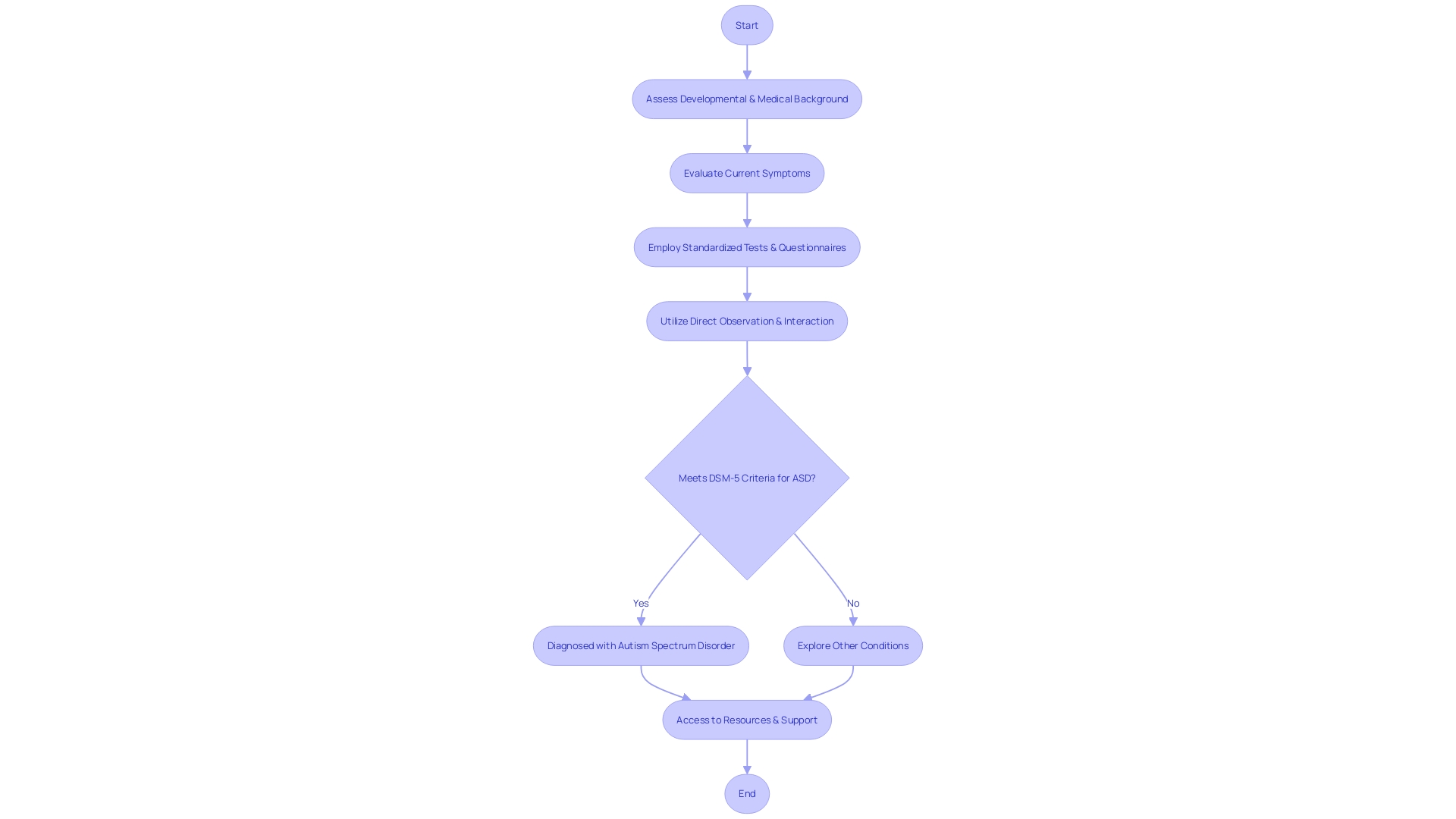
Detecting Autism Spectrum Disorder (ASD) early is crucial for enhancing a child's development. Exciting advancements in machine learning offer hope for swift identification of ASD, reducing the distressing diagnostic process. The DSM-5 provides criteria for diagnosis, while recognizing the value of self-identification within the autistic community.
A multi-faceted approach is essential to assess ASD, involving caregivers' insights and medical experts' observations. Technological advancements, like the SenseToKnow app, show promise in evaluating early indicators of ASD. Early recognition allows for timely interventions that significantly improve outcomes.
Diagnosing ASD requires a meticulous evaluation of developmental history, symptoms, and behaviors. Cutting-edge research is enhancing our understanding of ASD and the effectiveness of diagnostic tools. Early diagnosis allows access to resources and support for a fuller life.
Dispelling myths, such as the link to vaccines, is important. Autism is a complex condition influenced by genetic and neurological factors. Qualified healthcare professionals make clinical decisions to support individuals and their families effectively.
By providing valuable insights and expert advice, we empower parents in navigating the journey of ASD diagnosis and support. Early detection and intervention make a significant difference, and advancements in diagnostic tools offer hope for improved outcomes and support for families.
What is the importance of early diagnosis of Autism Spectrum Disorder (ASD)?
Early diagnosis of ASD is crucial as it allows for interventions to begin at a young age, which can significantly improve a child's social, communicative, and cognitive development. Early interventions can have a substantial impact on the individual's quality of life.
How are recent advancements in machine learning aiding ASD diagnosis?
Recent advancements in machine learning are utilizing large datasets and complex algorithms to identify patterns associated with ASD. One study achieved nearly 80 percent accuracy in identifying ASD in children under two years old using easily accessible data, which could revolutionize early and accurate diagnosis.
What diagnostic criteria are used for identifying ASD?
The Diagnostic and Statistical Manual of Mental Disorders, fifth edition (DSM-5), provides criteria for ASD diagnosis, which include persistent challenges in social interaction and communication, along with restricted and repetitive behaviors or interests.
Is self-recognition of ASD within the autistic and neurodivergent community considered significant?
Yes, self-recognition within the autistic and neurodivergent community is important as it acknowledges the limitations of medical evaluations and the value of personal identification of ASD, which may suffice for support without the need for a formal diagnosis.
What is the prevalence of ASD?
ASD is estimated to affect up to 1 in 36 people, making awareness and assessment crucial for accessing resources and support.
How is ASD assessed?
ASD assessment involves a multi-faceted approach that includes caregiver insights, medical expert observations, and often referrals to specialists. Tools like the Sense to know app and advancements by organizations like NeuroQure are contributing to more efficient diagnostic methods.
What role does the Interagency Autism Coordinating Committee (IACC) play in autism?
The IACC enhances federal coordination and communication regarding autism research and services, playing a crucial role in advancing understanding and improving the lives of those affected by autism.
What steps are involved in the diagnostic process for ASD?
The process involves assessing the person's developmental and medical history, evaluating current symptoms, direct observation and interaction, and may include standardized tests and questionnaires. Clinicians look for persistent differences in communication, social interaction, and restricted, repetitive behaviors.
What is the 'AutMedAI' model?
The 'AutMedAI' model is an innovative approach developed through research that employs machine learning to identify ASD in children under two years old with an accuracy rate of nearly 80%, based on observable factors without extensive evaluations.
How does early identification of ASD benefit individuals?
Early identification allows individuals to access resources and support that enable them to live more fulfilling lives. Organizations like The Autism Community in Action (TACA) emphasize the importance of early treatment, such as behavioral therapy, to improve outcomes.
Are there any common myths about ASD that need dispelling?
Yes, it is a myth that autism is caused by vaccines, parenting styles, or nutrition. Autism is not associated with these factors; instead, research is exploring genetic and neurological contributions to the condition.