Navigating the complexities of emotional regulation can be quite a journey for children with autism. Parents often find themselves searching for effective strategies to support their little ones. In this article, we’ll explore ten impactful methods that can empower you to foster emotional regulation skills in your child. These strategies can enhance their ability to manage feelings and navigate social interactions.
So, how can you effectively implement these strategies in daily life? And what benefits might they bring to your child's emotional well-being? Let’s dive into these questions together! Exploring these insights can truly transform the emotional landscape for both your child and your family. We’re here to help you every step of the way!
At Rori Behavioral Innovations, we truly believe in a . We understand that every child has unique psychological needs, and we’re here to help! Our clinicians conduct thorough evaluations to identify effective ways for parents to support their child with autism in developing , which can really make a difference in how young individuals manage their emotions.
Imagine your child learning to handle their feelings more effectively. This personalized support represents effective ways for parents to support their child with autism in developing , in various situations. We utilize , which are , ensuring that kids don’t just learn but actually apply them in real life!
As a result, you’ll see . It’s all about creating a . If you’re curious about how we can help your family, let’s explore this together! We’re here to !

Mindfulness methods, like deep breathing and guided imagery, are in developing by helping them become more aware of their feelings. These practices serve as in developing by encouraging children to take a moment to pause and reflect, allowing them to respond thoughtfully instead of reacting impulsively. Practicing mindfulness consistently is one of the in developing and reducing anxiety.
At Rori Care - ABA Therapy, we offer a variety of , including:
These services reinforce . Plus, our provides families with in developing by offering . And with our Program Development, we ensure that each approach is tailored to foster emotional growth.
Together, these services create a warm and compassionate atmosphere, helping families navigate challenges and support youth development. Let’s explore this journey together! We’re here to !

. It really helps them feel secure and can significantly reduce anxiety. When children have regular daily routines, they can anticipate what’s coming next, which often leads to fewer outbursts.
You know, can be a game changer! They provide a clear picture of daily tasks, making it easier for kids to understand their day. In fact, studies show that kids using visual schedules often feel more in control of their emotions. About 60% of research highlights positive outcomes in their ability to stay on task during school activities.
Psychologists who work with young people stress that . It helps them navigate their surroundings with more confidence and less uncertainty. By focusing on organized routines, parents can discover their child with autism in developing emotional regulation skills while and overall development.
At Rori Care, we’re all about embracing neurodiversity and supporting young individuals. Our clinical leadership team is dedicated to empowering caregivers with to help meet their behavioral goals. Plus, we offer free consultations with our to assist families in navigating the challenges that come after an .
Let’s explore this together! We’re here to help you every step of the way!

Role-playing different situations is among the effective ways for parents to in developing . Imagine simulating scenarios like greeting a friend or handling disappointment - this helps them recognize and express their emotions more effectively. This structured practice provides their child with autism in developing , while also boosting .
Research shows that about 70% of kids who regularly engage in see noticeable improvements in their behavior and communication. Plus, role-playing can enhance social interaction abilities by up to 40%! This gives kids the essential tools they need to navigate those tricky social dynamics.
At Rori Care, we’ve designed our to create a supportive environment where young participants can dive into these . It’s all about fostering communication and building relationships. Our therapists highlight how this method provides effective ways for parents to in developing through and , which are key for developing empathy and negotiation skills.
By breaking down social interactions into bite-sized pieces, role-playing helps kids grasp and practice each element. This ultimately leads to increased confidence and resilience in real-life situations. And let’s not forget about our ! They empower parents with ABA principles and strategies, which offer their child with autism in developing through involvement and data collection.
Let’s explore this together! We’re here to !

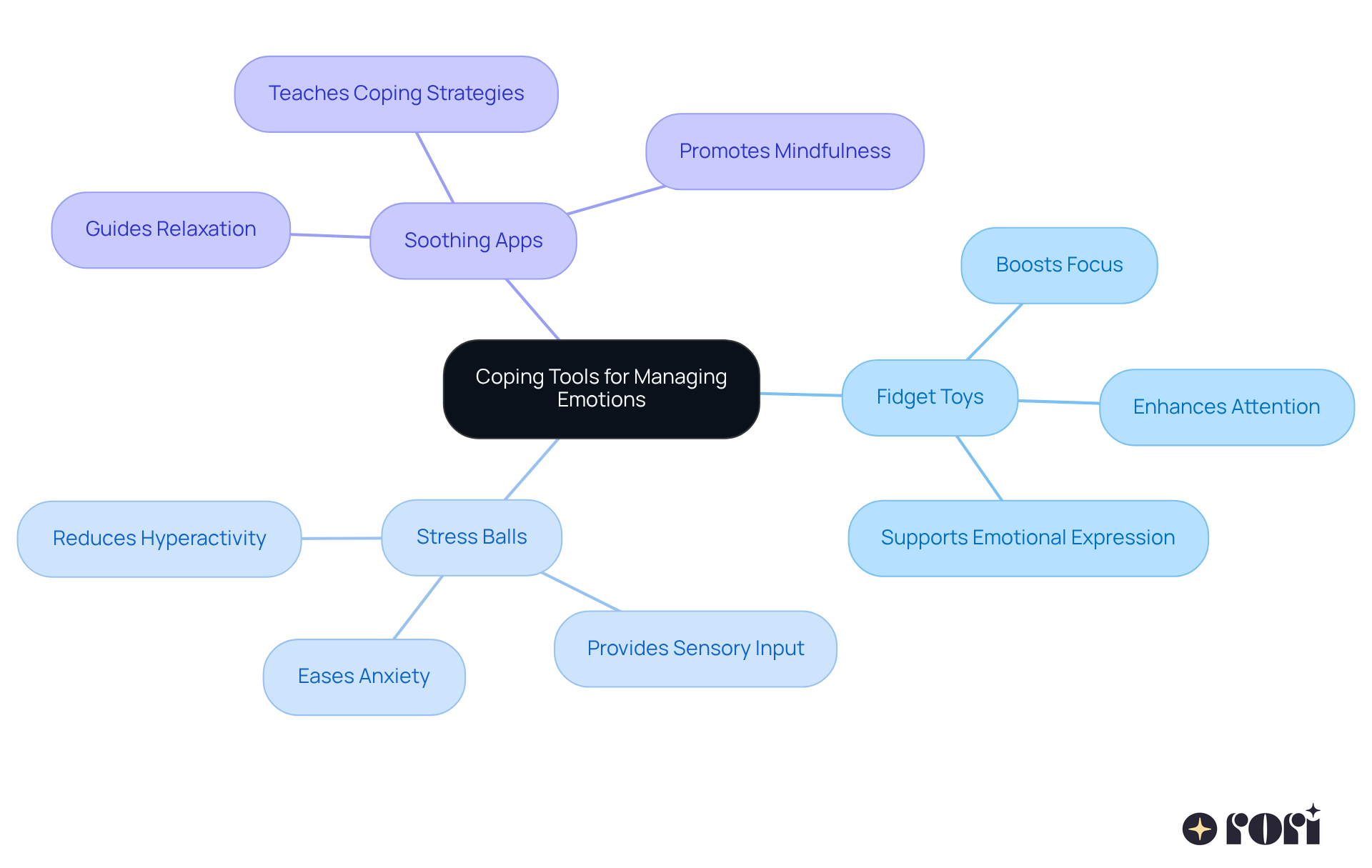
Coping tools like stress balls, , and can be real lifesavers for kids with autism when they’re navigating tough emotions. These handy resources help young ones self-regulate and ease anxiety, giving them something tangible to hold onto when feelings get overwhelming. Research shows that can boost focus and attention, making them great strategies for emotional regulation. For instance, studies have found that fidgeting can lead to , especially for kids who struggle with attention. Plus, can guide relaxation techniques, helping kids better manage their emotional journeys.
When it comes to using these tools, it’s best to introduce them as rather than just toys. This way, kids can grasp their purpose and learn when and how to use them, especially during stressful moments. Evidence suggests that when kids have the right , they’re more equipped to handle their emotions, leading to better behavioral outcomes. For example, fidget devices can help kids express their feelings and make choices, while can provide quick relief from anxiety.
Integrating these into daily routines can really enhance emotional management for kids with autism, fostering independence and resilience. By creating a that encourages the use of and , parents can discover with autism in developing . Let’s explore this together and see how these tools can make a difference!
Recognizing and rewarding is one of the to in developing and can really boost a young person's motivation to handle their feelings. Praising their kids for using or staying calm in stressful situations is one of the to in developing . This kind of is one of the to in developing !
But it’s not just about the kids; is super important too. When caregivers understand and strategies better, they can make informed choices that positively impact their children’s progress. This not only helps the kids but also boosts caregivers' confidence and reduces stress in the family. Plus, it creates a that encourages resilience and self-control in youngsters.
Let’s explore this together! By working hand-in-hand, we can explore to in developing , creating a where our kids thrive emotionally.

Cultivating is so important for kids with autism. It helps them recognize and understand their feelings better. can really make a difference! 🌟
Feeling charts provide a visual way for children to see different emotions, making it easier for them to identify what they’re feeling. On the other hand, to write down their emotions, which promotes reflection and a deeper understanding of their feelings.
Research shows that these tools can significantly boost in autistic youth. For instance, kids who regularly use feeling charts often find it easier to . This can lead to better coping strategies during tough times. Therapists emphasize how crucial it is to , noting that "the ability to express emotions is key for effective communication and emotional regulation."
Integrating these tools into daily routines can create a supportive environment for growth. Parents can spark conversations about feelings by using the charts and encouraging journaling. This not only helps kids recognize their emotions but also strengthens the bond between parent and child. Overall, using emotion charts and feelings journals represents effective ways for parents to in developing . Let’s explore this together!

Consistent physical activity is so important for boosting the of kids with autism. Think about it: activities like swimming, dancing, or just playing outside can really get those endorphins flowing-those little neurotransmitters that help us feel happy and relaxed! shows that this balance in brain chemicals can help ease stress, , and lift moods.
Encouraging our little ones to join in on fun not only supports their mental health but also adds a sprinkle of joy and engagement to their daily lives. Even short bursts of exercise can make a difference, and . Isn’t that amazing? It really highlights how important it is to weave movement into their routines.
Pediatricians emphasize that organized can build , helping kids manage stress and navigate better. However, it’s worth noting that some benefits, like reduced anxiety, might need more specific or intense activities. By prioritizing physical activity, we can create a that supports our children’s social growth and overall well-being. Let’s explore this together!

Creating a nurturing home atmosphere is one of the effective ways for parents to in developing . When we set up , it allows our young ones to feel safe while they . Think about having quiet corners for relaxation - this can really help reduce , which is crucial since many autistic individuals are more sensitive to stimuli. Research shows that for parents to in developing , as they help manage sensory input and give our kids the chance to develop .
Family therapists often talk about how vital it is to create spaces where young individuals can share their emotions freely. Specialists agree that a encourages the expression of feelings, which is key for personal growth. Plus, when families engage in open conversations about emotions, it strengthens their bonds and equips kids with the skills they need to express themselves. By focusing on these elements, parents can discover their child with autism in developing while building a supportive setting that nurtures their children's well-being and resilience.
Let’s explore this together! By prioritizing a calm and organized home, we can make a real difference in our children's emotional development.

Collaborating with experts such as therapists, educators, and pediatricians offers effective ways for parents to in developing . This teamwork not only brings valuable insights and strategies but also ensures that kids get the consistent support tailored to their unique needs. When caregivers and professionals , it really , allowing everyone to tackle challenges in a coordinated way.
Studies show that when caregivers and professionals , it can lead to much better outcomes for autistic youth. This teamwork , which are crucial for their development. Experts agree that the synergy created through collaboration can spark innovative solutions and create a more for children. Ultimately, this highlights in developing and improving their overall quality of life.
Let’s explore this together! By reaching out and building connections with professionals, you’re taking a big step toward supporting your child’s journey.

Supporting emotional regulation in children with autism is quite the journey! It takes understanding, patience, and some effective strategies. By trying out personalized approaches like ABA therapy, mindfulness techniques, and structured routines, parents can really help their child manage emotions and tackle daily challenges. Creating a supportive home environment and using role-playing scenarios can empower children to express themselves and build essential coping skills.
One key insight here is the importance of practical resources like coping tools and positive reinforcement. These can motivate children to engage in healthy emotional regulation. Plus, fostering emotional identification skills through tools like feelings charts and journals helps kids articulate their emotions more effectively. It’s all about collaboration between parents and professionals, ensuring that each child gets the tailored support they need.
Ultimately, the journey toward emotional regulation for children with autism isn’t just about managing emotions; it’s about fostering resilience, independence, and well-being. By embracing these strategies and creating a nurturing environment, parents can truly make a profound impact on their child's emotional development. Exploring these approaches not only benefits the child but also strengthens family bonds, paving the way for a brighter future filled with emotional growth and understanding. Let’s explore this together!
What is Rori Care's approach to ABA therapy for children with autism?
Rori Care emphasizes a personalized approach to ABA therapy, conducting thorough evaluations to identify effective strategies for supporting children with autism in developing emotional regulation skills.
How does Rori Care help children with emotional regulation?
Rori Care uses evidence-driven methods such as positive reinforcement, visual aids, and role-playing to teach children coping strategies that they can apply in real-life situations, fostering independence and resilience.
What mindfulness techniques does Rori Care recommend for emotional awareness?
Rori Care recommends techniques like deep breathing and guided imagery to help children become more aware of their feelings, allowing them to respond thoughtfully instead of reacting impulsively.
What mental health support services does Rori Care offer?
Rori Care offers group therapy, individual therapy, and a Caregiver Education program that provides families with strategies to implement mindfulness at home.
Why are predictable routines important for children with autism?
Predictable routines help children feel secure and can significantly reduce anxiety by allowing them to anticipate what comes next, leading to fewer emotional outbursts.
How can visual schedules benefit children with autism?
Visual schedules provide a clear picture of daily tasks, helping children understand their day better. Research shows that using visual schedules can improve their ability to stay on task and feel more in control of their emotions.
What resources does Rori Care provide for families after an autism diagnosis?
Rori Care offers free consultations with Board Certified Behavior Analysts to assist families in navigating the challenges that arise after an autism diagnosis.
How does Rori Care support neurodiversity?
Rori Care embraces neurodiversity by empowering caregivers with ABA principles and strategies to help meet their children's behavioral goals, creating a supportive environment for youth development.