
Introduction
Understanding and nurturing social skills in children with autism can be quite the journey for both the child and their family. 🌟 With tailored approaches that focus on individual needs, parents and caregivers can truly tap into the potential for better communication, confidence, and meaningful interactions. But amidst all the strategies out there, how can families figure out which methods will really resonate with their child?
Let’s explore this together! This article dives into ten proven techniques designed to enhance social skills in children with autism. We’ll share insights that empower caregivers to foster growth and connection in their little ones. After all, every step forward is a reason to celebrate!
Rori Care – ABA Therapy: Personalized Treatment Plans for Social Skills Development
At Rori Behavioral Innovations Inc., we truly believe in the power of . Every child with autism is unique, and their needs are just as distinct. That’s why a is so important! It allows our practitioners to dive deep into understanding each child’s specific challenges in social skills by utilizing proven methods for .
By crafting , we not only help improve these skills but also in young individuals. Imagine your child becoming more adept at , leading to better interactions and friendships with their peers. It’s heartwarming to see the positive changes that come from !
And the results speak for themselves! Numerous studies highlight among children who receive in children with autism. So, let’s explore this together! If you’re a parent looking for ways to support your child, we’re here to help you every step of the way!
Utilize Visual Supports to Enhance Social Understanding
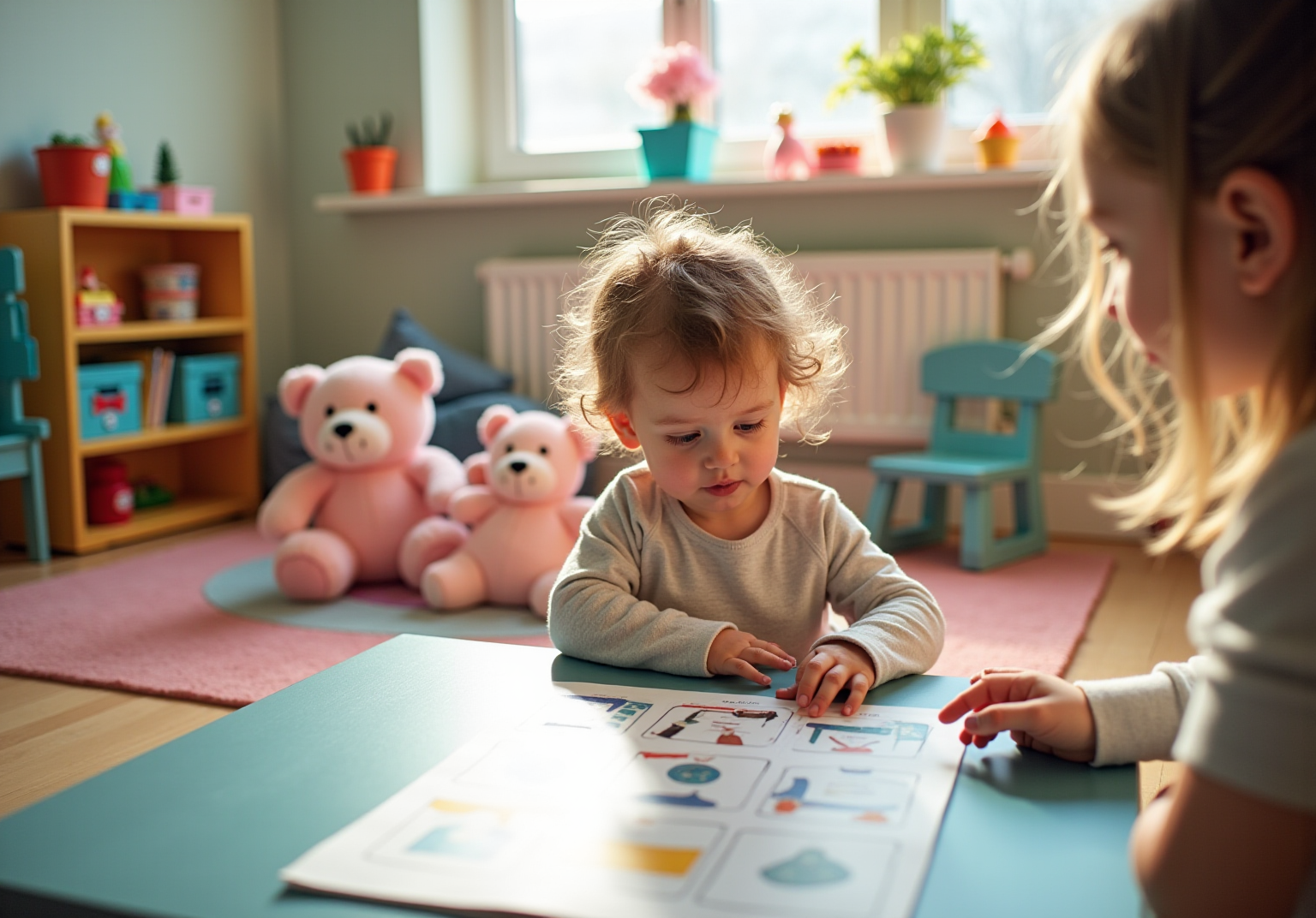
like picture schedules, narrative stories, and gesture prompts are truly invaluable for helping kids with autism grasp social signals and expectations. By turning abstract ideas into concrete representations, these tools make navigating a lot easier. For example, visual schedules help young learners anticipate transitions and understand the order of social activities, which can really cut down on anxiety and boost engagement.
Did you know that research shows and a 28% increase in academic engagement for students with autism? That’s pretty impressive! Plus, kids using tend to show 45% more independence in compared to those who rely solely on verbal guidance. It’s clear that these tools make a difference.
And let’s not forget about . They’re fantastic for helping kids navigate different situations, making it easier for them to understand appropriate behaviors and reactions. Overall, integrating visual supports creates a that builds confidence, reduces frustration, and encourages .
So, let’s explore this together! If you’re looking for ways to support your child, consider . We’re here to help you every step of the way!

Implement Role-Playing to Practice Everyday Social Scenarios
is a fantastic way to help kids with autism build their ! At Rori Care, our clinical leadership team is all about creating a space that celebrates neurodiversity and helps young people thrive. By acting out everyday scenarios, kids can practice starting conversations, answering questions, and picking up on social cues in a safe and supportive environment.
For example, parents can set up fun role-play situations where their child practices inviting a friend to play or sharing toys. This hands-on approach not only boosts their confidence but also strengthens for effective social interactions. Research shows that can enhance by up to 40%! Plus, studies indicate that around 70% of kids who regularly engage in role-playing see .
Success stories highlight how kids involved in often experience less anxiety in real-life social situations, leading to deeper connections with their peers. These role-playing sessions can include practicing greetings, taking turns, and responding to various social cues, all tailored to the child’s interests and developmental level.
At Rori Care, we believe these are crucial for . Role-playing is truly , ADHD, Social Communication Disorders, and Anxiety Disorders, utilizing proven methods for developing in children with autism. Let’s explore this together and see how we can support your child every step of the way!

Concentrate on One Skill at a Time for Effective Learning
Focusing on one social skill at a time is super important when using proven methods for to help them learn effectively. This approach lets them really before moving on to the next one. For example, when teaching eye contact, it’s best to concentrate solely on that until the child feels confident. Research shows that this method not only but also builds confidence, as kids can use what they’ve learned in real-life situations.
A meta-analysis found that has a moderate effect, highlighting the importance of . There are so many out there! Many kids have made significant strides in their social interactions through in children with autism, showing just how powerful these approaches can be in autism therapy. As Fatimah S. Alahmari wisely points out, ‘While SST interventions offer potential benefits, they should be regarded as one element of a broader, , rather than a standalone solution.’
Parents, you can really make a difference by dedicating . This way, your child can gain confidence and truly master each ability before moving forward. Plus, by learning some – you’ll be better equipped to support your child’s learning. This not only leads to better behavioral outcomes but also helps you make informed decisions.
By actively engaging in your child’s development, you can provide the right support at home, which enhances professional interventions and fosters consistency. Let’s explore this together! Your involvement is key to their success!

Leverage Play to Foster Social Interaction Skills
Play is such a vital resource for helping kids with autism, ADHD, and similar challenges by using proven methods for . Think about – like and . They give kids a chance to practice , taking turns, and communicating effectively. For instance, games like ‘Simon Says’ and ‘Duck, Duck, Goose’ not only teach kids to follow directions but also encourage them to interact with their peers in a fun and supportive environment.
Research shows that engaging in these playful activities can really boost interaction skills, helping kids build . Isn’t that wonderful? Studies indicate that organized play can lead to improvements in , self-expression, and . This makes it a for those on the spectrum, especially when incorporating proven methods for .
By weaving organized play into daily routines, parents and caregivers can create enriching experiences that enhance and emotional well-being. Let’s explore this together! We’re here to help you every step of the way!

Practice Social Skills in Real-Life Settings for Better Generalization
Kids with autism, ADHD, Social Communication Disorders, and Anxiety Disorders can really benefit from practicing proven methods for to effectively acquire and retain . Think about arranging , joining , or getting involved in group sports – these are fantastic opportunities for practice! For example, a little one might greet friends at a local park or share toys during a playdate.
These real-world interactions not only reinforce what kids have learned in therapy but also boost their confidence in social situations. Studies show that children who participate in well-organized playdates can experience , leading to . One study found that kids with autism who regularly engaged in playdates demonstrated the effectiveness of proven methods for , which resulted in , leading to stronger connections and better participation in .
Success stories really highlight how consistent can foster and lessen feelings of isolation. By creating nurturing environments where kids can develop their interpersonal skills, families can help their children thrive both relationally and emotionally. Plus, is key! By understanding ABA principles and actively participating in their child’s social development, caregivers can provide better support at home, leading to improved behavioral outcomes and a happier family dynamic. Let’s explore this together!

Use Positive Reinforcement to Encourage Social Behaviors
is such a powerful way to encourage positive behaviors in kids with autism! When parents recognize and reward their child for showing , it really helps strengthen those behaviors. For instance, if a child successfully starts a conversation with a peer, giving them some can really motivate them to keep practicing this skill.
Research shows that not only boosts communication attempts – like saying ‘drink’ instead of screaming – but also helps build . This approach creates a , leading to better interactions and connections.
Plus, when caregivers learn about , they’re better equipped to use these techniques consistently at home. This active involvement not only supports informed decision-making but also leads to . It empowers caregivers, boosts their confidence, and helps reduce stress.
Let’s explore this together! Your journey in can be filled with small victories that make a big difference.

Incorporate Peer Modeling to Enhance Social Learning
is a fantastic way to help kids with autism learn important . By watching their neurotypical friends, they can pick up on essential behaviors and interactions. For example, arranging gives children a chance to see and mimic , like sharing and taking turns. This kind of not only helps them grasp cultural norms but also boosts their ability to connect with others.
Research shows that kids with autism who engage in peer interactions often make significant strides in how they initiate and respond in conversations. This can lead to greater independence and emotional well-being. Many families have shared heartwarming success stories, noting that playdates have led to improved interactions and friendships. As one expert pointed out, ” by providing real-world contexts where children with ASD can observe and imitate suitable behaviors among diverse peers.”
And let’s not forget about the importance of . It lays the groundwork for these vital . By combining the benefits of with EIBI principles, families can implement proven methods for developing in children with autism, creating enriching experiences that nurture these abilities and help forge lasting connections.
So, let’s explore this together! If you’re looking for ways to support your child’s social development, remember that you’re not alone. We’re here to help you every step of the way!

Integrate Technology to Support Social Skills Development
Technology is a game-changer for employing proven methods for ! With interactive apps and programs designed specifically for , these tools create . For instance, apps like SceneSpeak use video modeling to show appropriate interactions, letting young learners pick up skills by watching and practicing.
And it gets even better! like NAO can mimic real-life social situations. This gives kids a safe space to practice their skills without the pressure of real-world interactions. Many families are seeing great results, with recent statistics showing a growing trend in using in children with autism for . Success stories highlight how these tech tools have implemented proven methods for , resulting in big improvements in socialization, , and independence for youth with developmental disorders. It’s amazing to see how these innovative solutions can nurture essential life skills!
But it’s not just about the technology. is super important too! When caregivers understand , they can provide better support at home. This complements professional interventions and helps create consistency. By making informed decisions, caregivers can actively engage in their child’s learning journey, leading to better behavioral outcomes and boosting their confidence in supporting their little ones.
Let’s explore this together! We’re here to help you every step of the way!

Join Social Skills Groups for Collaborative Learning Opportunities
Joining can be a game changer for youth with autism! These organized settings utilize proven methods for , allowing them to build alongside peers who face similar challenges. With the at Rori Care, these groups often feature , games, and discussions that really encourage interaction and communication.
Imagine young ones teaming up on projects or playing group games that require cooperation and teamwork. This collaborative approach not only boosts their social skills but also helps them form friendships and feel a sense of belonging in their community. Research shows that kids involved in benefit from proven methods for , which leads to and increases their confidence in social situations.
By participating in these groups, young individuals can develop vital communication skills while enjoying the company of their peers. It’s all about paving the way for ! Plus, Rori Care highlights the , developing programs, and providing supervision, empowering families to support their child’s growth effectively. Let’s explore this together!

Conclusion
Developing social skills in children with autism can feel like a winding road, right? It’s a journey that needs a personal touch and some tried-and-true methods. When caregivers focus on tailored treatment plans, they can really boost their child’s ability to handle social situations, leading to more independence and confidence. Think about it: from visual supports and role-playing to real-life practice and tech tools, each method highlights how crucial a structured and supportive environment is for effective social interactions.
For instance, using visual aids can turn those tricky social concepts into something kids can actually grasp. And role-playing? It’s a fantastic way for children to practice their skills in a safe space. By zeroing in on one skill at a time, kids can master it before moving on. Plus, joining organized playgroups opens up chances for collaborative learning. Don’t forget about positive reinforcement and peer modeling – they really enrich the learning experience, helping kids internalize those important social norms and behaviors.
Ultimately, all these insights point to the power of a comprehensive and personalized approach to social skills development in children with autism. By getting involved in their child’s growth and tapping into community resources, caregivers can make a real difference in fostering meaningful relationships and boosting emotional well-being. Embracing these strategies not only helps the child but also strengthens family bonds, paving the way for a brighter, more connected future. Let’s explore this together! We’re here to help you every step of the way!
Frequently Asked Questions
What is the approach taken by Rori Care in ABA therapy for children with autism?
Rori Care utilizes personalized treatment plans in ABA therapy, recognizing that every child with autism is unique. This tailored approach allows practitioners to understand each child’s specific challenges in social skills and develop focused strategies to improve these skills while nurturing independence and confidence.
How do personalized treatment plans benefit children with autism?
Personalized treatment plans help children improve their social skills, leading to better interactions and friendships with peers. They also foster independence and confidence, resulting in positive changes in communication and social engagement.
What are visual supports, and how do they help children with autism?
Visual supports include tools like picture schedules, narrative stories, and gesture prompts that help children with autism understand social signals and expectations. These aids make navigating social interactions easier and can lead to improved task completion rates and increased academic engagement.
What improvements have been observed with the use of visual supports?
Research shows that visual supports can lead to a 34% improvement in task completion rates and a 28% increase in academic engagement for students with autism. Additionally, children using visual aids tend to show 45% more independence in daily living skills compared to those relying solely on verbal guidance.
How can role-playing benefit children with autism in developing social skills?
Role-playing allows children to practice everyday social scenarios in a safe environment, helping them build confidence and essential social skills. It enhances communication skills and can lead to significant improvements in behavior and communication.
What specific social skills can be practiced through role-playing?
Role-playing can include practicing starting conversations, answering questions, inviting friends to play, sharing toys, greeting others, taking turns, and responding to social cues, all tailored to the child’s interests and developmental level.
What are the overall benefits of incorporating role-playing into therapy for children with autism?
Role-playing can reduce anxiety in real-life social situations, leading to deeper connections with peers. It is an invaluable tool in therapy for children with Autism Spectrum Disorders, ADHD, Social Communication Disorders, and Anxiety Disorders.
List of Sources
- Rori Care – ABA Therapy: Personalized Treatment Plans for Social Skills Development
- Success Rates of ABA Therapy | Advanced Autism Services (https://advancedautism.com/post/success-rates-of-aba-therapy)
- The Numbers Don’t Lie: Revealing Autism Therapy Statistics | Above and Beyond Therapy (https://abtaba.com/blog/autism-therapy-statistics)
- Inspiring and Insightful Autism Quotes | Advanced Autism Services (https://advancedautism.com/post/autism-quotes)
- Success Rates of ABA Therapy (https://besteveraba.com/blog/success-rates-of-aba-therapy)
- Quotes About Autism – Arms Wide Open ABA Therapy (https://armswideopenaba.com/blog/quotes-about-autism)
- Utilize Visual Supports to Enhance Social Understanding
- The Role of Visual Supports in Enhancing Learning for Autism | Advanced Autism Services (https://advancedautism.com/post/the-role-of-visual-supports-in-enhancing-learning-for-autism)
- The Effectiveness of Visual Supports for Students with Autism Spectrum Disorder – (https://naset.com/publications/autism-spectrum-disorders-series/the-effectiveness-of-visual-supports-for-students-with-autism-spectrum-disorder)
- Using Visual Supports in ABA Therapy | Links (https://linksaba.com/using-visual-supports-in-aba-therapy)
- (PDF) Assessing the Effectiveness of Visual Supports in Fostering Communication and Classroom Engagement among Elementary Students with Autism Spectrum Disorder (https://researchgate.net/publication/395430929_Assessing_the_Effectiveness_of_Visual_Supports_in_Fostering_Communication_and_Classroom_Engagement_among_Elementary_Students_with_Autism_Spectrum_Disorder)
- Quotes About Autism (https://usevisualstrategies.com/quotes-about-autism)
- Implement Role-Playing to Practice Everyday Social Scenarios
- The Role of Role-Playing in Developing Social Skills in ABA Therapy for Autism (https://buildingblockstherapy.org/blog/the-role-of-role-playing-in-developing-social-skills-in-aba-therapy-for-autism)
- How to Use Role-Playing in ABA Therapy for Skill Development | Discovery ABA (https://discoveryaba.com/aba-therapy/how-to-use-role-playing-in-aba-therapy-for-skill-development)
- Celebrating Neurodiversity: Inspiring Words on Autism | Step Ahead ABA (https://stepaheadaba.com/blog/autism-quotes)
- Inspiring Autism Quotes for Understanding and Acceptance – Kids First (https://kidsfirstservices.com/first-insights/autism-quotes)
- How Scripting and Role-Playing Enhance ABA Therapy Outcomes – Up & Up ABA (https://upandupaba.com/faqs-resources/how-scripting-and-role-playing-enhance-aba-therapy-outcomes)
- Concentrate on One Skill at a Time for Effective Learning
- 30 Quotes from 30 People with Autism (https://elsforautism.org/30-quotes-from-30-people-with-autism)
- Effectiveness of social skills training interventions for children with autism spectrum disorder: A systematic review and meta-analysis – PMC (https://pmc.ncbi.nlm.nih.gov/articles/PMC11918677)
- Enhancing ADL skill acquisition in children with ASD through a personalized, fuzzy logic-based tablet game: a pilot study – Scientific Reports (https://nature.com/articles/s41598-025-21586-2)
- 80 Inspiring Quotes on Autism Awareness and Support – Empower ABA (https://empoweraba.com/80-inspiring-quotes-on-autism-awareness-and-support)
- Leverage Play to Foster Social Interaction Skills
- The Open School- Learning Through Play Quotes (https://openschooloc.com/2020/05/05/learning-through-play-quotes)
- Is there evidence that playing games promotes social skills training for autistic children and youth? – PMC (https://pmc.ncbi.nlm.nih.gov/articles/PMC11816463)
- The Numbers Don’t Lie: Revealing Autism Therapy Statistics | Above and Beyond Therapy (https://abtaba.com/blog/autism-therapy-statistics)
- The Role of Role-Playing in Developing Social Skills in ABA Therapy for Autism (https://buildingblockstherapy.org/blog/the-role-of-role-playing-in-developing-social-skills-in-aba-therapy-for-autism)
- Play Quotes – The Strong National Museum of Play (https://museumofplay.org/about/play-quotes)
- Practice Social Skills in Real-Life Settings for Better Generalization
- pmc.ncbi.nlm.nih.gov (https://pmc.ncbi.nlm.nih.gov/articles/PMC11487924)
- Understanding Play Dates from an Autistic Child’s Perspective: A Comprehensive Guide for Parents and Caregivers | Links (https://linksaba.com/understanding-play-dates-from-an-autistic-childs-perspective)
- 10 inspiring quotes from people with autism | Autism Speaks (https://autismspeaks.org/life-spectrum/autism-quotes)
- 80 Inspiring Quotes on Autism Awareness and Support – Empower ABA (https://empoweraba.com/80-inspiring-quotes-on-autism-awareness-and-support)
- The Role of Playdates in Promoting Social Skills for Children with ASD (https://mastermindbehavior.com/post/the-role-of-playdates-in-promoting-social-skills-for-children-with-asd)
- Use Positive Reinforcement to Encourage Social Behaviors
- Inspirational ABA and Autism Quotes – Mrs. Moe’s Modifications (https://mrsmoesmodifications.com/inspirational-aba-and-autism-quotes)
- The Benefits of Positive Reinforcement for Kids with Autism (https://elevationautism.com/blog/the-effects-of-positive-reinforcement-on-toddlers-with-autism)
- 10 inspiring quotes from people with autism | Autism Speaks (https://autismspeaks.org/life-spectrum/autism-quotes)
- Celebrating Neurodiversity: Inspiring Words on Autism | Step Ahead ABA (https://stepaheadaba.com/blog/autism-quotes)
- Incorporate Peer Modeling to Enhance Social Learning
- Celebrating Neurodiversity: Inspiring Words on Autism | Step Ahead ABA (https://stepaheadaba.com/blog/autism-quotes)
- The Impact of Positive Peer Models on Social Skills Development in ASD (https://mastermindbehavior.com/post/the-impact-of-positive-peer-models-on-social-skills-development-in-asd)
- 80 Inspiring Quotes on Autism Awareness and Support – Empower ABA (https://empoweraba.com/80-inspiring-quotes-on-autism-awareness-and-support)
- 10 inspiring quotes from people with autism | Autism Speaks (https://autismspeaks.org/life-spectrum/autism-quotes)
- gratefulcareaba.com (https://gratefulcareaba.com/blog/inspirational-quotes-about-autism)
- Integrate Technology to Support Social Skills Development
- Autism And Technology-Based Learning Tools (https://allaboutaba.com/blog/autism-and-technology-based-learning-tools)
- Inspiring Autism Quotes for Understanding and Acceptance – Kids First (https://kidsfirstservices.com/first-insights/autism-quotes)
- A virtual reality, AI-boosted system helps students with autism improve social skills (https://eschoolnews.com/digital-learning/2025/02/14/virtual-reality-ai-students-autism-social-skills)
- 10 inspiring quotes from people with autism | Autism Speaks (https://autismspeaks.org/life-spectrum/autism-quotes)
- Robots help children with autism improve social skills (https://news.yale.edu/2018/08/22/robots-help-children-autism-improve-social-skills)
- Join Social Skills Groups for Collaborative Learning Opportunities
- 43 Inspiring Autism Quotes to Uplift and Motivate (https://goldencaretherapy.com/43-inspiring-autism-quotes)
- Inspiring Autism Quotes for Understanding and Acceptance – Kids First (https://kidsfirstservices.com/first-insights/autism-quotes)
- 80 Inspiring Quotes on Autism Awareness and Support – Empower ABA (https://empoweraba.com/80-inspiring-quotes-on-autism-awareness-and-support)
- kidsclubaba.com (https://kidsclubaba.com/autism-quotes)
- 10 inspiring quotes from people with autism | Autism Speaks (https://autismspeaks.org/life-spectrum/autism-quotes)