Creating a nurturing environment for sensory-sensitive children is more important than ever! As awareness of sensory processing issues grows, parents and caregivers have a wonderful opportunity to create a space that not only accommodates but also celebrates their child's unique sensory needs.
But let’s be real - the challenge often lies in understanding the specific triggers and preferences that can make or break a child's comfort and emotional well-being. How can caregivers design a supportive atmosphere that empowers children to thrive amidst their sensitivities?
Let’s explore this together! By sharing experiences and insights, we can build a community that truly understands these challenges. After all, every child is different, and what works for one may not work for another.
So, let’s dive into some relatable scenarios and supportive information that can help you navigate this journey. We’re here to help you every step of the way!
As you start this journey, take a moment to observe your child in different settings. Notice what seems to trigger their senses - whether it’s loud noises, bright lights, or certain textures. Keeping a journal can be super helpful! Jot down instances that cause discomfort or distress. Did you know that studies show processing dysfunction affects about 5-16% of kids? It’s more common than you might think!
Working with occupational therapists can really make a difference. They can conduct formal evaluations that offer valuable insights into your child’s unique processing patterns. These evaluations are crucial because they help you understand how sensitivities manifest. Plus, they offer tips for creating a supportive environment for children with sensory sensitivities that meets your child's needs. Let’s explore this together! We’re here to help you every step of the way!

One of the tips for creating a supportive environment for children with sensory sensitivities is to create a soothing space in your home, which can really make a difference for your little one. Think about filling this area with cozy items like bean bags and weighted blankets. You might also want to include some fidget toys to help your child self-regulate when they need it most.
Colors play a big role too! Soft blues, greens, and purples can create a calming atmosphere. And don’t forget about lighting! Adjustable options like dimmable LED lights or soft floor lamps can help minimize visual overstimulation.
Adding some auditory tools, like noise machines that produce white noise or nature sounds, can further reduce distractions. One of the tips for creating a supportive environment for children with sensory sensitivities is to ensure the area is free from overwhelming stimuli, providing your child with a peaceful retreat when they feel overwhelmed.
Personalization is key! Encourage your child to include items that bring them comfort, like their favorite books, plush toys, or bins filled with soothing materials. Did you know that research shows 90% of individuals with ASD face sensory-related challenges? Tailoring calming environments offers tips for creating a supportive environment for children with sensory sensitivities, which can enhance emotional regulation and focus.
By creating a space that reflects your child’s preferences, you’re fostering a sense of safety and empowerment. This way, they can advocate for their own sensory needs. Let’s explore this together!

Soft, natural lighting is key to creating a calming atmosphere at home. Think about installing dimmable lights so you can adjust the brightness to suit your little one’s mood. And let’s steer clear of those harsh fluorescent lights - they can be a bit overwhelming, can’t they?
If your child is sensitive to sound, adding sound-absorbing materials like rugs and curtains can really help reduce echoes and create a more peaceful space. Plus, white noise machines or some soothing music can mask those sudden loud noises that might cause anxiety for kids with autism. Did you know that around 50% to 70% of autistic individuals experience sound sensitivity? That’s why these adjustments are so important for their comfort and well-being.
Environmental psychologists emphasize that managing sound levels can really enhance how children perceive their surroundings, allowing them to engage more fully. As Marina Sarris wisely points out, 'No one single type of symptom is 'consistently associated' with autism,' which reminds us just how varied the experiences can be among autistic individuals.
By implementing these strategies, you can use tips for creating a supportive environment for children with sensory sensitivities, which promotes relaxation and reduces stress. Let’s explore this together and make your home a haven for your child!

Incorporating fun activities into your child's daily routine can make a world of difference! Think about bins filled with rice or beans, playdough, or even some water play. Setting specific times for these activities not only adds structure but also brings predictability, which is super important in Applied Behavior Analysis (ABA) for helping kids learn and grow.
Encourage your little ones to explore different textures and materials. This exploration can really help them develop their sensory processing skills and align with their behavioral goals. And don’t forget about movement! Activities like jumping on a trampoline or swinging can be great for regulating energy levels.
By joining in on these activities, you’ll not only have fun but also deepen your understanding of ABA principles. This knowledge can empower you to make informed choices that lead to better behavioral outcomes and support your child's development. Let’s explore this together!

Take a moment to look around your living space. Are there items that just seem to add to the visual clutter? Regularly checking in on your surroundings can help you spot those unnecessary things that might be weighing you down. Consider using storage solutions like bins and baskets to keep toys and materials organized and tucked away when they’re not in use.
It’s also helpful to designate specific areas for different activities. This way, each space can be functional and free from distractions. Involving your kids in the decluttering process can be a great way to teach them about the importance of an organized environment. After all, a tidy space is crucial for their emotional and behavioral well-being.
Research shows that a well-organized home can significantly reduce anxiety and enhance focus, especially for individuals with autism. So, creating a calming atmosphere is essential! Have you heard of the 52-Week Decluttering Challenge? It’s a fantastic way for families to tackle clutter systematically, which provides tips for creating a supportive environment for children with sensory sensitivities, leading to a more serene living space. This challenge encourages families to take small, manageable steps toward a clutter-free home, making the process feel less overwhelming and much more achievable.
And here’s a tip: caregivers can apply ABA principles by using positive reinforcement when kids help out with organizing tasks. This not only boosts their engagement but also helps them understand the process better. Let’s explore this together and make our homes a little more peaceful!

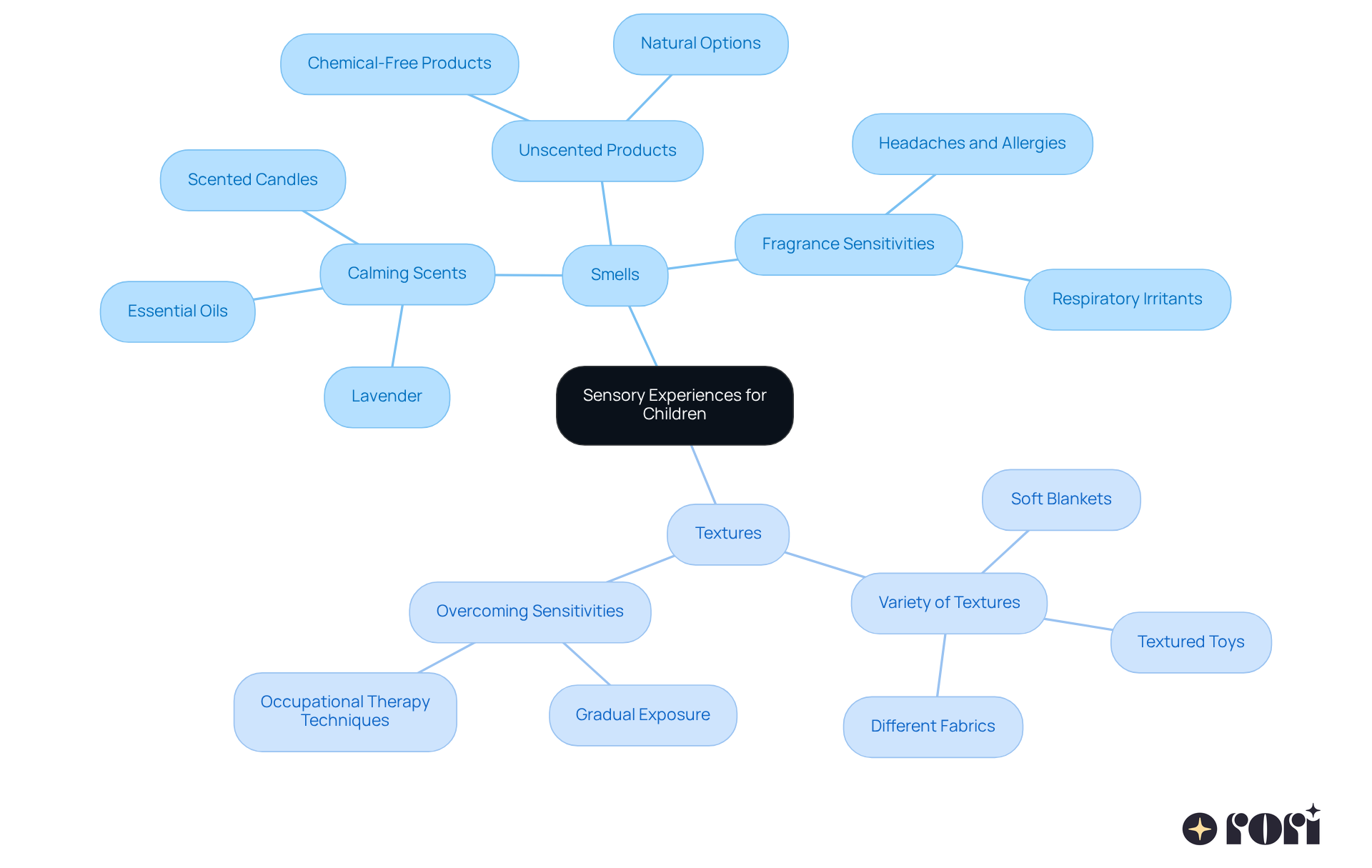
Let’s talk about the scents in your home! Choosing unscented or naturally scented products can really help keep things comfortable for your little one. Calming scents, like lavender, can be lovely when introduced through essential oils or scented candles. Just make sure your young one is okay with these aromas! As Lucy Jane Miller points out, "sensation that reaches the sensory filtering system and is passed through to" your child can greatly affect their comfort and behavior.
Also, keep in mind that some fragrances might trigger headaches or worsen allergies, so it’s super important to choose wisely.
Now, when it comes to textures, offering a variety of tactile experiences is key! Think soft blankets, textured toys, and different fabrics. This variety offers valuable tips for creating a supportive environment for children with sensory sensitivities, enabling your child to explore and express their preferences in a more engaging way.
Addressing texture sensitivities is crucial, too. Some kids might shy away from certain fabrics, which can limit their clothing choices. By providing a range of textures, you can help them gradually overcome these aversions and improve their quality of life. We’re here to help you every step of the way!
One of the essential tips for creating a supportive environment for children with sensory sensitivities is to establish a daily timetable that includes regular times for meals, activities, and relaxation. Visual schedules or charts can really help illustrate the day’s flow, making it easier for your little one to know what to expect. Research shows that having a consistent routine can significantly lower anxiety, giving kids a sense of security during transitions.
Of course, it’s also important to be flexible to meet your child’s needs, but keeping the core elements of the routine steady is key for stability. Youth psychologists often provide tips for creating a supportive environment for children with sensory sensitivities, emphasizing how structured daily schedules can support emotional regulation and boost overall well-being, helping kids thrive in their environments.
By incorporating some principles of Applied Behavior Analysis (ABA), you can enhance these routines even further. This way, they align with therapeutic strategies that promote effective learning and positive behavior changes. Plus, being actively involved gives you the tools to make informed decisions that can really help your child progress.
To create a visual schedule, think about using colorful charts or apps that outline daily activities. This can help your child anticipate what’s coming next, making the day feel more manageable. This approach not only fosters a collaborative environment but also supports your child’s development. Let’s explore this together!

Encouraging open conversations about perceptual needs and preferences within the family is so important! When everyone understands sensitivities and the strategies in place to support the young one, it really boosts compassion and understanding. At Rori Care, we provide thorough and empathetic Applied Behavior Analysis treatment, helping caregivers grasp ABA principles and strategies that are key for supporting behavioral goals.
Assembling a family toolkit can make a big difference! Think about including items like:
This way, everyone can engage in the youngster's experience. This collaborative approach not only empowers the young one but also strengthens family connections, making it easier for them to feel supported and understood.
Let’s not forget the power of regular chats about sensory experiences! These discussions can help normalize feelings and offer tips for creating a supportive environment for children with sensory sensitivities. We’re here to help you every step of the way!
Working with occupational therapists or behavioral specialists is so important when it comes to understanding your child's unique processing needs. These specialists can help you:
At Rori Care, we’re all about empowering your little one with the [[skills they need to explore the world independently](https://rori.care/post/10-benefits-of-naturalistic-training-for-children-with-autism)](https://rori.care/post/10-benefits-of-naturalistic-training-for-children-with-autism), and we know how vital play is for sensory development.
Regular chats with these experts can provide you with valuable tips for creating a supportive environment for children with sensory sensitivities, ensuring that the support you receive evolves with your child's changing needs. Plus, our clinical leadership team at Rori Care is dedicated to neurodiversity and the success of young individuals, making sure that every intervention is effective and personalized.
Let’s explore this journey together! We’re here to help you every step of the way!
Keeping an eye on your child's environment is super important for their well-being, particularly when you apply tips for creating a supportive environment for children with sensory sensitivities in the context of Applied Behavior Analysis (ABA) therapy. Take a moment to watch how they react to different things around them. Notice any changes in what they like or don’t like. Involving your child in this process can really help; ask them what they enjoy or what feels a bit too much. Based on their feedback, you can make some tweaks to their space-maybe rearranging furniture, adding new sensory tools, or adjusting daily routines to fit their changing needs.
Research shows that kids' sensory preferences can shift over time, so it’s key to stay in tune with those changes. For instance, a study found that 62% of sensory behavior patterns were either stable or improving, while 35% of kids showed low concerns. This suggests that making proactive adjustments can lead to better outcomes. By applying tips for creating a supportive environment for children with sensory sensitivities, such as creating a flexible sensory space and actively involving caregivers, you’re helping your child thrive and navigate their world with more ease.
This approach not only boosts support but also encourages informed decision-making and better behavioral outcomes, which aligns perfectly with the proven benefits of ABA therapy. So, let’s explore this together! Your insights and experiences matter, and we’re here to help you every step of the way!

Creating a supportive environment for sensory-sensitive children is so important for their emotional well-being and development. By understanding their unique sensory needs, caregivers can create a nurturing space where these kids feel safe and empowered. This journey is all about continuous observation, teaming up with professionals, and implementing tailored strategies that cater to each child's sensitivities.
Throughout this article, we’ve shared some key strategies to help you in this endeavor. From assessing sensory needs and designing calming spaces to optimizing lighting and sound levels, each tip plays a crucial role in crafting an accommodating home environment. Incorporating sensory activities into daily routines, keeping things organized, and involving the whole family can really enhance the support system. Plus, regularly reassessing these strategies ensures that the environment adapts to your child's evolving needs, promoting comfort and confidence.
Ultimately, fostering a supportive atmosphere for sensory-sensitive children not only benefits their individual experiences but also strengthens family bonds and enhances overall well-being. By actively engaging in this process and seeking professional guidance when needed, families can create a harmonious living space that allows children to thrive and navigate their world with greater ease. Embracing these practices is a significant step toward nurturing resilience and joy in sensory-sensitive children. Let’s explore this together!
How can I assess my child's sensory needs?
Start by observing your child in different settings to identify triggers for their senses, such as loud noises, bright lights, or certain textures. Keeping a journal of instances that cause discomfort can be very helpful. Working with occupational therapists can also provide valuable insights through formal evaluations of your child's unique processing patterns.
What is the prevalence of sensory processing dysfunction in children?
Studies show that sensory processing dysfunction affects about 5-16% of children, which is more common than many might think.
What are some tips for creating a calming space for my child?
Create a soothing area filled with cozy items like bean bags and weighted blankets, and include fidget toys for self-regulation. Use soft colors like blues, greens, and purples, and consider adjustable lighting options like dimmable LED lights. Additionally, incorporate auditory tools such as noise machines to minimize distractions.
Why is personalization important in a calming space?
Personalization is key because it allows your child to include items that bring them comfort, such as favorite books or plush toys. This fosters a sense of safety and empowerment, enabling them to advocate for their own sensory needs.
How can I optimize lighting and sound levels in my home?
Use soft, natural lighting and consider installing dimmable lights to adjust brightness according to your child's mood. Avoid harsh fluorescent lights. For sound, add sound-absorbing materials like rugs and curtains, and use white noise machines or soothing music to mask sudden loud noises.
What percentage of autistic individuals experience sound sensitivity?
Approximately 50% to 70% of autistic individuals experience sound sensitivity, making it important to manage sound levels in their environment for comfort and well-being.
How can managing the environment enhance a child's experience?
Managing lighting and sound levels can enhance how children perceive their surroundings, allowing them to engage more fully. Creating a supportive environment promotes relaxation and reduces stress for children with sensory sensitivities.