

Introduction
Parenting a child with autism can feel like a rollercoaster ride – full of ups and downs, but also incredibly rewarding. With the right evidence-based behavioral strategies, you can create a nurturing environment that promotes growth, independence, and positive behaviors. In this article, we’ll explore 15 effective techniques that not only enhance communication and compliance but also empower your child on the spectrum.
So, how can you navigate the complexities of autism while ensuring your child thrives? 🤔 The following strategies offer insightful solutions to common challenges faced by families, paving the way for a more harmonious and supportive journey together. Let’s dive in and discover how we can make this journey a little easier!
Rori Care – ABA Therapy: Personalized Behavioral Strategies for Autism
At Rori Behavioral Innovations Inc., we understand that every child with autism is unique, and that’s why we specialize in tailored just for them. This approach means that the strategies we use are not only effective but also resonate with each child’s individual experiences and challenges.
Imagine a world where your child’s therapy feels like a natural part of their day-to-day life! By using data-informed insights, our clinicians craft that encourage , , and .
What’s even better? This personalized care model invites parents and caregivers to actively participate in their child’s development. You become an essential part of the , and together, we can make a real difference!
Let’s explore this journey together! We’re here to help you every step of the way!
Establish Clear Expectations to Enhance Compliance
Applied Behavior Analysis (ABA) is a tailored therapy that meets your child’s unique needs and incorporates , drawing on the science of learning and behavior. is key! It’s all about communicating specific rules and desired behaviors to your little ones. Using simple language and can really help reinforce these expectations. For instance, instead of saying, ‘Be good,’ you might say, ‘Please sit quietly while we eat.’
! Regularly reminding your kids of these expectations helps them understand and follow through. This clarity not only reduces confusion but also creates a , allowing children to explore their surroundings with confidence. Implementing through can significantly enhance learning, verbal, and social skills, making it essential to set these clear expectations right from the start.
As a next step, why not that outlines daily routines and expectations? It’s a great way to support your child’s understanding and make things a bit easier for everyone. Let’s explore this together!

Utilize Visual Schedules for Daily Structure and Predictability
can be a game-changer when used as for parents of kids with autism! They provide a clear outline of daily activities, which aligns beautifully with the principles of . This approach is all about being , making it easier for everyone involved.
Imagine creating a visual schedule using pictures or icons that represent each task or activity – like brushing teeth, getting dressed, and having breakfast. Place this schedule in a spot where your child can easily see it, and take a moment to discuss it together each morning. This simple practice serves as one of the , helping them anticipate what’s coming next, , and making transitions throughout the day much smoother.
And here’s something to consider: when these strategies are paired with the – often covered by insurance – about 90% of kids show ! This really underscores the importance of in boosting learning, verbal, and social skills.
Let’s explore this together! By implementing , such as , you’re not just helping your child; you’re also that fosters growth and understanding. We’re here to help you every step of the way!

Implement Positive Reinforcement to Encourage Desired Behaviors
Applying as one of the is a fantastic way to ! This approach utilizes by rewarding your child when they show certain behaviors, which boosts the chances they’ll do it again. Rewards can be anything from verbal praise and stickers to extra playtime or access to their favorite activities. For example, if your child follows a direction without needing a nudge, shower them with immediate and enthusiastic praise! This instant feedback helps them connect those positive actions with a rewarding outcome, making them more motivated to keep it up in the future.
Research shows that is key; giving rewards within 1-2 seconds of the desired action really amps up their effectiveness. While tangible rewards like toys or treats are popular, don’t underestimate the power of like praise or special privileges. It’s super important to tailor rewards to your child’s likes, as can really .
Psychologists highlight that the magic of rewards in changing behaviors lies in their ability to create a positive link with desired actions. For instance, a study found that showed better compliance and engagement. By focusing on what excites your child, you can for parents of kids with autism, fostering positive behaviors and supporting their overall growth. is especially crucial, as it enhances learning, verbal, and social skills in children with developmental disorders. So, becomes a vital strategy in their journey of growth.
Let’s explore this together! We’re here to help you every step of the way!

Offer Choices to Empower and Engage Your Child
Structured options can really empower individuals with autism, and they can be enhanced by applying , giving them a sense of control over their surroundings. This can significantly . For instance, instead of asking an open-ended question like, “What do you want to do?” try : “Would you like to play with blocks or read a book?” This approach not only helps young individuals sharpen their but also showcases to .
Research shows that employing can lower anxiety levels through organized decision-making. When young individuals can express their preferences within manageable options, they often feel more secure. It’s essential to ensure that the choices you offer are relevant and suitable for the individual’s current context. This way, you’re .
Child development specialists highlight that are crucial for helping children develop the ability to make , which is essential for self-advocacy and self-determination. This reinforces the importance of weaving into daily routines. Practical examples, like using , show how these techniques can enhance communication and involvement. Ultimately, this leads to for individuals on the spectrum.
Let’s explore this together! We’re here to help you every step of the way!

Communicate Clearly with Short and Concrete Directions
When guiding kids with autism, it’s super important to keep your language brief, clear, and concrete. For example, instead of saying, “Can you please clean up your toys?” try saying, “Put the blocks in the box.” This kind of helps young learners understand exactly what’s expected of them, making it easier for them to comply. Research shows that and lower anxiety, which helps kids follow through more easily.
is a tailored therapy that meets each child’s unique needs, using the science of learning and behavior. Keeping a is key, as it gives your little one the time they need to process what you’re saying. Speech therapists often highlight that repeating instructions can really reinforce understanding, and using – can make things even clearer. For instance, that break down tasks step-by-step have been shown to work wonders in various settings. Parents can create a and builds confidence in their children by using . Let’s explore this together!

Incorporate Transitional Objects for Smooth Activity Changes
Transitional items, like a beloved toy or blanket, can be a real game-changer for kids with autism when it comes to managing those tricky transitions between activities. These , helping to ease anxiety during changes. For example, when it’s time to switch from playtime to mealtime, letting your little one hold onto their favorite toy can create a cozy sense of security, making them more open to the change.
Did you know that research shows using comfort items during these activity shifts can really help with ? In fact, studies reveal that up to 25 percent of a school day is spent on ! That’s a lot of time where support is key. As therapist Gina M. Marini points out, “Children with ASD often in their routine and find it difficult when a pattern of behavior is disrupted.”
By incorporating familiar objects and , such as , parents can that helps their kids adapt more easily to new routines. This approach truly aligns with , which focus on being patient and adaptable to ensure that interventions meet each child’s unique needs.
Let’s explore this together! By understanding these strategies, we can for our little ones.

Redirect Problematic Behavior Instead of Saying ‘No’
Instead of just saying ‘no’ when your little one is acting out, why not ? This approach incorporates for parents of kids with autism that are rooted in principles. Imagine a therapy that adapts to your child’s , using learning and action principles to .
For instance, if your child is tossing toys around, gently steer them toward something like building with blocks. This not only helps them grasp what’s appropriate but also . By focusing on , you’re not just reinforcing good behavior; you’re also . This is so important for in kids with through for parents of kids with autism.
Let’s explore this together! By shifting the focus, you’re setting the stage for success and connection. We’re here to help you every step of the way!

Recognize and Address Sensory Overload in Your Child
Children with sensory processing differences often experience , which can lead to distress and challenging behaviors. Did you know that around 90% of individuals with autism face some form of ? – like covering ears, showing agitation, or withdrawing – is crucial for helping your child.
To create a , try to minimize loud noises, bright lights, and overwhelming stimuli. Simple strategies can make a big difference! Using noise-canceling headphones, weighted blankets, and fidget tools can help your little one more effectively. And don’t forget about ! Teaching deep breathing exercises can empower your child to cope during overwhelming situations.
Early identification of indicators can really help and promote a sense of security. This, in turn, can improve your child’s ability to connect with their environment. Have you considered incorporating into your approach? It’s a flexible, client-focused method that emphasizes each individual’s unique needs, using principles of education and behavior.
When the recommended hours of ABA therapy are fully implemented with active caregiver participation, about 90% of youth show significant progress! This evidence-driven approach highlights the importance of for parents of kids with autism in enhancing educational, verbal, and social skills. Ultimately, it can help your child manage sensory challenges more effectively.
Let’s explore this together! We’re here to help you every step of the way!

Utilize Teachable Moments for Reinforcement and Learning
pop up when your child shows a behavior or interest that can turn into a great . Think about it: if your little one is , why not take that chance to chat about its characteristics and habitat? This spontaneous exchange not only boosts their learning but also .
By embracing these moments, you can tailor your teaching to fit your child’s , which is a key part of . So, keep your eyes peeled for these opportunities! They’re perfect for introducing new concepts or skills in a fun way that enhances their experience and supports their growth.
To really make the most of these , try asking . This encourages your child to think critically and share their thoughts, and curiosity. Let’s explore this together!

Provide Structured Hands-On Activities for Engagement
Organized activities like arts and crafts, cooking, or construction projects can really spark the interest of young learners and make learning fun! 🎨✨ It’s important that these activities come with , so kids know exactly what to expect. For instance, when you’re baking cookies, why not involve your little one in measuring the ingredients and following the recipe step-by-step? Not only does this teach them practical skills, but it also helps them learn to follow directions and enjoy some .
By weaving in some during these activities, you can gain a better understanding of and . This knowledge empowers you to make informed choices that can positively through . Plus, when you actively participate, it not only supports your child’s education but also leads to , creating a . Let’s explore this together!

Maintain Calmness During Interactions to Foster Positive Behavior
Your demeanor really shapes how your kids behave, especially when we think about (ABA). This approach tailors to your child’s unique needs by tapping into the science of learning and behavior. It’s super important to keep a during those tough moments. Using a can really help reassure your little one, which can make a big difference in their emotional state.
When your child gets upset, take a moment to breathe deeply and show calmness. This not only helps to de-escalate the situation but also teaches them . Research shows that implementing can significantly reduce s, creating a more .
Experts in child behavior emphasize that staying composed isn’t just about handling the moment; it’s about . This encourages kids to express themselves and interact positively with others. Remember, feeling like they belong is a fundamental need for young people, fueling their motivation and building resilience.
Dr. Ross Greene reminds us that often happens when the demands on a child exceed their ability to cope. So, rather than punishment. This approach aligns with , which aim to enhance learning, verbal, and social skills in children with autism.
Let’s explore this together! We’re here to help you every step of the way!

Clarify Task Endings to Manage Expectations
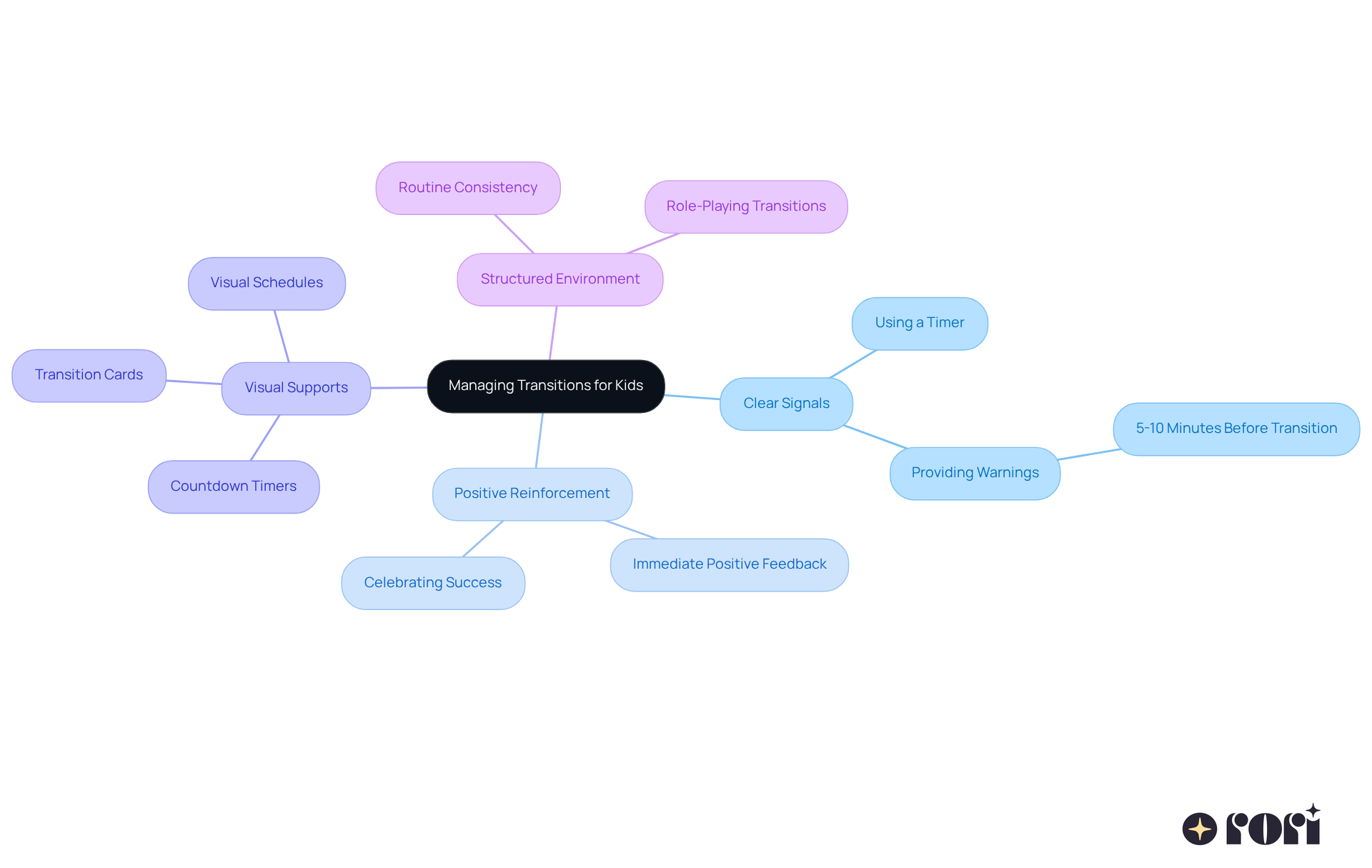
Helping your little ones understand when a task is wrapping up can be a game changer! 🌟 are key. For example, using a timer can signal that playtime is coming to an end, or you might say, ‘We have five more minutes before we clean up.’ This kind of clarity not only prepares kids for transitions but also eases the anxiety that often comes with unexpected changes.
When you acknowledge their cooperation during smooth transitions, it builds a sense of accomplishment and encourages positive behavior. Research shows that kids with autism thrive on predictability, and implementing can really help them manage transitions better. Behavioral therapists often recommend , like countdown timers or , to make these changes feel more manageable.
And don’t forget the power of immediate ! Celebrating a can boost their confidence and reinforce their efforts. By using these strategies, you can create a that supports your child’s . This aligns beautifully with the principles of , which are tailored to each child’s unique needs and have shown remarkable progress in 90% of individuals when caregivers are actively involved.
Plus, is the only scientifically proven treatment for autism that insurance covers, making it an accessible and vital resource for families. Let’s explore this together and see how we can support our kids through these transitions!
Engage Caregiver Support for Effective Strategy Implementation
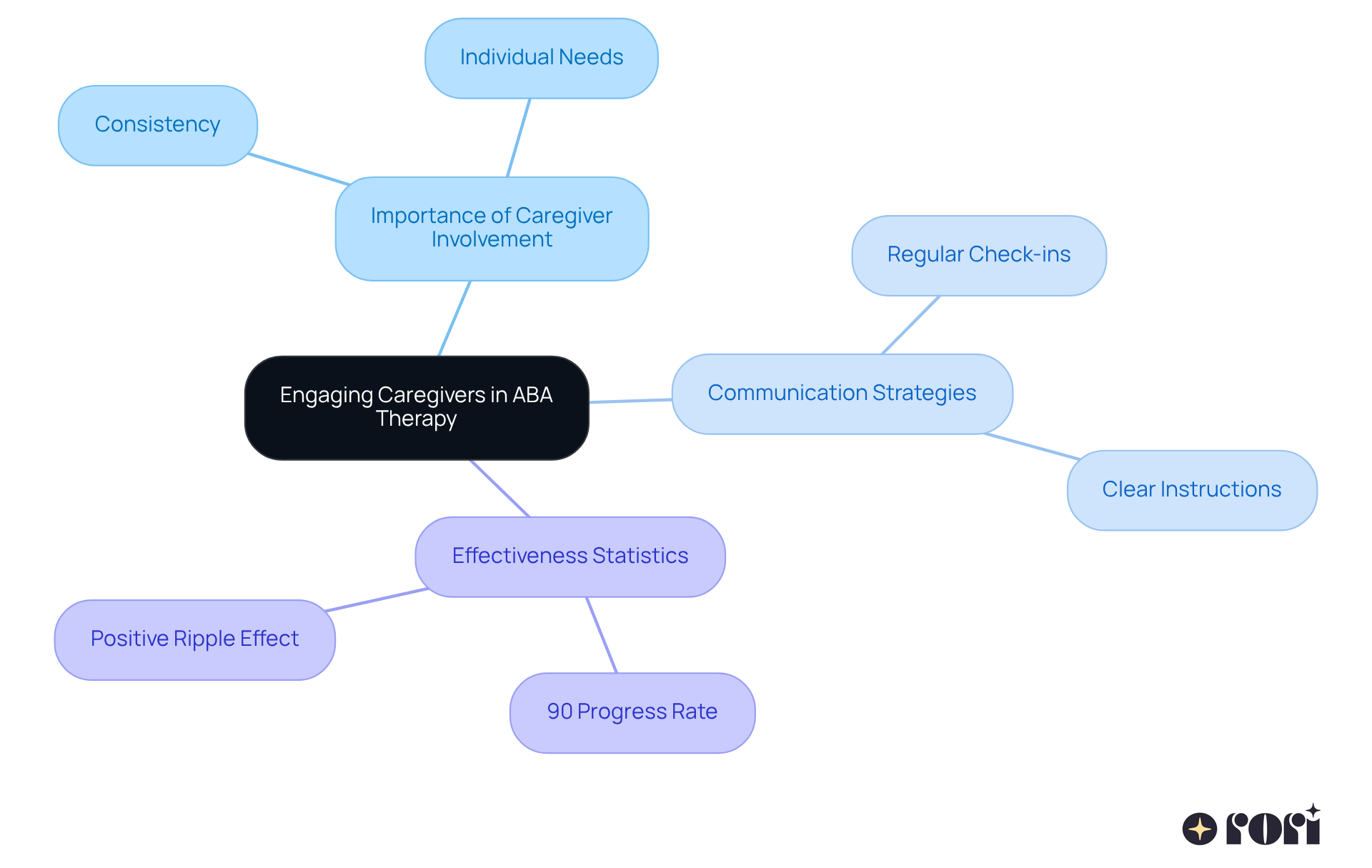
Getting caregivers involved in is key for consistency and effectiveness, especially when it comes to . This approach is all about focusing on each child’s , and it’s pretty impressive – about 90% of kids show when caregivers actively participate and follow the suggested hours.
It’s super important to keep the about the strategies you’re using. For instance, if a caregiver is looking after your child during the day, make sure they’re clear on what you’re doing at home. can really help everyone stay on the same page, reinforcing those in different settings. Let’s explore this together and see how we can make the most of it!
Leverage Technology for Enhanced Behavioral Strategies
Technology plays a vital role in supporting individuals with autism, offering innovative solutions that can really enhance . For example, using apps designed for can make daily routines and transitions smoother. Apps like ChoiceWorks help kids manage their activities better, . Plus, can provide real-time support, helping young ones navigate overwhelming situations. By weaving these tech tools into your child’s daily life, you not only boost their engagement but also create a lively learning environment that makes more accessible and enjoyable.
At Rori Care, we’re all about based on progress report data. Our updates intervention and skill acquisition plans after each session, ensuring we’re always on track. It’s exciting to see that when caregivers fully engage and complete the suggested hours, about 90% of kids show significant progress! However, we understand that parents can have mixed feelings about technology. Some might worry about its use. But here’s the good news: , and autistic youth tend to enjoy a higher quality of life compared to their non-autistic peers.
Experts in technology emphasize how important these tools are in , reinforcing their value in supporting development. By weighing the benefits and potential challenges of using technology, you can make informed choices that best support your child’s needs. We encourage you to explore that to maximize your child’s progress. Let’s explore this together!

Conclusion
Effective parenting strategies for children with autism can truly change the way we interact daily and boost developmental outcomes. By weaving in evidence-based behavioral strategies, parents can craft a nurturing space that meets their child’s unique needs. This approach not only encourages positive behaviors but also helps children navigate their world with more confidence and independence.
Throughout this article, we’ve explored various strategies, like:
- Setting clear expectations
- Using visual schedules
- Implementing positive reinforcement
- Offering choices
Each of these techniques plays a crucial role in enhancing compliance, easing anxiety, and promoting engagement. Plus, recognizing sensory overload and keeping calm during interactions are key to creating a supportive atmosphere that fosters learning and growth.
Ultimately, the journey of parenting a child with autism is enriched by the active involvement of caregivers and the smart use of technology. By tapping into these evidence-based strategies, parents can support their child’s development while also gaining a deeper understanding of their needs. Embracing these techniques can lead to meaningful progress, making a lasting difference in the lives of children with autism and their families. So, let’s explore these strategies further, engage actively in the process, and witness the wonderful changes that unfold together!
Frequently Asked Questions
What is Rori Care’s approach to ABA therapy for children with autism?
Rori Care specializes in personalized ABA therapy tailored to each child’s unique experiences and challenges, using data-informed insights to craft customized interventions that encourage positive behaviors, enhance social skills, and promote independence.
How can parents and caregivers participate in their child’s therapy at Rori Care?
Parents and caregivers are invited to actively participate in the therapeutic process, becoming essential partners in their child’s development, which can lead to significant improvements.
Why is it important to establish clear expectations for children with autism?
Establishing clear expectations helps communicate specific rules and desired behaviors, reducing confusion and creating a sense of safety for children, allowing them to explore their surroundings with confidence.
What role do visual schedules play in supporting children with autism?
Visual schedules provide a clear outline of daily activities, helping children anticipate what’s coming next, easing anxiety, and making transitions smoother throughout the day.
How does positive reinforcement work in encouraging desired behaviors?
Positive reinforcement involves rewarding children when they exhibit desired behaviors, which increases the likelihood they will repeat those behaviors. Rewards can include verbal praise, stickers, or extra playtime.
What is the significance of prompt reinforcement in behavior modification?
Prompt reinforcement, which involves providing rewards within 1-2 seconds of the desired action, enhances the effectiveness of positive reinforcement and helps children connect their actions with rewarding outcomes.
How does Early Intensive Behavioral Intervention (EIBI) benefit children with autism?
EIBI significantly enhances learning, verbal, and social skills in children with autism, making it an essential component of effective ABA therapy.
List of Sources
- Utilize Visual Schedules for Daily Structure and Predictability
- The Efficacy of Visual Activity Schedule Intervention in Reducing Problem Behaviors in Children With Attention-Deficit/Hyperactivity Disorder Between the Age of 5 and 12 Years: A Systematic Review – PMC (https://pmc.ncbi.nlm.nih.gov/articles/PMC8733412)
- The Benefits of Using Visual Schedules in ABA Therapy | Advanced Autism Services (https://advancedautism.com/post/the-benefits-of-using-visual-schedules-in-aba-therapy)
- Why Visual Supports are Important for Children with Autism (https://precisionfamilytherapy.com/post/why-visual-supports-are-important-for-children-with-autism)
- journals.sagepub.com (https://journals.sagepub.com/doi/10.1177/10742956241276003)
- Implement Positive Reinforcement to Encourage Desired Behaviors
- mastermindbehavior.com (https://mastermindbehavior.com/post/the-role-of-positive-reinforcement-in-autism-therapy)
- Inspirational ABA and Autism Quotes – Mrs. Moe’s Modifications (https://mrsmoesmodifications.com/inspirational-aba-and-autism-quotes)
- Autism Quotes | Intellistars – ABA Therapy (https://intellistarsaba.com/blog/autism-quotes)
- Autism Therapy: Key Statistics (https://ambitionsaba.com/resources/autism-therapy-statistics)
- thelighthousech.com (https://thelighthousech.com/positive-reinforcement-for-autism-what-every-parent-should-know)
- Offer Choices to Empower and Engage Your Child
- How ABA Therapy Encourages Decision-Making and Choice-Making Skills (https://totalcareaba.com/autism/how-aba-therapy-encourages-decision-making-and-choice-making-skills)
- A practitioner’s guide to emphasizing choice-making opportunities in behavioral services provided to individuals with intellectual and developmental disabilities – PMC (https://pmc.ncbi.nlm.nih.gov/articles/PMC9897779)
- Leading with Choice: Honoring and Empowering Autistic Children (https://autismparentingmagazine.com/honoring-empowering-autistic-children?srsltid=AfmBOoqrvs3n8TLRqEbWTt_pDjiKDtOvhy3G-o29KQoz6mf4mQh3e03d)
- 107 Favorite Quotes About Autism and Aspergers (https://the-art-of-autism.com/favorite-quotes-about-autism-and-aspergers)
- Making Choices – Autism Awareness (https://autismawarenesscentre.com/making-choices)
- Communicate Clearly with Short and Concrete Directions
- 20 Inspiring Quotes About Autism Every Parent Must Read Today (https://circlecareservices.com/20-quotes-about-autism-and-parenting)
- 10 Inspiring Autism Awareness Quotes to Foster Understanding – Rori Blog (https://rori.care/post/10-inspiring-autism-awareness-quotes-to-foster-understanding)
- Inspirational Quotes About Autism | Grateful Care ABA (https://gratefulcareaba.com/blog/inspirational-quotes-about-autism)
- The Numbers Don’t Lie: Revealing Autism Therapy Statistics | Above and Beyond Therapy (https://abtaba.com/blog/autism-therapy-statistics)
- Incorporate Transitional Objects for Smooth Activity Changes
- 20 Life Transition Quotes for Change (https://life-care-wellness.com/20-life-transition-quotes-for-change)
- How ABA Therapy Helps with Self-Regulation During Transitions | Grateful Care ABA (https://gratefulcareaba.com/blog/how-aba-therapy-helps-with-self-regulation-during-transitions)
- How ABA Therapy Supports Transitions in Children with Autism | Advanced Autism Services (https://advancedautism.com/post/how-aba-therapy-supports-transitions-in-children-with-autism)
- Children, Autism, and Change: Tips to Make Transition Easier | Brown University Health (https://brownhealth.org/be-well/children-autism-and-change-tips-make-transition-easier)
- Top Quotes to Help During Times of Transition, Change, and Struggle – Thrive Therapy Studio (https://thrivetherapystudio.com/top-quotes-to-help-during-times-of-transition-change-and-struggle)
- Redirect Problematic Behavior Instead of Saying ‘No’
- Success Rates of ABA Therapy | Advanced Autism Services (https://advancedautism.com/post/success-rates-of-aba-therapy)
- 10 Effective Redirecting Behavior Examples for Parents and Educators – Rori Blog (https://rori.care/post/10-effective-redirecting-behavior-examples-for-parents-and-educators)
- Redirecting Behavior: A Guide for Early Childhood Educators (https://mybrightwheel.com/blog/redirecting-behavior)
- Impact of Applied Behavior Analysis on Autistic Children Target Behaviors: A Replication Using Repeated Measures – PMC (https://pmc.ncbi.nlm.nih.gov/articles/PMC10907966)
- Autism Quotes | Intellistars – ABA Therapy (https://intellistarsaba.com/blog/autism-quotes)
- Recognize and Address Sensory Overload in Your Child
- Inspiring Autism Quotes for Understanding and Acceptance – Kids First (https://kidsfirstservices.com/first-insights/autism-quotes)
- Autism Sensory Overload & Overstimulation (https://astroaba.com/blog/autism-sensory-overload-overstimulation)
- The Connection Between Autism and Sensory Processing Disorder (https://mastermindbehavior.com/post/the-connection-between-autism-and-sensory-processing-disorder)
- Managing Sensory Overload in Autism | Advanced Autism Services (https://advancedautism.com/post/managing-sensory-overload-in-autism)
- Utilize Teachable Moments for Reinforcement and Learning
- incredibleyears.com (https://incredibleyears.com/blog/supporting-students-with-autism)
- How to Encourage Curiosity and Exploration Through ABA Techniques | Intellistars – ABA Therapy (https://intellistarsaba.com/blog/how-to-encourage-curiosity-and-exploration-through-aba-techniques)
- Provide Structured Hands-On Activities for Engagement
- Supporting Social Engagement in Children with Autism Through Structured Programs | Advanced Autism Services (https://advancedautism.com/post/supporting-social-engagement-in-children-with-autism-through-structured-programs)
- The Games They Play: Observations of Children with Autism Spectrum Disorder on the School Playground – PMC (https://pmc.ncbi.nlm.nih.gov/articles/PMC6509020)
- The Benefits of Structured Recreational Activities for Children with Autism (https://mastermindbehavior.com/post/the-benefits-of-structured-recreational-activities-for-children-with-autism)
- potentialinc.org (https://potentialinc.org/about-us/news/benefits-of-cooking-kitchen-activities-for-children-with-autism)
- Inspiring Quotes on Child Learning and Development (https://vincegowmon.com/inspiring-quotes-on-child-learning-and-development)
- Maintain Calmness During Interactions to Foster Positive Behavior
- ybgr.org (https://ybgr.org/17-quotes-on-coaching-kids-through-behaviors)
- Emotional Regulation Quotes: 35 Words to Find Your Calm (https://reachlink.com/advice/anger/34-powerful-quotes-for-managing-strong-emotions)
- Calm Minds, Ready to Learn: Empowering Children with Relaxation Training (https://autismspectrumnews.org/calm-minds-ready-to-learn-empowering-children-with-relaxation-training)
- Clarify Task Endings to Manage Expectations
- Effective ABA for Managing Transitions in Kids | Blossom ABA Therapy (https://blossomabatherapy.com/blog/aba-for-managing-transitions)
- Children, Autism, and Change: Tips to Make Transition Easier | Brown University Health (https://brownhealth.org/be-well/children-autism-and-change-tips-make-transition-easier)
- Strategies for Reducing Transition-Related Meltdowns | Links (https://linksaba.com/strategies-for-reducing-transition-related-meltdowns)
- Top Quotes to Help During Times of Transition, Change, and Struggle – Thrive Therapy Studio (https://thrivetherapystudio.com/top-quotes-to-help-during-times-of-transition-change-and-struggle)
- Engage Caregiver Support for Effective Strategy Implementation
- 40 Inspirational Quotes for Caregivers – Care Options for Kids (https://careoptionsforkids.com/blog/inspirational-quotes-for-caregivers)
- The Vital Role Caregivers Play in ABA Therapy Success | Step Ahead ABA (https://stepaheadaba.com/blog/how-caregiver-support-enhances-the-effectiveness-of-aba-therapy-interventions)
- ultimatecareny.com (https://ultimatecareny.com/resources/motivational-quotes-for-caregivers)
- The Importance of ABA Family Training: Empowering Caregivers | Advanced Autism Services (https://advancedautism.com/post/the-importance-of-aba-family-training-empowering-caregivers)
- Inspirational Quotes to Lift Up Caregivers (https://h2hhc.com/blog/inspirational-quotes-for-caregivers)
- Leverage Technology for Enhanced Behavioral Strategies
- Data and Statistics on Autism Spectrum Disorder (https://cdc.gov/autism/data-research)
- Patterns and impact of technology use in autistic children (https://sciencedirect.com/science/article/pii/S1750946723001538)
- Inspirational Quotes About Autism | Grateful Care ABA (https://gratefulcareaba.com/blog/inspirational-quotes-about-autism)
- Quotes About Autism – Arms Wide Open ABA Therapy (https://armswideopenaba.com/blog/quotes-about-autism)