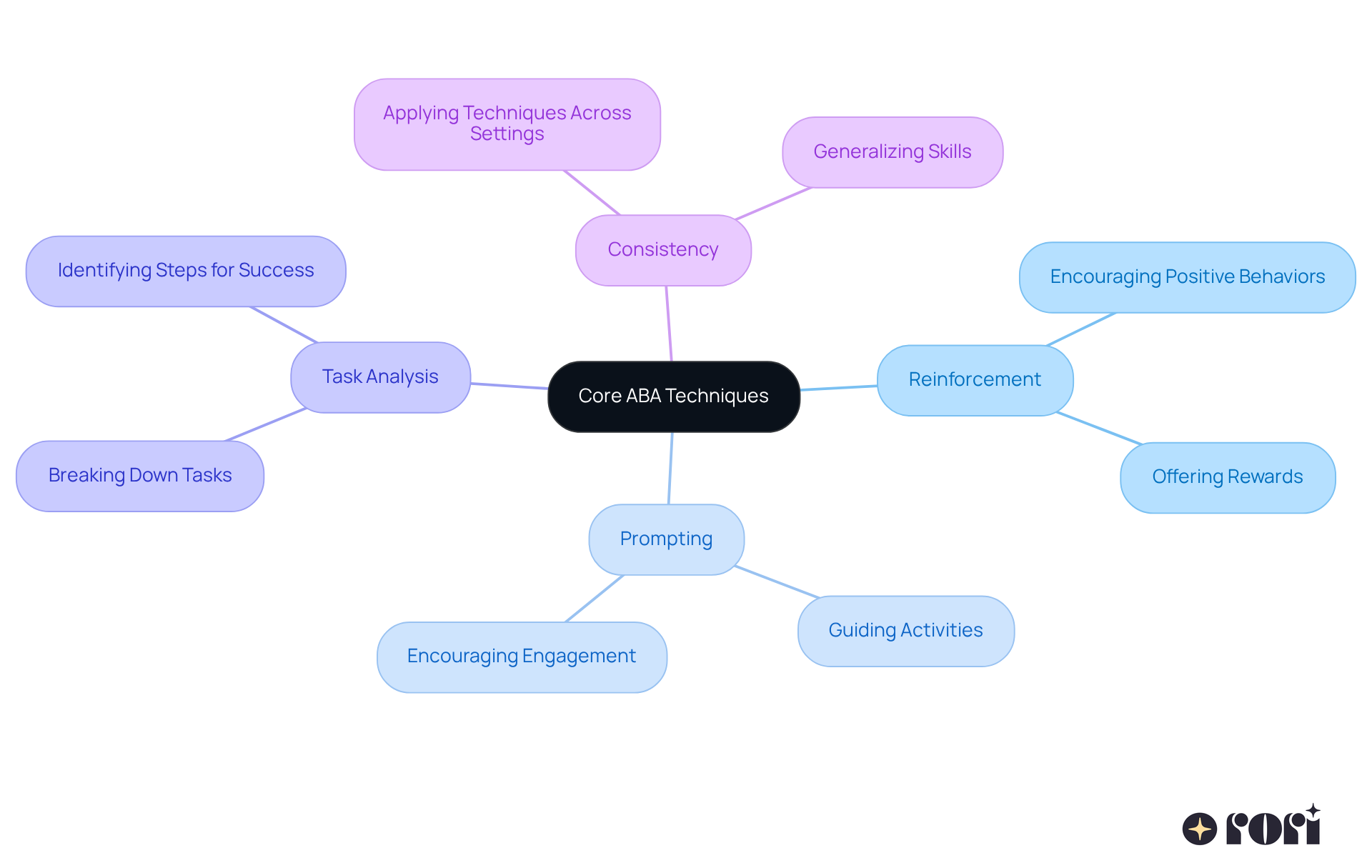
Navigating the everyday challenges of raising children can feel overwhelming, right? Understanding the ins and outs of Applied Behavior Analysis (ABA) can truly be a game-changer for parents like you. By mastering core techniques such as:
you can effectively foster positive behaviors and enhance your child's learning experiences.
But how do you seamlessly weave these strategies into your daily routines? This article is here to explore practical ABA techniques that empower you to tackle daily challenges with confidence and clarity. Together, we’ll pave the way for meaningful progress in your child's development. Let’s explore this journey together!
Let’s dive into some key ABA principles like reinforcement, prompting, and task analysis. These are super important for effectively modifying actions! For instance, think about how reinforcement can encourage positive behaviors by offering rewards. And prompting? It’s a great way to guide young ones toward activities they enjoy.
Now, let’s talk about consistency. It plays a critical role in applying these techniques across different settings. Research shows that when kids consistently apply ABA techniques for everyday challenges, they can really generalize their skills. This means they can use what they’ve learned at home, school, and beyond!
Next, it’s helpful to identify specific behaviors you want to encourage or discourage in your child. This , which incorporates ABA techniques for everyday challenges, makes reinforcement and prompting much more effective, leading to better outcomes.
Don’t forget to review resources or training materials that explain these techniques in detail. Engaging with comprehensive guides on ABA techniques for everyday challenges can significantly enhance your understanding and offer practical examples of how to apply these strategies effectively.
Lastly, have a chat with your child’s therapist about these techniques. Collaborating with professionals ensures that what you’re doing at home aligns with therapy sessions, maximizing the chances for success. We’re here to help you every step of the way!
Let’s talk about some specific behaviors you can reinforce with your little ones, like sharing, following instructions, or managing their emotions. Having this clarity helps you set achievable goals for your kids.
Now, think about meaningful rewards that really resonate with them. Maybe it’s extra playtime, a favorite snack, or doing an activity they love. Research shows that when rewards are personalized, they can really boost motivation and engagement!
It’s super important to provide immediate praise or rewards right after the desired behavior. This helps kids connect their actions with positive outcomes, nurturing that wonderful sense of achievement.
Mix it up with different reinforcement methods! You could use verbal praise, stickers, tokens, or even . For instance, a token economy system can work wonders - kids earn tokens for good behavior that they can trade for fun items or activities.
Keep an eye on their progress with regular check-ins to see which strategies are working best. This data-driven approach is key to maximizing the benefits of ABA techniques for everyday challenges and ensuring that your reinforcement strategies remain effective and aligned with your child’s evolving needs. Remember, individualization is crucial; tailoring your approach to each child’s unique needs makes all the difference!

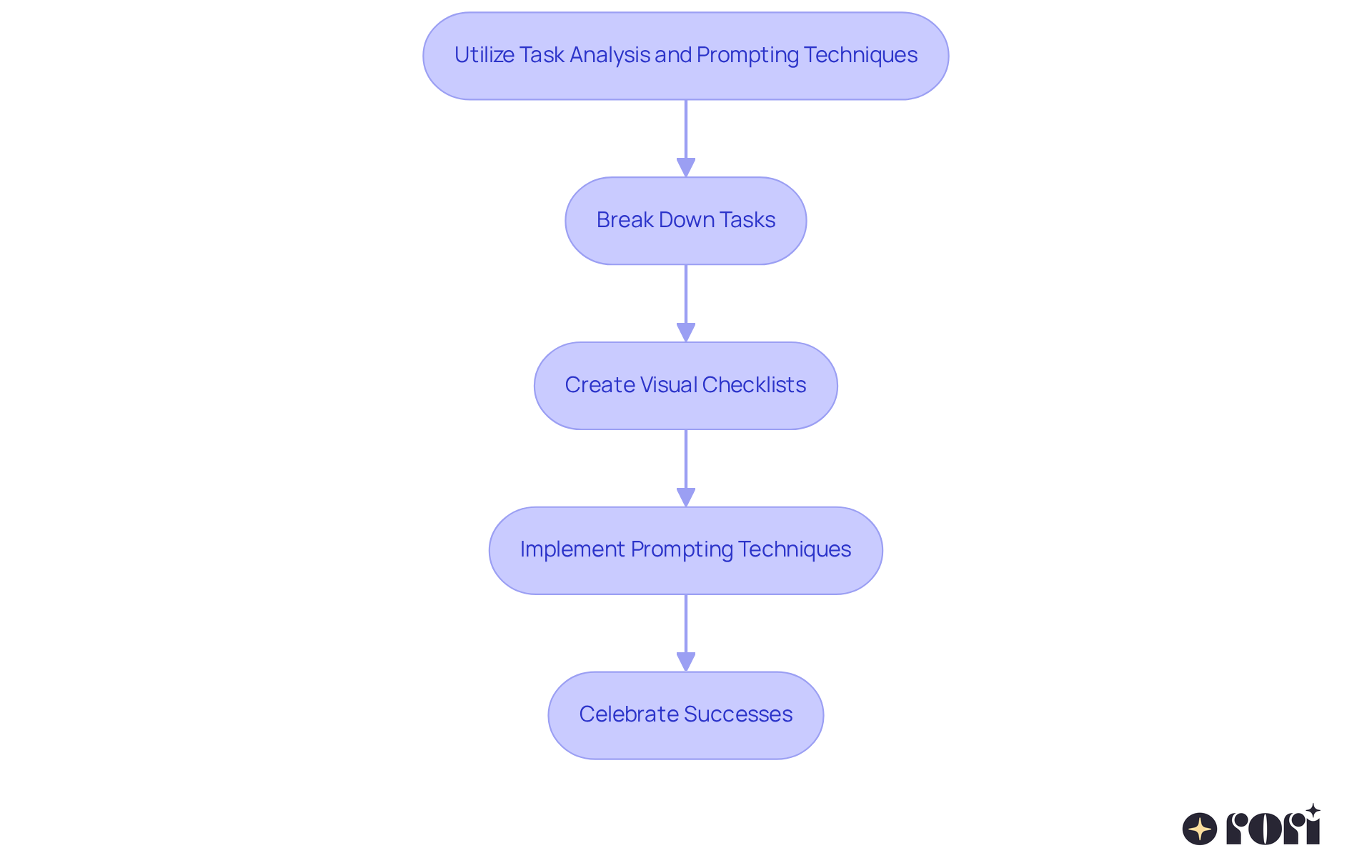
Breaking down tasks into smaller, manageable steps - like getting dressed or brushing teeth - can really help your little one feel less overwhelmed. Did you know that skills practiced at least twice a week have an 80% retention rate? That’s why consistent practice is so important for better learning outcomes! This personalized approach fits right in with the principles of Applied Behavior Analysis (ABA) and incorporates ABA techniques for everyday challenges, making sure that interventions are tailored to your child’s unique needs.
Creating a visual checklist for each task, using pictures or written steps, can be a game-changer. It helps your child understand the sequence of actions they need to take. Structured task analysis can boost skill acquisition rates by 60-75% compared to traditional teaching methods, promoting independence and reducing reliance on adult prompting. This method reflects the adaptive strategies highlighted in Rori Care’s program development, ensuring that interventions stay effective and responsive to your growing needs.
Don’t forget to implement prompting techniques, like verbal cues or gentle physical guidance, to help your child complete tasks. Current best practices suggest gradually fading prompts as your little one gains confidence and independence. Using minimal prompts fosters self-sufficiency, empowering both your child and you in the process.
And let’s celebrate those successes, no matter how small! Positive reinforcement is a core principle of ABA techniques for everyday challenges, and recognizing accomplishments can significantly enhance your child’s engagement and willingness to participate in tasks. This approach not only supports your child’s development but also empowers you as a caregiver, fostering a sense of ownership in the learning journey.
Real-world examples, like using visual schedules or cue cards, show how these strategies can effectively assist young ones in various environments. For instance, visual schedules have been shown to help kids grasp daily routines and expectations, leading to better compliance and independence. These are key benefits of caregiver education in supporting development through ABA techniques for everyday challenges.
Let’s explore this together! We’re here to !
Regularly meeting with your child’s therapist can really make a difference! It’s a great way to discuss their progress and any challenges they might be facing. By keeping both parties aligned on objectives and plans, you’re setting the stage for success.
Don’t hesitate to share your observations about your child’s behavior at home. Your insights are invaluable for to meet their unique needs. Plus, requesting specific ABA techniques for everyday challenges that can fit seamlessly into your daily routine can really boost the effectiveness of therapy.
Have you thought about engaging in training sessions or workshops offered by your child’s therapy center? These are designed to empower you with ABA techniques for everyday challenges that you can easily apply at home.
Building a support network with other parents and professionals can also be incredibly beneficial. Exchanging experiences and strategies fosters a collaborative environment that helps everyone involved. Let’s explore this together! We’re here to help you every step of the way!
Applying ABA techniques in everyday parenting can truly enhance your child's development and behavior management. By understanding and using core principles like reinforcement, prompting, and task analysis, you can create a structured environment that encourages learning and growth. These strategies not only promote positive behaviors but also help your child become more independent and self-sufficient.
Key insights from the article remind us how important consistency, targeted reinforcement, and collaboration with professionals are. When you implement positive reinforcement strategies tailored to your child's needs, break tasks into manageable steps, and keep open communication with therapists, you’re setting the stage for more effective outcomes. Plus, engaging in ongoing education and sharing experiences with other parents can really enrich how you apply ABA techniques in your daily life.
Ultimately, embracing these ABA strategies empowers you to support your child in overcoming challenges and achieving their goals. By weaving these techniques into your daily routines, you can create a nurturing environment that not only addresses immediate behavioral concerns but also lays the groundwork for long-term success and independence. Parenting can be a complex journey, but with the right tools and support, it can also be a rewarding experience for both you and your child. Let’s explore this together!
What are some core ABA techniques mentioned in the article?
The core ABA techniques mentioned include reinforcement, prompting, and task analysis.
How does reinforcement work in ABA?
Reinforcement encourages positive behaviors by offering rewards for desired actions.
What is the purpose of prompting in ABA?
Prompting is used to guide individuals, particularly young ones, toward activities they enjoy.
Why is consistency important in applying ABA techniques?
Consistency is critical because it helps children generalize their skills across different settings, such as home and school.
How can parents effectively apply ABA techniques at home?
Parents can effectively apply ABA techniques by identifying specific behaviors they want to encourage or discourage, which makes reinforcement and prompting more effective.
What resources can help enhance understanding of ABA techniques?
Engaging with comprehensive guides and training materials that explain ABA techniques in detail can significantly enhance understanding and provide practical examples.
Should parents communicate with their child’s therapist about ABA techniques?
Yes, collaborating with the child’s therapist ensures that home practices align with therapy sessions, maximizing the chances for success.