Introduction
Understanding the complexities of autism, especially in nonverbal children, opens a doorway to effective behavioral strategies that can truly enhance their communication and social skills. 🌟 This article dives into some helpful interventions grounded in Applied Behavior Analysis (ABA). We’ll explore how to tailor treatment plans that resonate with each child's unique profile.
But here’s the thing: how can caregivers and educators effectively implement these strategies? It’s all about fostering meaningful connections and improving interactions in a world that often overlooks nonverbal communication. Let’s explore this together!
Understand ABA Therapy: Principles and Techniques
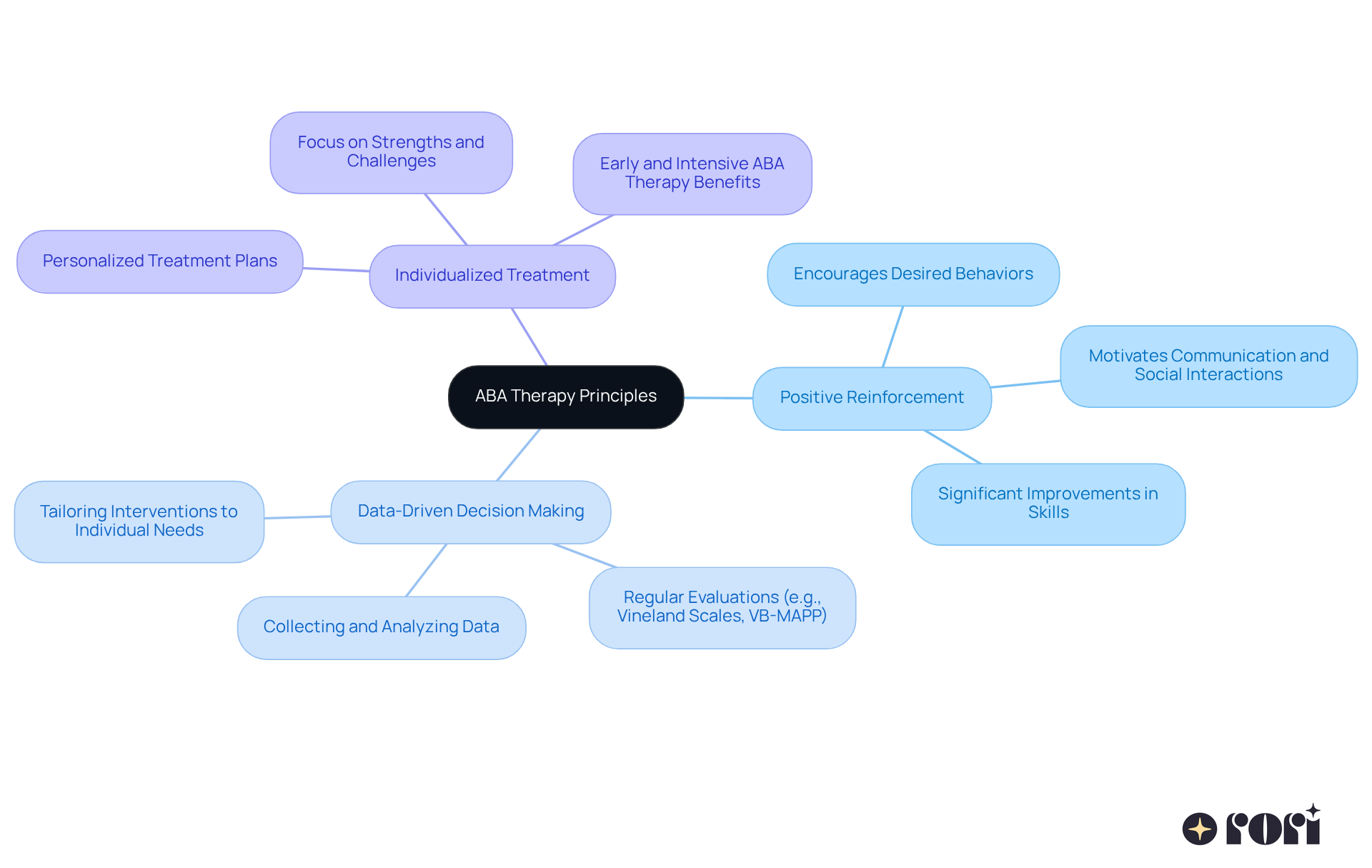
Applied Behavior Analysis (ABA) is a fantastic method designed to help improve specific behaviors and skills through focused reinforcement techniques. Let’s dive into some of the foundational principles of ABA that can make a real difference:
- : This approach encourages desired behaviors by offering rewards. It’s amazing how motivating this can be for children, especially when it comes to communication and social interactions. Research shows that when is applied effectively, it can lead to for individuals with autism.
- : Collecting and analyzing data is crucial for tailoring interventions to meet each child’s unique needs. Regular evaluations, like the Vineland Adaptive Behavior Scales and the VB-MAPP, help clinicians keep track of progress and adjust strategies as necessary. This way, therapy can stay in sync with the individual’s changing requirements.
- : Creating personalized treatment plans based on each child’s strengths and challenges is key to success. Studies indicate that kids who receive in their interaction and interpersonal skills, especially when the interventions are tailored to their specific profiles.
By understanding and applying these principles, caregivers and clinicians can develop that enhance interaction and social skills. For example, using positive reinforcement can inspire a young person to use gestures or other forms of expression, enhancing their ability to communicate needs and emotions effectively.
Let’s explore this together! We’re here to !
Implement Effective Communication Strategies for Nonverbal Children
To enhance communication for nonverbal children with autism, let’s explore some effective strategies together:
- : Think about implementing AAC systems, like picture exchange communication systems (PECS) or speech-generating devices. These tools can really empower your child to express their needs! By offering , they make it easier for young ones to share their thoughts and desires.
- : Have you tried using ? They can help establish clear expectations and reduce anxiety. Presenting information visually allows young learners to better grasp routines and transitions, nurturing a sense of security in their daily lives. Research shows that can significantly enhance engagement and reduce challenging behaviors, especially during transitions.
- : can really boost their nonverbal interaction skills. For instance, using exaggerated gestures while speaking can help them link actions with meanings, improving their understanding of interpersonal cues. This method not only aids in expression but also encourages interaction, allowing nonverbal youth to connect more effectively with peers and caregivers.
- : Participating in can greatly enhance your child’s interactions within a group setting. This supportive environment promotes skill practice and fosters connections, helping them feel more competent and engaged.
The work together to support communication development and social interaction, creating a more inclusive environment. Remember, we’re here to help you every step of the way!

Develop Personalized Treatment Plans for Optimal Outcomes
Creating can feel like a big task, but breaking it down into a few key steps makes it manageable and effective.
- Comprehensive Assessment: First things first, understanding your child's unique strengths and challenges is essential. Think of it as a team effort! This often means gathering insights from behavioral assessments, functional behavior analyses, and, of course, valuable input from parents and teachers. These are like a roadmap, helping to pinpoint specific behaviors and needs. This way, we can that truly resonate with your child's individual profile.
- Goal Setting: Next up is . This is where the magic happens! For instance, a goal might focus on using gestures to request items. Imagine how much easier it would be for your child to express their needs! Research shows that can lead to . All of this contributes to lifelong resilience and independence.
- Regular Review and Adjustment: Now, let’s talk about the importance of . ensures that it stays effective and aligned with your child's evolving needs. This is an ongoing process, supported by data collection, which gives us a clear picture of how things are going. It allows clinicians to .
By focusing on , you can create a and progress. Together, we can improve their quality of life! Let’s explore this journey together!

Leverage Technology to Enhance ABA Therapy Effectiveness
Incorporating technology into ABA therapy can really make a difference for nonverbal individuals! Let’s take a look at some :
- Interactive Apps: These fun applications are designed to boost . They offer engaging experiences that kids love! Research shows that , with studies highlighting positive effects on interactions and language development.
- : Using software for real-time data tracking helps therapists keep an eye on behaviors and progress. This is super important! Rigorous data collection strategies can optimize therapy outcomes, allowing for based on what each child needs.
- (VR): Imagine a world where young individuals can practice social interactions in a safe, controlled environment! VR technology creates immersive experiences that have been linked to better engagement and knowledge acquisition, making it a fantastic addition to traditional therapy techniques.
By leveraging these technologies, therapists can develop more dynamic and responsive , tailored to their unique needs. This ultimately enhances their communication skills and overall development.
Let’s explore this together! We’re here to !

Conclusion
Supporting nonverbal children with autism is a journey filled with hope and possibilities, especially when we embrace effective behavioral strategies like Applied Behavior Analysis (ABA). By focusing on positive reinforcement, personalized treatment plans, and making decisions based on data, caregivers and clinicians can create nurturing environments that truly foster communication and social skills. These strategies empower children to express their needs and enhance their overall development.
Let’s take a moment to reflect on some key insights. Tailored interventions, effective communication tools like AAC, and visual supports can make a world of difference. Plus, integrating technology can really optimize therapy outcomes! By honing in on personalized treatment plans, conducting regular assessments, and exploring innovative approaches, we can significantly improve the quality of life for nonverbal children with autism.
Ultimately, our commitment to understanding and applying these behavioral strategies can lead to meaningful changes in these children’s lives. It’s so important for caregivers, educators, and therapists to come together, sharing resources and insights, to ensure every child has the chance to thrive and connect with the world around them. Embracing these practices not only uplifts individual lives but also helps build a more inclusive society for everyone. Let’s explore this journey together! We’re here to help you every step of the way!
Frequently Asked Questions
What is Applied Behavior Analysis (ABA) therapy?
ABA therapy is a method designed to improve specific behaviors and skills through focused reinforcement techniques.
What is positive reinforcement in ABA therapy?
Positive reinforcement encourages desired behaviors by offering rewards, which can significantly motivate children, especially in communication and social interactions.
How does positive reinforcement impact individuals with autism?
When applied effectively, positive reinforcement can lead to significant improvements in communication skills and adaptive behaviors for individuals with autism.
Why is data-driven decision making important in ABA therapy?
Collecting and analyzing data is crucial for tailoring interventions to meet each child's unique needs, allowing clinicians to track progress and adjust strategies as necessary.
What tools are used for evaluating progress in ABA therapy?
Regular evaluations such as the Vineland Adaptive Behavior Scales and the VB-MAPP help clinicians monitor progress and adapt therapy to the individual's changing requirements.
How is individualized treatment important in ABA therapy?
Creating personalized treatment plans based on each child's strengths and challenges is key to success, leading to remarkable improvements in interaction and interpersonal skills.
What benefits do children receive from early and intensive ABA therapy?
Studies indicate that children who receive early and intensive ABA therapy often show significant improvements in their interaction and interpersonal skills.
How can caregivers and clinicians use ABA principles for nonverbal children with autism?
By applying ABA principles, caregivers and clinicians can develop behavioral strategies that enhance interaction and social skills, such as using positive reinforcement to encourage gestures and other forms of expression.
List of Sources
- Understand ABA Therapy: Principles and Techniques
- Understanding Autism Therapy Success Rates (https://ambitionsaba.com/resources/understanding-autism-therapy-success-rates)
- blueabatherapy.com (https://blueabatherapy.com/aba/aba-therapy-success-rates)
- The Numbers Don't Lie: Revealing Autism Therapy Statistics | Above and Beyond Therapy (https://abtaba.com/blog/autism-therapy-statistics)
- Success Rates of ABA Therapy | Advanced Autism Services (https://advancedautism.com/post/success-rates-of-aba-therapy)
- Best ABA Quotes (https://testpreptech.com/post/best-aba-quotes)
- Implement Effective Communication Strategies for Nonverbal Children
- ourmental.health (https://ourmental.health/autism/inspiring-words-and-insights-on-autism-spectrum-disorder)
- The Role of Visual Supports in Enhancing Learning for Autism | Advanced Autism Services (https://advancedautism.com/post/the-role-of-visual-supports-in-enhancing-learning-for-autism)
- kidsclubaba.com (https://kidsclubaba.com/autism-quotes)
- Visual Schedules for Children with Autism | Links (https://linksaba.com/visual-schedules-for-children-with-autism)
- 40 Inspiring Autism Quotes: Autistic Voices You Need to Hear (https://aheartforallstudents.com/inspirational-autism-quotes)
- Develop Personalized Treatment Plans for Optimal Outcomes
- The Numbers Don't Lie: Revealing Autism Therapy Statistics | Above and Beyond Therapy (https://abtaba.com/blog/autism-therapy-statistics)
- Data and Statistics on Autism Spectrum Disorder (https://cdc.gov/autism/data-research)
- 2026 Autism Statistics - Insights for Families and Advocates (https://prosperahealthcare.com/autism-statistics)
- The Importance of Individualized Treatment Plans in ABA Therapy | Advanced Autism Services (https://advancedautism.com/post/the-importance-of-individualized-treatment-plans-in-aba-therapy)
- Leverage Technology to Enhance ABA Therapy Effectiveness
- The Importance of Data Collection in ABA Therapy | Discovery ABA (https://discoveryaba.com/aba-therapy/the-importance-of-data-collection-in-aba-therapy-cec7b)
- Effectiveness of Using Mobile Technology to Improve Cognitive and Social Skills Among Individuals With Autism Spectrum Disorder: Systematic Literature Review (https://mental.jmir.org/2021/9/e20892)
- Applied Behavior Analysis (ABA) Statistics: Data, Effectiveness, and Evidence-Based Practices (https://nexoaba.com/applied-behavior-analysis-statistics)
- Patterns and impact of technology use in autistic children (https://sciencedirect.com/science/article/pii/S1750946723001538)