Introduction
Supporting children with autism can sometimes feel like a daunting task, can’t it? Caregivers and educators often find themselves navigating a maze of unique needs and challenges. That’s where Applied Behavior Analysis (ABA) comes in! It’s a structured approach that not only boosts learning outcomes but also helps individuals on the spectrum truly thrive.
By diving into the core principles and effective techniques of ABA, you can discover ways to unlock significant progress in communication, social skills, and overall development. But let’s be real - implementing these strategies in everyday situations can come with its own set of challenges. How do we ensure that interventions stay effective and adapt to each child’s changing needs?
Let’s explore this together! We’re here to help you every step of the way!
Understand the Principles of ABA Therapy
is built on some key principles that really help when it comes to therapy for children with autism. By getting to know these core ideas, you can make a big difference in learning outcomes:
- Reinforcement: This principle is all about after a desired action, which makes it more likely that the action will happen again. For instance, when a young learner successfully uses a new word, they might get some praise or a small treat. This reinforces their communication efforts! Research shows that reinforcement methods are super important in ABA therapy, with studies indicating an impressive .
- Prompting: This technique involves giving cues or hints to encourage a child to show a desired action. For example, if a little one is having trouble saying 'please,' a caregiver might gently prompt them by asking, 'What do you say?' .
- Shaping: This principle is about . For example, when teaching a child to tie their shoes, they might first be rewarded just for holding the laces, then for crossing them, and so on. This gradual approach helps young learners develop complex skills over time.
- : ABA relies heavily on data to track progress and inform intervention strategies. Keeping a consistent record of behaviors allows therapists to tweak their strategies based on what works best, ensuring that each child’s unique needs are met. Plus, automatic during sessions means the clinical team can focus on the child without interruptions. This , enhancing the ethical standards of ABA services.
- : Every child is unique, and ABA therapy is tailored to meet specific needs. Treatment plans are crafted based on individual assessments and ongoing evaluations, making sure that interventions are relevant and effective.
By understanding these principles, caregivers and educators can , which contributes to enhancing learning outcomes for children with autism through ABA interventions. Empowering caregivers with knowledge of ABA principles, strategy alignment, and data collection fosters a consistent and supportive environment, which is crucial for enhancing learning outcomes for children with autism through ABA interventions.
Let’s explore this together! If you have any questions or experiences to share, we’re here to help you every step of the way!

Implement Effective ABA Techniques for Learning
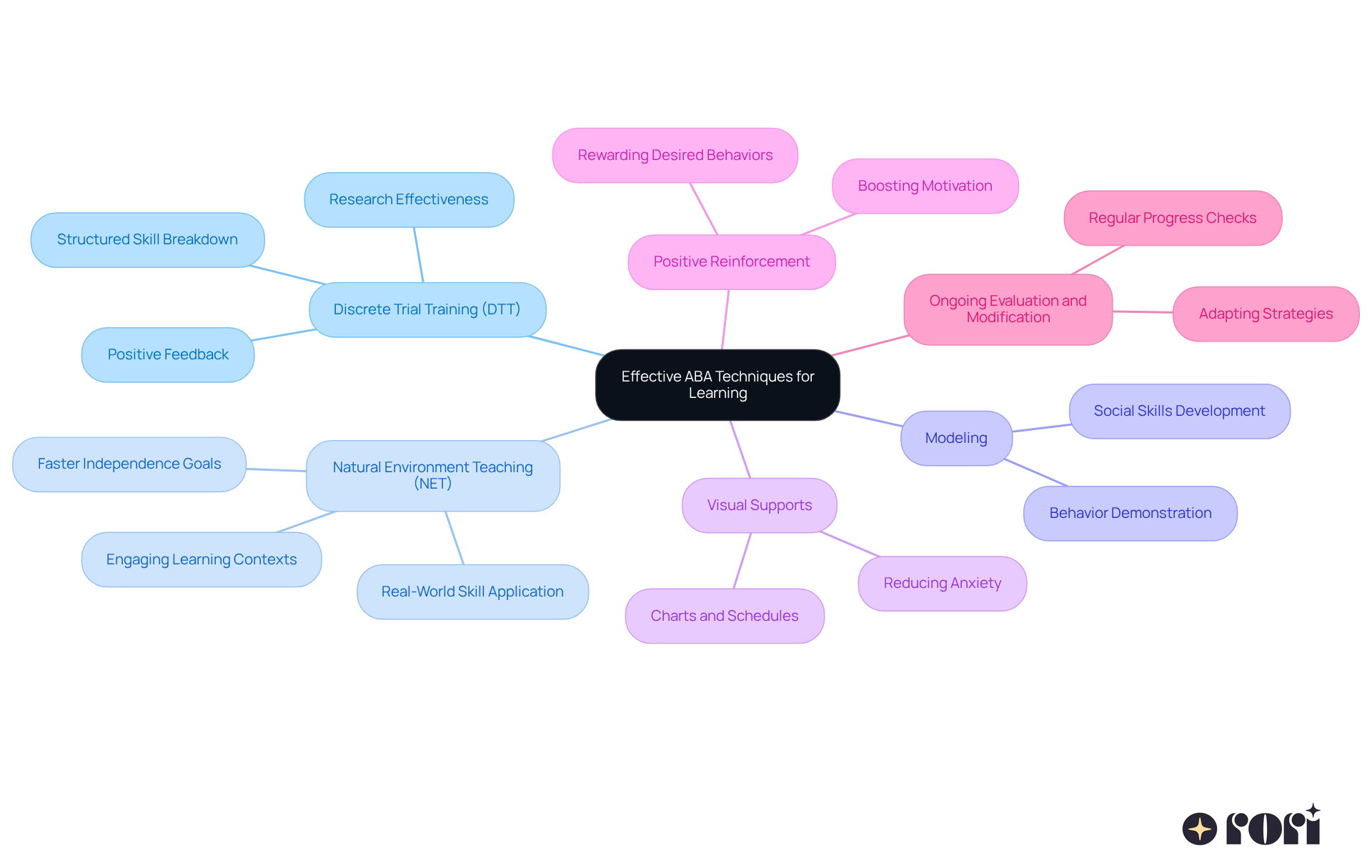
To effectively enhance learning outcomes for children with autism, let’s explore some helpful ABA techniques together:
- : This structured method breaks down skills into small, manageable parts, making learning feel more focused and achievable. For example, when teaching a young learner to recognize colors, you might start with just one hue at a time, giving lots of positive feedback for correct answers. Research shows that DTT is especially effective for skill acquisition and reducing challenging behaviors, thus .
- : This technique is all about teaching skills in the child’s natural surroundings, which makes learning feel more relevant and engaging. Imagine practicing how to request items during playtime - this allows for genuine interactions! Studies reveal that results in kids using NET reaching their independence goals an average of 3.5 months faster than those in traditional programs, highlighting its effectiveness in promoting .
- Modeling: Demonstrating a behavior for the child to imitate can really boost their learning. For instance, when teaching social skills, an adult can show how to greet someone, encouraging the child to replicate the action. This approach contributes to enhancing learning outcomes for children with autism through ABA interventions, while also fostering and building confidence in social interactions.
- : Using visual aids like charts, pictures, or schedules can help young learners grasp expectations and routines. For example, a visual schedule can assist a child in anticipating transitions throughout the day, reducing anxiety and making daily activities smoother. are essential for , as they improve comprehension and engagement in educational settings.
- : Consistently rewarding desired behaviors encourages kids to repeat them. This could be as simple as giving verbal praise, stickers, or extra playtime when a child follows instructions or completes a task. Research emphasizes that immediate and personalized reinforcement is crucial for enhancing learning outcomes for children with autism through ABA interventions, as it boosts motivation.
- : Regularly checking in on the child’s progress and how they respond to these techniques is crucial. Sometimes, you might need to tweak your strategies to ensure they remain effective and aligned with the child’s evolving needs. This continuous evaluation helps optimize outcomes while enhancing learning outcomes for children with autism through ABA interventions and supports the individualized planning that Rori Care emphasizes.
By using these methods, caregivers and educators can create a more effective educational atmosphere focused on enhancing learning outcomes for children with autism through ABA interventions, meeting the unique needs of kids with developmental disorders. This ultimately leads to improved academic achievements and overall development. Each technique aligns with the personalized planning and evidence-based strategies that Rori Care focuses on, ensuring that interventions are tailored to meet the specific goals and challenges of every child.
Let’s work together to make a difference!
Create a Supportive Learning Environment
Creating a nurturing educational setting is crucial for enhancing learning outcomes for children with autism through . It helps them thrive both academically and emotionally. Let’s explore some together:
- : Establishing a consistent daily schedule is key for individuals with autism. It fosters a sense of security and predictability. Visual schedules can be a great tool to outline daily activities, helping young ones understand what to expect and easing any anxiety around transitions.
- : Setting up a specific study area that reduces distractions is essential. Think about cutting down on noise, clutter, and visual stimuli that might overwhelm them. Did you know that up to 90-95% of individuals with autism experience ? This can really impact their focus and engagement in traditional educational settings.
- : Including sensory resources like fidget toys, weighted blankets, or calming visuals can help young individuals self-regulate and maintain concentration during learning activities. These tools are fantastic for managing sensory sensitivities, creating a more supportive educational experience.
- : Designating spaces for positive reinforcement can motivate young individuals to participate and succeed. A 'reward corner' with visual signals can inspire them by offering clear incentives for their achievements, reinforcing positive behaviors and educational outcomes.
- : Fostering an inclusive atmosphere is crucial for social development. Encouraging peer interactions and teamwork through group activities allows youngsters to build social skills in a nurturing environment, enhancing their overall educational experience.
By applying these strategies, caregivers and educators can create an environment that promotes academic success while enhancing learning outcomes for children with autism through and supports the emotional well-being of youngsters with developmental disorders. As autism experts often point out, organized routines and reduced distractions are vital for effective learning for individuals on the spectrum.
Let’s work together to make a difference!

Monitor Progress and Adjust Interventions
is super important in for children with autism through to ensure that these interventions are really working. Let’s break down some steps to track and adjust those interventions effectively:
- : It’s all about consistently gathering info on how your child is responding to interventions. This can include counting how often certain behaviors happen, how long they last, and even some qualitative observations. Our makes this easy by automatically collecting data during sessions, so our clinical team can focus on your family member without interruptions for note-taking. Plus, all data is securely stored, anonymized, and deleted after analysis to keep your child’s privacy intact.
- : Establishing for each child is key. For example, a goal could be for your little one to use three new words in a week. It’s all about tailoring these goals to fit their unique needs.
- : Make it a habit to review the collected data regularly to see how things are progressing. This could be weekly or bi-weekly, depending on what works best for your child and the intensity of the intervention. Interestingly, we see progress in about 90% of children when the recommended hours are fully implemented with active caregiver involvement.
- : Be ready to tweak your strategies based on the data. If something isn’t working, don’t hesitate to try a different approach or modify what you’re already doing. Our updates intervention and skill acquisition plans after each session based on the progress made, ensuring that strategies stay effective.
- : Getting families involved in the monitoring process is crucial. Share the data and discuss progress together. Your insights can provide valuable context and help reinforce learning at home. Empowering caregivers with ABA principles and strategies is essential for supporting your child’s behavioral goals through active involvement.
By actively tracking progress and being flexible in modifying interventions, caregivers and educators can focus on for children with autism through to effectively address the changing needs of individuals with developmental disorders. Let’s explore this together!

Collaborate with Professionals for Consistent Support
Collaboration among professionals is so important for providing the best support to individuals with autism. Let’s dive into some :
- Establish Communication Channels: Regular meetings or shared digital platforms can really help everyone stay on the same page about a student’s progress and strategies. Open communication is key! When all team members share insights freely, it creates a stronger support system.
- Share Information and Insights: Encourage team members to share their observations about the youth’s behavior and development. This collective knowledge helps everyone make . Research shows that when professionals collaborate effectively, it leads to better behavioral, social, and communication growth for individuals on the autism spectrum.
- Develop a Unified Plan: It’s essential to that brings together input from therapists, educators, and family members. This way, everyone is aligned toward shared goals, making the student’s educational experience much richer. Did you know that as of 2024, 1 in 36 youths in the U.S. is diagnosed with autism spectrum disorder (ASD)? This highlights just how crucial .
- Involve Families: ! Their insights are invaluable, and they can help implement strategies at home, reinforcing what’s learned in everyday settings. At Rori Care, our amazing clinicians support families through compassionate , empowering caregivers with ABA principles to help their loved ones achieve their behavioral goals.
- Continuous Training: is a must! Staying updated on best practices in ABA and autism care enhances the skills of all team members, ultimately benefiting the young ones we serve. Our clinical leadership team, featuring expert BCBAs like Kristine Le and Dr. Jesslyn Nicole Farros, is dedicated to neurodiversity and youth success. They even offer free consultations to assist families on their journey.
By fostering collaboration among professionals, we can focus on to create a more supportive and effective learning environment. This contributes to by . Let’s explore this together!

Conclusion
Enhancing learning outcomes for children with autism through Applied Behavior Analysis (ABA) is a journey filled with opportunities and challenges. It’s all about understanding key principles and using effective techniques that truly make a difference. By focusing on:
- Reinforcement
- Prompting
- Shaping
- Individualization
caregivers and educators can build a strong framework that meets the unique needs of each child. Plus, using methods like Discrete Trial Training and Natural Environment Teaching, along with ongoing evaluation, helps ensure that interventions stay relevant and effective.
Throughout this article, we’ve explored various strategies to create a supportive learning environment. Think about:
- Establishing structured routines
- Minimizing distractions
- Promoting positive reinforcement
Collaboration among professionals and families is crucial, too! When everyone works together, it really enhances the chances of achieving the best outcomes. These insights highlight how tailored interventions can adapt to the evolving needs of children with autism.
Ultimately, enhancing learning outcomes for children with autism using ABA is all about teamwork, continuous assessment, and a commitment to individualized care. By embracing these principles and techniques, caregivers and educators can boost academic achievements while also nurturing the overall development and well-being of children on the autism spectrum. Engaging with professionals and actively participating in the learning process can truly make a profound difference in their lives, paving the way for a brighter future. Let’s explore this together!
Frequently Asked Questions
What is Applied Behavior Analysis (ABA) therapy?
ABA therapy is a therapeutic approach designed to help children with autism by applying key principles that improve learning outcomes through structured methods and individualized strategies.
What are the key principles of ABA therapy?
The key principles of ABA therapy include reinforcement, prompting, shaping, data collection, and individualization.
How does reinforcement work in ABA therapy?
Reinforcement involves providing a reward after a desired action to increase the likelihood of that action being repeated. For example, praising a child for using a new word reinforces their communication efforts.
What is prompting in the context of ABA therapy?
Prompting is a technique that provides cues or hints to encourage a child to demonstrate a desired action, such as asking a child, 'What do you say?' to help them learn to say 'please.'
Can you explain the shaping principle in ABA therapy?
Shaping involves reinforcing small steps toward a desired behavior. For instance, when teaching a child to tie their shoes, they may first be rewarded for holding the laces, then for crossing them, and so forth, gradually leading to the complete skill.
Why is data collection important in ABA therapy?
Data collection is crucial for tracking progress and informing intervention strategies. It allows therapists to adjust their methods based on what works best for each child, ensuring personalized and effective treatment.
How is ABA therapy individualized for each child?
ABA therapy is tailored to meet the unique needs of each child through individualized assessments and ongoing evaluations, ensuring that interventions are relevant and effective.
What techniques can enhance learning outcomes for children with autism in ABA therapy?
Effective techniques include Discrete Trial Training (DTT), Natural Environment Teaching (NET), modeling, visual supports, positive reinforcement, and ongoing evaluation and modification.
What is Discrete Trial Training (DTT)?
DTT is a structured method that breaks down skills into small, manageable parts, making learning focused and achievable, which is effective for skill acquisition and reducing challenging behaviors.
How does Natural Environment Teaching (NET) work?
NET involves teaching skills in a child's natural surroundings, making learning more relevant and engaging, which helps promote skill generalization and independence.
What role does modeling play in ABA therapy?
Modeling involves demonstrating a behavior for the child to imitate, which can enhance learning, particularly in developing social skills and building confidence in interactions.
How do visual supports aid in ABA therapy?
Visual supports like charts and schedules help children understand expectations and routines, improving comprehension and engagement, which contributes to better learning outcomes.
What is the significance of positive reinforcement in ABA therapy?
Positive reinforcement encourages children to repeat desired behaviors by rewarding them with praise, stickers, or extra playtime, thus boosting motivation and learning.
Why is ongoing evaluation important in ABA therapy?
Ongoing evaluation allows caregivers and educators to monitor a child's progress and adjust strategies as needed to ensure effectiveness and alignment with the child's evolving needs.
List of Sources
- Understand the Principles of ABA Therapy
- The Numbers Don't Lie: Revealing Autism Therapy Statistics | Above and Beyond Therapy (https://abtaba.com/blog/autism-therapy-statistics)
- Quotes About Autism - Arms Wide Open ABA Therapy (https://armswideopenaba.com/blog/quotes-about-autism)
- Success Rates of ABA Therapy (https://besteveraba.com/blog/success-rates-of-aba-therapy)
- crossrivertherapy.com (https://crossrivertherapy.com/aba-therapy-success-rates)
- Inspirational ABA and Autism Quotes - Mrs. Moe's Modifications (https://mrsmoesmodifications.com/inspirational-aba-and-autism-quotes)
- Implement Effective ABA Techniques for Learning
- Inspirational ABA and Autism Quotes - Mrs. Moe's Modifications (https://mrsmoesmodifications.com/inspirational-aba-and-autism-quotes)
- Examining the Effects of Discrete Trials, Mass Trials, and Naturalistic Environment Training on Autistic Individuals Using Repeated Measures - PMC (https://pmc.ncbi.nlm.nih.gov/articles/PMC10907925)
- linksaba.com (https://linksaba.com/natural-environment-teaching-net-benefits-and-strategies)
- Natural Environment Teaching (NET): How It Helps with Skill Generalization (https://astroaba.com/blog/natural-environment-teaching-net-how-it-helps-with-skill-generalization)
- The Effectiveness of DTT (Discrete Trial Training) in ABA Therapy (https://mastermindbehavior.com/post/the-effectiveness-of-dtt-discrete-trial-training-in-aba-therapy)
- Create a Supportive Learning Environment
- Inspiring Autism Quotes for Understanding and Acceptance - Kids First (https://kidsfirstservices.com/first-insights/autism-quotes)
- 10 inspiring quotes from people with autism | Autism Speaks (https://autismspeaks.org/life-spectrum/autism-quotes)
- Ways Autism Can Affect Learning (https://kidsclubaba.com/ways-autism-can-affect-learning)
- Autism and Education: Navigating the Learning Environment| All Together ABA (https://alltogetheraba.com/autism-and-education-navigating-the-learning-environment-center-for-autism)
- Inspiring Quotes on Child Learning and Development (https://vincegowmon.com/inspiring-quotes-on-child-learning-and-development)
- Monitor Progress and Adjust Interventions
- The Numbers Don't Lie: Revealing Autism Therapy Statistics | Above and Beyond Therapy (https://abtaba.com/blog/autism-therapy-statistics)
- Success Rates of ABA Therapy | Advanced Autism Services (https://advancedautism.com/post/success-rates-of-aba-therapy)
- Impact of Applied Behavior Analysis on Autistic Children Target Behaviors: A Replication Using Repeated Measures - PMC (https://pmc.ncbi.nlm.nih.gov/articles/PMC10907966)
- Applied Behavior Analysis (ABA) Statistics: Data, Effectiveness, and Evidence-Based Practices (https://nexoaba.com/applied-behavior-analysis-statistics)
- How ABA Therapy Encourages Goal Setting in Children with Autism - RightWay ABA (https://rightwayaba.com/how-aba-therapy-encourages-goal-setting-in-children-with-autism)
- Collaborate with Professionals for Consistent Support
- doublecareaba.com (https://doublecareaba.com/post/autism-quotes)
- kidsclubaba.com (https://kidsclubaba.com/autism-quotes)
- The Benefits of Cross-Disciplinary Collaboration in Autism Treatment (https://mastermindbehavior.com/post/the-benefits-of-cross-disciplinary-collaboration-in-autism-treatment)
- Interdisciplinary and Collaborative Models - Transforming Autism Care Through Strategic Partnerships | Links (https://linksaba.com/interdisciplinary-and-collaborative-models-aba)
- 30 Quotes from 30 People with Autism (https://elsforautism.org/30-quotes-from-30-people-with-autism)