Early skill development is so crucial for fostering independence in children with autism. Research shows that early intervention can make a world of difference! In this article, we’ll explore some effective strategies to help your little ones become more self-sufficient. From involving parents in the learning journey to using technology that truly captivates young minds, there’s a lot to cover.
But let’s pause for a moment. How can caregivers tackle the challenges of teaching essential self-help skills while ensuring their children thrive in different settings? It can feel overwhelming, right? By diving into these best practices, we can uncover a pathway to greater independence and a better quality of life for our children on the autism spectrum. Let’s explore this together!
Early ability development is so important for kids with autism - it really lays the groundwork for their future independence. Research shows that when kids get , they often see . For example, studies indicate that children who start therapy before they turn three can experience an ! By focusing on essential skills like self-care, communication, and social interaction from a young age, we can contribute to encouraging , helping them build confidence and feel capable.
This proactive approach not only boosts their independence but also focuses on on the autism spectrum, which can really enhance the quality of life for both the kids and their families. Plus, is key in this journey. When families understand ABA principles and strategies, they can offer better support, make informed choices, and actively engage in their child’s development. This leads to and a greater sense of empowerment.
And let’s not forget about the role of parents! Your involvement and education are crucial for achieving these . By equipping yourselves with the right resources, you can effectively . So, let’s explore this together! We’re here to help you every step of the way!

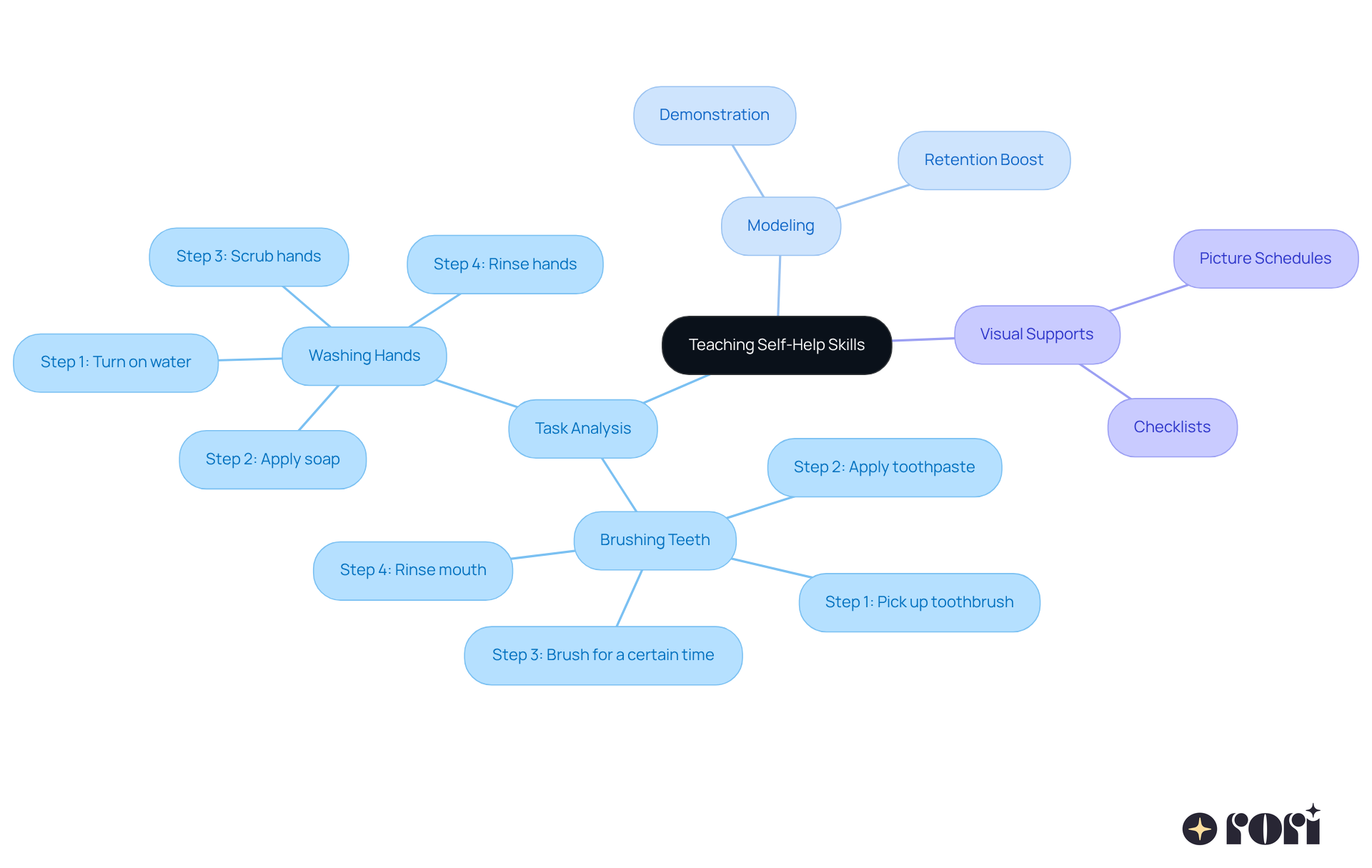
For caregivers, teaching self-help skills can feel like a big task, but it can be made easier by focusing on encouraging ! By using techniques like task analysis, modeling, and - you can make the process smoother and more enjoyable for everyone involved.
Let’s break it down a bit. . For example, when helping a little one learn to brush their teeth, you might outline each step: picking up the toothbrush, applying toothpaste, brushing for a certain amount of time, and rinsing. It’s like creating a mini roadmap for success!
. By demonstrating the task while your child watches, you can boost their understanding and retention. And don’t forget about visual aids! Picture schedules provide clear, step-by-step guidance that helps kids follow routines on their own.
Of course, it’s for to fit each child’s unique needs. Some kids might face challenges, like sensory overload during personal care tasks. For instance, if a child struggles with the feel of toothpaste, introducing the texture gradually in a gentle way can make a world of difference.
Consistency is key! Regular practice and can significantly aid in encouraging , helping them master these skills and build their confidence. In fact, research shows that when caregivers actively participate and follow suggested hours, about 90% of youth see significant progress.
When caregivers are informed about , they can make informed choices that positively impact their child’s development. This teamwork not only enhances the effectiveness of the techniques used but also empowers caregivers, reducing stress and improving family dynamics.
So, let’s explore this together! Remember, you’re not alone in this journey, and we’re here to help you every step of the way!
Parental participation is essential for the success of focused on encouraging . When caregivers get involved in the , it helps reinforce skills at home, which is key for . For instance, training sessions can equip parents with practical tools, like visual schedules and , to support their child's development.
Imagine being able to with simple data-gathering techniques! This not only helps you stay informed but also allows you to make better choices for their growth. Keeping the lines of communication open between therapists and parents is essential. It ensures everyone is on the same page regarding goals and progress, creating a that enhances your child's learning experience.
Research shows that when caregivers actively engage, they are instrumental in encouraging , which helps kids generalize skills across different settings and leads to greater independence. This teamwork not only empowers parents but also contributes to and significantly boosts therapy outcomes. It reinforces the idea that caregiver involvement is a cornerstone of effective autism treatment.
Plus, Rori Care offers , helping families cover up to 100% of ABA therapy costs. This can ease financial worries and encourage participation. According to a meta-analysis, (PIIs) have an average effect size of 0.553, showcasing the significant benefits of .
However, it’s important for parents to be aware of common pitfalls, like inconsistent strategy application or lack of communication with therapists, which can slow progress. By actively participating in the therapeutic process and steering clear of these challenges, you can make a real difference in your child's development. Let’s explore this together!

Technology is truly a game-changer for helping young people with autism develop their skills. It offers that can make a real difference. Imagine apps designed to teach self-care skills through fun game-like elements! These apps use rewards and challenges to motivate kids, turning learning into an enjoyable adventure.
And let’s not forget about the . These technologies create safe spaces where young individuals can practice real-life scenarios, boosting their confidence and skills. It’s all about making learning feel safe and fun!
When we tailor these tech tools to fit each child’s unique needs, we really hit the mark. Research shows that kids using are more engaged and retain skills better. In fact, a review of 94 studies found that over a third focused on social skills, highlighting how .
By weaving these technological resources into therapy, we can create a vibrant learning environment. This not only helps kids but also focuses on encouraging , empowering them to thrive in everyday life. Plus, using apps and interactive software fosters a sense of achievement and self-reliance, both essential for on the autism spectrum.
As caregivers learn more about , they can better align their support with these tech tools. This alignment enhances the effectiveness of behavioral interventions. Setting measurable goals and regularly checking progress can further boost the impact of these efforts.
Let’s explore this together! With the right tools and support, we can .

Encouraging self-sufficiency in children with autism is such an important journey! It really lays the groundwork for their future independence and quality of life. By focusing on early skill development, using effective teaching techniques, involving parents in the process, and embracing technology, caregivers can create a nurturing environment that helps these kids grow and gain confidence.
This article shines a light on the importance of early intervention. Proactive strategies like task analysis, modeling, and visual aids can really boost a child's ability to learn self-help skills. Plus, when parents get involved, it not only reinforces these skills at home but also strengthens the bond between caregivers and therapists. This teamwork leads to better outcomes for the child! And let’s not forget how technology can make learning fun and engaging, offering fresh ways to connect with children.
So, as we wrap this up, remember that the journey to fostering self-sufficiency in children with autism is all about understanding, patience, and collaboration. By putting these practices into action and actively participating in their child's development, families can truly empower their children to thrive. The impact of these efforts is profound, enriching the lives of both children and their families. Let’s commit to supporting each child's unique path toward self-sufficiency and independence together!
Why is early skill development important for children with autism?
Early skill development is crucial for children with autism as it lays the groundwork for their future independence. Research shows that early intervention services lead to significant improvements in communication, social skills, and everyday behaviors.
What benefits do children receive from early intervention services?
Children who receive early intervention services often experience big improvements in communication, social skills, and everyday behaviors. Studies indicate that those who start therapy before age three can see an average IQ boost of 17 points.
What essential skills should be focused on for children with autism?
Essential skills to focus on include self-care, communication, and social interaction. Developing these skills from a young age encourages self-sufficiency and helps build confidence in children on the autism spectrum.
How does early skill development impact the quality of life for families?
Focusing on early skill development not only boosts the independence of children but also enhances the quality of life for both the children and their families by promoting self-sufficiency.
What role do parents play in the development of their child with autism?
Parents play a crucial role in achieving positive outcomes for their child. Their involvement and education are essential for supporting their child's growth effectively.
How can parents support their child's development?
Parents can support their child's development by equipping themselves with the right resources and understanding ABA principles and strategies, which allows them to offer better support and make informed choices.
What is the importance of educating providers in the context of early skill development?
Educating providers is key as it ensures that families receive better support, leading to improved behavioral outcomes and a greater sense of empowerment for both parents and children.