Consistency in ABA therapy is a game changer, especially when it comes to helping children with autism thrive. By setting up structured schedules, caregivers can create a comforting routine that not only eases anxiety but also supports skill development and emotional well-being. But here’s the question: how can families effectively put these routines into practice and work alongside therapists for the best results?
Let’s dive into some practical strategies for building consistent schedules in ABA therapy. Together, we’ll uncover ways to enhance behavioral management and create a richer learning experience for our kids. We’re here to help you every step of the way!
Consistency in ABA therapy plays a crucial role in enhancing treatment outcomes with consistent schedules in ABA therapy for autism, as it creates a structured learning environment that greatly benefits kids. You know, these children often thrive in predictable settings where they can look forward to what’s coming next. This kind of predictability not only eases their anxiety but also boosts their focus on picking up new skills. Research shows that enhancing treatment outcomes with consistent schedules in ABA therapy for autism can significantly improve behavioral management and emotional stability.
By setting up a reliable framework, caregivers can effectively reinforce positive behaviors and help kids retain what they’ve learned. This makes it easier for them to transfer those skills from therapy into everyday life. For example, organized settings can reduce confusion and anxiety, allowing young learners to dive into their educational experiences more fully. Plus, when caregivers are involved in enhancing treatment outcomes with consistent schedules in ABA therapy for autism, therapy outcomes tend to be better. It ensures that the skills practiced in therapy are consistently applied at home.
Caregivers can use specific ABA strategies, like visual schedules and positive reinforcement, to make learning even more enjoyable for their kids. Overall, committing to structured learning environments, backed by empowered caregivers, is key to unlocking the potential of children with autism. Let’s explore this together!

Creating structured routines is essential for enhancing treatment outcomes with consistent schedules in ABA therapy for autism, making it a game-changer for your family! It all starts with identifying those key daily activities that can fit into a predictable schedule. Let’s break it down into some simple steps:
By following these steps, you can create a stable environment that supports ABA therapy goals, enhances learning, and is focused on enhancing treatment outcomes with consistent schedules in ABA therapy for autism. Research shows that kids who maintain consistent patterns across different environments often see better academic performance and fewer behavioral issues. Plus, these routines can help establish healthy circadian rhythms, which can be tricky for kids with autism. And here’s a little secret: routines can still be effective even if they’re followed 70-80% of the time, giving your family some much-needed flexibility.
Let’s explore this together! You’ve got this!

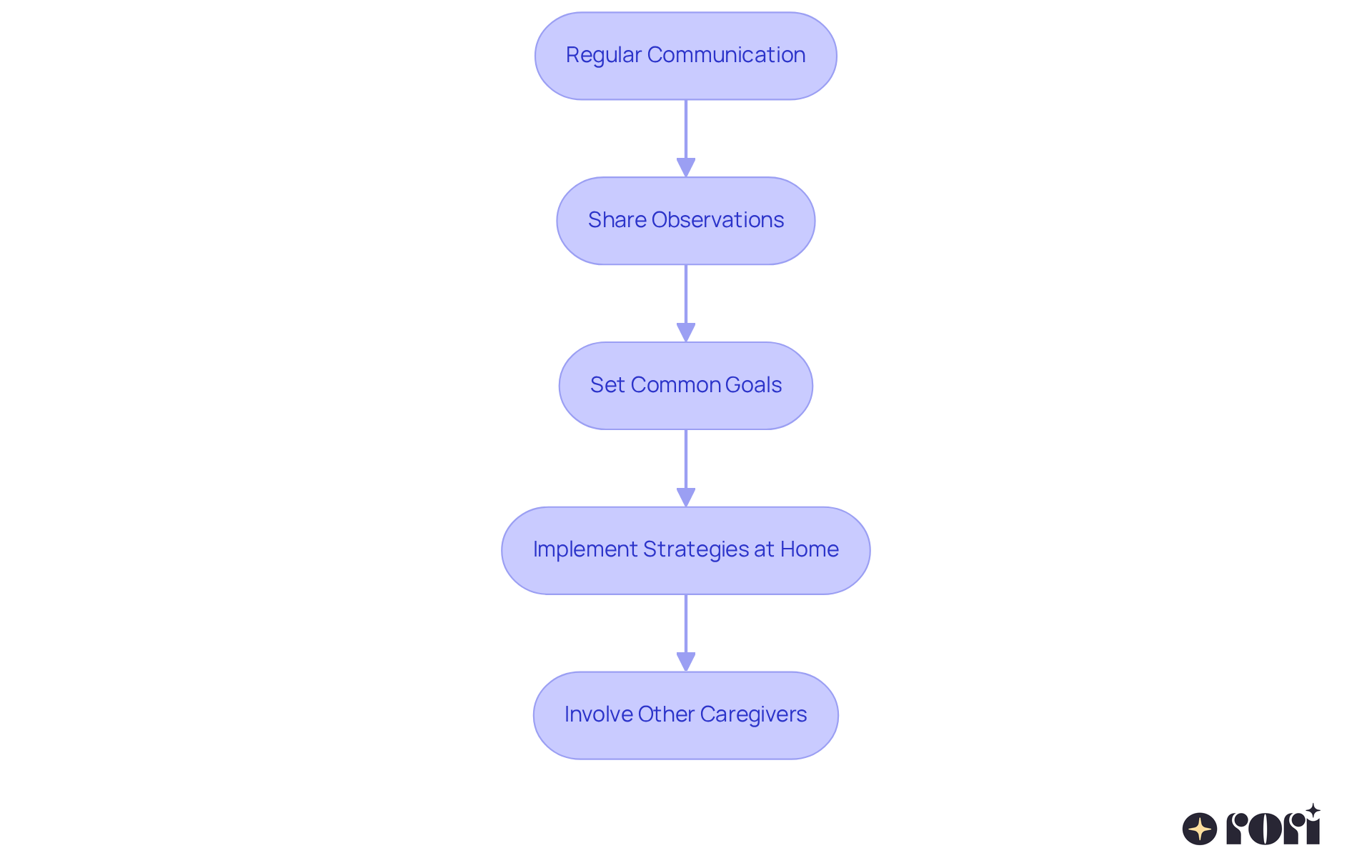
Collaboration between parents and therapists is so important for making sure that ABA therapy strategies are consistently applied at home. Let’s explore some effective steps to enhance this collaboration:
By fostering a collaborative relationship with therapists, parents can create a seamless experience for their children, which plays a vital role in enhancing treatment outcomes with consistent schedules in ABA therapy for autism. Research indicates that enhancing treatment outcomes with consistent schedules in ABA therapy for autism can lead to improved results, with compliance rates for home-based programs reaching as high as 99%! This partnership not only supports your child’s development but also empowers you as parents, reinforcing your role as key advocates in your child’s therapeutic journey. Plus, Rori Care offers various caregiver education programs designed to equip you with the knowledge and skills necessary to support your child's behavioral goals effectively.
We’re here to help you every step of the way!
Tracking progress in ABA treatment is super important for making sure the methods we use are really working. Here’s how you can effectively keep an eye on things and make any necessary adjustments:
Set Clear Metrics: Start by defining specific, measurable goals for your child’s therapy. Think about behavioral targets, skill acquisition, or even emotional regulation. It’s all about having a clear vision!
Use Data Collection Tools: Grab some handy tools like charts, graphs, or apps to track your child’s development over time. At Rori Care, we’ve got automatic data gathering during sessions, which means our clinical team can monitor your child’s progress without missing a beat. Plus, all data is securely stored, anonymized, and deleted after analysis to keep everything private and safe.
Review Progress Regularly: Make it a point to schedule regular check-ins with your therapist to go over the information you’ve gathered. Our behavior care engine refreshes intervention and skill acquisition plans after each session based on what’s been achieved. This approach has led to significant improvements in 90% of youth when the recommended hours are followed with active caregiver involvement. That’s something to celebrate!
Be Open to Adjustments: If you notice progress slowing down or if your little one seems to be struggling, don’t hesitate to chat with your therapist about changing strategies. This might mean tweaking reinforcement techniques or trying out new activities.
Celebrate Achievements: Always take a moment to recognize and celebrate your child’s progress, no matter how small. Positive reinforcement goes a long way in encouraging ongoing effort and involvement in treatment.
By actively keeping track of progress and being open to adjustments, you can contribute to enhancing treatment outcomes with consistent schedules in ABA therapy for autism, ensuring that your child's therapy at Rori Care remains effective and responsive to their changing needs. Let’s explore this journey together!

Creating consistent schedules in ABA therapy is so important for helping children with autism thrive. When caregivers establish a structured environment, it can really boost their child's learning experience, ease anxiety, and help them transfer skills from therapy to everyday life. That predictability from having a routine not only supports behavioral management but also empowers kids to shine in their educational and social interactions.
Throughout this guide, we’ve highlighted how crucial structured routines, active caregiver involvement, and teamwork with therapists are. Using visual schedules, keeping communication open, and regularly checking in on progress are all key pieces that lead to successful ABA therapy. These strategies ensure that children get a unified approach to their learning and behavioral goals, ultimately paving the way for better treatment outcomes.
In closing, embracing consistency and collaboration in ABA therapy can truly make a difference in a child's development. Parents and caregivers, we encourage you to take an active role in crafting those structured routines and working closely with therapists to adjust strategies as needed. By committing to these practices, you can help unlock your child's full potential, setting the stage for a brighter future filled with growth and achievement. Let’s explore this journey together!
Why is consistency important in ABA therapy for autism?
Consistency is crucial in ABA therapy as it creates a structured learning environment that helps children thrive. Predictable settings reduce anxiety and enhance focus, leading to better treatment outcomes.
How does a consistent schedule benefit children undergoing ABA therapy?
A consistent schedule provides predictability, which eases anxiety and boosts children's ability to learn new skills. It also improves behavioral management and emotional stability.
What role do caregivers play in enhancing treatment outcomes in ABA therapy?
Caregivers help reinforce positive behaviors and ensure that skills learned in therapy are consistently applied at home, leading to better therapy outcomes.
What strategies can caregivers use to support consistency in ABA therapy?
Caregivers can use specific ABA strategies such as visual schedules and positive reinforcement to make learning more enjoyable and effective for their children.
How does a structured learning environment impact children's educational experiences?
A structured learning environment reduces confusion and anxiety, allowing children to engage more fully in their educational experiences and facilitating skill transfer from therapy to everyday life.