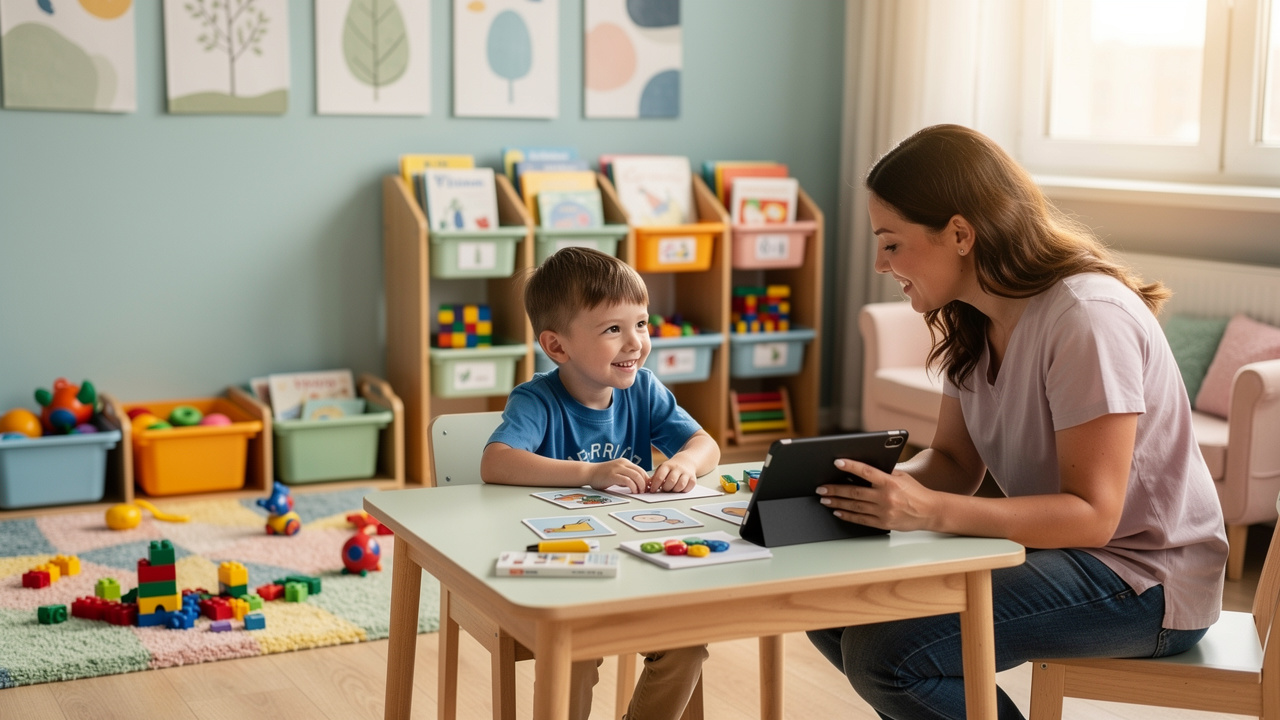
Play therapy has become a wonderful way to help children with autism improve their communication skills. It offers a unique chance for kids to express themselves and connect emotionally. By tapping into their natural love for play, this approach not only boosts verbal and non-verbal communication but also helps develop vital social skills and emotional regulation.
But here’s the question: how can caregivers and therapists make the most of these strategies? 🤔 Exploring the best practices in play therapy doesn’t just reveal techniques; it provides a roadmap to unlocking the potential of every child on the autism spectrum. Let’s explore this together!
Play-based treatment is a wonderful way for kids to express themselves through play, helping them share their feelings, needs, and ideas in a safe space. This approach, known as , is especially meaningful for children with autism because it taps into their natural love for activities, making it a fantastic tool for learning and communication.
At Rori Care, our skilled behavior analysts create designed to meet specific goals, like . These evidence-based strategies not only encourage but also foster , which can be improved by implementing .
This method of helps kids build while also nurturing a sense of security and trust, which are key ingredients for effective therapy. Plus, by equipping caregivers with , we enhance their ability to support their child’s behavioral goals. This creates a consistent and nurturing environment that maximizes the effectiveness of the intervention.
Let’s explore this together! We’re here to help you every step of the way!

provides fantastic benefits for kids! First off, it creates a safe space where young ones can express themselves without the stress of having to talk. This can really help through , as they find ways to share their thoughts and feelings.
Plus, is an excellent method for . It encourages kids to interact with their peers and therapists, giving them a chance to practice important things like taking turns, sharing, and picking up on social cues. And let’s not forget about ! It helps kids learn to manage their feelings in a positive way.
At Rori Care, we’re all about with the tools and knowledge they need to engage in their child’s growth. We focus on , like reinforcement strategies and data collection methods, to make sure the intervention is as effective as possible.
Research shows that kids who engage in experience significant improvements in both their verbal and non-verbal skills. For instance, a recent study found that kids who participated in structured play sessions showed a 30% boost in their expressive language skills over just six months! Isn’t that amazing?
So, if you’re looking for ways to support your child’s development, let’s explore this together! We’re here to help you every step of the way!

To effectively implement in children with autism, therapists and parents can adopt several impactful strategies.
By using these methods, therapists can create a vibrant and through for . Plus, incorporating principles ensures that treatment is centered on the individual and adaptable to each child's unique needs, further boosting the effectiveness of these play intervention techniques.
It’s heartening to note that significant progress is seen in 90% of young individuals when suggested hours are fully followed with active . And remember, ABA intervention is the only scientifically proven treatment for autism that’s covered by insurance!
group sessions, guided by qualified professionals, also offer youngsters opportunities to practice interaction and develop relationships in a supportive group environment. This highlights the importance of caregiver participation in the process. Let’s explore this together!

Involving parents in the therapeutic process is crucial for maximizing the benefits of . At Rori Care, we’re here to support your family’s journey, highlighting how crucial is. When and at home, they can really help their children grow in expressing themselves.
One fun way to do this is by setting up a where parents can join in on . This creates a supportive space that encourages regular practice of interaction skills. Plus, when parents learn from therapists, they gain the tools to apply during everyday moments, making learning even more effective.
It’s also super important for parents and therapists to keep the conversation going. helps ensure that therapy stays in tune with the child’s changing needs. This teamwork not only strengthens the bond between parent and child but also incorporates , , leading to better behavior and happier family dynamics.
Let’s explore this together! We’re here to help you every step of the way!

Engaging in play therapy offers a unique and effective way to boost communication skills in children with autism. This approach not only lets kids express themselves in a safe space but also nurtures essential social interactions and emotional regulation. By tapping into their natural love for play, children can build vital communication skills that lay the groundwork for their social and emotional growth.
Throughout this article, we’ve highlighted the many benefits of play therapy. It creates a supportive environment for self-expression, enhances both verbal and non-verbal communication skills, and emphasizes the importance of caregiver involvement in the therapeutic journey. Techniques like role-playing, sensory activities, and storytelling are fantastic methods for engaging children and promoting interaction. Plus, the role of parents in reinforcing these skills at home is crucial for success.
Ultimately, the journey of using play therapy to enhance communication skills in children with autism thrives on collaboration between therapists, caregivers, and the children themselves. By embracing these practices and actively participating in the therapeutic process, families can create a nurturing environment that not only boosts communication skills but also enriches overall family dynamics. Taking these steps can lead to meaningful improvements in children’s lives, making play therapy an invaluable tool in the world of autism treatment. Let’s explore this together!
What is play therapy?
Play therapy is a play-based treatment that allows children to express themselves through play, helping them share their feelings, needs, and ideas in a safe environment.
Why is play therapy relevant to children with autism?
Play therapy is particularly meaningful for children with autism because it aligns with their natural love for activities, making it an effective tool for learning and communication.
How does play therapy help improve communication skills in children with autism?
Play therapy helps children with autism build important interpersonal skills and enhances their ability to express emotions, which fosters social interactions and communication.
What role do behavior analysts play in play therapy at Rori Care?
Skilled behavior analysts at Rori Care create personalized plans that include structured play activities aimed at achieving specific goals, such as improving social skills and emotional regulation.
What are the benefits of using evidence-based strategies in play therapy?
Evidence-based strategies encourage emotional expression, foster social interactions, and help create a consistent and nurturing environment that maximizes the effectiveness of the intervention.
How do caregivers benefit from play therapy?
Caregivers are equipped with ABA principles and strategies, enhancing their ability to support their child's behavioral goals and creating a supportive environment for their development.