Understanding and nurturing self-care skills in autistic children can feel like quite the journey, right? It’s filled with unique challenges and those rewarding milestones that make it all worthwhile. As parents, you play such a crucial role in this process, armed with strategies that can truly empower your children toward greater independence and confidence.
But here’s a question: how can you effectively assess your child’s readiness and implement teaching methods that really resonate with their needs? 🤔 This article dives into essential strategies, valuable resources, and innovative tools that can transform the self-care learning experience for autistic children. Together, we’ll ensure they thrive in their daily routines. Let’s explore this together!
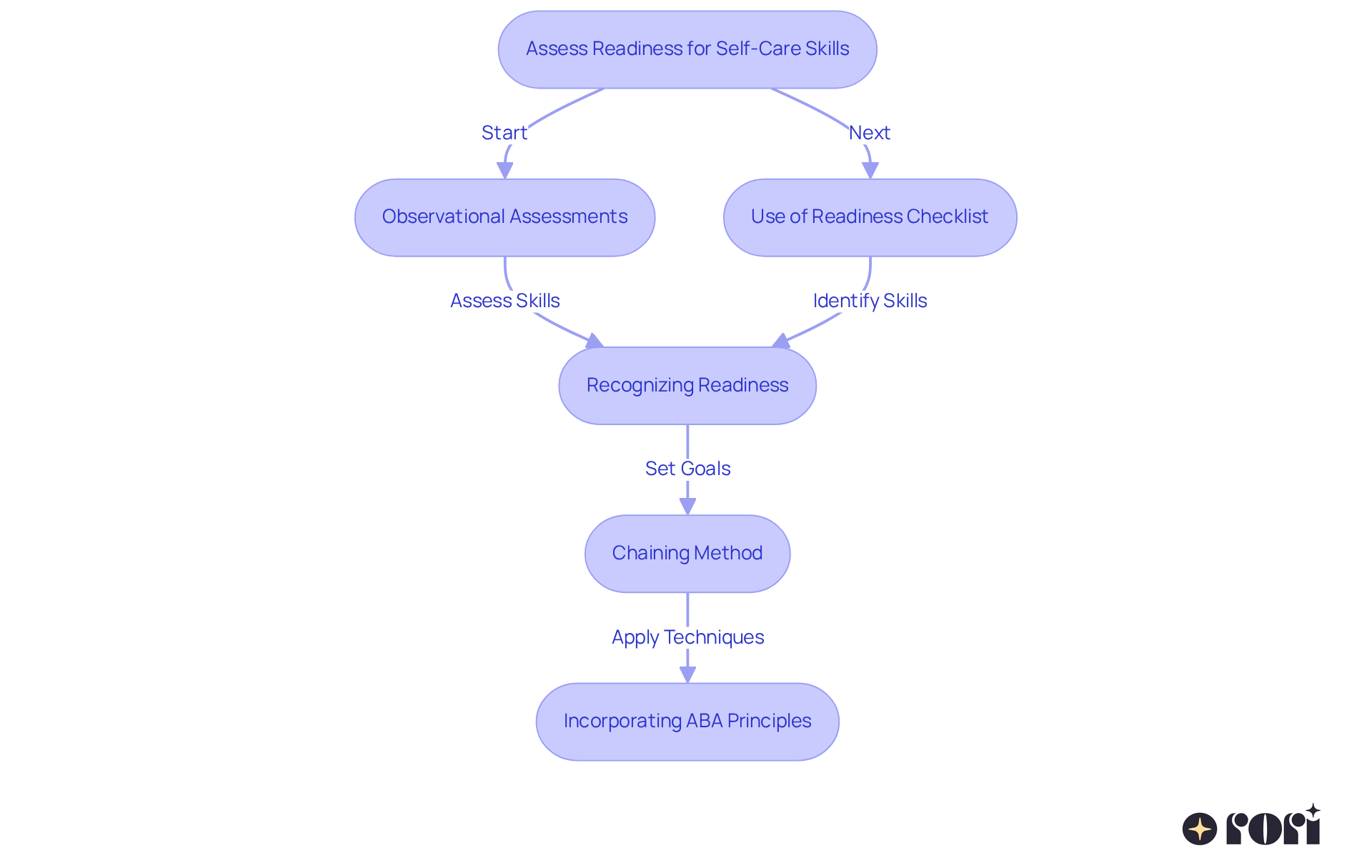
Evaluating a young person's readiness for self-care is such an important first step before diving into teaching. You can really get a sense of their abilities through simple observational assessments and checklists that focus on key areas like dressing, hygiene, and feeding. For example, caregivers can observe how well their kids follow straightforward directions or tackle simple tasks on their own.
Using resources like the '' can help parents pinpoint specific skills their children are ready to learn. Recognizing this readiness not only sets achievable goals but also boosts their confidence as they hit those small milestones. And here’s something to consider: research shows a significant negative correlation for hygiene activities (−0.57, p < 0.001) and handwashing (−0.73, p < 0.001), highlighting the .
As Rikki Rogers wisely said, 'Strength doesn't come from what you can do. It comes from .' This really emphasizes the as a step toward greater independence. Plus, using the chaining method-breaking tasks into smaller, manageable steps-can be very effective for helping autistic children with .
By incorporating the principles of , which tailors to each child's unique needs, caregivers can customize their approach. This way, they’re not just teaching skills but also creating an environment filled with empowerment and encouragement. is key here, equipping parents with the knowledge and strategies they need to make informed decisions that lead to better behavioral outcomes and stronger support for their child's development.
Let’s explore this together! We’re here to !
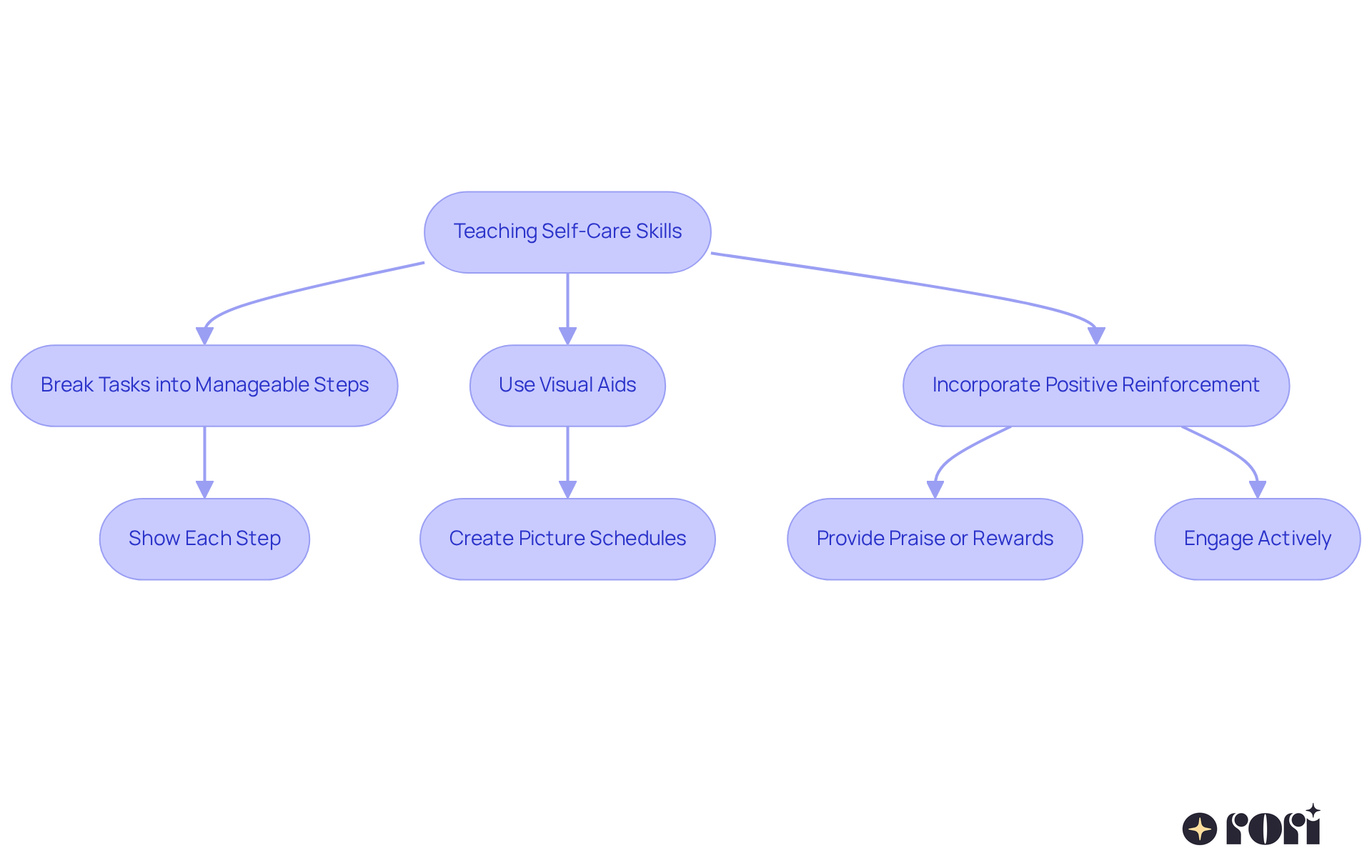
For caregivers, helping autistic children with can feel like a big task, but it doesn’t have to be overwhelming! One effective way to approach is by breaking their tasks into smaller, manageable steps. For example, when helping a little one learn to brush their teeth, you might show them each step:
, like picture schedules or charts, can really help too! They assist kids in understanding the order of tasks and what’s expected of them. Plus, can make a world of difference by . Kids thrive on predictability, and it helps them learn better.
Don’t forget about in the context of ! A little can go a long way in tasks. And remember, your is key. When you’re informed about the principles of (ABA), you can make choices that positively impact your child’s progress.
It’s pretty amazing to note that when caregivers fully implement the recommended hours with active involvement, about 90% of kids show ! This teamwork not only boosts the effectiveness of the strategies you use but also empowers you as a caregiver, reducing stress and improving family dynamics. Let’s explore this together!
Hey there, parents! 🌟 It’s so important to tap into the with . Local are a fantastic way to connect with others who understand what you’re going through. Many parents find that sharing experiences in these groups not only provides valuable insights but also creates a wonderful sense of community.
Did you know that families involved in these groups often feel more satisfied with their children’s ? It really highlights how can make a difference when navigating the ups and downs of autism. Plus, online forums and social media are great places to swap tips and strategies, making it even easier to connect with others.
Don’t forget about the professionals! Consulting with can give you that fits your child’s unique needs. And let’s not overlook - they’re packed with useful information and with self-care and supporting your child’s growth.
By making the most of these resources, you can create a and self-management. Let’s explore this together! We’re here to help you every step of the way!

Technology can be a fantastic ally in , especially when paired with principles. There are so many apps out there designed just for this purpose! For example, like 'ChoiceWorks' and 'Visual Schedule Planner' can really help kids grasp the order of tasks involved in self-care, which .
Research shows that combining with prompts and rewards makes them even more effective in keeping kids engaged and on task. Plus, turn practicing these skills into fun experiences, making learning feel less like a chore. And let’s not forget about timers! They can help kids manage their time better, like ensuring they brush their teeth for the full two minutes.
Studies have found that significantly enhance on-task behaviors and engagement, making them a valuable resource for parents to build their child’s confidence and independence. By weaving these tech tools into daily learning, parents can really empower their kids, especially in helping autistic children with .
And here’s something important: when parents learn about , they gain the knowledge and strategies needed to support their child's . This leads to better decision-making, , and a happier family dynamic. So, let’s explore this together! We’re here to help you every step of the way!

Helping autistic children develop self-care skills is such an important journey, one that truly empowers both the child and the caregiver. By assessing readiness, using effective teaching strategies, tapping into support systems, and embracing technology, parents can create a nurturing environment that fosters independence and confidence in their little ones. This multifaceted approach not only boosts self-care abilities but also nurtures emotional well-being and strengthens family dynamics.
Key strategies to consider include:
Engaging with community resources, like support groups and professional guidance, can really enrich the learning experience. Plus, technology can be a game-changer, offering interactive tools that make learning self-care fun and effective.
In conclusion, we can’t stress enough how vital it is to teach self-care skills to autistic children. It lays the groundwork for independence and self-management, leading to a more fulfilling life. So, let’s embrace these strategies and resources together, creating a supportive environment that celebrates every achievement, no matter how small. By taking these steps, caregivers can significantly enhance their child's journey toward autonomy and well-being. We’re here to help you every step of the way!
Why is assessing readiness for self-care skills important for autistic children?
Assessing readiness for self-care skills is crucial because it helps identify a child's abilities and sets achievable goals, boosting their confidence as they reach small milestones.
How can caregivers evaluate a child's readiness for self-care skills?
Caregivers can evaluate readiness through simple observational assessments and checklists that focus on key areas like dressing, hygiene, and feeding, observing how well the child follows directions or completes tasks independently.
What resources can help parents determine specific self-care skills their children are ready to learn?
The 'Readiness Checklist for Self-Care Abilities' is a helpful resource that can assist parents in pinpointing specific skills their children are prepared to learn.
What challenges do autistic children face regarding hygiene activities?
Research indicates a significant negative correlation for hygiene activities and handwashing, suggesting that children with autism often struggle to master these essential skills.
What is the chaining method, and how is it used in teaching self-care skills?
The chaining method involves breaking tasks into smaller, manageable steps, which can be very effective in helping autistic children learn self-care skills.
How does Applied Behavior Analysis (ABA) contribute to teaching self-care skills?
ABA tailors the teaching approach to each child's unique needs, allowing caregivers to customize their methods, thus creating an empowering and encouraging environment for skill development.
Why is caregiver education important in the context of self-care skills for autistic children?
Caregiver education is vital as it equips parents with the knowledge and strategies needed to make informed decisions, leading to better behavioral outcomes and stronger support for their child's development.