Understanding the nuances of reinforcement can truly change how caregivers support children with Autism Spectrum Disorder (ASD). By tapping into the principles of Applied Behavior Analysis (ABA), caregivers can use strategies that not only promote positive behaviors but also create a nurturing learning environment.
But here’s the thing: personalizing these reinforcement techniques to fit each child’s unique needs can be quite a challenge. How can caregivers make sure their approaches resonate with individual preferences and motivations? This is key to fostering meaningful behavioral changes.
Let’s explore this together! By sharing experiences and insights, we can build a supportive community that helps each other navigate these challenges.
Reinforcement is such a key concept in Applied Behavior Analysis (ABA) therapy! It’s all about any consequence that makes it more likely for a behavior to happen again. You can think of it in two main ways: . Positive encouragement is when you add something nice after a behavior, like giving a compliment or a small reward. This can really boost a young person’s motivation to get involved in positive activities. On the flip side, negative reinforcement is about taking away something unpleasant, which helps promote good behaviors by easing discomfort.
Research shows that support strategies work best when they’re prompt and consistent. This way, young individuals can clearly see how their actions lead to rewards. For example, studies reveal that 90% of kids show improvement when therapy sessions include active participation from their guardians. This really highlights how crucial support is in driving behavioral change!
So, how can caregivers put these reinforcement strategies into action? Here are a few simple steps:
Understanding these principles allows providers to implement [effective reinforcement strategies for children with asd](https://rori.care/post/4-effective-rewards-for-autism-care-every-parent-should-know) that encourage preferred behaviors. By using both positive and negative stimuli, empowered guardians can develop effective reinforcement strategies for children with asd to create supportive environments that boost learning and development. This ultimately leads to better outcomes for their kids. As Rivka Hoch, a Clinical Director, beautifully puts it, "Providing the parents and families the support they need to help their offspring thrive is my favorite part of what I do."
Let’s explore this together! We’re here to help you every step of the way!

When it comes to implementing effective reinforcement strategies for children with asd, caregivers have some fantastic techniques at their fingertips that align perfectly with Rori Care's . One great method is the [Premack Principle](https://rori.care/post/10-best-music-therapy-programs-for-autism-that-transform-lives). This involves using a fun activity as a reward for completing a less exciting task. For example, letting a young person play their favorite game after finishing homework can really motivate them to tackle that less appealing task.
Another effective approach is a token economy system. This helps kids visualize their progress and rewards. Basically, you give tokens for preferred actions, which they can later trade for something even better! Consistency is key here; it’s important to provide reinforcement right after the desired action to strengthen that connection.
Research shows that effective reinforcement strategies for children with asd not only improve behavior but also enhance overall engagement in educational activities. In fact, a remarkable 90% of youngsters show significant progress when the suggested hours are applied with active adult participation. Plus, with Rori Care's behavior care engine adjusting intervention strategies based on progress reports, caregivers can make informed choices that positively impact their child’s development.
By actively participating in their child’s therapy, parents can really enhance behavioral outcomes and improve family dynamics. Let’s explore this together! We’re here to help you every step of the way!

Creating an engaging learning experience for kids with autism can be a fun adventure for caregivers! 🎉 One great way to do this is by infusing some joy into reinforcement strategies. Think about using:
For instance, incorporating movement-based activities like jumping or dancing not only makes learning lively but also boosts engagement.
, like colorful charts or tokens, can really motivate young learners by showing them their progress in a clear way. Research shows that when learning is enjoyable, kids are more likely to show the behaviors we want and hold onto new skills. Plus, letting them choose their rewards gives them a sense of ownership in their learning journey.
And here’s a tip: if you’re using ABA principles, you can really help your child reach their behavioral goals by keeping track of their progress. This consistent data collection can make a big difference in how effective the intervention is. By creating a positive and enjoyable learning environment, you can enhance your support strategies, benefiting not just kids with autism, but also those with ADHD, behavioral challenges, and learning difficulties. Let’s explore this together!
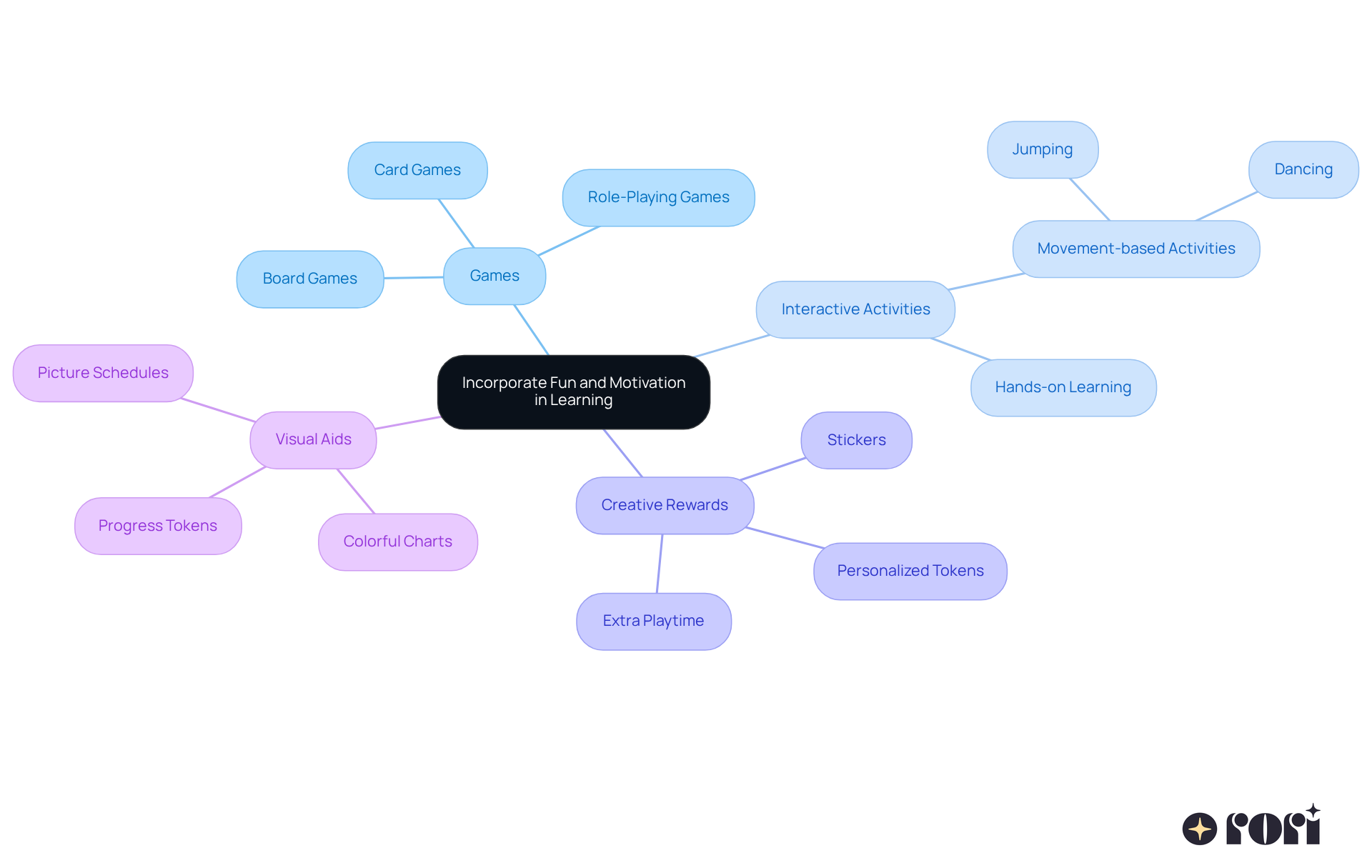
Personalizing reinforcement strategies is so important for understanding each child's unique preferences, interests, and motivations. Caregivers, it’s essential to conduct thorough evaluations to find out which types of rewards resonate best with the young individual. For instance, some kids might light up at the sight of tangible incentives like toys or snacks, while others may thrive on social rewards, such as compliments or extra playtime.
And let’s not forget about considering the child’s developmental level and sensory preferences when choosing reinforcers! Tailoring effective reinforcement strategies for children with ASD not only enhances the effectiveness of interventions but also encourages greater engagement. Studies show that effective reinforcement strategies for children with ASD, including customized methods, lead to better behavior change outcomes, as kids are more likely to respond positively to incentives that hold personal significance.
Programs that use positive encouragement achieve significantly better results compared to punitive approaches. Plus, when suggested hours are fully executed with active adult participation, we see significant improvement in 90% of youngsters! Consistently reviewing and adjusting effective reinforcement strategies for children with ASD based on the child’s evolving interests can further enhance their effectiveness, ensuring that reinforcement remains relevant and inspiring.
By equipping supporters with ABA principles and strategies, Rori Care empowers them to help their child reach behavioral goals, leading to improved outcomes. The benefits of are immense: enhanced support, informed decision-making, and caregiver empowerment all contribute to a more effective therapeutic environment. Let’s explore this together!

Reinforcement strategies are truly essential for supporting children with Autism Spectrum Disorder (ASD). They form the backbone of Applied Behavior Analysis (ABA) therapy. When caregivers understand and use both positive and negative reinforcement techniques, they can create a space that not only encourages desired behaviors but also sparks motivation and engagement in learning activities.
Throughout this article, we’ve explored effective methods like the Premack Principle and token economies. These strategies can really boost behavioral outcomes! Personalization is key here; by considering each child's unique preferences and needs, we can lead to more meaningful and impactful interventions. Plus, let’s not forget the importance of consistency and active participation from caregivers. These factors are crucial for successful reinforcement practices.
Ultimately, supporting children with ASD through reinforcement strategies is a team effort. It can lead to significant improvements in behavior and learning. By embracing these techniques and tailoring them to individual needs, caregivers empower their children and create a nurturing environment that promotes growth and development. Engaging in this process not only benefits the child but also enhances family dynamics and overall well-being. It’s such a vital aspect of effective care for children on the autism spectrum.
So, let’s explore this journey together! Remember, you’re not alone in this - we’re here to help you every step of the way!
What is reinforcement in ABA therapy?
Reinforcement in ABA therapy refers to any consequence that makes it more likely for a behavior to occur again. It can be categorized into positive and negative reinforcement.
What is positive reinforcement?
Positive reinforcement involves adding something pleasant after a behavior, such as giving a compliment or a small reward, which increases motivation for positive activities.
What is negative reinforcement?
Negative reinforcement involves removing something unpleasant to promote good behaviors by alleviating discomfort.
How do support strategies impact behavioral change in children?
Research indicates that support strategies are most effective when they are prompt and consistent, helping children understand the connection between their actions and the rewards they receive.
What percentage of kids show improvement with guardian participation in therapy sessions?
Studies show that 90% of kids demonstrate improvement when therapy sessions include active participation from their guardians.
What steps can caregivers take to implement reinforcement strategies?
Caregivers can use positive reinforcement by giving immediate praise or rewards, implement negative reinforcement by removing discomforting stimuli after positive behavior, maintain consistency in support, and monitor progress to adjust strategies as needed.
How can understanding reinforcement principles benefit children with ASD?
Understanding reinforcement principles allows providers to implement effective strategies that encourage preferred behaviors, creating supportive environments that enhance learning and development for children with ASD.
What is the role of guardians in supporting children with ASD through reinforcement strategies?
Empowered guardians can develop effective reinforcement strategies that foster supportive environments, ultimately leading to better outcomes for their children with ASD.