Introduction
Understanding emotions can be a bit of a tricky journey for children with autism, but it’s such an important part of their social and emotional growth. 🌱 In this article, we’ll dive into some fun and engaging activities that can help kids on the spectrum recognize and express their feelings.
So, how can caregivers and educators nurture emotional intelligence in these young learners?
What creative strategies can turn this process into a joyful and rewarding experience?
Let’s explore this together!
Implement Emotion Recognition Activities
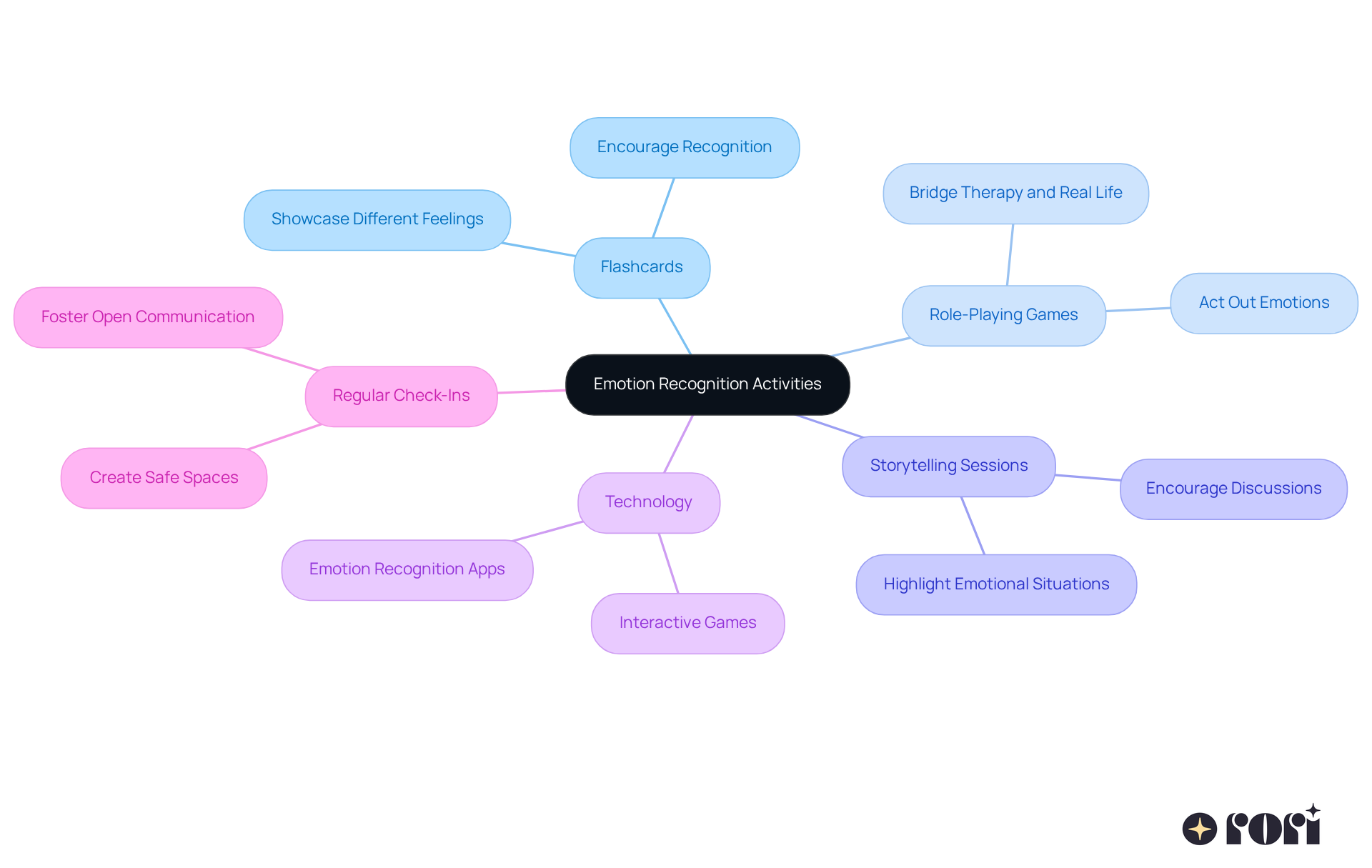
Try using flashcards that showcase different feelings as to help them recognize various emotions. It’s a fun way to get them thinking about how they feel through emotional awareness activities for children with autism!
- How about engaging in role-playing games? Allowing children to act out different emotions is an effective method among emotional awareness activities for children with autism to help them express themselves.
- Storytelling sessions can also work wonders! Share tales that highlight emotional situations and encourage discussions about feelings as part of emotional awareness activities for children with autism. It’s amazing how emotional awareness activities for children with autism can spark conversations!
- Don’t forget about technology! There are apps designed for emotion recognition, such as interactive games that can be considered emotional awareness activities for children with autism, making learning about feelings enjoyable.
- Lastly, regular check-ins are key. Create a safe space where kids can participate in emotional awareness activities for children with autism and share how they feel about different situations. It’s all about fostering open communication!
Utilize Visual Aids for Emotional Understanding
Using can significantly support emotional awareness activities for children with autism by enhancing their emotional understanding. Here are some friendly strategies you might find useful:
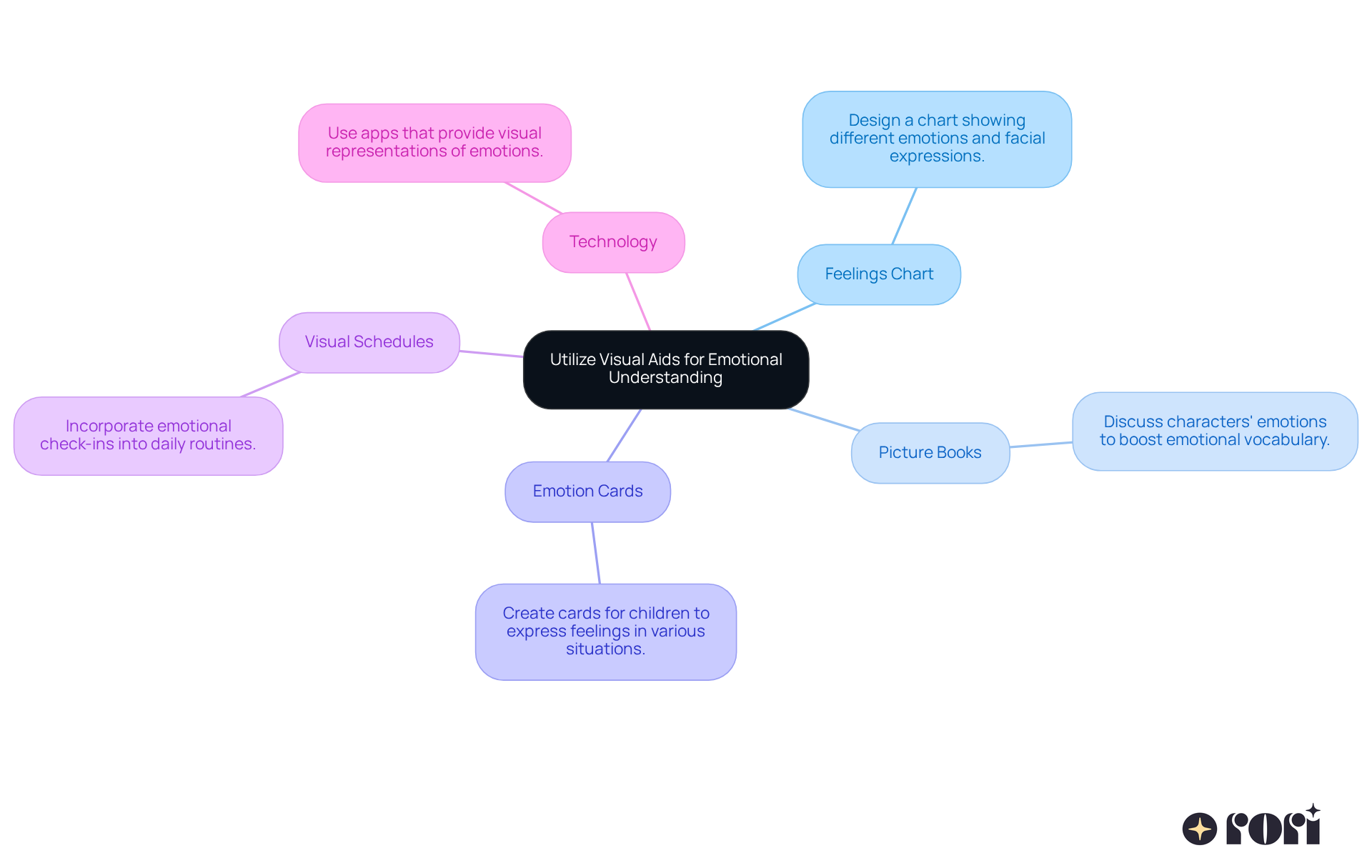
- Create a Feelings Chart: How about designing a chart that shows different emotions along with facial expressions? This visual can help your child recognize and express their feelings more easily.
- Incorporate Picture Books: Picture books are fantastic! They often depict characters going through various emotions. Discussing these stories with your little one can really boost their emotional vocabulary and understanding.
- Develop Emotion Cards: Consider making cards that your child can use to express their feelings in different situations. This little tool can empower them to communicate their emotions more clearly.
- Implement Visual Schedules: Why not add emotional check-ins to daily visual schedules? This practice encourages kids to reflect on their feelings throughout the day, promoting self-awareness.
- Leverage Technology: There are some great apps out there that provide visual representations of emotions. These interactive tools can make learning fun and engaging for your child!
Also, remember to personalize these visual supports to match your child’s interests and preferences, and keep them at eye level for easy access. Research shows that feelings charts and similar visual aids are invaluable tools in therapy and daily life, serving as effective emotional awareness activities for children with autism to significantly improve their emotional regulation.
And let’s not forget about you, the caregivers! Your education is crucial in this journey. By understanding ABA principles and strategies, you can equip yourself with the knowledge and skills needed to support your child’s emotional development effectively. Together, we can make informed choices that lead to better behavioral outcomes, helping your child manage their feelings with confidence. Let’s explore this together!
Incorporate Interactive Learning Techniques
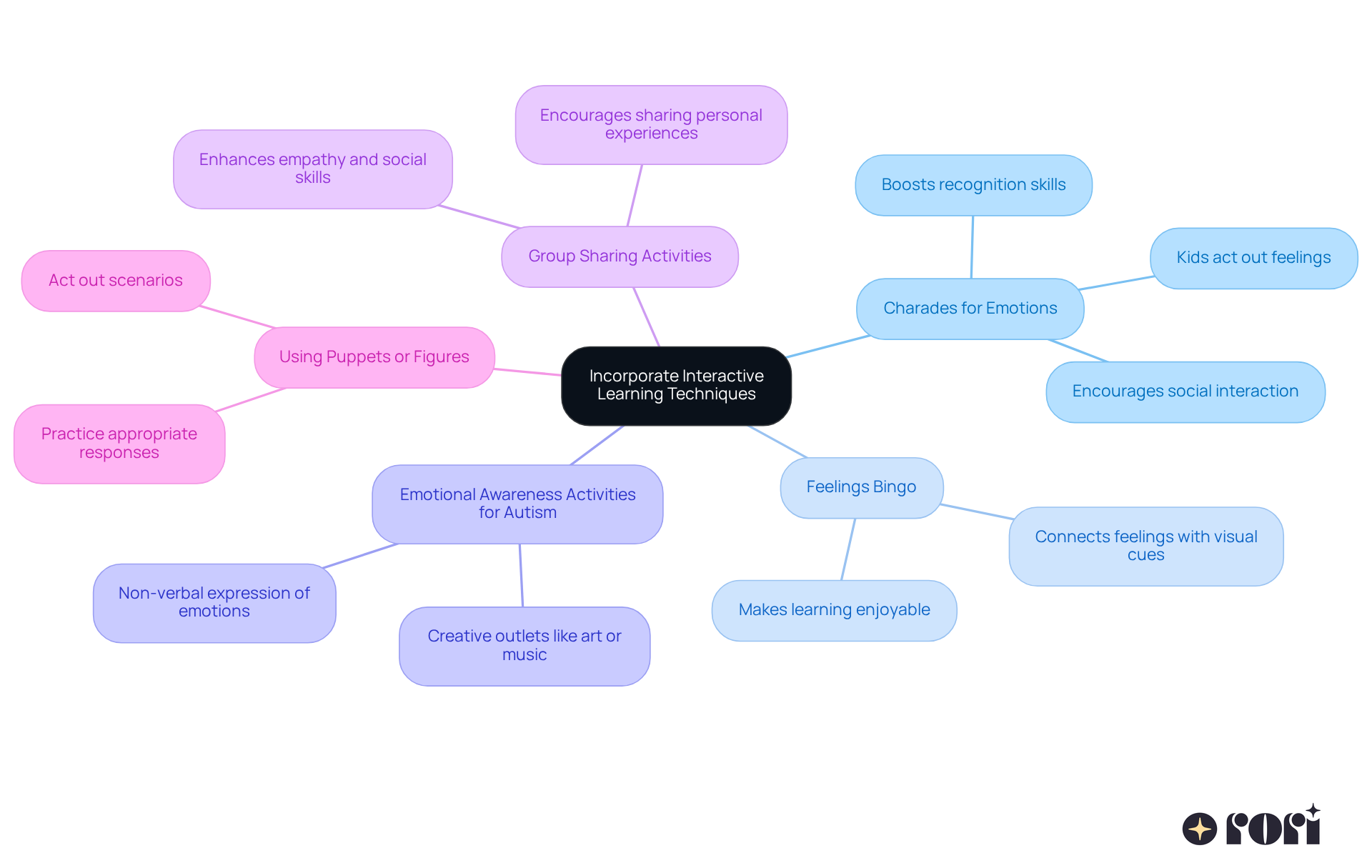
- How about arranging some charades where kids can act out different feelings? It’s a fun way for classmates to guess the emotions being portrayed! This interactive game not only boosts recognition skills but also sparks social interaction among everyone involved.
- You could also try games like 'Feelings Bingo' to make learning about emotions enjoyable. This playful approach helps kids , making it a delightful experience for them.
- Consider implementing emotional awareness activities for children with autism that allow young ones to express their emotions through creative outlets like art or music. These emotional awareness activities for children with autism provide a wonderful non-verbal way to communicate, enabling kids to explore and share their feelings in a supportive space.
- Group activities can be a great way to encourage sharing personal experiences related to emotions. This not only fosters peer engagement but also helps kids understand different perspectives, enhancing their empathy and social skills.
- And don’t forget about using puppets or figures! They can act out scenarios that help kids express their emotions and practice appropriate responses in a safe and creative environment.
Encourage Regular Emotional Reflection and Discussion
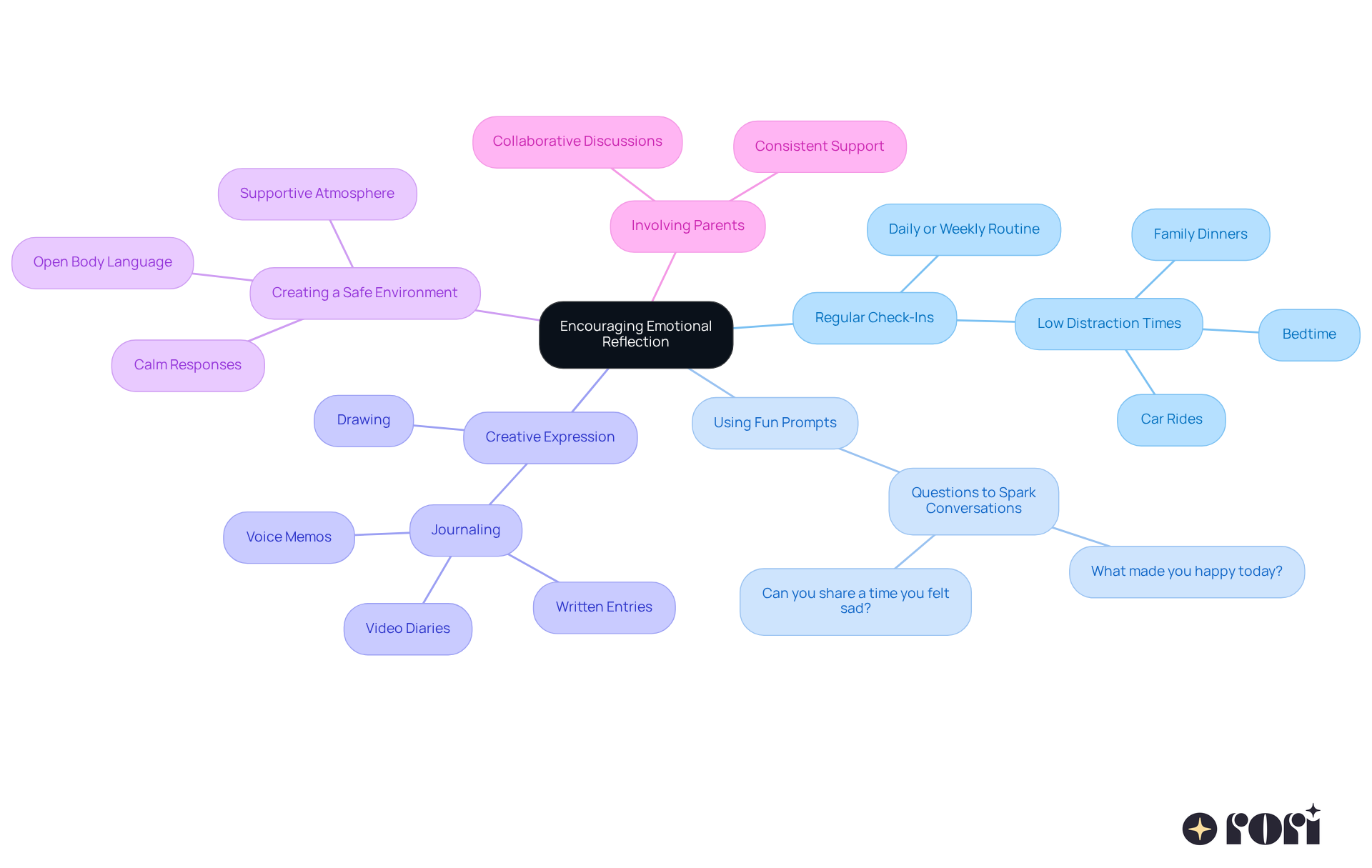
- Let’s make feelings check-ins a regular thing! Whether it’s daily or weekly, having a routine where kids can share their emotions and experiences is so important. This practice not only boosts but also aids them in expressing their feelings more effectively.
- Try using fun prompts to spark conversations about emotions. Questions like, 'What made you happy today?' or 'Can you share a time you felt sad?' can really motivate kids to think about their feelings and share them in a safe space.
- Encourage journaling or drawing as a creative outlet for kids to explore and document their emotions. Engaging in creative expression can enhance self-reflection and help them process their experiences. Plus, research shows that regular journaling can lift their mood and boost emotional awareness, which is one of the emotional awareness activities for children with autism, while reducing stress!
- It’s crucial to create a safe environment where kids can express their feelings without fear of judgment. This supportive atmosphere fosters trust and openness, allowing them to feel secure in sharing their thoughts. As Dr. Ariana Hoet points out, responding calmly and using open body language can really encourage kids to open up.
- Don’t forget to involve parents in these discussions about feelings! By collaborating with parents, kids can receive consistent support and guidance, which is vital for their personal growth. And hey, consider using digital journaling apps like the Mirror app! It allows children to track and process their thoughts and emotions in fun ways, making emotional expression even more engaging.
Conclusion
Fostering emotional awareness in children with autism is so important for their growth and social integration. By incorporating fun activities like emotion recognition games, visual aids, and interactive learning techniques, caregivers can really boost kids' ability to understand and express their feelings. These methods not only help with emotional literacy but also create a nurturing environment where children can truly thrive.
Throughout this article, we’ve explored some effective strategies, such as:
- Using flashcards
- Storytelling
- Technology to help with emotion recognition
Visual aids like feelings charts and picture books are fantastic tools for enhancing understanding. Plus, interactive activities like charades and creative expression through art let kids dive into their emotions in a fun and engaging way. Regular emotional check-ins and discussions can further solidify these skills, giving children the chance to reflect on their feelings and experiences.
The importance of emotional awareness is huge; it lays the foundation for healthy communication and relationships. Encouraging consistent emotional reflection and discussion not only empowers children but also builds trust and openness. By actively engaging in these emotional awareness activities, caregivers can equip their children with the skills they need to navigate their emotions confidently. This ultimately leads to better behavioral outcomes and a greater sense of well-being.
Let’s explore this together! Remember, you’re not alone in this journey. We’re here to help you every step of the way!
Frequently Asked Questions
What are some effective activities for teaching emotional recognition to children with autism?
Effective activities include using flashcards that showcase different feelings, engaging in role-playing games, storytelling sessions that highlight emotional situations, and utilizing technology through apps designed for emotion recognition.
How can flashcards be used in emotional awareness activities?
Flashcards can help children recognize various emotions by showcasing different feelings, making it a fun way to promote emotional awareness.
What role does role-playing play in helping children with autism express emotions?
Role-playing games allow children to act out different emotions, which is an effective method for helping them express themselves and understand emotional expression.
How can storytelling sessions aid in emotional awareness for children with autism?
Storytelling sessions can highlight emotional situations and encourage discussions about feelings, facilitating conversations about emotions.
Are there any technological tools that can assist in teaching emotion recognition?
Yes, there are apps designed for emotion recognition that incorporate interactive games, making the learning process about feelings enjoyable for children with autism.
Why are regular check-ins important in emotional awareness activities?
Regular check-ins create a safe space for children to participate in emotional awareness activities and share how they feel about different situations, fostering open communication.