Navigating mealtime with children who have autism can often feel like a complex puzzle. With unique sensory sensitivities shaping their food preferences, it’s no wonder that nearly half of parents report challenges in feeding their autistic children. Understanding these sensitivities is crucial for creating enjoyable and stress-free meals.
This article offers essential strategies for meal planning that cater to these specific needs. We’ll explore how to foster healthier eating habits and greater acceptance of diverse foods. So, how can caregivers effectively adapt mealtime routines and involve children in the cooking process? Let’s transform potential struggles into positive experiences together!
Children with autism often have that can really shape their taste preferences. Did you know that 44.6% of parents report because of these sensitivities? Many kids show . For instance, some might be hypersensitive to certain textures, leading them to prefer only soft foods, while others might go for crunchy options. By closely observing how your child responds to different textures, tastes, and temperatures, you can engage in that caters to their preferences. This way, mealtimes can become more enjoyable and less stressful for everyone involved.
If your little one is not a fan of the texture of certain vegetables, consider pureeing them or blending them into familiar dishes. This can help enhance their acceptance of these foods. Plus, offering a variety of textures in meals can help kids discover new foods in a comfortable way. By understanding and accommodating these sensory sensitivities, can help create a that encourages .
and strategies can really boost their ability to . This active involvement and data collection not only prepares you to make informed decisions but also encourages consistency in your care. By adjusting treatment plans based on progress reports, you can ensure that your strategies remain effective and responsive to your child's evolving needs. Temple Grandin's perspective, ',' resonates here, reminding us that our children's can be embraced and supported through meal planning for kids with autism.
Let’s explore this together! Your journey in understanding your child’s needs can lead to wonderful mealtime moments.

Creating a is essential for . It really helps promote predictability and comfort! When meals are served at the same times each day in a , kids can anticipate what comes next. This can significantly reduce anxiety and resistance during mealtime.
Research shows that consistent routines can lead to a noticeable decrease in among autistic individuals, enhancing their overall well-being. Isn’t that great?
can be a game-changer in this context. By showcasing images of , kids can better understand the order of events, like washing hands, setting the table, and eating. For instance, a visual chart can clearly outline these steps, making the process more engaging and less overwhelming.
Plus, keeping a - like 30 minutes - can really help youngsters focus and engage actively during mealtime. This structured approach to meal planning for kids with autism not only but also encourages social interaction and communication, which are essential for their development.
Let’s explore this together! By creating a routine, you’re not just helping your child eat better; you’re also . We’re here to help you every step of the way!

Getting and preparation can really boost their willingness to ! Start by letting them pick from a list of food options or even take them . Simple tasks like washing veggies or stirring ingredients help them feel included and invested in the meal. For example, when a little one helps make a salad, they’re often more eager to taste it.
And how about ? Think 'Taco Tuesday' or 'Pasta Night' - these add a fun twist that gets kids excited to . It’s worth noting that research shows up to 75% of individuals diagnosed with autism may face , highlighting the importance of . By involving kids in and prep, you can spark their curiosity and encourage them to , leading to greater acceptance as they form a they help create.
Let’s explore this together! Your little chefs are ready to !

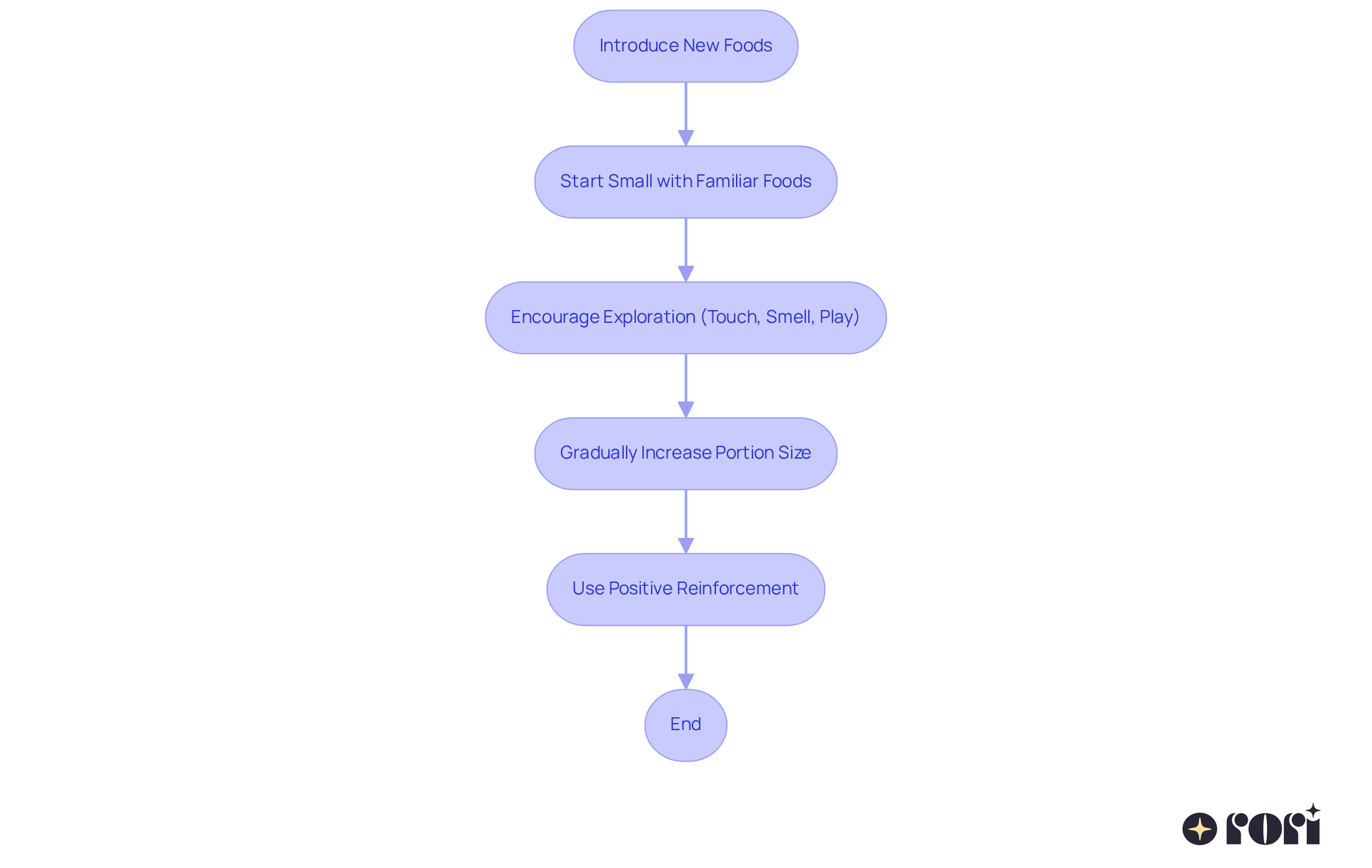
Introducing can be a bit tricky when it comes to , right? It’s all about patience and care to help ease any . Start small by offering a little bit of a new dish alongside something they already love. For example, if your little one enjoys chicken nuggets, try adding a small piece of broccoli on the plate. No pressure to eat it, just let them explore!
Encourage discovery by allowing them to touch, smell, or even play with the . This helps create a sense of comfort and curiosity. As they get more familiar with the new meal, you can gradually increase the portion size. Research shows that this gentle exposure can really boost their acceptance of different foods. Some kids even go from eating fewer than 15 items to over 50 diverse choices!
And don’t forget the power of ! A little verbal praise or a small reward for trying something new can go a long way in motivating them to expand their dietary preferences. This supportive approach not only helps with to but also builds a healthier relationship with food.
Let’s ! We’re here to help you every step of the way!
Meal planning for children with autism can feel like a big task, but it’s really about understanding their unique sensory needs and creating a routine that works for everyone. Involving kids in the cooking process and slowly introducing new foods can make mealtime a lot more enjoyable. By focusing on these strategies, you can help your child develop healthy eating habits while making mealtimes a fun experience.
One key insight is recognizing those sensory sensitivities that can really shape what your child wants to eat. Establishing a structured mealtime routine brings comfort and predictability, which is so important. Plus, when kids get to help with meal planning and preparation, they’re often more willing to try new dishes. Gradually exposing them to new foods, along with some positive reinforcement, can ease any resistance and encourage a more varied diet.
Ultimately, meal planning for kids with autism is about more than just what’s on the plate; it’s a chance to strengthen your bond and build their confidence. By embracing these strategies, you can turn mealtimes into positive experiences that cater to your child’s unique needs and help them appreciate healthy eating for life. And remember, this journey not only benefits your child but also enriches family dynamics, making mealtime a cherished part of your daily routine. Let’s explore this together!
What are sensory sensitivities in children with autism?
Sensory sensitivities in children with autism refer to their unique reactions to different textures, tastes, and temperatures of food, which can significantly influence their taste preferences.
What percentage of parents report feeding challenges due to sensory sensitivities?
44.6% of parents report experiencing feeding challenges because of their child's sensory sensitivities.
How can parents accommodate their child's food texture preferences?
Parents can accommodate their child's food texture preferences by closely observing their reactions and engaging in meal planning that caters to these preferences, such as pureeing or blending disliked vegetables into familiar dishes.
Why is it important to offer a variety of textures in meals?
Offering a variety of textures in meals can help children discover new foods in a comfortable way, enhancing their acceptance of different foods.
How can caregivers support their child's behavioral goals related to food?
Caregivers can support their child's behavioral goals by using ABA principles and strategies, actively involving themselves in data collection, and adjusting treatment plans based on progress reports to ensure effectiveness.
What is the significance of Temple Grandin's perspective on differences in children with autism?
Temple Grandin's perspective, 'I am different, not less,' emphasizes the importance of embracing and supporting the unique experiences of children with autism, including their sensory sensitivities, through thoughtful meal planning.
How can understanding sensory sensitivities improve mealtime experiences?
Understanding sensory sensitivities can create a positive mealtime experience that encourages healthy eating habits, making mealtimes more enjoyable and less stressful for both children and caregivers.