Understanding the relationship between sleep and well-being is so important, especially for children with autism who often face unique sleep challenges. Quality rest doesn’t just boost cognitive function and emotional regulation; it also plays a key role in reducing behavioral issues and anxiety. As parents navigate the complexities of bedtime routines, you might wonder: what expert strategies can truly transform your child's sleep experience and create a more peaceful home?
Exploring effective methods tailored to the needs of autistic children can open the door to better sleep quality and overall family wellness. Let’s explore this together! Your journey toward a more restful night starts here.
Rest is vital for all young people, and especially crucial for those with developmental disorders, which is why seeking is essential. Quality rest can really boost cognitive function, emotional regulation, and overall health. Did you know that recent studies indicate that is important, as , anxiety, and social challenges? For example, when kids get enough rest, they tend to have better attention spans and fewer meltdowns. This really highlights why parents should prioritize !
And let’s not forget, rest plays a key role in . By recognizing these connections, caregivers can truly understand how important it is to implement through . For families seeking , simple methods like:
can lead to and overall family wellness.
Plus, caregivers can use and visual schedules, to help kids grasp their bedtime routines. This not only supports their children’s behavioral goals but also strengthens the family bond. Let’s explore this together and find what works best for your little one!

Children with autism often face significant . Many struggle to fall asleep, wake frequently during the night, and have irregular . In fact, studies reveal that up to 80% of autistic youth experience some form of sleep disruption, with about 65% having trouble falling asleep. Sensory sensitivities can make these issues even tougher; many kids are particularly sensitive to things like noise, light, and even the feel of their bedding, which can really interfere with their ability to settle down for sleep. Plus, anxiety and often linked to autism can lead to resistance at bedtime. For instance, transitioning from daytime activities to a calming nighttime routine can be especially tricky, resulting in prolonged resistance to sleep.
To help , caregivers can try out these strategies:
Understanding these challenges is key to developing effective strategies that include for children with autism. Let’s explore this together!

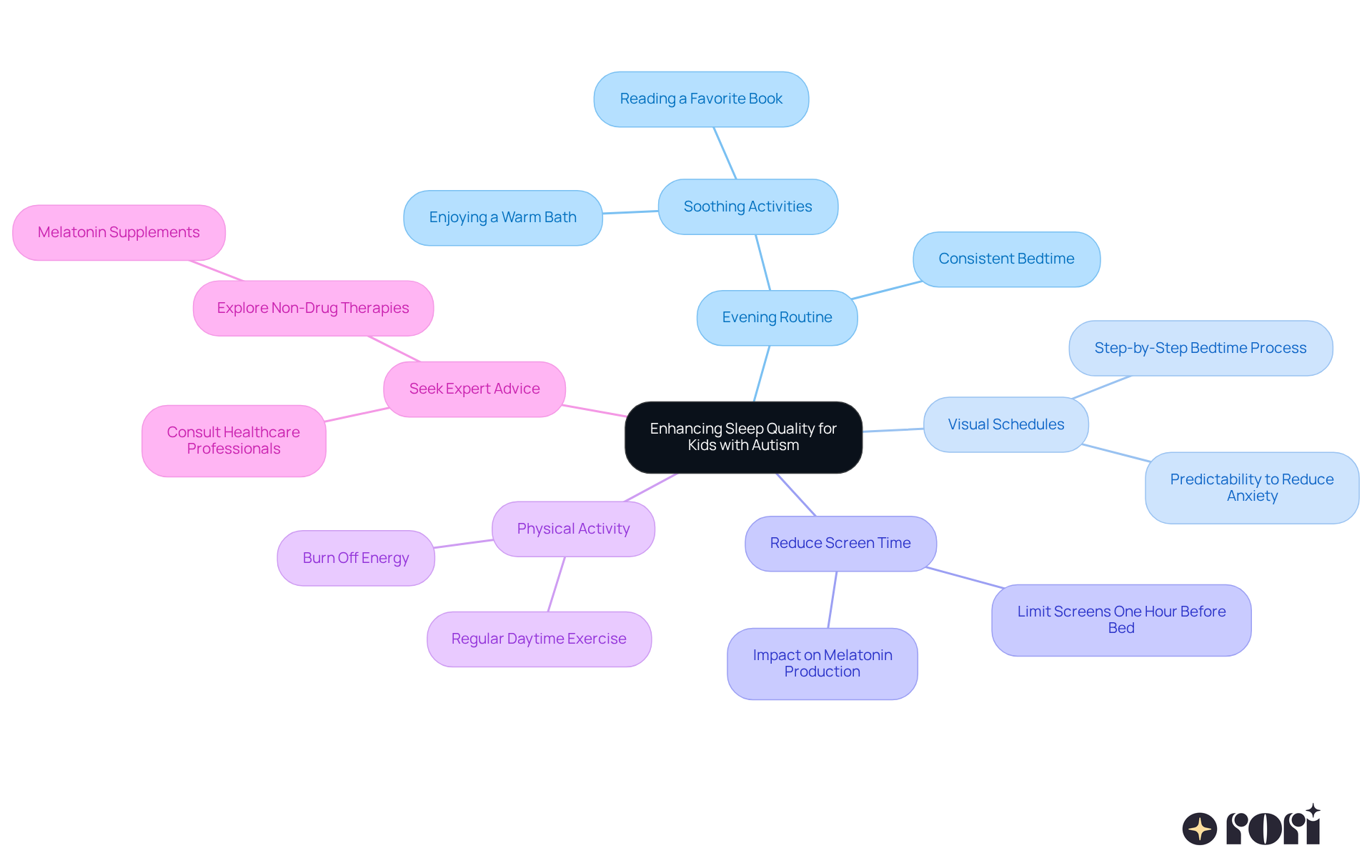
Parents may find enhancing sleep quality for kids with autism to be a real challenge, but they can seek expert advice on that offers ! 🌙 One of the best things you can do is create a . Think about soothing activities like reading a favorite book or enjoying a warm bath. These little rituals signal to your child that it’s time to wind down and relax.
Have you ever noticed how ? They can really help kids understand and predict the steps leading up to bedtime, which can ease their anxiety about the transition. It’s all about making things clearer and more manageable for them. Plus, these strategies reflect the , which tailors to each child’s unique needs.
Another tip? Try at least an hour before bed. Screens can mess with melatonin production, making it harder for your little one to drift off. And don’t forget about the ! Regular exercise helps burn off energy, making it easier for kids to settle down at night.
If , it might be time to seek from healthcare experts. They can explore , like melatonin supplements, which have shown effectiveness in improving sleep quality for kids with developmental disorders. Remember, you’re not alone in this journey, and we’re here to help you every step of the way!
is so important for kids with autism, and can help achieve this. Parents, you know how challenging it can be to , especially when seeking ! For children with autism, keeping the bedroom dark, quiet, and cool is often considered expert advice on improving sleep quality. Think about using blackout curtains to block out light and white noise machines to mask any disruptive sounds.
And let’s not forget about comfort! Choosing can serve as . It’s also a great idea to create a special place for rest in the bed, as suggested by . This helps your little one connect their bed with relaxation, which is so beneficial, particularly when following .
Finally, for , consider adding some . Soft lighting or soothing scents can really help set the mood for sleep. 🌙 Let’s explore this together and create a peaceful haven for your child!

Improving sleep quality for children with autism isn’t just a nice-to-have; it’s essential for their overall well-being. Quality rest can really boost cognitive function, emotional regulation, and social interactions. By focusing on effective sleep strategies, caregivers can create a nurturing environment that helps kids develop better sleep habits, leading to happier, healthier lives.
Throughout this article, we’ve explored various strategies, like:
Each of these approaches tackles the unique challenges that children with autism face, including sensory sensitivities and anxiety, while highlighting the importance of a supportive family dynamic.
Imagine transforming bedtime from a nightly struggle into a peaceful experience! By putting these strategies into practice, families can significantly enhance their child’s sleep patterns and, in turn, their daily functioning. It’s so important for caregivers to take proactive steps toward improving sleep quality, as the benefits reach far beyond the pillow-impacting every aspect of a child’s life.
Let’s explore this together! Your journey toward better sleep for your child can start today, and we’re here to help you every step of the way!
Why is sleep important for children with autism?
Sleep is vital for children with autism as it boosts cognitive function, emotional regulation, and overall health. Quality rest can lead to better attention spans and fewer meltdowns.
What are the consequences of sleep disturbances in children with autism?
Sleep disturbances are linked to increased behavioral issues, anxiety, and social challenges in children with autism.
How does sleep affect learning in children with autism?
Rest plays a key role in memory consolidation, which is essential for learning new skills and behaviors.
What expert advice can help improve sleep quality for children with autism?
Expert advice includes implementing effective rest strategies tailored to the child's unique needs, such as setting regular bedtime routines, using weighted blankets, and creating sensory-friendly sleep environments.
What methods can families use to enhance sleep quality for children with autism?
Families can enhance sleep quality by establishing regular bedtime routines, using weighted blankets, and creating sensory-friendly sleep environments.
How can ABA strategies assist with bedtime routines for children with autism?
ABA strategies, like positive reinforcement for staying in bed and visual schedules, can help children understand their bedtime routines while supporting their behavioral goals and strengthening family bonds.