4 Practical Techniques for Promoting Skill Generalization in Autism

Explore effective techniques for promoting skill generalization in children with autism for better outcomes.

Introduction

Understanding how children with autism can effectively transfer learned skills into their everyday lives is a key focus in Applied Behavior Analysis (ABA) therapy. This article explores practical techniques that not only enhance skill generalization but also empower caregivers to actively participate in their child's development.

However, the journey toward successful skill application can be challenging. What strategies can we use to overcome these obstacles and ensure that the gains made in therapy extend beyond the therapy room? Let’s explore this together!

Understand the Importance of Skill Generalization in ABA Therapy

Ability generalization is all about how a young person can take the skills they've learned and use them in different places, with different people, and in various situations. In ABA therapy, this idea is super important because it helps ensure that what kids learn in therapy doesn’t just stay in the therapy room - it spills over into their everyday lives. For example, a child might learn to say hello to friends during a session, but if they can’t use that skill at school or home, it’s not really helping them, is it?

Research shows that many kids with autism struggle with generalization. This makes it crucial for therapists to use targeted strategies that are effective in promoting skill generalization in children with autism: practical techniques and interventions. When kids can generalize their skills, it not only helps them become more independent but also enhances their social interactions and overall quality of life. A recent study found that kids who received early and intensive ABA therapy showed big improvements in their communication and social skills, highlighting just how vital generalization is for achieving meaningful outcomes.

By recognizing the importance of promoting skill generalization in children with autism: practical techniques and interventions, caregivers and clinicians can better support a young person’s growth, ensuring that the progress made in therapy translates into real-life changes. This approach aligns with the understanding that every child is unique, and tailored strategies can really help them apply what they’ve learned in different settings.

Benefits of Caregiver Education:

  • Enhanced Support: Caregivers become better equipped to provide the right support at home, complementing professional help and promoting consistency.
  • Informed Decision-Making: With a deeper grasp of ABA principles, caregivers can make choices that positively impact their child’s progress.
  • Enhanced Behavioral Outcomes: When caregivers actively participate and align with therapeutic methods, it often leads to more effective and lasting behavioral improvements.
  • Empowered Caregivers: The knowledge gained through education boosts caregivers’ confidence in their ability to help their children, reducing stress and improving family dynamics.

Let’s explore this together! By working hand-in-hand, we can make a real difference in the lives of our children.

The central node represents the main idea of skill generalization. Each branch shows related topics, helping you see how they connect and contribute to the overall understanding of ABA therapy and its impact on children with autism.

Implement Proven Strategies for Effective Skill Generalization

To effectively promote skill generalization in children with autism: practical techniques and interventions, it is important to recognize the vital role of parental involvement and the challenges of measuring progress in natural settings. Here are some proven strategies that can help:

  1. Multiple Exemplar Training: This method involves teaching skills through different examples and contexts. For instance, when teaching a child to ask for help, practice this skill in various settings like home, school, and community activities. This way, the child learns to use the skill in different situations, making it more versatile.

  2. Natural Environment Training (NET): Conducting therapy sessions in natural settings where the child will use their skills is essential. This approach is effective in promoting skill generalization in children with autism: practical techniques and interventions by helping kids apply what they’ve learned in real-life scenarios. Plus, when parents participate in these sessions, it can really enhance the child’s learning and strengthen their skills in everyday situations.

  3. Varying Instruction: Mixing up teaching methods and stimuli is key. Using different prompts, resources, and educators to reinforce the same skill makes it more adaptable and helps children generalize across various contexts. Parents can play a big role here by providing varied opportunities for practice at home, aligning with the personalized support offered by Rori Care.

  4. Peer Involvement: Involving peers in practice sessions provides social support and helps kids learn to generalize skills in social settings. This interaction not only boosts learning but also fosters social connections, which are crucial for applying skills.

  5. Role-Playing: Using role-playing scenarios allows kids to practice skills in a controlled setting before applying them in real-life situations. This method helps children rehearse and gain confidence in their abilities, making them more likely to generalize their skills.

While these approaches are effective, assessing progress in natural environments can be tricky. Therapists at Rori Care use innovative data collection techniques to monitor each child’s development accurately, ensuring that treatment plans are flexible and responsive to their evolving needs. As Dr. Emily Sanders notes, "Natural ABA Therapy provides a more customized approach than conventional methods," emphasizing the importance of adapting techniques to each child’s unique requirements.

By using these strategies and recognizing the collaborative role of parents, therapists at Rori Care can significantly increase the chances of promoting skill generalization in children with autism: practical techniques and interventions, allowing children to transfer their skills beyond the therapy environment and leading to better outcomes in their daily lives. Let’s explore this together!
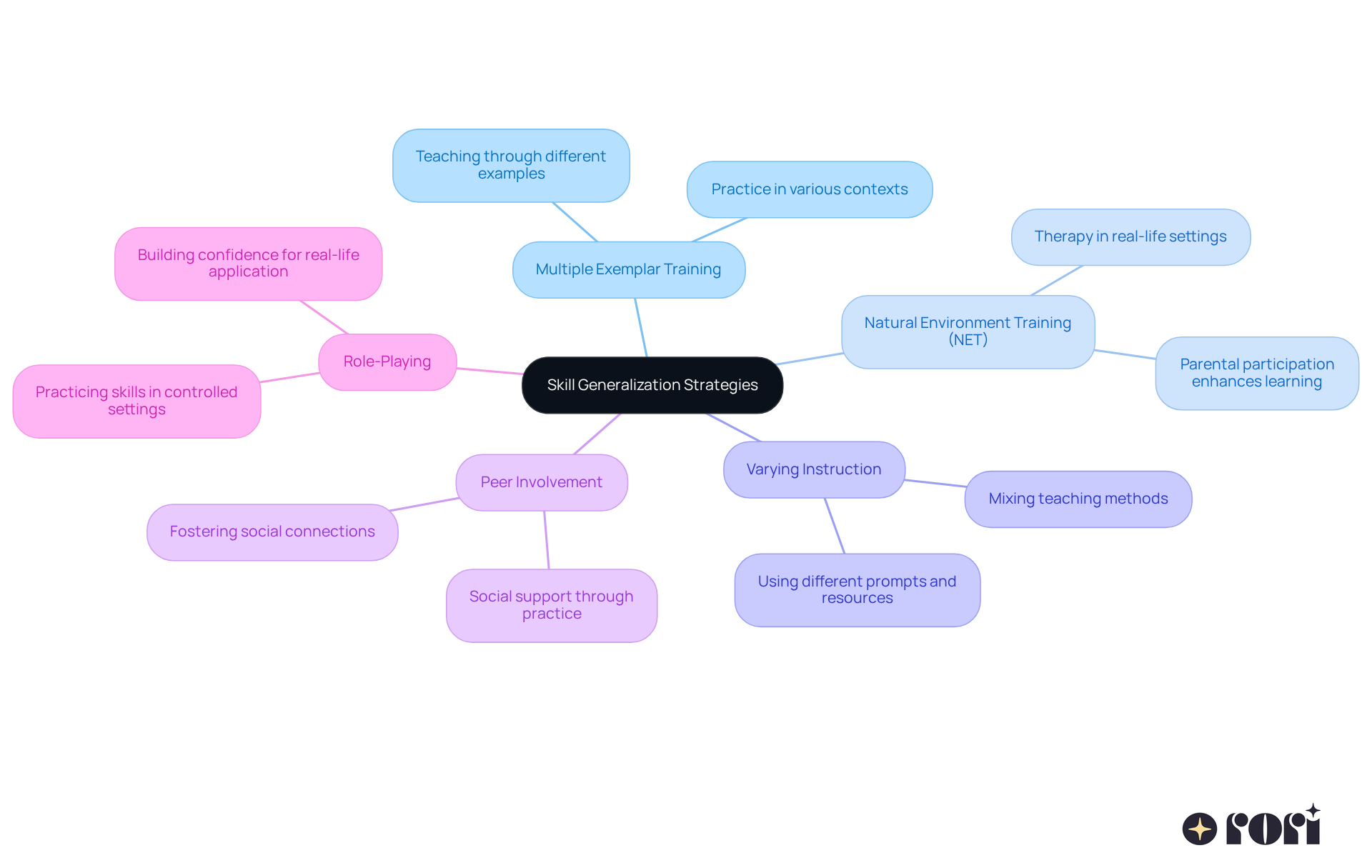
The central node represents the main topic, while each branch shows a different strategy. The sub-branches provide details about how each strategy works. This layout helps you see the connections and importance of each approach in promoting skill generalization.

Engage Parents and Caregivers in the Generalization Process

Parental involvement is crucial for helping children with autism generalize their skills. Let’s explore some effective strategies to engage parents and caregivers:

  1. Training Sessions: How about conducting training for caregivers on the strategies used in therapy? This way, they gain essential skills to support learning at home, which can really boost the child’s progress.

  2. Organized Schedules: Encourage caregivers to set up organized routines that include practice opportunities for the skills being taught. For instance, if a child is learning to request items, parents can create scenarios during daily activities where the child can practice this skill. It’s all about fostering real-world application and consistency in support!

  3. Communication: Keeping those lines of communication open between therapists and parents is key. Regular updates on the child’s development and the approaches being used in therapy help caregivers feel more engaged and informed, strengthening their role in the therapeutic process.

  4. Modeling: Demonstrating techniques during therapy sessions that caregivers can replicate at home is super helpful. This hands-on approach allows parents to see successful strategies in action, making it easier for them to use these techniques in everyday interactions.

  5. Feedback and Assistance: Offering ongoing feedback and support to caregivers as they apply techniques at home is essential. This could include check-ins, resources, and a bit of encouragement to help them feel confident and empowered in their role. It’s all about reducing stress and improving family dynamics!

  6. Addressing Common Pitfalls: It’s important for caregivers to be aware of potential challenges, like misapplying strategies or feeling overwhelmed. Encouraging them to seek guidance and share their experiences can really help mitigate these issues, ensuring they stay engaged and effective in their support.

By actively involving parents and caregivers, therapists can create a nurturing environment that promotes skill generalization and enhances the overall development of the child. As highlighted in the case study 'Role of Parent Training in Autism Therapy,' parent training programs not only empower parents but also lead to better outcomes for the children. Let’s work together to make a difference!

The central node represents the main goal of engaging parents and caregivers, while each branch shows a specific strategy. The sub-branches provide details on how to implement each strategy effectively.

Address Challenges in Promoting Skill Generalization

Encouraging promoting skill generalization in children with autism: practical techniques and interventions can be a bit tricky, right? There are several common barriers that can make this process challenging. Let’s explore some effective strategies to tackle these issues together:

  1. Limited Exposure: Kids often miss out on chances to practice their skills in different settings. To help with this, therapists can encourage practice at home, school, and in the community. This way, abilities can shine in real-world situations! Educating caregivers is key here; when they know what to do, they can support their kids in various environments.

  2. Anxiety and Overwhelm: New places can make children with autism feel anxious, which can block their ability to use what they’ve learned. Gradual exposure to new settings, along with supportive guidance, can really help ease their transition and calm those nerves. Empowered caregivers, who understand ABA principles, can make these transitions smoother by being attuned to their child’s needs.

  3. Unreliable Support: Without consistent encouragement from caregivers, kids might struggle to apply their skills effectively. Training parents to provide regular reinforcement and constructive feedback is super important for helping kids retain and use their abilities. This training boosts caregivers' confidence in making choices that positively influence their child’s growth.

  4. Lack of Motivation: Sometimes, kids don’t see the point in using their skills outside of therapy sessions. By linking these abilities to their interests and daily activities, therapists can spark motivation and engagement, making learning feel relevant. When caregivers are trained to connect these skills to everyday experiences, it encourages kids to get involved and use what they’ve learned.

  5. Communication Barriers: Communication challenges can make it hard for kids to express their needs or apply their skills. Using visual supports and alternative communication methods can really help improve understanding and expression. Educated caregivers can implement these strategies effectively, further supporting their child’s development.

By proactively addressing these challenges and empowering caregivers through education, therapists can create a more supportive environment for skill generalization. Together, we can work towards better outcomes for children with autism! Let’s explore this journey together!

The central node represents the main topic, while each branch shows a specific challenge. The sub-branches detail practical strategies to tackle those challenges. This layout helps visualize how to support children with autism in generalizing their skills.

Conclusion

Promoting skill generalization in children with autism is such an important part of ABA therapy. It’s all about making sure that the skills learned in therapy can be used in everyday life. By focusing on practical techniques and interventions, caregivers and therapists can work together to create an environment where children can apply their skills in different situations. This not only boosts their independence but also enhances their social interactions.

Throughout this article, we’ve highlighted some key strategies that can really make a difference. Techniques like multiple exemplar training and natural environment training, along with the vital role of parental involvement, are essential. Each of these approaches shows how important it is to provide varied practice opportunities and consistent support from caregivers. This support can significantly improve a child's ability to generalize skills. Plus, addressing challenges like limited exposure and communication barriers is crucial for creating a nurturing learning environment.

Ultimately, the journey toward effective skill generalization is a team effort between therapists and caregivers. By empowering parents with knowledge and resources, and by implementing proven strategies, we can unlock the potential for meaningful progress in children with autism. Engaging in this collaborative process not only benefits the child but also strengthens family dynamics. Together, we can pave the way for a brighter future filled with opportunities for growth and connection. Let’s explore this together!

Frequently Asked Questions

What is skill generalization in ABA therapy?

Skill generalization in ABA therapy refers to a young person's ability to apply the skills they've learned in therapy across different settings, with various people, and in diverse situations, ensuring that the skills are useful in everyday life.

Why is skill generalization important in ABA therapy?

It is important because it ensures that the skills learned in therapy extend beyond the therapy room, enabling children to use those skills in real-life situations, which enhances their independence and social interactions.

Do children with autism struggle with skill generalization?

Yes, research indicates that many children with autism have difficulties with generalization, making it essential for therapists to employ targeted strategies to promote skill generalization.

What are some benefits of skill generalization for children with autism?

When children can generalize their skills, it leads to increased independence, improved social interactions, and a better overall quality of life.

How can caregiver education impact the process of skill generalization?

Caregiver education enhances support, informs decision-making, improves behavioral outcomes, and empowers caregivers, which collectively promotes consistency and effectiveness in helping children generalize their skills.

What are the specific benefits of caregiver education mentioned in the article?

The benefits include enhanced support for the child at home, informed decision-making regarding ABA principles, improved behavioral outcomes through alignment with therapeutic methods, and increased confidence for caregivers, leading to reduced stress and better family dynamics.