Social skills are truly the cornerstone for individuals with autism spectrum disorder (ASD). They help with communication, building relationships, and managing emotions. Research shows that many face significant challenges in social interactions, making it crucial to develop effective strategies. In this article, we’ll explore four proven techniques for enhancing social skills in group therapy settings. These methods can have a transformative impact on the lives of youth with ASD.
What if the key to unlocking their potential isn’t just in therapy, but in a collaborative approach that includes caregivers and innovative technology? Let’s dive in and discover how we can work together to support these amazing individuals!
Social skills are so important for individuals with autism spectrum disorder (ASD). They help with communication, building relationships, and managing emotions. At Rori Care, our clinical leadership team - made up of experienced experts in psychology, special education, and behavioral therapy - is dedicated to promoting neurodiversity and supporting youth in these areas. Research shows that kids with ASD often face challenges in social interactions, which can lead to feelings of isolation and anxiety. By cultivating these skills, we not only help them connect better with their peers but also encourage their independence and self-advocacy.
For example, a meta-analysis of social skills training (SST) interventions found that participants showed significant improvements in their abilities, with effect sizes ranging from 0.28 to 0.60. Even more encouraging, the average community participation score jumped from 19.50 to 28.50, reflecting a real boost in engagement. These improvements are vital for navigating daily situations and enhancing emotional understanding.
By focusing on developing interpersonal skills, caregivers and clinicians at Rori Care can truly enhance the quality of life for young people with ASD. This allows them to form meaningful relationships and engage more fully in their communities. Plus, research indicates that kids who take part in SST experience better emotional regulation, with harmful behaviors decreasing by an average of two points in the experimental group. This is crucial for reducing anxiety and improving overall well-being. It really highlights how important it is to weave social skills development in ASD group therapy into therapeutic approaches for youth with ASD. As Temple Grandin wisely said, 'I am different, not less,' reminding us of the unique strengths that can blossom through effective interpersonal development.

When it comes to helping youth with autism spectrum disorder (ASD), organized interpersonal skills training methods are super important for effective communication and interaction. Techniques like role-playing, modeling, and peer-mediated interventions can really boost interpersonal engagement.
Take role-playing, for instance. It gives kids a chance to practice real-life scenarios in a safe space, helping them pick up on social cues and learn appropriate responses. This approach has shown some fantastic results, leading to better participation and reciprocity among peers.
And let’s not forget about peer-mediated interventions! These methods encourage learning through interactions with peers, which can really spark motivation and engagement. Research backs this up, showing that structured methods lead to significant improvements in interpersonal skills. They set clear expectations and provide plenty of opportunities for practice.
Plus, caregiver education plays a vital role in this journey. By equipping caregivers with the right tools, they can reinforce these skills at home. Clinicians are encouraged to weave these techniques into their group therapy sessions, particularly for social skills development in ASD group therapy, maximizing benefits for everyone involved. Together, we can create a more inclusive and supportive environment for our kids. Let’s explore this together!

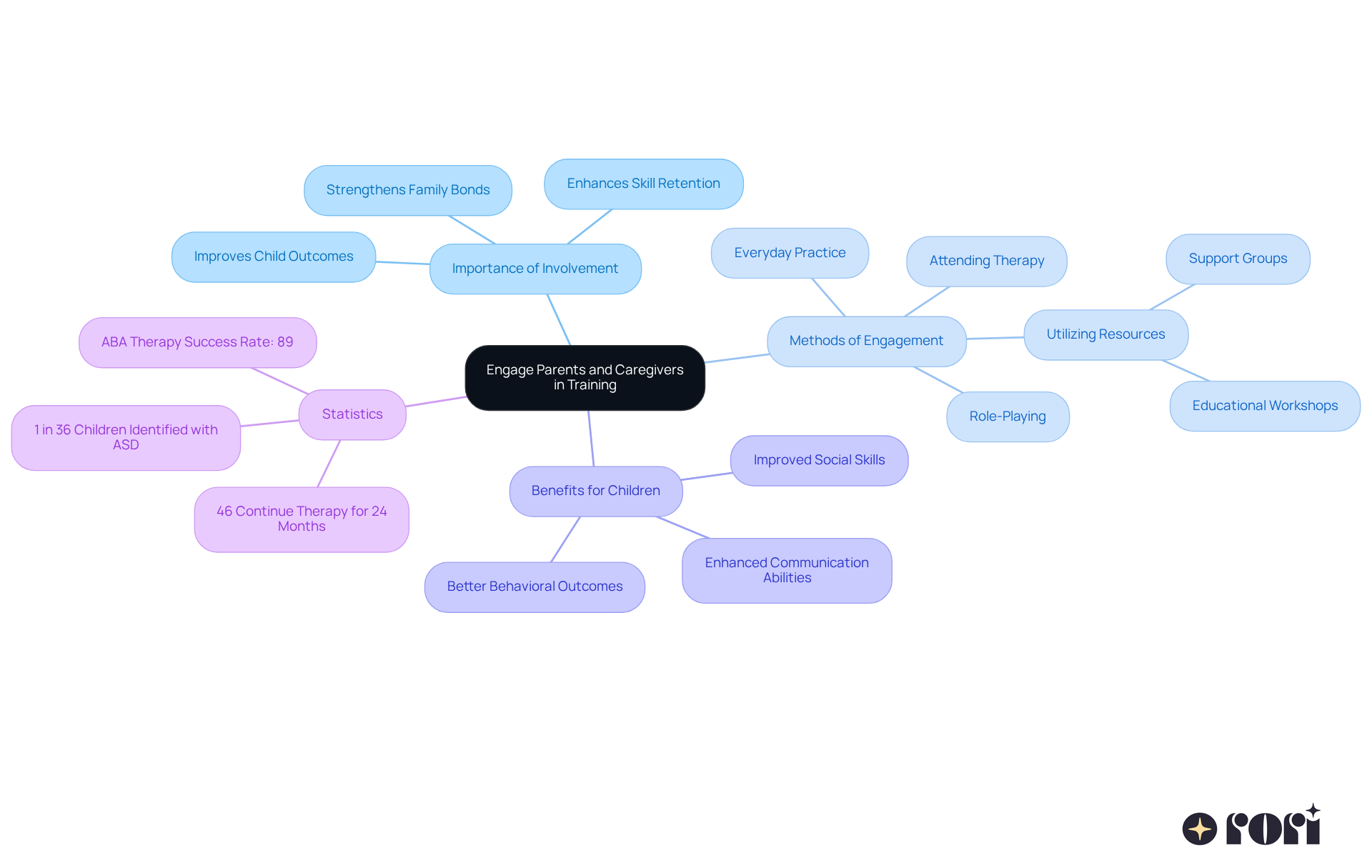
Getting parents and caregivers involved in developing interpersonal skills is so important for reinforcing what kids learn in therapy. Did you know that about 1 in 36 (2.8%) 8-year-olds are identified with autism spectrum disorder? That means parents have a huge role in helping their kids practice these skills at home, turning therapy lessons into real-life opportunities.
Think about it: attending therapy sessions together, engaging in fun role-playing activities, or using everyday situations to practice can really boost learning. Research shows that when parents actively participate, kids retain skills better and have improved interactions with others. At Rori Care, clinicians should offer parents resources and training to empower them in supporting their child's social development. This collaborative approach not only enriches the therapy experience but also strengthens family bonds, creating a healthier home environment.
And here’s something to consider: ABA therapy has shown an impressive success rate of over 89% in helping young people with autism spectrum disorder. This makes parental involvement even more crucial! When caregivers are actively engaged, it leads to informed decision-making and better behavioral outcomes, ultimately benefiting the child’s overall development. So, let’s explore this together! We’re here to help you every step of the way!
Integrating technology into interpersonal development training can really boost engagement and educational results for kids with Autism Spectrum Disorder (ASD). Think about it: mobile apps, virtual reality, and interactive software offer exciting ways for young people to practice their interpersonal skills in safe environments. For example, apps like Proloquo2Go and iTake Turns use video modeling to show appropriate interactions, helping kids visualize and grasp those important social cues. Plus, virtual reality settings mimic real-life situations, giving them a comfortable space to practice and grow.
At Rori Care, our clinical leadership team is all about embracing neurodiversity and ensuring that children thrive through these innovative methods. We blend evidence-based practices, like storytelling and visual supports, with these tech tools to reinforce learning. Research shows that mobile devices not only encourage participation in interventions but also boost motivation and engagement-key ingredients for effective learning. In fact, 50% of studies focusing on interpersonal skills as primary outcomes have shown impressive effectiveness, especially for kids aged 9 to 18, where interventions were 100% effective!
But let’s not forget about the role of caregiver education. When caregivers are equipped with knowledge and skills, they can provide better support at home, make informed decisions, and actively participate in their child’s development. This involvement often leads to better behavioral outcomes and empowers caregivers, reducing stress and improving family dynamics. By harnessing advanced tools and the expertise of our clinical team, Rori Care creates a dynamic training experience that resonates with kids, ultimately enhancing their ability retention and communication skills.
However, it’s important to recognize that high intervention costs can be a barrier for low-income families, limiting access to these technologies. The positive outcomes seen in various case studies highlight the potential of these tools to transform social skills development in ASD group therapy for children. Let’s explore this together! We’re here to help you every step of the way!

Developing social skills is so important for individuals with autism spectrum disorder (ASD). It helps them communicate better, build relationships, and manage their emotions. When caregivers and clinicians use effective strategies in group therapy, they can really boost the quality of life for these young individuals. Structured social skills training is key - it gives participants the tools they need to navigate social interactions and form meaningful connections.
In this article, we’ve highlighted some key strategies. Think about using structured techniques like role-playing and peer-mediated interventions. Engaging parents and caregivers in the training process is also vital, along with integrating technology to make learning more enriching. Each of these elements contributes to a well-rounded approach that not only enhances interpersonal skills but also supports emotional regulation and overall well-being for children with ASD.
Ultimately, fostering social skills in individuals with ASD is a team effort. It involves clinicians, caregivers, and innovative tools working together. By embracing these proven strategies, we can create inclusive environments that empower young people to thrive. So, let’s prioritize social skills development in therapy, engage families in the process, and leverage technology to ensure every child has the chance to flourish in their social interactions. We’re here to help you every step of the way!
Why are social skills important for individuals with autism spectrum disorder (ASD)?
Social skills are crucial for individuals with ASD as they facilitate communication, help build relationships, and assist in managing emotions, ultimately promoting better connections with peers and encouraging independence and self-advocacy.
What challenges do kids with ASD face in social interactions?
Kids with ASD often encounter difficulties in social interactions, which can lead to feelings of isolation and anxiety.
How does social skills training (SST) benefit individuals with ASD?
Research shows that participants in SST interventions demonstrate significant improvements in their social abilities, with effect sizes ranging from 0.28 to 0.60. Additionally, community participation scores increased from 19.50 to 28.50, indicating enhanced engagement.
What impact does social skills training have on emotional regulation for children with ASD?
Children who participate in SST experience better emotional regulation, with harmful behaviors decreasing by an average of two points in the experimental group, which is essential for reducing anxiety and improving overall well-being.
How does Rori Care approach social skills development for youth with ASD?
At Rori Care, caregivers and clinicians focus on developing interpersonal skills, which enhances the quality of life for young people with ASD, allowing them to form meaningful relationships and engage more fully in their communities.
What is the significance of including social skills development in therapeutic approaches for youth with ASD?
Incorporating social skills development into therapeutic approaches is vital, as it helps individuals with ASD navigate daily situations, enhances emotional understanding, and supports their overall quality of life.