

Teaching social skills to autistic adolescents is a complex yet vital journey that can truly shape their ability to connect with others. By using structured and evidence-based strategies, caregivers and educators can help foster meaningful relationships and boost communication skills. But here’s the question: how can we tailor these strategies to fit the unique needs of each adolescent?
Let’s dive into some proven methods that not only support social skills development but also empower parents to take an active role in their child’s path toward social competence. Together, we can explore this important topic and find ways to make a real difference!
Teaching for autistic adolescents can feel like a big challenge, right? But don’t worry! With , you can make a real difference. Methods like , narrative stories, and have shown to be particularly effective.
By thoughtfully incorporating these strategies, you can create a supportive environment that encourages your child to thrive socially. Let’s explore this together! We’re here to help you every step of the way!

Customization in training is essential for effectively supporting . Every young person has their own strengths, challenges, and interests that we should consider when designing a training program. For instance, if your child learns best visually, using visual aids and interactive activities can really help them grasp better.
Involving your adolescent in the can also boost their motivation and investment in the training. At Rori Care, we’re all about empowering your young one with the skills they need to explore the world independently. We make sure our interventions are tailored to fit their unique experiences and preferences.
Our clinical leadership team is dedicated to fostering , which guides our approach to . Research shows that for social skills development for autistic adolescents lead to better engagement and more significant improvements in interpersonal skills, as they closely align with each individual’s needs and actively involve caregivers in achieving behavioral goals.
Let’s explore this together! We’re here to !
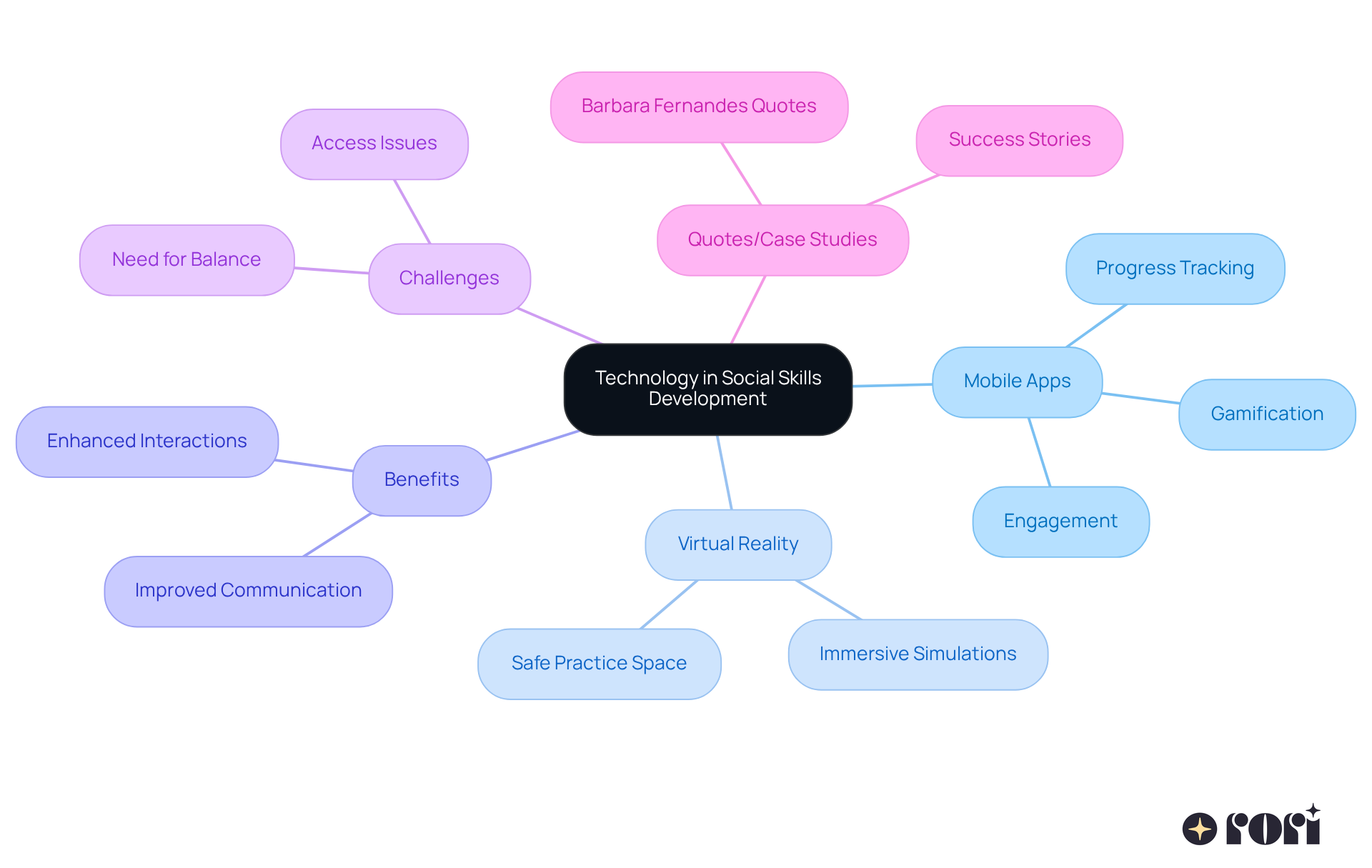
Technology is truly a game-changer for autistic teenagers in their journey towards . Consider this: for autistic adolescents provide fun, interactive experiences that truly engage and motivate kids. These apps often turn learning into a game, making it enjoyable and rewarding as users see their progress. And let’s not forget about ! It provides immersive simulations of real-life interactions, giving teens a safe space to practice their skills without any pressure.
Research shows that these tech tools can , demonstrating their effectiveness in social skills development for autistic adolescents alongside traditional training methods. But here’s the thing: not every family has equal access to these resources, and that’s something we need to address. While , it’s also important to to nurture genuine relationships and meet emotional needs.
As Barbara Fernandes, a Speech-Language Pathologist, puts it, "The use of technology isn’t merely a trend; it’s a personal revolution." This really highlights how . Plus, case studies show real success stories of teens achieving social skills development for autistic adolescents by .
So, let’s explore this together! If you’re a parent navigating these waters, know that you’re not alone. We’re here to help you every step of the way!
Getting parents involved as active contributors in the is crucial! It really helps reinforce what kids learn and keeps things consistent at home. Parents can be trained to use , like modeling positive interactions and giving constructive feedback. For instance, letting kids practice their social skills during playdates or family gatherings can really enhance their learning experience.
When parents engage in and tracking progress, it creates a team effort that’s essential for success. Research shows that when parents are actively involved, kids often experience for autistic adolescents and feel more confident in social situations. A meta-analysis found that (PIIs) have an effect size of 0.603 for expected behaviors/social skills and 0.545 for language/communication skills. This really highlights how effective can be!
Plus, having a is key to tailoring interventions to meet each child’s unique needs. This collaboration not only strengthens the bond between parents and kids but also boosts the overall effectiveness of the interventions. is crucial in this journey, as it equips them with the knowledge and skills to support their children’s behavioral goals effectively. By , parents can make informed choices that positively influence their child’s progress, leading to better behavioral outcomes and happier family dynamics. Let’s explore this together!

Developing social skills in autistic adolescents is quite the journey, isn’t it? It’s a multifaceted process that calls for thoughtful, evidence-based approaches. By using effective teaching strategies like role-playing, narrative stories, and video modeling, caregivers and educators can create a nurturing environment that really fosters meaningful social interactions. Personalizing training to meet individual needs can make a world of difference, enhancing engagement and success, and helping each adolescent thrive in their social endeavors.
One key insight here is the importance of leveraging technology and involving parents as active participants in this skill development process. Mobile apps and virtual reality tools offer innovative ways to practice social skills, while having parents involved can significantly boost progress and confidence in social situations. When families work together and utilize a variety of resources, they can really support their adolescents in overcoming challenges and achieving their social goals.
Ultimately, the path to effective social skills development for autistic adolescents is a shared responsibility. It benefits from community support, tailored interventions, and the integration of modern technology. Embracing these strategies not only empowers adolescents to navigate social landscapes more effectively but also enriches their overall quality of life. Let’s continue exploring and implementing these proven strategies, ensuring that every young person has the opportunity to connect, communicate, and thrive in their social world. We’re here to help you every step of the way!
What are effective teaching strategies for social skills development in autistic adolescents?
Effective strategies include role-playing, narrative stories, and video modeling, which are structured and evidence-based methods that can significantly aid in social skills development.
How does role-playing help autistic adolescents?
Role-playing allows teenagers to practice social interactions in a safe environment, helping them understand social cues and appropriate responses. It empowers them to shape their identity and story, which can be transformative in social situations.
What are narrative stories, and how do they benefit autistic adolescents?
Narrative stories simplify complex interpersonal situations into manageable tales, making it easier for teens to navigate real-life interactions. They promote appropriate responses, improve behavior, and reduce anxiety, with research showing significant boosts in communication skills.
What is video modeling and its role in social skills development?
Video modeling involves watching videos that demonstrate suitable behaviors, reinforcing learning by providing clear visual examples of desired interactions. It is linked to better communication and reciprocity, making it a valuable tool for social skills training.
How can group therapy support social skills development for autistic adolescents?
Group therapy, led by qualified therapists, provides a structured setting for developing interpersonal skills, enhancing communication and relationships among peers.
What should parents be cautious about when teaching social skills?
Parents should be aware of common pitfalls, such as relying too much on scripted interactions, which can hinder natural social skills development. It’s important to create a supportive environment that encourages authentic interactions.


