Understanding how children learn and thrive in educational settings is so important, especially for those with autism. Applied Behavior Analysis (ABA) offers a variety of research-backed techniques that can really help enhance academic success by addressing each child’s unique learning needs. By exploring these strategies, parents and educators can empower young learners to overcome challenges and reach their full potential.
But what specific ABA techniques can we implement to not only boost academic performance but also foster a love for learning? Let’s explore this together! We’re here to help you every step of the way!
Applied Behavior Analysis (ABA) is built on some key principles that really make a difference in educational settings. Let’s dive into them!
Reinforcement: This principle is all about giving a little reward after a desired action, which helps increase the chances of that action happening again. For instance, imagine a young student who gets a pat on the back or a small treat for turning in their homework on time. Research shows that more therapy hours and consistent treatment lead to better mastery of goals. This highlights just how crucial consistent reinforcement is for achieving positive outcomes.
Prompting: Here’s where cues or hints come into play to encourage kids to show desired behaviors. Picture a teacher using verbal prompts to remind a student to raise their hand before speaking. This simple technique can really help make classroom interactions smoother and more enjoyable.
Task Analysis: Breaking down complex tasks into bite-sized steps can make learning feel a lot less overwhelming for young learners. For example, when teaching a child to write an essay, you can break it down into manageable steps like brainstorming, outlining, drafting, and revising. This way, the whole process feels more achievable!
Generalization: This principle is all about helping kids apply what they’ve learned in different situations. For instance, if a child learns to ask for help in class, we want them to be able to use that skill at home or in social settings too. It’s all about reinforcing their adaptability!
At Rori Care, we also emphasize the importance of individualized plans crafted by qualified behavior analysts. These plans come with measurable goals and evidence-based strategies tailored to each child’s unique needs. This ensures that therapy is flexible and responsive. Plus, continuous assessment and adjustments are key to meeting each individual’s evolving needs.
Understanding these principles can really empower parents and educators to create a supportive learning environment that incorporates research-backed ABA techniques for improving academic outcomes for young individuals with autism. The effectiveness of ABA therapy shines through its data-driven approach, focusing on personalized assessments and ongoing evaluations to optimize each learner’s journey.
So, let’s explore this together! We’re here to help you every step of the way!

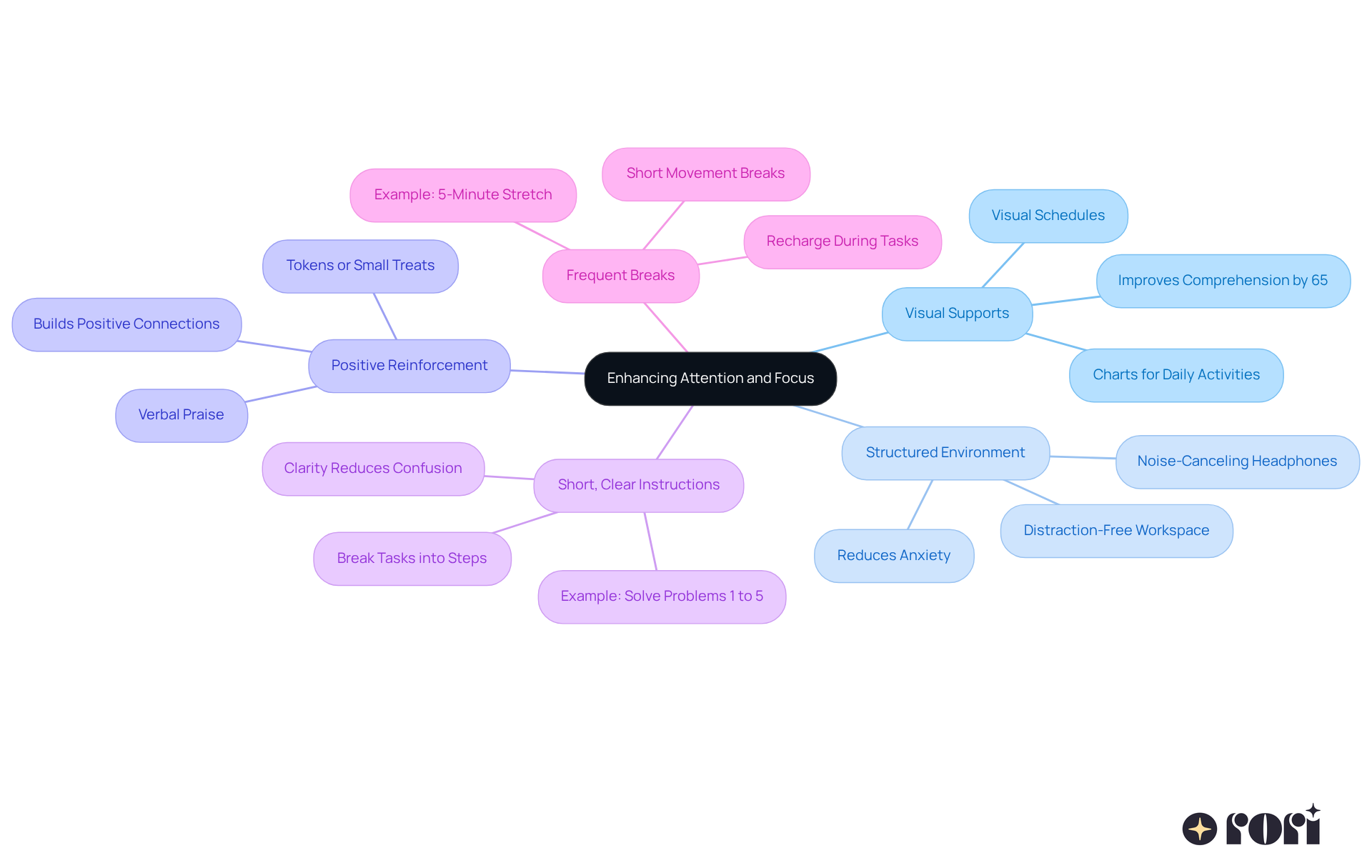
To help children with autism focus better, let’s explore some effective ABA techniques together:
Visual Supports: Think about using visual schedules and charts to outline daily activities. This can really help kids anticipate what’s next, easing their anxiety and allowing them to concentrate on tasks. Research shows that visual supports can boost comprehension by 65% for many autistic learners!
Structured Environment: Creating a distraction-free workspace is key. Reducing noise and visual clutter can make a big difference. For example, noise-canceling headphones can be a lifesaver in busy classrooms. A structured environment not only lowers anxiety but also enhances focus, leading to better behavior and task completion.
Positive Reinforcement: Kids thrive on encouragement! Rewarding their efforts with verbal praise, tokens, or small treats can help them stay focused. It’s all about building a positive connection with sustained attention.
Short, Clear Instructions: Breaking tasks into simple steps is super helpful. Instead of saying, "Complete your math homework," try, "First, solve problems 1 to 5 in your math book." This clarity helps kids understand what’s expected and reduces confusion.
Frequent Breaks: Don’t forget to incorporate short breaks! Allowing kids to recharge during tasks can keep them engaged. For instance, after 15 minutes of focused work, a quick 5-minute stretch or movement break can work wonders.
By using research-backed ABA techniques for improving academic outcomes, you can significantly boost a young person’s ability to focus. Remember, structured environments and visual supports are essential in promoting independence and learning for individuals with autism. We’re here to help you every step of the way!
To effectively assist individuals with autism, customizing ABA techniques to meet personal needs is essential. Let’s explore some strategies that can make a real difference:
Functional Behavior Assessment (FBA): Conducting an FBA is key to identifying specific actions that need intervention and understanding the contexts in which they arise. This evaluation, carried out by skilled analysts, helps create tailored interventions that resonate with the young person's environment, ensuring they’re meaningful and effective. Our behavior care engine makes this process smoother by performing functional behavior analysis and generating automatic progress reports for clinician review, which helps in ongoing evaluation and adjustment of strategies.
Incorporate Interests: Tapping into a young person's interests can really boost motivation and engagement. For instance, if a child loves dinosaurs, weaving dinosaur-themed activities into educational tasks can make learning more enjoyable and effective. Research shows that kids who engage in activities centered around their interests often see better social outcomes.
Adapt Teaching Methods: It’s important to recognize that students have different learning styles. Some might thrive with visual aids, while others may respond better to auditory instructions. By assessing each student’s preferred learning style and adjusting teaching methods accordingly, we can achieve better results.
Set Individual Goals: Establishing specific, measurable objectives tailored to each young person's unique abilities and challenges is crucial. For example, if a child struggles with social interactions, a goal could be to initiate a conversation with a peer once a week. This not only fosters social skills development but also aligns with our commitment to individualized planning, ensuring that each behavioral plan is crafted to fit the client’s unique needs.
Regularly Review and Adjust: Keeping an eye on progress is vital, along with being open to adjusting techniques as needed. If a particular strategy isn’t working, exploring alternative approaches can enhance effectiveness. Continuous monitoring and data gathering are essential for tracking progress and making informed modifications, enabling caregivers to support their child’s development effectively.
Utilize Positive Reinforcement: Incorporating positive reinforcement is fundamental in ABA. Offering quick rewards or praise after preferred actions encourages young individuals to engage in new experiences and strengthens their understanding.
By personalizing research-backed ABA techniques for improving academic outcomes, caregivers and educators can create a more effective learning environment that addresses each individual’s unique needs, ultimately promoting their growth and success. Studies indicate that 63% to 88% of children receiving ABA interventions show improvement in at least seven of eight outcome categories, highlighting the importance of tailored approaches.
We’re here to help you every step of the way!

Monitoring progress in ABA therapy is super important for making sure interventions are effective. Let’s dive into some data-driven strategies that can really help:
Data Collection Methods: It’s great to use different ways to collect data, like frequency counts, duration recording, and interval sampling. For example, tracking how often a student raises their hand in class can give you a peek into their participation levels. At Rori Care, we’ve got automatic data gathering during clinical sessions, which means our clinical team can keep an eye on your child’s development without missing a beat. Plus, all data is securely stored, anonymized, and deleted after analysis to keep everything private and confidential.
Adaptive Treatment Plans: Our behavior care engine is always on the move, updating treatment plans based on outcome report data. We see significant progress in 90% of kids when the suggested hours are followed closely with active caregiver involvement. This really shows how crucial caregivers are in adapting interventions to fit their child’s changing needs.
Visual Data Representation: Using graphs and charts can make it so much easier to see development over time. This visual approach helps both parents and educators spot trends quickly, making it simpler to decide what adjustments to therapy might be needed.
Regular Review Meetings: Setting up ongoing meetings with everyone involved - parents, educators, and therapists - can really help in reviewing data and discussing the student’s progress. This teamwork ensures that everyone is on the same page and can contribute effectively to the decision-making process.
Adjust Interventions Based on Data: It’s important to be flexible and ready to change interventions based on what the data shows. If a child isn’t showing improvement, looking at the data can help identify challenges and guide necessary strategy changes. Our conduct care engine even creates automatic reports for clinician review, so adjustments can happen in a timely manner.
Celebrate Milestones: Don’t forget to use data to celebrate achievements, no matter how small! Recognizing progress can motivate kids and reinforce positive behaviors, creating a supportive learning environment.
By putting these data-driven strategies into action, caregivers and educators can make sure that ABA therapy at Rori Care is tailored to meet each child’s needs, leading to meaningful progress. Let’s explore this together!

Implementing research-backed ABA techniques can truly make a difference in a child's academic journey. By fostering a supportive and effective learning environment, we can help our kids shine! When parents and educators understand and apply core principles like reinforcement, prompting, task analysis, and generalization, they can create tailored strategies that meet each child's unique needs. This personalized approach not only boosts academic achievement but also nurtures overall development and adaptability in various settings.
Key insights from the article remind us how important visual supports, structured environments, and positive reinforcement are in helping children with autism focus and engage. By customizing ABA techniques through functional behavior assessments and incorporating individual interests, we can ensure that interventions stay relevant and effective. Regularly reviewing progress is essential, too! These strategies empower caregivers to nurture their child's growth and learning journey.
Ultimately, embracing these data-driven strategies and individualized approaches is vital for fostering meaningful progress in ABA therapy. By actively engaging with the techniques outlined, caregivers and educators can profoundly impact their children's academic performance and overall well-being. Remember, the journey toward academic success is a collaborative effort. With the right tools and support, every child can thrive! Let’s explore this together!
What is Applied Behavior Analysis (ABA) therapy?
ABA therapy is a method that focuses on understanding and improving behavior through key principles, particularly in educational settings, to support individuals, especially children with autism.
What is the principle of reinforcement in ABA therapy?
Reinforcement involves providing a reward after a desired behavior to increase the likelihood of that behavior occurring again. For example, a student might receive praise or a small treat for completing their homework on time.
How important is consistency in reinforcement?
Consistent reinforcement is crucial, as research indicates that more therapy hours and consistent treatment lead to better mastery of goals in ABA therapy.
What does prompting mean in the context of ABA therapy?
Prompting refers to using cues or hints to encourage children to exhibit desired behaviors, such as a teacher reminding a student to raise their hand before speaking.
What is task analysis in ABA therapy?
Task analysis involves breaking down complex tasks into smaller, manageable steps to make learning less overwhelming for children. For instance, teaching essay writing can be broken down into brainstorming, outlining, drafting, and revising.
What is the principle of generalization in ABA therapy?
Generalization helps children apply learned skills in various situations. For example, if a child learns to ask for help in class, they should also be able to use that skill at home or in social settings.
How does Rori Care approach ABA therapy?
Rori Care emphasizes individualized plans created by qualified behavior analysts, which include measurable goals and evidence-based strategies tailored to each child's unique needs.
Why is continuous assessment important in ABA therapy?
Continuous assessment and adjustments are essential to meet each individual's evolving needs, ensuring that therapy remains flexible and responsive.
How can understanding ABA principles benefit parents and educators?
Understanding these principles empowers parents and educators to create supportive learning environments that effectively incorporate research-backed ABA techniques to improve academic outcomes for children with autism.