

Introduction
Role-playing has become a fantastic tool in autism care, offering a lively space for children to explore real-life situations in a safe and nurturing environment. By diving into these activities, kids not only sharpen their problem-solving skills but also build confidence in their social interactions, setting the stage for greater independence.
But here’s the big question: how can caregivers tailor these role-playing experiences to fit the unique needs of each child? It’s all about ensuring that every child truly benefits from this innovative approach. Let’s explore this together!
Understand the Role of Role-Playing in Problem-Solving Skills Development
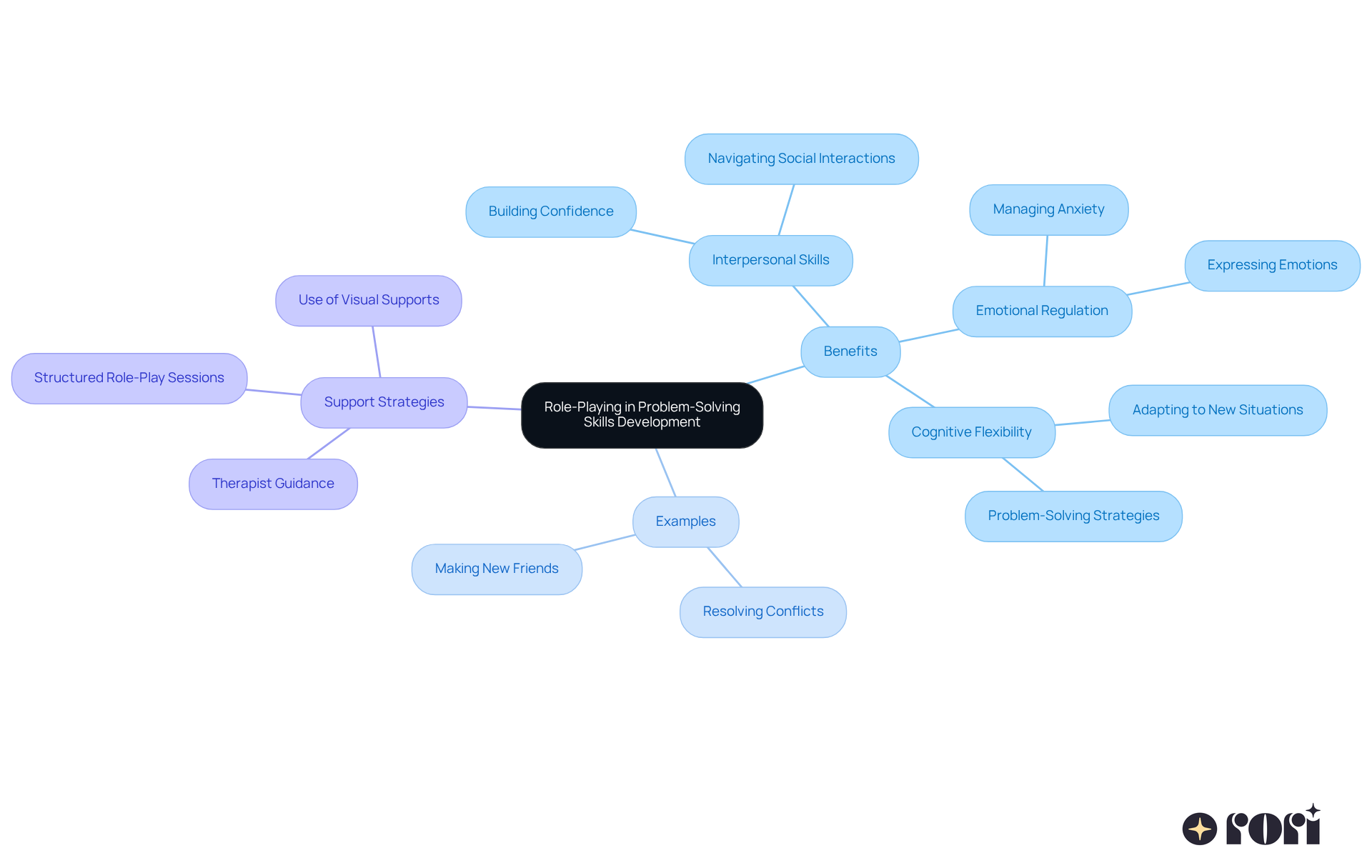
Role-playing activities for offer a fun and interactive way for young people with autism to practice real-life situations in a safe space. By stepping into different scenarios, kids can explore various outcomes and build those all-important for solving problems. Research shows that can significantly , emotional regulation, and cognitive flexibility, making them a fantastic tool in autism care.
For example, when kids participate in role-playing activities for , such as resolving conflicts or making new friends, they gain the confidence to handle similar situations in real life. Psychologists point out that not only spark creativity but also more smoothly. By breaking down complex social behaviors into bite-sized steps, these allow kids to understand and practice essential skills, leading to better relationships and greater independence.
At Rori Care, our clinical leadership team is all about supporting these developmental strategies. We’re dedicated to ensuring that kids get the best guidance through our and . Let’s explore this together and see how we can help your child thrive!
Implement Effective Role-Playing Strategies for Real-Life Scenarios
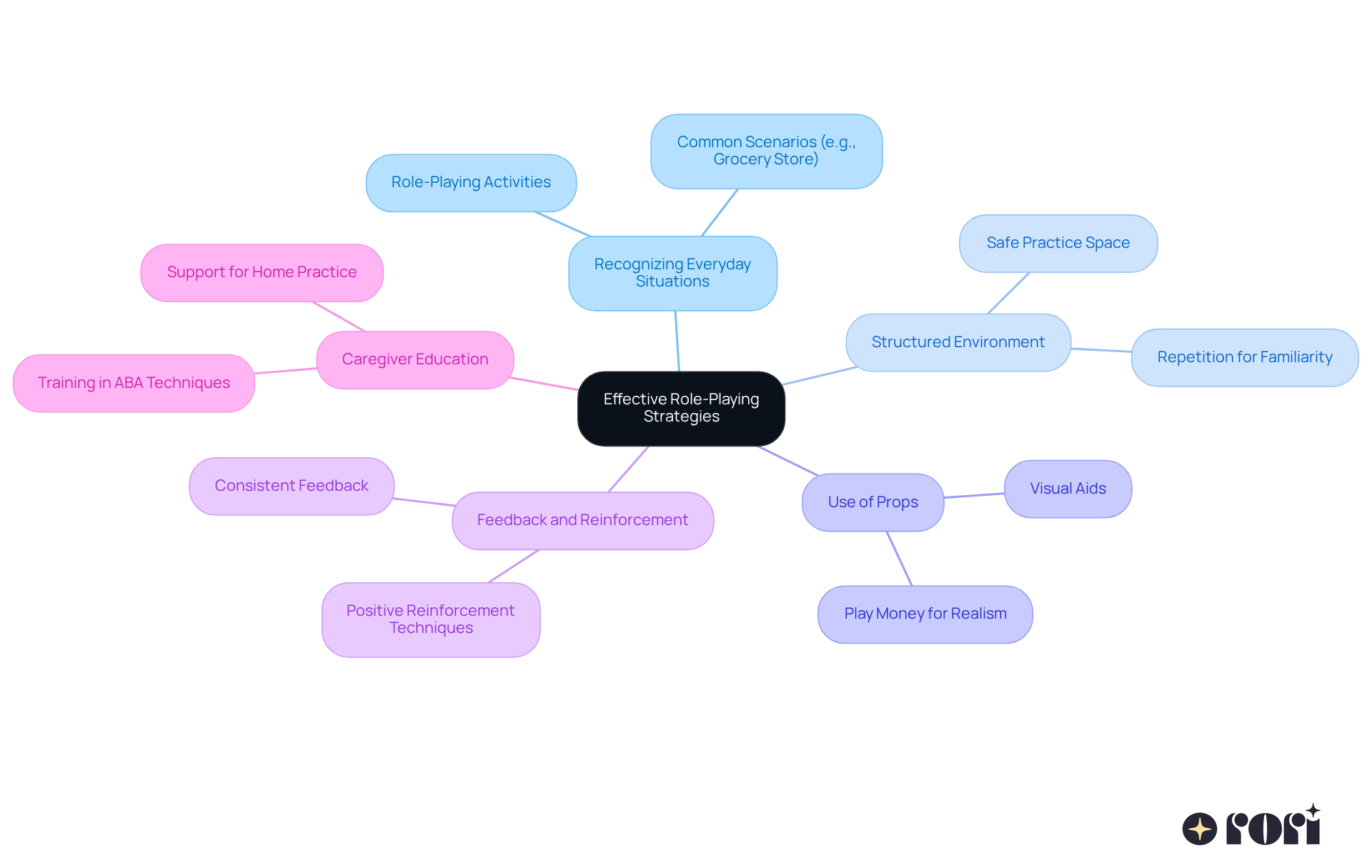
To successfully apply simulation techniques, the everyday situations that kids might encounter. For example, engaging in , like a trip to the grocery store, can help little ones . This approach, incorporating , is especially helpful for children with Autism Spectrum Disorders, ADHD, Social Communication Disorders, and Anxiety Disorders, as it boosts their .
Creating a these scenarios multiple times is key. This repetition helps them build familiarity and confidence. Plus, can make the experience even more engaging! Imagine using play money during a shopping role-play – it really brings the scenario to life.
Consistent feedback and for problem-solving in autism can encourage kids to apply what they learn in real-life situations. And let’s not forget about the caregivers! Equipping them with through education allows them to provide better support at home. This not only enhances professional interventions but also fosters consistency in their children’s learning and behavioral goals.
Let’s explore this together! We’re here to !
Tailor Role-Playing Activities to Individual Needs and Learning Styles
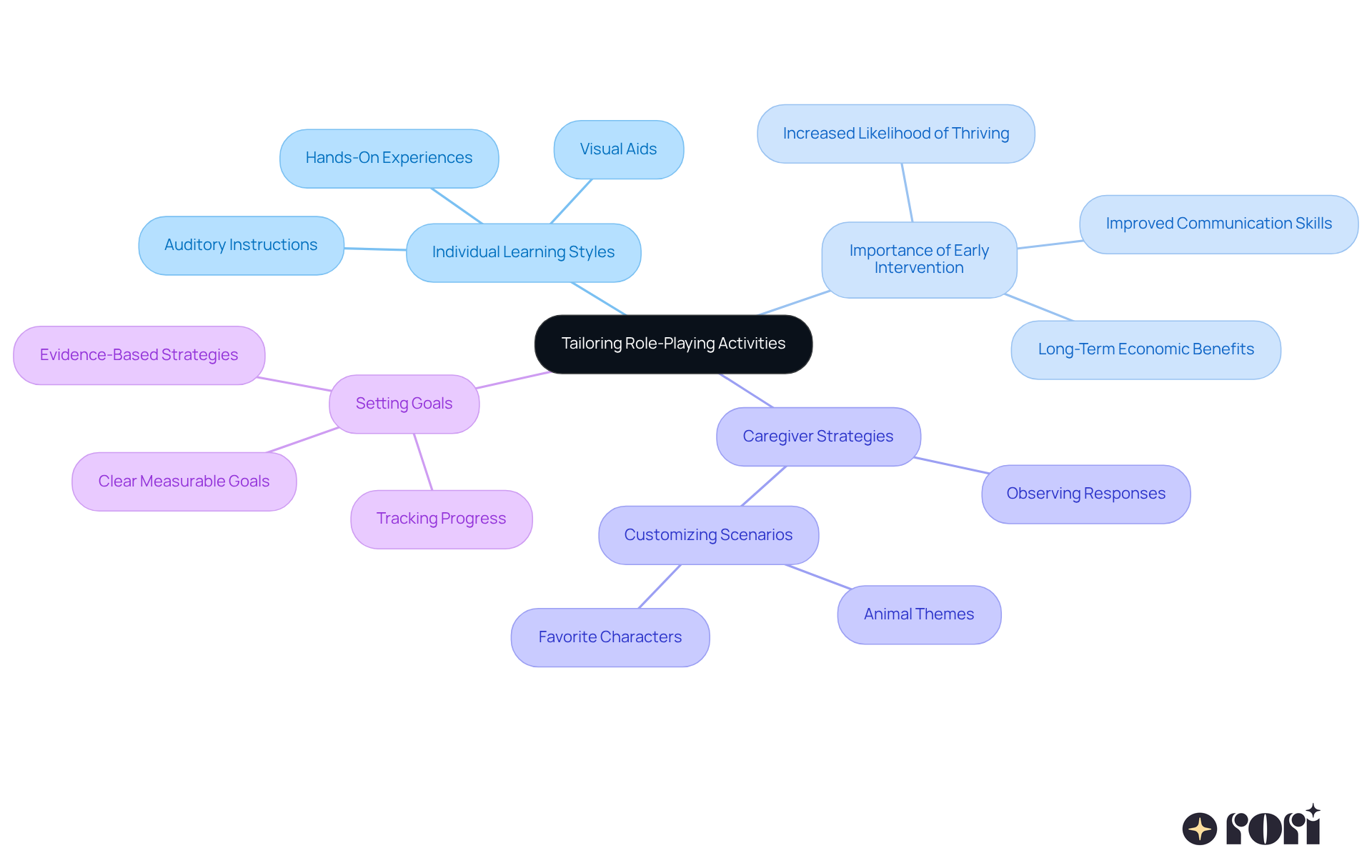
Every individual with autism has their own unique learning styles and preferences. That’s why it’s so important to tailor to meet their individual needs. Did you know that research shows are three times more likely to thrive in ? This really highlights how crucial can be.
For instance, some children might respond better to visual aids, while others may find auditory instructions or hands-on experiences more effective. Caregivers can really enhance by observing how the little ones respond and adjusting the scenarios to align with their interests. If a child loves animals, pretending to visit a zoo can be both fun and educational! 🦁 Incorporating favorite characters or themes can also spark motivation and participation.
By for problem-solving in autism, caregivers create a richer and more effective learning experience that nurtures essential . This personalized approach not only boosts engagement but also helps develop communication and social skills, which are so important for individuals on the autism spectrum.
Setting clear, measurable goals for these activities is another great way for caregivers to track progress and make informed decisions. This ensures that the interventions stay effective and aligned with the child’s developmental needs. Plus, behavior analysts use to guide these interactive activities, making sure the methods are rooted in research and proven to work.
Let’s explore this together! We’re here to help you every step of the way!
Incorporate Technology to Enhance Role-Playing Activities
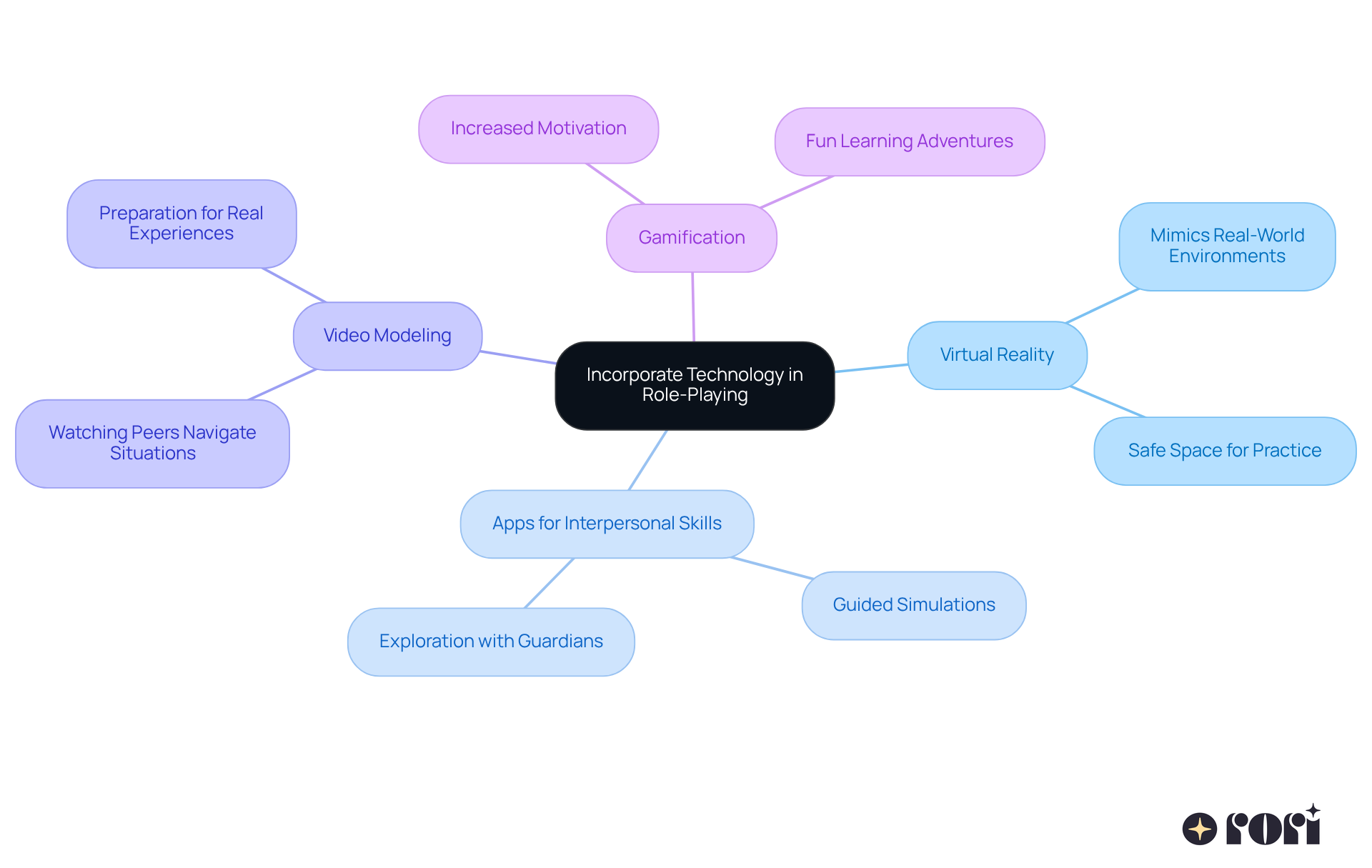
Technology can really boost , making them more engaging and immersive! For example, virtual reality (VR) can mimic real-world environments, allowing young people to practice in a safe space. Plus, there are apps designed to help develop , offering guided simulations that kids can explore on their own or with a guardian.
Have you ever thought about ? It’s where kids watch videos of their peers successfully navigating social situations, which can help them prepare for their own experiences. And let’s not forget about adding to role-playing! This can really amp up motivation and make learning feel like a fun adventure.
By incorporating technology into for problem-solving in autism, caregivers can create a rich, multifaceted approach to nurturing . Let’s explore this together and see how we can make a difference!
Conclusion
Engaging in role-playing activities for problem-solving can be a game-changer for children with autism! 🌟 These interactive scenarios not only help kids think critically and manage their emotions but also boost their social skills and confidence. By immersing children in different situations, caregivers can guide them toward better problem-solving abilities, paving the way for greater independence and stronger relationships.
Throughout this journey, it’s so important to tailor role-playing activities to fit each child’s unique needs. By recognizing how your child learns best, you can create a fun and effective learning experience. Plus, adding technology and structured feedback can really spice things up, making the practice both engaging and educational. The benefits of role-playing go beyond just practice; they lay the foundation for lifelong skills that will support children throughout their lives.
Ultimately, embracing role-playing as a vital tool in autism care is key. It empowers children to tackle real-life challenges with confidence and creativity. By actively implementing these strategies and fostering a supportive environment, caregivers can truly make a difference in the lives of children with autism, guiding them toward a brighter, more socially connected future. Let’s explore this together! We’re here to help you every step of the way!
Frequently Asked Questions
What is the role of role-playing in problem-solving skills development for young people with autism?
Role-playing activities provide a fun and interactive way for young people with autism to practice real-life situations, enhancing their critical thinking skills and problem-solving abilities in a safe environment.
How do role-playing activities benefit children with autism?
These activities significantly enhance interpersonal skills, emotional regulation, and cognitive flexibility, allowing children to gain confidence in handling real-life situations.
Can you provide examples of role-playing scenarios used for problem-solving in autism?
Examples include resolving conflicts or making new friends, which help children practice and prepare for similar situations in real life.
What skills do children develop through role-playing activities?
Children develop essential skills such as creativity, social interaction navigation, and the ability to break down complex social behaviors into manageable steps.
How does Rori Care support the development of problem-solving skills through role-playing?
Rori Care’s clinical leadership team supports developmental strategies through interpersonal skills group therapy and caregiver education programs to help children thrive.
List of Sources
- Understand the Role of Role-Playing in Problem-Solving Skills Development
- discoveryaba.com (https://discoveryaba.com/aba-therapy/the-benefits-of-scripting-and-role-playing-in-aba-therapy)
- The Benefits of Role-Playing in Center-Based ABA Therapy | Advanced Autism Services (https://advancedautism.com/post/the-benefits-of-role-playing-in-center-based-aba-therapy)
- A critical hit: Dungeons and Dragons as a buff for autistic people – Gray Atherton, Rhys Hathaway, Ingela Visuri, Liam Cross, 2025 (https://journals.sagepub.com/doi/10.1177/13623613241275260)
- The Role of Role-Playing in Developing Social Skills in ABA Therapy for Autism (https://buildingblockstherapy.org/blog/the-role-of-role-playing-in-developing-social-skills-in-aba-therapy-for-autism)
- Inspirational Quotes About Autism | Grateful Care ABA (https://gratefulcareaba.com/blog/inspirational-quotes-about-autism)
- Implement Effective Role-Playing Strategies for Real-Life Scenarios
- Autism Quotes | Intellistars – ABA Therapy (https://intellistarsaba.com/blog/autism-quotes)
- Social skills training with a tabletop role-playing game, before and during the pandemic of 2020: in-person and online group sessions – PMC (https://pmc.ncbi.nlm.nih.gov/articles/PMC10796767)
- The Role of Role-Playing in Developing Social Skills in ABA Therapy for Autism (https://buildingblockstherapy.org/blog/the-role-of-role-playing-in-developing-social-skills-in-aba-therapy-for-autism)
- How to Use Role-Playing in ABA Therapy for Skill Development | Discovery ABA (https://discoveryaba.com/aba-therapy/how-to-use-role-playing-in-aba-therapy-for-skill-development)
- Tailor Role-Playing Activities to Individual Needs and Learning Styles
- 2026 Autism Statistics – Insights for Families and Advocates (https://prosperahealthcare.com/autism-statistics)
- Success Rate of Early Intervention for Autism | Connect n Care (https://connectncareaba.com/blog/early-intervention-autism-success-rate-statistics)
- Autism Quotes | Intellistars – ABA Therapy (https://intellistarsaba.com/blog/autism-quotes)