Introduction
Nonverbal autism can present some unique challenges that really affect social interactions. Many young individuals might feel isolated, even though they genuinely want to connect with their peers. It’s so important for caregivers to understand these difficulties, as this knowledge can lead to effective strategies that enhance communication and social skills.
So, what specific approaches can we use to bridge the gap in social interaction for nonverbal children with autism? And how can families play a pivotal role in this transformative journey? Let’s explore this together! By sharing experiences and insights, we can create a supportive community that helps our children thrive.
Understand Social Interaction Challenges in Nonverbal Autism
Nonverbal individuals with autism often encounter some tough challenges in their interactions. It’s mainly because they struggle to understand and use nonverbal signals like facial expressions, gestures, and body language. This can make it hard for them to start or respond to conversations, leading to feelings of isolation and frustration.
Many young individuals genuinely want to connect with their peers but often lack the skills to do so effectively. For example, research shows that kids with autism frequently miss important social cues, which can hold them back from joining in on group activities or playtime. Recognizing these hurdles is so important for caregivers! It helps them apply focused strategies, like Social Competence Training and Peer-Mediated Approaches, to encourage communication and improve social skills.
By focusing on these specific challenges, we can develop specific strategies for enhancing social interaction in nonverbal children with autism, which will promote meaningful social interactions and enhance overall social outcomes. Caregiver education is key in this journey, equipping them with the knowledge and skills to support their child’s behavioral goals effectively. This active involvement not only complements professional interventions but also creates consistency at home, leading to better behavioral outcomes.
As researchers point out, understanding each child’s preferred way of learning nonverbal communication skills is crucial for reaching developmental goals. Let’s explore this together! We’re here to !

Implement Effective Strategies for Social Skills Development
Enhancing social interaction in nonverbal children with autism can feel like a daunting task for many parents when applying specific strategies for enhancing social interaction in nonverbal children with autism. But don’t worry! There are several effective strategies that can make a real difference:
- Utilize : Think about using visual aids like picture schedules, narratives, and communication boards. These tools can really help children understand specific strategies for enhancing social interaction in nonverbal children with autism. Did you know that around 90% of individuals with autism are visual learners? That’s why specific strategies for enhancing social interaction in nonverbal children with autism, like visual supports, are so important as they help bridge communication gaps and provide clear guidance for engaging with peers.
- Structured Play Activities: Organizing structured play sessions can be a game changer! Activities like board games or group crafts serve as specific strategies for enhancing social interaction in nonverbal children with autism, as they encourage turn-taking and sharing, creating a safe space for kids to enhance their social skills. Research indicates that organized play can significantly enhance communication by employing specific strategies for enhancing social interaction in nonverbal children with autism, as evidenced by a 34% increase in task completion rates when visual aids are used. Plus, group therapy led by trained therapists at Rori Care can further enhance these skills.
- Modeling and Role-Playing: Have you ever thought about demonstrating appropriate interactions through modeling and role-playing? This approach allows kids to observe and practice behaviors in a controlled environment, reinforcing their learning through imitation. Role-playing ABA scenarios can effectively teach essential communication skills and body language, making interactions smoother.
- Peer Interaction: Pairing nonverbal children with peers who have strong social skills can be incredibly beneficial. This peer modeling encourages positive interactions and serves as specific strategies for enhancing social interaction in nonverbal children with autism. In ABA therapy, organized play often includes goal-focused activities that help kids practice turn-taking and communication in a nurturing setting.
- Positive reinforcement is one of the specific strategies for enhancing social interaction in nonverbal children with autism that can work wonders in promoting desired social behaviors. Recognizing and rewarding efforts to connect with others encourages kids to keep practicing these skills. Research indicates that token economies can boost target behaviors by an impressive 73% when implemented correctly! Plus, equipping caregivers with ABA principles and strategies through education can greatly enhance their ability to support their children’s goals, leading to better outcomes.
Let’s explore these strategies together! Remember, you’re not alone in this journey, and we’re here to help you every step of the way!

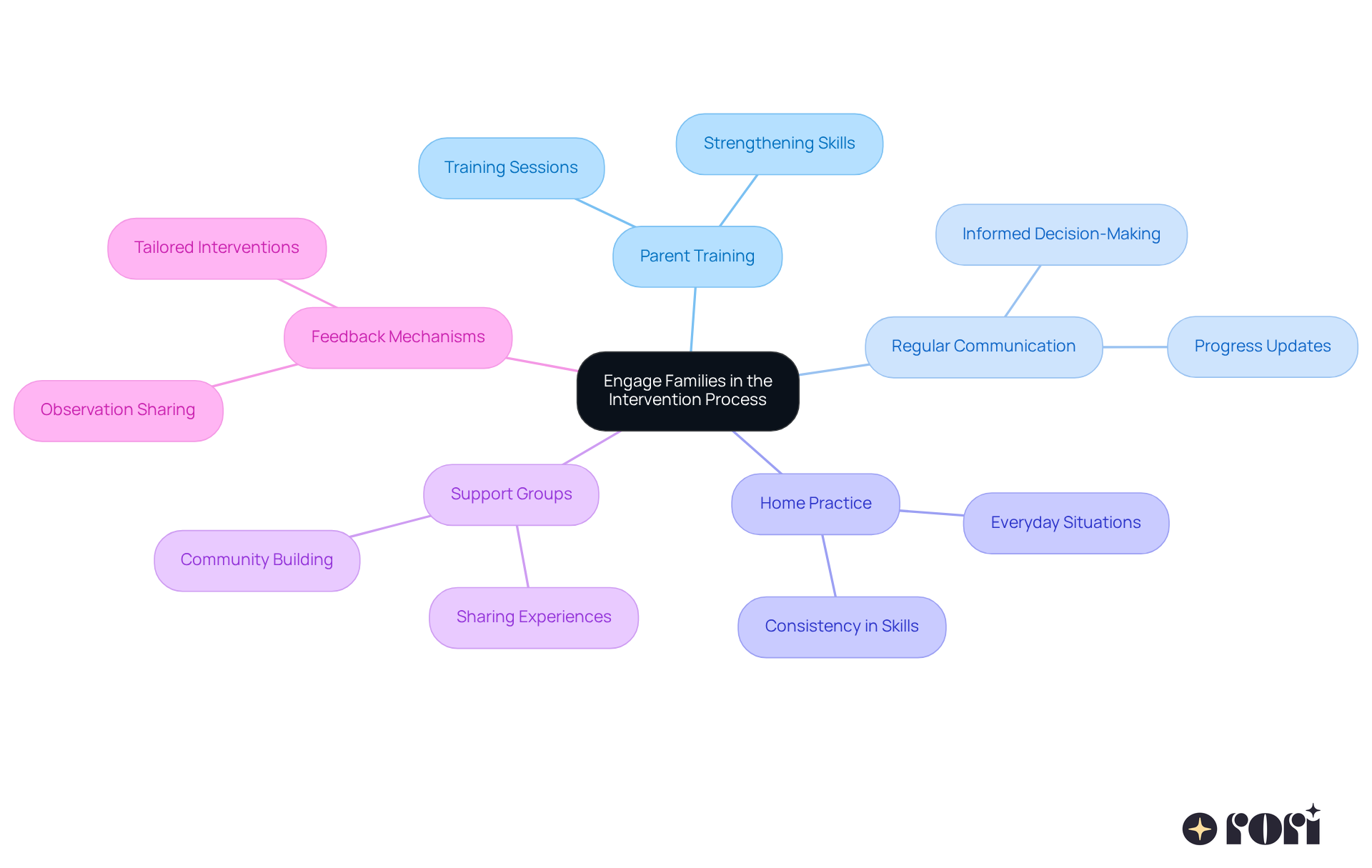
Engage Families in the Intervention Process
Family involvement is truly a cornerstone of effective intervention for nonverbal individuals with autism. Let’s explore some ways to bring families into the process:
- Parent Training: How about offering training sessions for parents? This way, they can learn about Rori Care's and how to implement them at home. It’s a fantastic opportunity for families to strengthen the skills their kids acquire during therapy, boosting their ability to support their child's growth.
- Regular Communication: Keeping those lines of communication open between Rori Care therapists and families is key! Regular updates on progress and strategies can help parents feel more engaged and informed, which in turn promotes decision-making that positively impacts their child’s journey.
- Home Practice: Encouraging families to practice social skills in everyday situations can be a game changer! Simple activities like grocery shopping or family gatherings can provide great chances for kids to use what they’ve learned in therapy, leading to better consistency and behavioral outcomes.
- Support Groups: How about facilitating support groups for parents? Sharing experiences and strategies can create a wonderful sense of community, offering additional resources for families facing similar challenges. It’s all about empowering caregivers and reducing stress together.
- Feedback Mechanisms: Establishing feedback systems where families can share their observations about their child’s progress is so important! This collaborative approach can lead to more tailored interventions, ensuring that caregivers are actively involved and aligned with therapeutic strategies.
We’re here to help you every step of the way!
Monitor Progress and Adjust Strategies for Improvement
To make social skills interventions truly effective for nonverbal children with autism, it’s important to keep an eye on progress and adjust as needed. Let’s dive into some friendly tips that can help!
- Data Gathering: Start by using organized ways to gather data on your child’s communication efforts. Think about keeping track of how often they initiate interactions and jotting down observations of their engagement. These insights are key to understanding their unique behavioral patterns.
- Regular Evaluations: It’s a good idea to check in regularly on how your child is progressing with their social skills goals. These evaluations can help you spot areas that might need a little extra love and attention, ensuring that the interventions are always in tune with your child’s changing needs.
- Adjusting Interventions: Be ready to tweak your strategies based on what you see. If something isn’t working, don’t hesitate to explore new approaches or ramp up support in certain areas. Sometimes, a little change can lead to big improvements!
- Involve Families in Monitoring: Encourage family members to join in on the monitoring process by keeping logs of interactions at home. This not only provides valuable insights into your child’s behavior in different settings but also strengthens the overall effectiveness of the interventions.
- Celebrate Milestones: Don’t forget to celebrate those small victories in social skills development! Recognizing progress, no matter how tiny, can really motivate both children and families to keep pushing forward. It creates a positive atmosphere that nurtures growth.
Let’s explore this journey together! Your involvement makes a world of difference, and we’re here to !

Conclusion
Enhancing social interaction for nonverbal individuals with autism is a journey filled with unique challenges. It’s important to understand these hurdles to help our children thrive. By recognizing the barriers they face in communication, we can adopt effective strategies that foster social skills development. This not only promotes meaningful connections but also helps reduce feelings of isolation.
Key strategies include:
- Using visual supports
- Engaging in structured play
- Incorporating modeling and role-playing
These strategies can make a real difference. Plus, involving families in the process through training and community support strengthens these efforts. Regular check-ins and adjustments ensure that each child’s needs are met, paving the way for ongoing progress and success.
But remember, enhancing social interaction isn’t just about strategies; it’s about building a supportive network. Together, we can create nurturing environments that foster growth and connection. By embracing these practices, we can truly improve social outcomes for our children. Let’s commit to understanding and supporting nonverbal autistic individuals, transforming their social experiences and making a profound difference in their lives. We’re here to help you every step of the way!
Frequently Asked Questions
What challenges do nonverbal individuals with autism face in social interactions?
Nonverbal individuals with autism often struggle to understand and use nonverbal signals such as facial expressions, gestures, and body language, making it difficult for them to start or respond to conversations, which can lead to feelings of isolation and frustration.
Why is it important to recognize social interaction challenges in children with autism?
Recognizing these challenges is important for caregivers as it helps them apply focused strategies, such as Social Competence Training and Peer-Mediated Approaches, to encourage communication and improve social skills.
What strategies can be developed to enhance social interaction in nonverbal children with autism?
Specific strategies can include Social Competence Training and Peer-Mediated Approaches, which focus on enhancing social interaction and promoting meaningful social outcomes for nonverbal children with autism.
How can caregiver education impact the social skills of children with autism?
Caregiver education equips them with the knowledge and skills to support their child’s behavioral goals effectively, creating consistency at home and complementing professional interventions, which leads to better behavioral outcomes.
What is the significance of understanding each child's preferred way of learning nonverbal communication skills?
Understanding each child's preferred learning style is crucial for reaching developmental goals and effectively teaching nonverbal communication skills.
List of Sources
- Understand Social Interaction Challenges in Nonverbal Autism
- Nonverbal Skills Evolution in Children with Autism Spectrum Disorder One Year Post-Diagnosis - PMC (https://pmc.ncbi.nlm.nih.gov/articles/PMC11727517)
- Data and Statistics on Autism Spectrum Disorder (https://cdc.gov/autism/data-research)
- Social difficulties in autism (https://educationonline.ku.edu/community/social-difficulties-in-autism-spectrum-disorder)
- Autism and Social Interaction: Challenges & Differences (https://rainbowtherapy.org/autism-and-social-interaction)
- Social Skills Deficits in Autism Spectrum Disorder: Potential Biological Origins and Progress in Developing Therapeutic Agents - PMC (https://pmc.ncbi.nlm.nih.gov/articles/PMC6105175)
- Implement Effective Strategies for Social Skills Development
- Why Structured Play Activities Matter in ABA Therapy (https://anybehavior.com/the-impact-of-structured-play-in-aba-therapy)
- Using Visual Supports in ABA Therapy | Links (https://linksaba.com/using-visual-supports-in-aba-therapy)
- 6 Benefits of Structured Play for Children with Autism | Shelton, Fairfield County (CT) | Solstice Behavioral Health & Consulting (https://solsticebhc.org/blog/6-benefits-of-structured-play-for-autism)
- The Games They Play: Observations of Children with Autism Spectrum Disorder on the School Playground - PMC (https://pmc.ncbi.nlm.nih.gov/articles/PMC6509020)
- The Effectiveness of Visual Supports for Students with Autism Spectrum Disorder - (https://naset.com/publications/autism-spectrum-disorders-series/the-effectiveness-of-visual-supports-for-students-with-autism-spectrum-disorder)
- Monitor Progress and Adjust Strategies for Improvement
- Autism Quotes | Intellistars - ABA Therapy (https://intellistarsaba.com/blog/autism-quotes)
- Applied Behavior Analysis (ABA) Statistics: Data, Effectiveness, and Evidence-Based Practices (https://nexoaba.com/applied-behavior-analysis-statistics)
- The Importance of Regular Assessments in ABA Therapy for Autism Treatment | Advanced Autism Services (https://advancedautism.com/post/the-importance-of-regular-assessments-in-aba-therapy-for-autism-treatment)
- The Importance of Regular Progress Monitoring in ABA Therapy for Autism Treatment (https://adinaaba.com/post/the-importance-of-regular-progress-monitoring-in-aba-therapy-for-autism-treatment)
- The Numbers Don't Lie: Revealing Autism Therapy Statistics | Above and Beyond Therapy (https://abtaba.com/blog/autism-therapy-statistics)