Introduction
Supporting mealtime independence in children with autism can be quite the journey - complex, yes, but also incredibly rewarding! As caregivers, you’re navigating unique challenges, from sensory sensitivities to food aversions. It’s essential to understand how fostering self-sufficiency can make a big difference.
In this article, we’ll explore effective strategies and practical steps that empower children to manage their meals with confidence. This not only enhances their social skills but also boosts their emotional well-being.
So, how can you tackle the obstacles that often get in the way of mealtime success? And what proven methods can lead to a more enjoyable dining experience for everyone involved? Let’s dive in together!
Understand Mealtime Independence for Children with Autism
The concept of supporting mealtime independence for children with autism revolves around a young person's ability to eat with minimal help from caregivers. For kids with autism, supporting mealtime independence can be a bit tricky. Sensory sensitivities, food aversions, and behavioral challenges often come into play. Recognizing these hurdles is key to effectively supporting mealtime independence.
- Recognize the Importance: Why is mealtime independence so important? Well, it fosters self-sufficiency and boosts social skills, which can really enhance family bonding. Kids who can manage their meals often feel less anxious and more confident at the table. Child psychologists remind us that supporting mealtime independence is not only about nutrition but also crucial for developing social skills and emotional regulation.
- Identify Challenges: Let’s talk about some common obstacles. Picky eating, issues with food textures, and a reluctance to try new foods can all be part of the picture. Did you know that supporting mealtime independence is crucial since children with autism are five times more likely to face dining challenges? That’s why it’s so important to address these issues early on. By understanding these challenges, caregivers can tailor strategies that are effective in supporting mealtime independence.
- Set Goals: Setting clear, achievable goals is vital for promoting mealtime independence. Think about goals like sitting at the table for a certain amount of time or trying a new food each week. These small steps can help young ones gradually build their confidence and skills. Caregiver education is crucial here, as informed caregivers can set realistic goals that focus on supporting mealtime independence while aligning with their child’s developmental needs.
- Implement Successful Strategies: So, what are some effective strategies for promoting mealtime independence? Consider providing a weekly meal plan that lets kids choose from a variety of options. Incorporating familiar items can encourage compliance, and using visual schedules can clarify mealtime expectations. Research shows that repeated exposure to different foods can positively impact acceptance, helping to expand their diets. When caregivers actively participate and align with therapeutic strategies, it can lead to better behavioral outcomes, which is essential for supporting mealtime independence and empowering them to support their kids effectively.
By supporting young ones in this area, caregivers can help them thrive both at the table and beyond. Let’s explore this together!

Establish a Structured Mealtime Routine
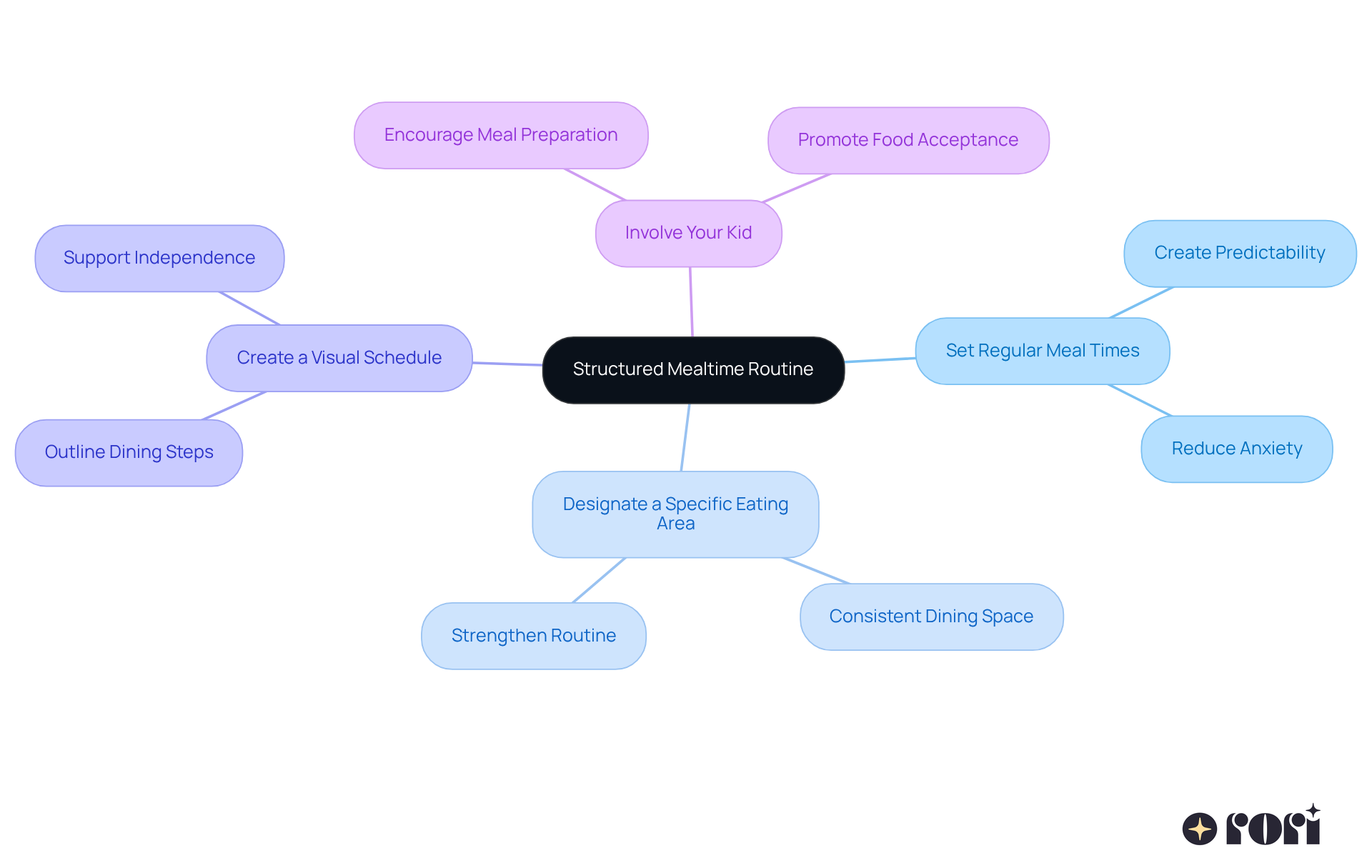
Creating a structured mealtime routine can feel like a challenge, but it’s totally doable! Here are some friendly tips to help you get started:
- Set Regular Meal Times: Try to schedule meals at the same time each day. This creates a predictable environment that can really help in supporting mealtime independence for children with autism, making them feel safe and ready. When they know what to expect, it can lessen anxiety and make mealtime more enjoyable for everyone.
- Designate a Specific Eating Area: Choose a consistent spot for meals, like the dining room table. This not only strengthens the routine but also helps kids connect that space with dining. Over time, they’ll feel more at ease and consistent during meals.
- Create a Visual Schedule: Consider using a visual schedule to outline the steps of your dining routine-like washing hands, sitting down, and eating. Visual aids play a crucial role in supporting mealtime independence for children with autism! They help your child understand what’s coming next, which is super important for supporting mealtime independence for children with autism and reducing anxiety during meals.
- Involve Your Kid: Get your child involved in meal preparation and setting the table. This can spark their interest in the meal and promote independence. Plus, when kids help out, they’re often more willing to try new foods, leading to a more positive dining experience.
Let’s explore this together! Remember, you’re not alone in this journey, and we’re here to help you every step of the way!
Introduce New Foods Gradually and Positively
Introducing new dishes can be a bit tricky for kids with autism, right? At Rori Care, our amazing clinical leadership team, made up of skilled and caring professionals, is dedicated to neurodiversity and is focused on supporting mealtime independence for children with autism to help youth succeed. We truly believe that empowering caregivers with effective strategies is essential for supporting mealtime independence for children with autism. So, let’s dive into some helpful tips to make this process a little smoother:
Let’s explore this together! We’re here to help you every step of the way!

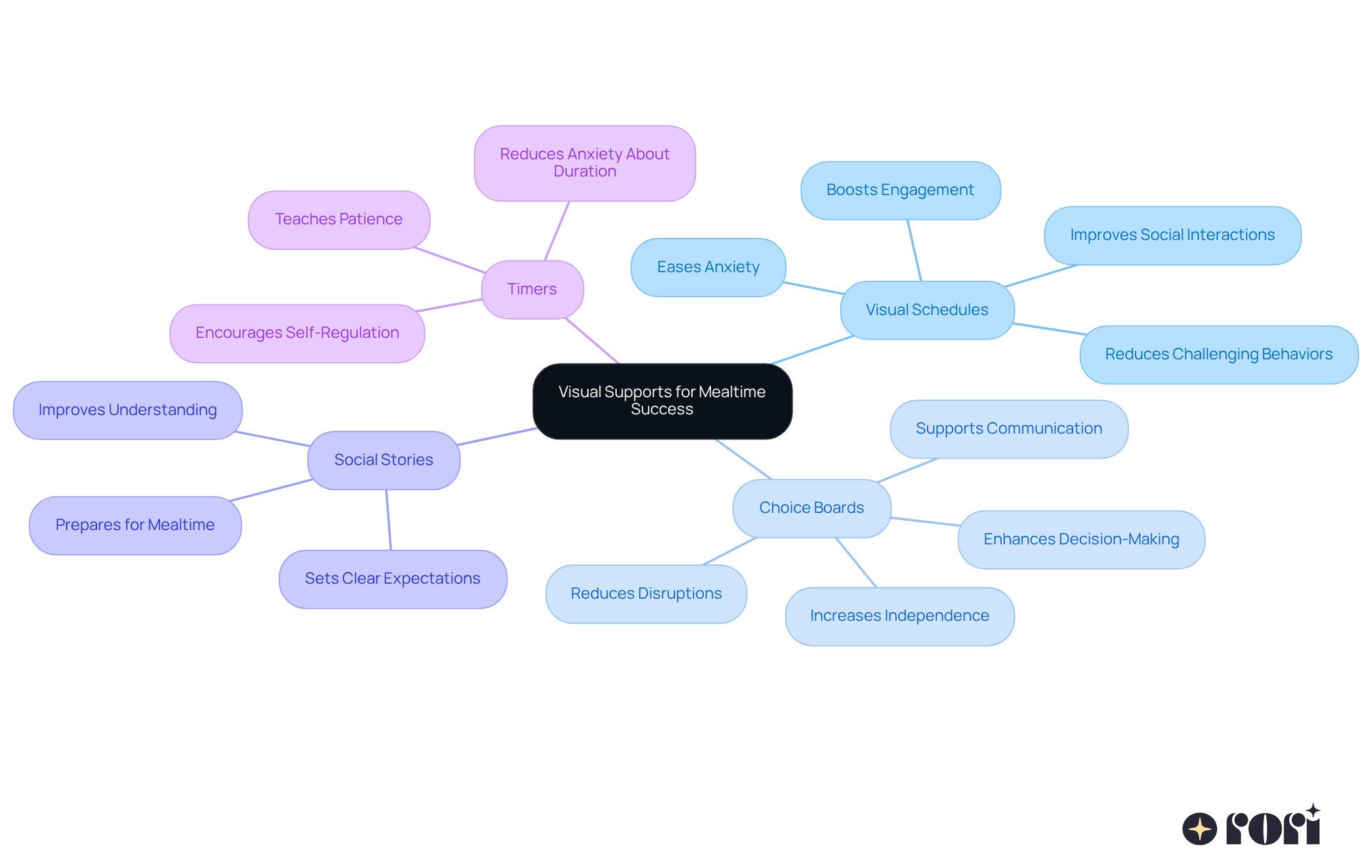
Visual aids can really enhance your little one’s dining experience! Let’s dive into some effective tools that can make mealtime smoother:
- Visual Schedules: How about creating a visual schedule that outlines the steps of the mealtime routine? You can include pictures of washing hands, sitting down, and eating. This structure helps kids know what to expect, easing anxiety and boosting engagement. Plus, visual supports can reduce challenging behaviors and improve social interactions.
- Choice Boards: Consider implementing a choice board with pictures of different foods. This way, your child can decide what they want to eat! Research shows that choice boards can increase on-task behavior and decrease disruptions, helping kids feel more independent and confident during meals. You can mix it up with pictures, icons, or even words - making them versatile tools for communication.
- Social Stories: Why not create social stories that explain the dining process and set clear expectations? These narratives can help your child mentally prepare for mealtime, making the whole experience smoother and more enjoyable.
- Timers: Using a visual timer can help your child understand how long they need to sit at the table. Visual aids like timers or countdown strips teach kids to tolerate waiting, reducing anxiety about meal duration and encouraging patience and self-regulation.
By weaving these visual supports into your mealtime routines, you’re supporting mealtime independence for children with autism, empowering your child to make choices and follow routines. Let’s explore this together!
Conclusion
Supporting mealtime independence for children with autism is such an important journey! It not only helps kids become more self-sufficient but also boosts their social interactions. By understanding the unique challenges these little ones face, caregivers can create a nurturing environment that promotes independence and builds confidence during meals.
Throughout this guide, we’ve highlighted how crucial it is to recognize individual challenges, set achievable goals, and implement effective strategies. Think about establishing a structured mealtime routine or gradually introducing new foods with positive reinforcement-each step plays a vital role in empowering children with autism. Visual supports, like schedules and choice boards, can really enhance their mealtime experience, making it more enjoyable and less stressful.
Ultimately, the journey toward mealtime independence isn’t just about nutrition; it’s about laying the groundwork for lifelong skills and social connections. By actively engaging in this process, caregivers can turn mealtime into a positive and empowering experience. This paves the way for children to thrive, both at the table and in their everyday lives. Embracing these strategies can lead to meaningful progress, encouraging families to come together in creating a supportive and inclusive dining environment.
Let’s explore this together! We’re here to help you every step of the way!
Frequently Asked Questions
What is mealtime independence for children with autism?
Mealtime independence for children with autism refers to the ability of a young person to eat with minimal help from caregivers, fostering self-sufficiency and boosting social skills.
Why is mealtime independence important for children with autism?
Supporting mealtime independence is important because it enhances self-sufficiency, reduces anxiety, boosts confidence, and is crucial for developing social skills and emotional regulation.
What challenges do children with autism face during mealtime?
Common challenges include picky eating, issues with food textures, reluctance to try new foods, and sensory sensitivities. Children with autism are five times more likely to face dining challenges.
How can caregivers set goals to promote mealtime independence?
Caregivers can set clear, achievable goals such as sitting at the table for a specific amount of time or trying a new food each week, which can help build confidence and skills gradually.
What strategies can be implemented to support mealtime independence?
Effective strategies include providing a weekly meal plan with various options, incorporating familiar foods, using visual schedules to clarify expectations, and ensuring repeated exposure to different foods to encourage acceptance.
How does caregiver education influence mealtime independence?
Informed caregivers can set realistic goals that focus on supporting mealtime independence while aligning with their child's developmental needs, leading to better behavioral outcomes.
List of Sources
- Understand Mealtime Independence for Children with Autism
- Breaking the Cycle of Food Selectivity: How MEAL PlanR Supports Autistic Children and Their Families (https://autismspectrumnews.org/breaking-the-cycle-of-food-selectivity-how-meal-planr-supports-autistic-children-and-their-families)
- Eating and Mealtime Behaviors in Patients with Autism Spectrum Disorder: Current Perspectives - PMC (https://pmc.ncbi.nlm.nih.gov/articles/PMC7504729)
- Expert Columns: Making Mealtimes More Manageable When You Have a Child with Special Needs (https://mayinstitute.org/news/acl/asd-and-dd-child-focused/making-mealtimes-more-manageable-when-you-have-a-child-with-special-needs)
- Sensory Differences and Mealtime Behavior in Children With Autism (https://research.aota.org/ajot/article/70/4_Supplement_1/7011505096p1/6896/Sensory-Differences-and-Mealtime-Behavior-in)
- Establish a Structured Mealtime Routine
- Enhancing Mealtimes for Children with Autism: Feeding Challenges and Strategies (https://extensionpubs.unl.edu/publication/g2285/na/html/view)
- Mealtimes with Children on the Autism Spectrum - College of Education & Human Development (https://cehd.udel.edu/mealtimes-with-children-on-the-autism-spectrum)
- Mealtime tips for autistic children with eating challenges | Autism Speaks (https://autismspeaks.org/expert-opinion/autism-food-refusal-mealtime-tips)
- Nutrition and autism | Autism Speaks (https://autismspeaks.org/autism-nutrition)
- Teach Mealtime Independence With ABA Therapy | Kids Club ABA (https://kidsclubaba.com/how-to-build-independence-with-aba-therapy-mealtime-routines-a-step-by-step-guide-for-parents)
- Introduce New Foods Gradually and Positively
- Nutrition and autism | Autism Speaks (https://autismspeaks.org/autism-nutrition)
- Autism and food aversions: 7 Ways to help a picky eater | Autism Speaks (https://autismspeaks.org/expert-opinion/autism-and-food-aversions)
- Feeding Behaviors Among Children With Autism Spectrum Disorder | Visvalingam | International Journal of Clinical Pediatrics (https://theijcp.org/index.php/ijcp/article/view/547/474)
- Interventions for Increasing Acceptance of New Foods Among Children and Adults with Developmental Disorders: A Systematic Review - PMC (https://pmc.ncbi.nlm.nih.gov/articles/PMC6667424)
- Utilize Visual Supports and Tools for Mealtime Success
- 80 Inspiring Quotes on Autism Awareness and Support - Empower ABA (https://empoweraba.com/80-inspiring-quotes-on-autism-awareness-and-support)
- Autism Quotes (https://kidsclubaba.com/autism-quotes)
- The Role of Visual Supports in Enhancing Learning for Autism | Advanced Autism Services (https://advancedautism.com/post/the-role-of-visual-supports-in-enhancing-learning-for-autism)
- The Role of Choice Boards in ABA Therapy - SoaringHigh ABA (https://soaringhighaba.com/post/the-role-of-choice-boards-in-aba-therapy)
- The Numbers Don't Lie: Revealing Autism Therapy Statistics | Above and Beyond Therapy (https://abtaba.com/blog/autism-therapy-statistics)