Many parents feel overwhelmed when trying to support their child's academic journey, especially when it comes to children with autism. But there’s good news! Applied Behavior Analysis (ABA) therapy provides a clear path to help kids not just understand but also improve the behaviors that matter for their school success.
In this article, we’ll explore four key steps that help caregivers craft personalized ABA therapy plans. You’ll learn how to use effective reinforcement strategies and keep track of progress, all designed to meet your child’s unique needs. So, how can you make sure these strategies really connect and help your child make real progress in school?
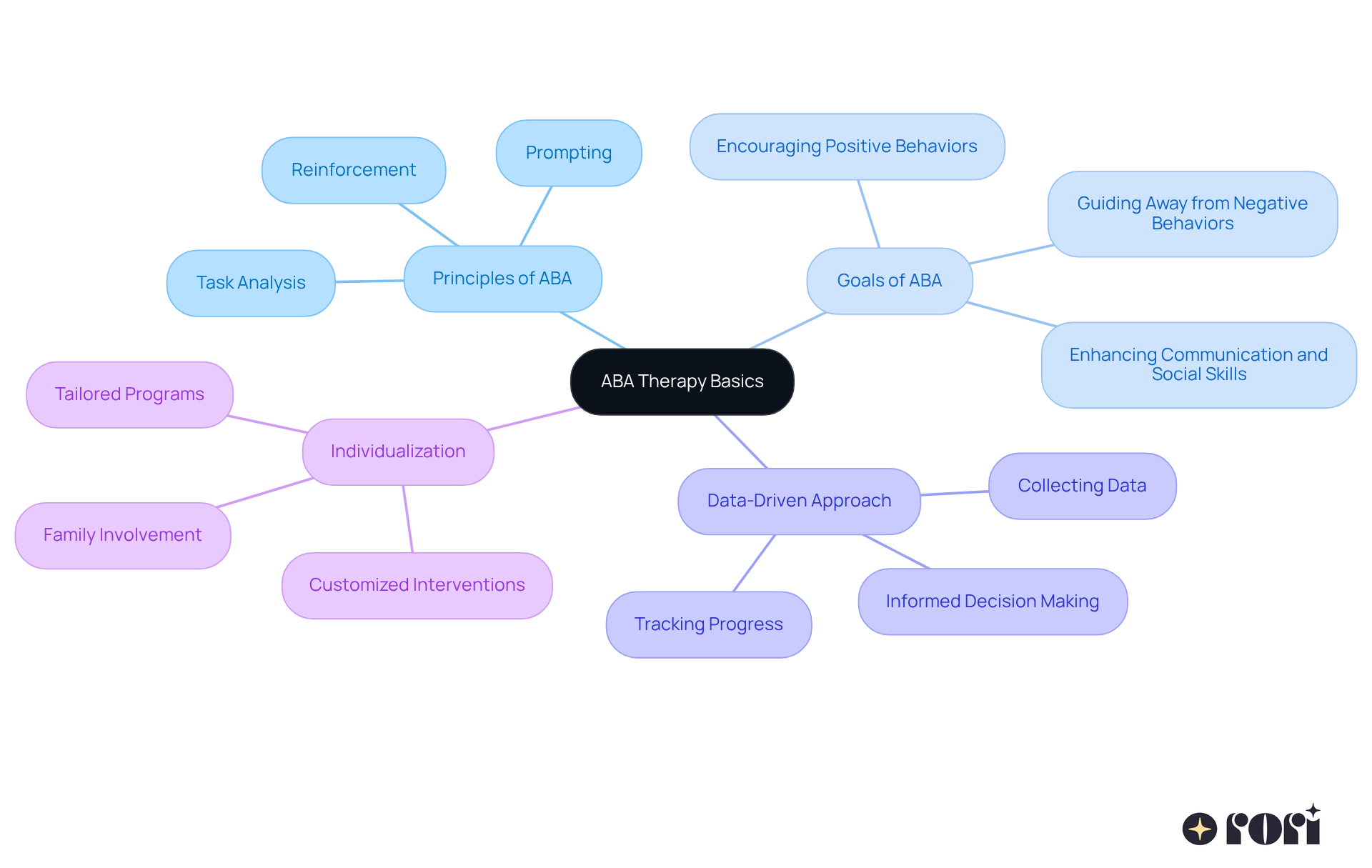
Navigating the world of autism can feel overwhelming for parents, especially when it comes to finding the right support for their child. Let’s dive into Applied Behavior Analysis (ABA) - a helpful approach that helps us understand and improve behaviors through careful observation and support. Here are the key components:
Principles of ABA: Grounded in behaviorism, ABA operates on the idea that behaviors can be learned and modified. Key principles include reinforcement (both positive and negative), prompting, and task analysis, which help break down complex tasks into manageable steps.
Goals of ABA: The goal here is simple: we want to encourage positive behaviors while gently guiding away from the negative ones, helping kids thrive in different settings, like school. Research shows that ABA treatment has an impressive success rate of over 89% in enhancing communication, social skills, and adaptive actions in kids with autism - all vital for academic success.
Data-Driven Approach: ABA relies on collecting data to track progress and effectiveness. This means keeping an eye on behaviors, analyzing the data, and making informed decisions about interventions. Ongoing observation allows for adjustments, ensuring that the treatment stays relevant to your child’s changing needs.
Individualization: What’s great about ABA is that it’s all about your child - each program is customized to fit their unique needs, making sure interventions are relevant and effective. Research indicates that tailored and consistent ABA intervention is effective in supporting academic growth with ABA therapy, leading to positive outcomes for many young individuals and enhancing their ability to engage fully in academic life. Plus, Rori Care uses advanced AI technology to automate progress report creation, freeing up 50% more time for direct youth treatment, which boosts the overall effectiveness of care.
By grasping these fundamentals, parents and educators can better appreciate the role of supporting academic growth with ABA therapy in aiding academic development for youth with autism. Understanding ABA can be the first step toward unlocking your child's potential and fostering their growth in a supportive environment.
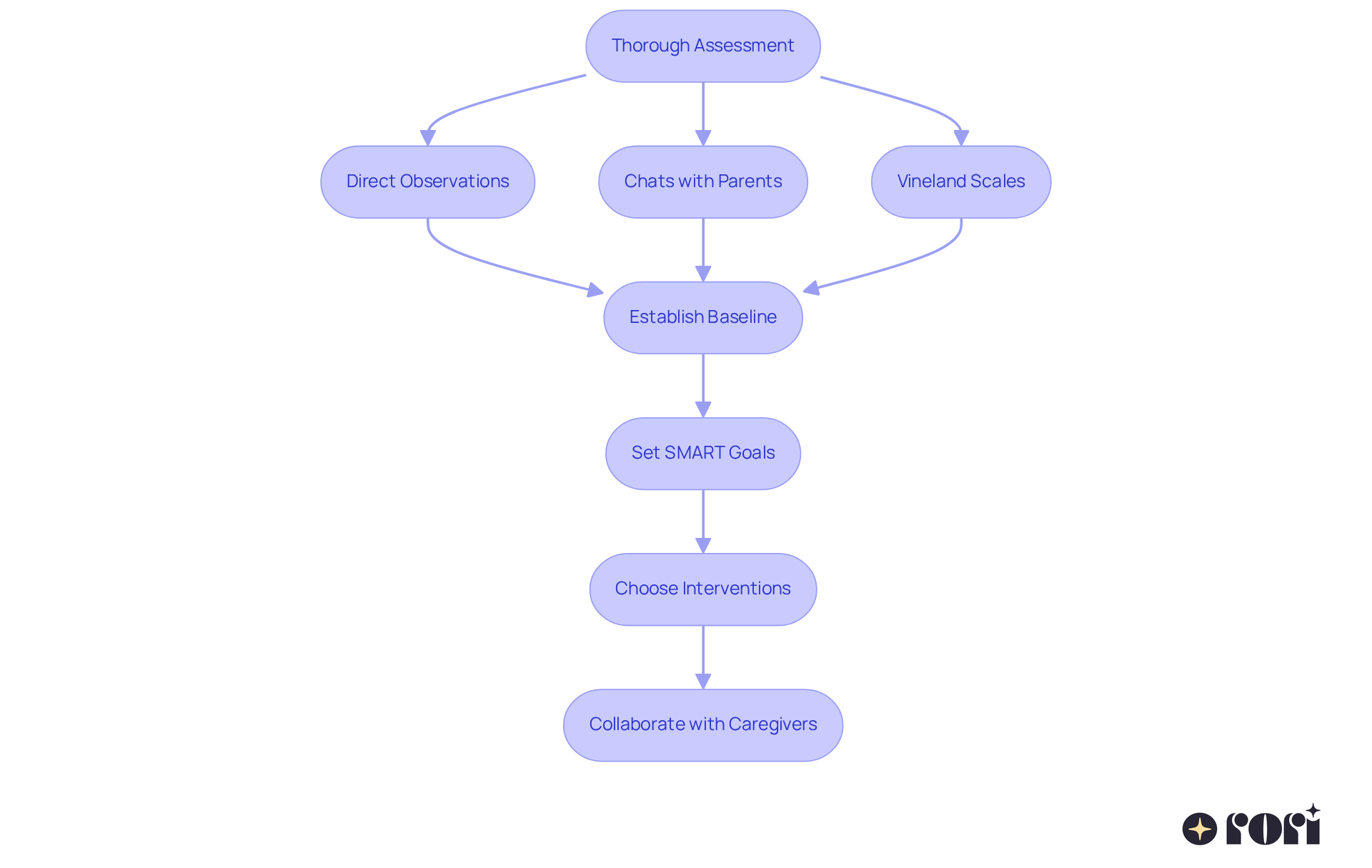
Creating a personalized ABA therapy plan can feel overwhelming, but it doesn’t have to be! Let’s kick things off with a thorough assessment of your child’s skills and challenges. This means taking a close look at what they can do, what they struggle with, and how they learn best. You might gather insights through:
Establishing a baseline is key - it helps us set realistic goals that are just a bit above where they currently are, keeping motivation high and progress steady.
Next up, let’s set some clear and achievable goals together! Based on what we find in the assessment, we’ll focus on specific academic skills, like boosting reading comprehension or tackling math problems. We want these goals to be SMART - Specific, Measurable, Achievable, Relevant, and Time-bound - so they fit your child’s unique needs and learning environment perfectly.
Now, let’s explore some great interventions that can really help your child thrive! We’ll choose evidence-based ABA strategies that align with those goals. Techniques like:
can make a big difference in how your child engages with academic tasks. Plus, our behavior care engine will keep things flexible, adjusting plans after each session based on how your child is doing.
Don’t forget to involve everyone who cares about your child - let’s work together! Collaborating with parents, teachers, and other professionals ensures that the plan covers all bases. When families are actively involved, it helps transfer strategies into home and school settings, making the interventions even more effective. Empowering caregivers through education not only supports your child’s goals but also eases stress within the family.
By following these steps, you can create a personalized ABA intervention plan that is focused on supporting academic growth with ABA therapy for your child's development. Remember, you’re not alone in this journey; support is just a step away!
Ever felt like your child just isn’t responding to the usual rewards? Let’s explore some strategies that can help!
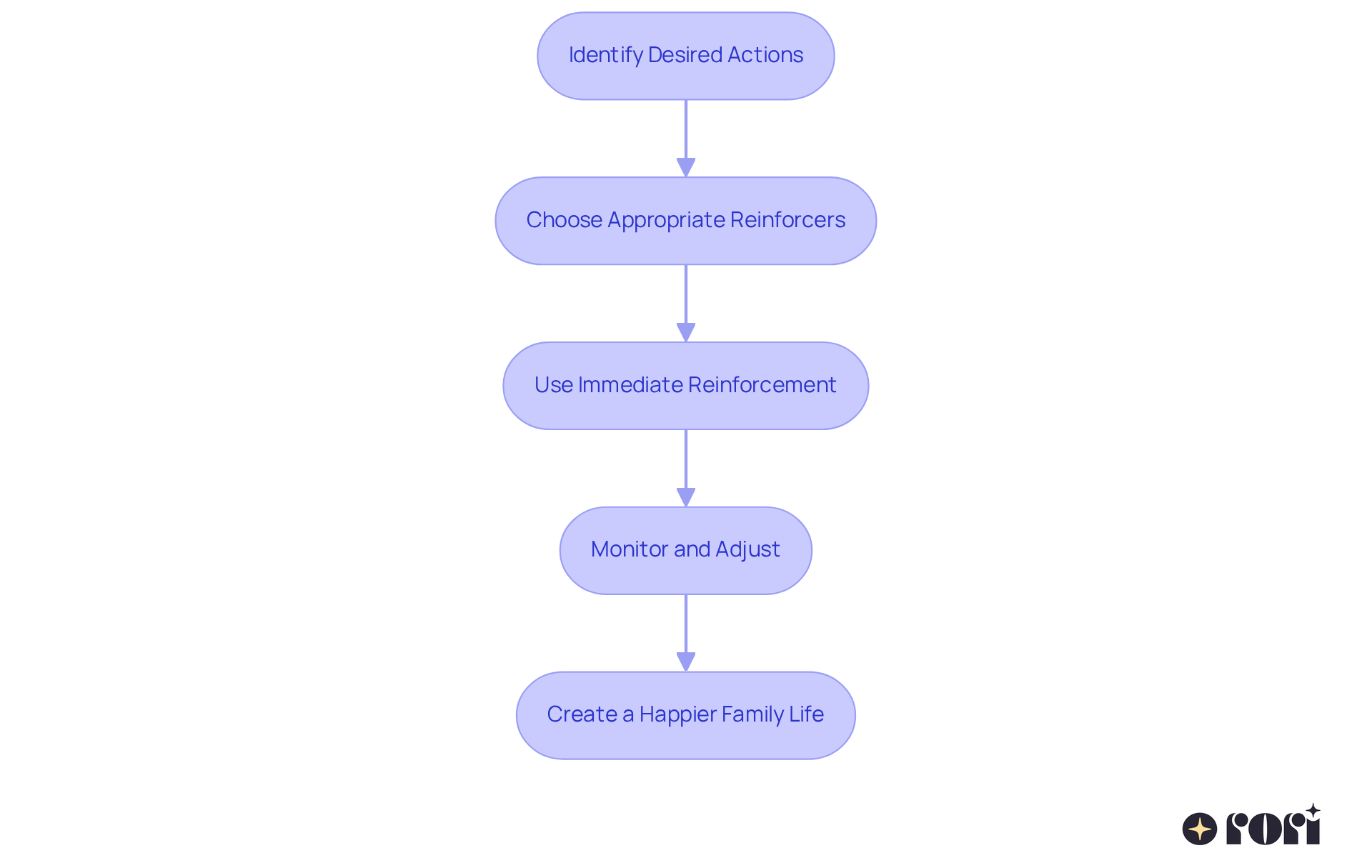
Identify Desired Actions: Knowing which behaviors to focus on makes a big difference in how well things go! Think about what you want to see more of - like finishing homework, joining in class discussions, or following instructions.
Choose Appropriate Reinforcers: Pick rewards that really resonate with your child. This could be a simple "Great job!" or something tangible like stickers or small toys. Mixing it up keeps things exciting and motivates them to keep trying!
Use Immediate Reinforcement: When your child does something great, give them that reward right away! This helps them connect their action with the reward, making it more likely they’ll do it again. Research shows that quick feedback works wonders, especially for kids with autism.
Monitor and Adjust: Keep an eye on how well your strategies are working! It can be tough when a reward that once excited your child suddenly loses its charm. Don’t worry, though! If something isn’t working, be ready to switch it up or change how often you give rewards. Without regular check-ins, you might find your child losing motivation, which can be frustrating for both of you.
By using these strategies, you’re not just helping your child; you’re creating a happier, more connected family life! Understanding ABA techniques can empower you as a caregiver in supporting academic growth with ABA therapy for your child effectively. This approach benefits not only kids with Autism Spectrum Disorders and ADHD but also those facing various behavioral challenges and learning disabilities. Remember, the more you know, the better you can help your child thrive!
Keeping tabs on your child's progress in ABA therapy can feel like a juggling act, can’t it? Here’s how to make it a bit easier and more effective:
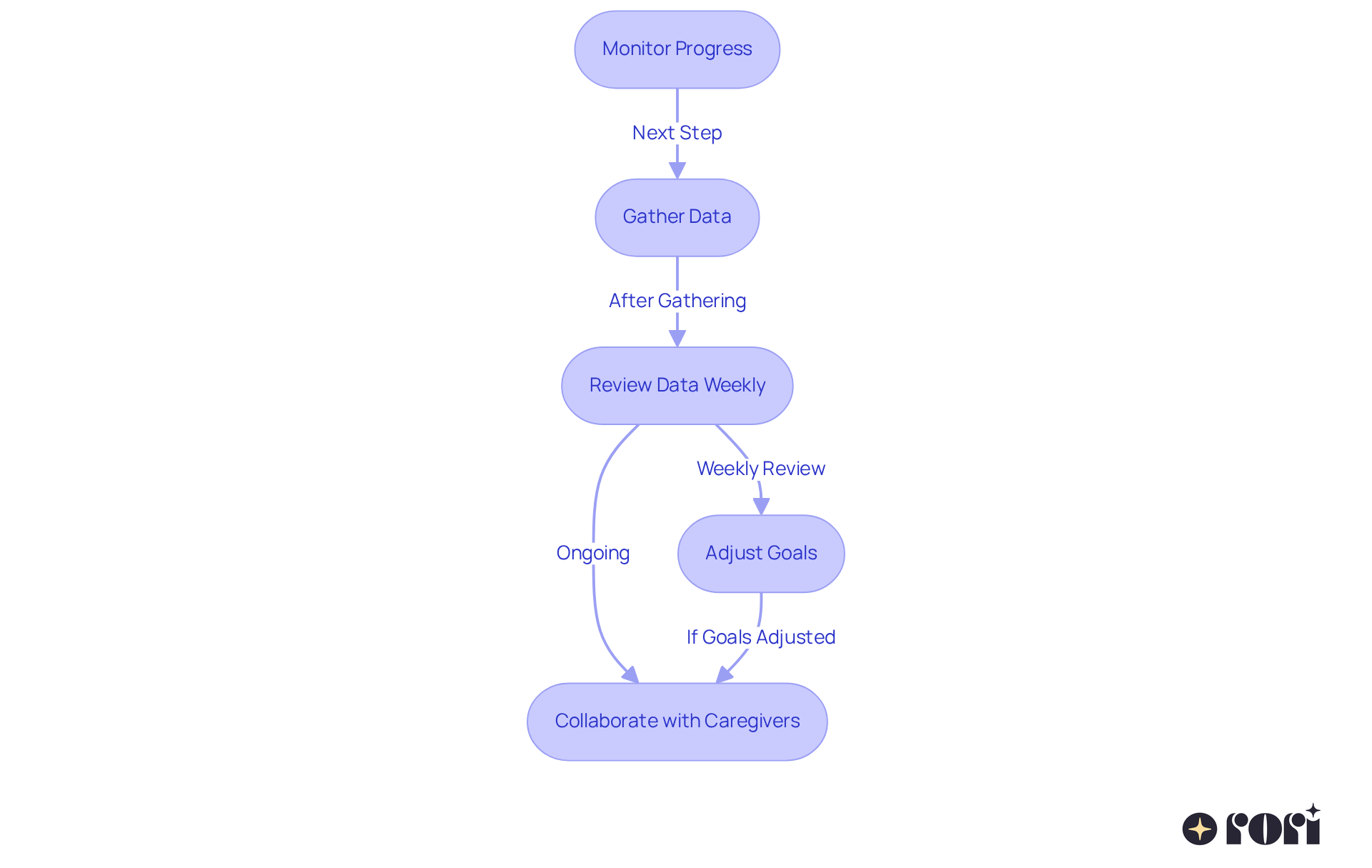
Let’s talk about how to keep track of your child’s progress in a way that feels manageable! Start by figuring out the best ways to gather data. You might want to count how often certain behaviors happen, measure how long they last, or observe actions during specific time frames. Using digital tracking apps or simple data sheets can really help. Plus, Rori Care’s behavior care engine automatically collects and analyzes data during sessions, keeping everything secure and organized for you.
Make it a habit to check in on the data every week or so - it can really make a difference! Research shows that regular reviews can lead to better treatment outcomes. In fact, frequent data analysis can boost the effectiveness of interventions by 30%! At Rori Care, we’re always refining our treatment plans based on what the data tells us, ensuring they’re tailored to each child’s unique needs.
Don’t hesitate to tweak those goals if you see your child hitting them consistently! If your child is meeting their goals, consider adding some new challenges or skills to keep things exciting. On the flip side, if progress seems to stall, it might be time to reassess the strategies you’re using. Rori Care emphasizes the importance of caregiver involvement, which can lead to amazing improvements in 90% of youth when the suggested hours are followed.
Keep the conversation going with everyone involved in your child’s care - it really helps! Sharing updates and collaborating with parents, teachers, and therapists creates a supportive environment for supporting academic growth with ABA therapy, which enhances its effectiveness. With Rori Care’s AI-driven progress report automation, caregivers can save up to 50% more time for direct youth treatment, allowing for more focused and personalized support.
By staying engaged and making adjustments, you’re not just tracking progress; you’re paving the way for your child’s success!
Supporting your child's academic journey can feel overwhelming, especially when navigating the world of ABA therapy. But it’s also a chance for them to truly shine! By getting to know the basics of ABA therapy and creating a plan that fits your child’s needs, you’re setting them up for success.
The article highlights some essential steps that you, as a parent or educator, can take to make sure ABA therapy is tailored just for your child:
These strategies not only make interventions more effective but also create a supportive environment that encourages academic success.
At the end of the day, helping your child grow academically with ABA therapy is about so much more than just grades. It’s about understanding autism better and appreciating the different ways children learn. By embracing these steps and committing to a personalized approach, you’re unlocking your child’s full potential and paving the way for a brighter, more successful future in academics and beyond. Let’s explore this journey together!
What is ABA therapy?
Applied Behavior Analysis (ABA) therapy is an approach that helps understand and improve behaviors through careful observation and support, particularly for children with autism.
What are the key principles of ABA?
The key principles of ABA include reinforcement (both positive and negative), prompting, and task analysis, which breaks down complex tasks into manageable steps.
What are the goals of ABA therapy?
The goal of ABA therapy is to encourage positive behaviors while guiding children away from negative ones, helping them thrive in various settings, such as school.
How effective is ABA therapy?
Research shows that ABA treatment has a success rate of over 89% in enhancing communication, social skills, and adaptive actions in children with autism, which are essential for academic success.
How does ABA therapy use data?
ABA relies on collecting data to track progress and effectiveness, allowing for ongoing observation and informed decisions about interventions tailored to the child's changing needs.
Is ABA therapy individualized?
Yes, ABA therapy is customized to fit each child's unique needs, ensuring that interventions are relevant and effective, which supports academic growth.
How does Rori Care enhance ABA therapy?
Rori Care uses advanced AI technology to automate progress report creation, freeing up 50% more time for direct youth treatment, which boosts the overall effectiveness of care.
Why is understanding ABA important for parents and educators?
Grasping the fundamentals of ABA helps parents and educators appreciate its role in supporting academic growth and unlocking a child's potential in a supportive environment.