In the world of autism care, tapping into a child's unique interests can really change the game. 🌟 Interest-based interventions not only boost engagement but also spark motivation, making it easier for kids to communicate and develop social skills. But how can caregivers pinpoint these interests and weave them into personalized intervention plans?
Let’s explore this together! This article takes a closer look at a structured approach to promoting engagement through interest-based interventions. We’ll share some actionable steps to empower both caregivers and children on their journey toward better outcomes. We’re here to help you every step of the way!
Preference-based interventions are centered on by tapping into what your child loves to boost their motivation in therapy. You see, many kids with autism have a knack for focusing intensely on certain topics or activities. By incorporating these passions into their therapy sessions, clinicians can , for your little one. Imagine if your child is crazy about trains! Tasks themed around trains can spark their interest and encourage them to connect with peers.
Research shows that when kids are excited about what they’re doing, it is essential for promoting engagement through interest-based interventions in autism care, leading to more effective participation in treatment. Studies have even found that a child’s can predict their progress in both verbal and nonverbal skills. Plus, the strategy of promoting engagement through interest-based interventions in autism care has led to noticeable increases in interactions and responses during play sessions, highlighting just how important it is to incorporate personal interests into .
At Rori Care, we offer led by trained therapists. This setting helps individuals , fostering better relationships with others. And let’s not forget about ! By equipping you with knowledge and skills based on ABA principles, we ensure you can actively support your child’s . This active involvement creates a consistent and nurturing environment, .
So, let’s explore this together! We’re here to help you every step of the way!

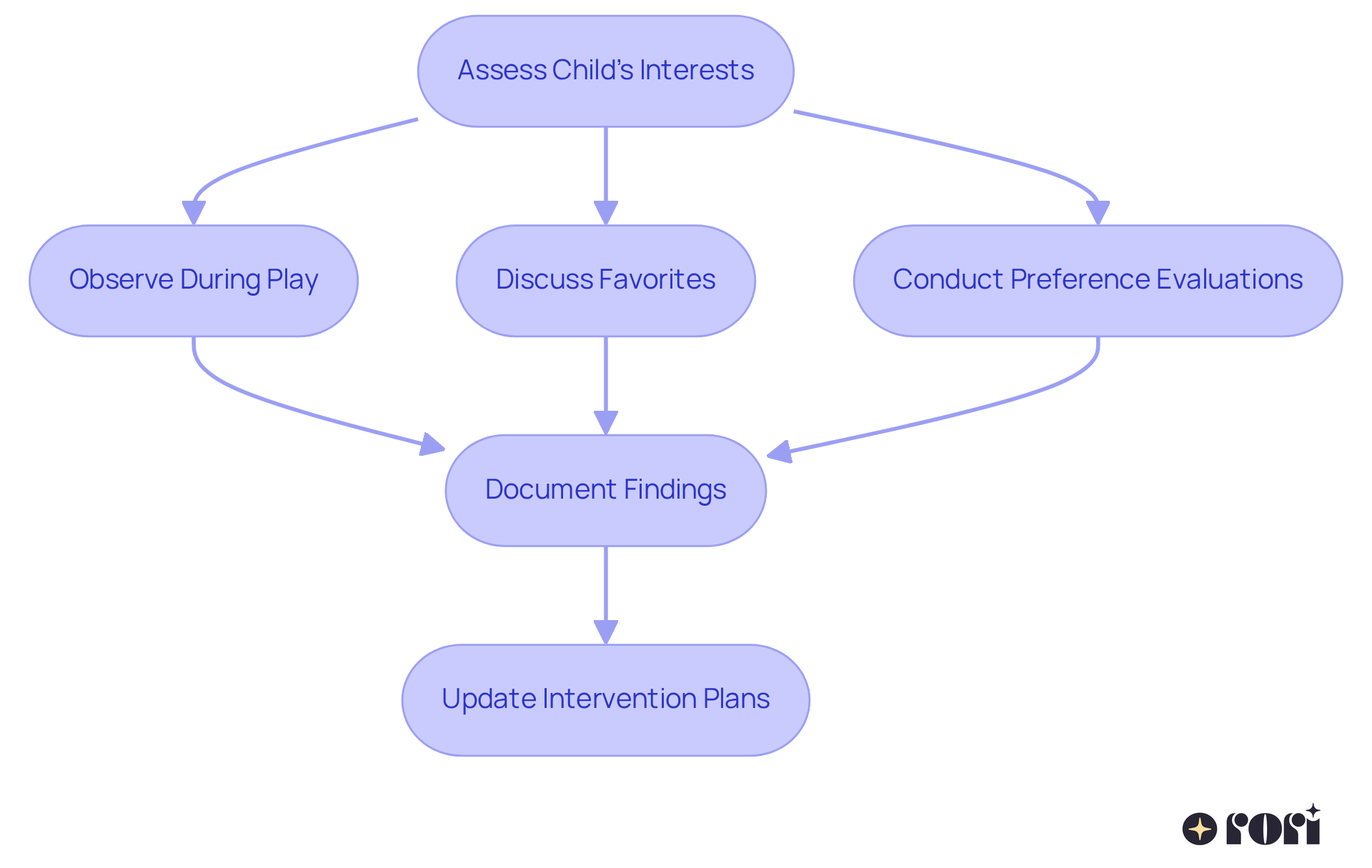
Understanding a young person's interests and preferences is so important for effective . Parents, you know your child best! Start by observing them during play or everyday activities to see what truly captures their attention. Have a chat with them about their - your insights are invaluable.
You might also try , where your child can choose from a variety of options. This can really help pinpoint what excites them the most! Remember to ; they’re essential for creating that cater to your child's unique needs.
At Rori Care, our behavior care engine is here to support you. It continuously updates based on the progress reported after each session. This adaptive approach, combined with your active involvement, ensures that treatment plans evolve alongside your child's needs, promoting better engagement and positive outcomes.
And let’s not forget: enhances your ability to make informed decisions. Your participation is crucial in this journey, and it can lead to . We’re here to help you every step of the way! Let’s explore this together!
Once you’ve figured out a young person’s preferences, the next step is to craft a that emphasizes through , guided by a . Start by setting that resonate with their interests, thereby in autism care. For instance, if they love dinosaurs, think about designing tasks that involve:
It’s important to implement these consistently, as through involves weaving them into the young person’s daily routine. Collaborate with parents to strengthen these strategies at home by promoting engagement through interest-based interventions in autism care, providing them with the to support their child’s engagement outside of therapy sessions. By and strategies, they can make informed choices that positively impact their child’s progress, leading to and happier family dynamics.
Let’s explore this together! We’re here to help you every step of the way!

To keep track of progress, it’s super important to set . Regularly collecting data through direct observations, , and structured assessments helps us see how effective our interventions are. At Rori Care, we use automatic during clinical sessions, which means our clinical team can focus entirely on your child without interruptions for gathering data or writing reports. This not only secures the data but also allows for anonymization and deletion after analysis, which is great for privacy and efficiency.
For example, studies show that kids who start early often see big improvements in their communication and social skills. If a young person isn’t showing much engagement or progress, it’s a good idea to revisit the intervention plan and make some adjustments. This could mean or tweaking existing ones to better fit their preferences.
! You can provide into your child’s behavior and preferences outside of therapy. This teamwork not only helps us understand your child’s needs better but also creates a that is essential for promoting engagement through .
By using AI-driven progress report automation, Rori Care frees up 50% more time for treatment, giving caregivers the knowledge and strategies they need to support their child’s behavioral goals. is crucial in this process, equipping you with the tools to actively participate in your child’s development and reinforce learning at home. Let’s explore this together!

Promoting engagement through interest-based interventions in autism care is such a powerful approach! It’s all about tapping into a child’s passions to make their therapy experience more enjoyable. When caregivers and clinicians focus on what truly captivates a child’s attention, they can create fun and meaningful activities that not only motivate kids but also help them build essential skills in communication and social interaction.
One key insight here is the importance of assessing a child’s interests. By developing tailored intervention plans and continuously monitoring progress, we can ensure that engagement remains effective. Understanding a child’s unique preferences allows us to craft personalized strategies that resonate with them, turning therapy sessions into something productive and enjoyable. Plus, the collaboration between caregivers and professionals really enhances the overall effectiveness of these interventions, supporting positive behavioral outcomes.
Ultimately, we can’t overstate how significant interest-based interventions are in autism care. By embracing this approach, caregivers can actively participate in their child’s development, creating an environment that’s perfect for learning and growth. It’s so important to stay vigilant and adaptable, ensuring that our interventions evolve alongside a child’s changing interests and needs. Engaging in this journey together can lead to remarkable progress and a more fulfilling experience for both children and their families.
So, let’s explore this together! We’re here to help you every step of the way!
What are interest-based interventions in autism care?
Interest-based interventions in autism care focus on promoting engagement by incorporating a child's personal interests into therapy sessions, which helps boost their motivation and participation.
How do interest-based interventions promote engagement?
By using activities or topics that a child is passionate about, such as trains or specific toys, therapists can create enjoyable and meaningful experiences that encourage the child to engage more effectively in treatment.
What benefits do interest-based interventions provide in therapy?
Research indicates that when children are excited about their activities, it leads to better participation in treatment, improved verbal and nonverbal skills, and increased interactions during play sessions.
What type of therapy does Rori Care offer?
Rori Care offers social skills group therapy led by trained therapists, aimed at improving social interactions and communication skills among individuals with autism.
How does Rori Care support caregivers?
Rori Care empowers caregivers by providing knowledge and skills based on Applied Behavior Analysis (ABA) principles, enabling them to actively support their child's behavioral goals and create a nurturing environment.
Why is it important to involve caregivers in autism therapy?
Involving caregivers helps create a consistent and supportive environment, which maximizes the effectiveness of the interventions being used in therapy.