5 Strategies for Transferring Skills to Real-Life Situations in ASD

Discover effective strategies for transferring skills to real-life situations in children with ASD.

Introduction

Understanding how to effectively transfer skills learned in therapy to real-life situations is crucial for individuals with Autism Spectrum Disorder (ASD). This article dives into the importance of skill generalization within Applied Behavior Analysis (ABA) therapy, exploring strategies that empower both children and caregivers. As families navigate the complexities of autism treatment, a big question often arises: how can caregivers ensure that the skills learned in therapy translate into meaningful, everyday interactions?

By addressing this question, we’ll uncover practical approaches that foster independence and enhance social skills for children with ASD. Let’s explore this together!

Define Skill Generalization in ABA Therapy

When it comes to applying skills learned in ABA treatment, it’s all about a young person using what they’ve picked up in different settings, with various people, and outside the therapy room. This is super important because it helps ensure that the skills gained during therapy actually make a difference in everyday life. Imagine a young person who learns to greet their therapist-successful transfer means they can also greet family members, friends, and others in places like school or community events. To really make this work, skills should be taught in different contexts and with different folks, reinforcing what they’ve learned and encouraging independence.

Now, let’s talk about empowering caregivers! Educating them on ABA principles and strategies is key to supporting children’s behavioral goals. When caregivers have the right tools, they can provide better support at home, complementing professional help and creating consistency. Some effective approaches include:

  • Practicing skills in various environments
  • Role-playing with family members
  • Turning everyday situations into learning opportunities

As Temple Grandin beautifully puts it, "I am different, not less," highlighting the importance of recognizing personal differences in how abilities are applied. Research shows that early intervention and effective strategies for transferring skills to real-life situations in children with ASD significantly boost the chances of successful skill transfer, leading to better developmental outcomes for individuals with autism.

Take case studies, for example, like those focusing on 'Response Generalization in Application.' They show how young learners can effectively use their skills in different contexts, underscoring the importance of this practice. However, parents should be aware of common pitfalls in skill transfer, like forgetting to practice in diverse settings or with various people, which can hinder a young one’s ability to transfer effectively. By understanding these challenges and using strategies to tackle them, parents can better support their child’s journey toward independence. Let’s explore this together!

The center represents the main idea of skill generalization, while the branches show related topics and strategies. Each color-coded branch helps you see how different aspects connect to the central theme.

Explain the Importance of Skill Generalization in Autism Treatment

Ability generalization is super important for successful autism intervention! It helps kids by providing strategies for transferring skills to real-life situations in children with ASD. This transfer is key for developing strategies for transferring skills to real-life situations in children with ASD, which helps in building independence and improving social interactions. For instance, if a child learns to ask for help during therapy, they should be able to use that skill in a classroom or at home. Research shows that kids who can generalize their skills tend to do better in social, educational, and everyday situations. Plus, being able to abstract these skills helps them remember and use them confidently in different settings.

Caregiver education is a big part of this journey. When caregivers understand ABA principles and strategies better, they can provide the right support at home. This not only boosts professional interventions but also encourages consistency, which is crucial for effective learning transfer. Active involvement from caregivers enhances support and leads to better behavioral outcomes. It also empowers them, reducing stress and improving family dynamics. Just think about it-case studies show how resilient autistic students can be in unpredictable school environments when they have the right support.

Focusing on broad application in ABA treatment ensures that strategies for transferring skills to real-life situations in children with ASD are practiced in various natural settings, enhancing their relevance. Experts agree that organized preparation for this broad application is essential. It helps create positive responses and aids in transferring skills across different environments. Ultimately, promoting strategies for transferring skills to real-life situations in children with ASD is essential for achieving meaningful results in autism treatment, significantly impacting kids' independence and social skills. Let’s explore this together!

This flowchart shows how skill generalization works in autism treatment. Start with caregiver education, which leads to effective strategies for skill transfer, ultimately resulting in positive outcomes for children. Follow the arrows to see how each part connects!

Implement Strategies to Promote Skill Generalization in ABA Therapy

To effectively promote skill generalization in ABA therapy, let’s explore some friendly strategies together:

  1. Instruct in Diverse Environments: It’s super helpful to practice skills in different places - like home, school, and community spots. This way, kids learn through strategies for transferring skills to real-life situations in children with ASD. It’s all about tailoring the approach to fit each child’s unique needs, which is a key part of ABA therapy.

  2. Employ Naturalistic Teaching: Try to weave skills into everyday activities and routines. This enables kids to practice in real-life situations using strategies for transferring skills to real-life situations in children with ASD. Research shows that when caregivers actively participate, about 90% of kids see significant progress when they follow the recommended hours of ABA therapy.

  3. Vary Instructional Materials: Mixing up the resources and stimuli during teaching sessions can really help children adapt their skills to different scenarios. This fosters a more flexible learning experience, which incorporates strategies for transferring skills to real-life situations in children with ASD, making it easier for them to generalize what they’ve learned.

  4. Involve Peers and Family: Getting peers and family members involved in practice sessions creates a supportive environment. This encourages kids to apply their skills in social settings through strategies for transferring skills to real-life situations in children with ASD. Plus, social interaction group sessions led by qualified professionals can really enhance communication and relationships.

  5. Reinforce Success: Celebrate those little victories! When kids successfully generalize their skills, offer positive encouragement. This not only boosts their confidence but also inspires them to keep using those skills in different situations. Empowering caregivers with ABA principles and strategies can further support this reinforcement process.

And remember, ABA therapy is the only scientifically proven treatment for autism that’s covered by insurance, making it accessible for families seeking effective support. We’re here to help you every step of the way!

The center represents the main goal of promoting skill generalization, while each branch shows a different strategy to achieve that goal. Follow the branches to explore how each strategy contributes to helping children with ASD apply their skills in real-life situations.

Identify Factors Influencing Successful Skill Generalization

When it comes to helping children with autism generalize their skills, several key factors come into play:

  1. Consistency of Reinforcement: Keeping reinforcement consistent across different settings really helps kids learn. It motivates them to use their skills in various situations. You know, intermittent reinforcement can be especially effective, as it helps behaviors stick around longer, making them less likely to fade away.

  2. Variability of Instruction: Mixing up teaching methods and contexts can really boost a child’s ability to generalize their skills. By using different educators, resources, and environments, we create a more flexible learning experience. This encourages kids to utilize strategies for transferring skills to real-life situations in children with asd.

  3. Child's Anxiety Levels: We all know that anxiety can get in the way, especially in new settings. Creating a warm and welcoming environment can help ease those nerves, allowing kids to engage more freely and develop their skills more effectively.

  4. Social Support: Having supportive friends and family around makes a huge difference! Positive social interactions can motivate kids to practice and use their skills in different environments. It’s all about that encouragement!

  5. Ability Complexity: Let’s face it, simpler skills are usually easier to generalize than complex ones. Breaking down those tricky skills into manageable steps can really enhance the learning process, helping kids apply their knowledge in various situations.

So, let’s explore this together! Understanding these factors can really make a difference in developing strategies for transferring skills to real-life situations in children with asd during your child’s learning journey. We’re here to help you every step of the way!

The central node represents the main topic, while each branch shows a key factor that affects skill generalization. Follow the branches to see how each factor contributes to helping children apply their skills in real-life situations.

Explore Practical Applications and Examples of Skill Generalization

Practical applications of skill generalization can be seen in everyday situations that many parents encounter:

  1. Social Skills: Imagine a young one learning to start conversations during sessions. To help them generalize this ability, why not implement strategies for transferring skills to real-life situations in children with asd during family gatherings, school events, or playdates? This way, they can interact with different peers, which aligns with the strategies for transferring skills to real-life situations in children with asd, boosting their confidence to engage socially in various settings.

  2. Daily Living Skills: Picture your child learning to request a snack during sessions. Implementing strategies for transferring skills to real-life situations in children with asd by encouraging them to practice at home, in school, and during outings can really make a difference. It helps them realize that this skill is useful everywhere, which is vital for implementing strategies for transferring skills to real-life situations in children with asd, thus promoting their independence in daily activities.

  3. Communication Skills: Think about a young individual who learns to use a communication device during sessions. Practicing using it in different situations, such as at home or in community settings, is essential as part of strategies for transferring skills to real-life situations in children with asd. This consistent practice not only reinforces their skills but also enhances their ability to utilize strategies for transferring skills to real-life situations in children with asd across various scenarios.

  4. Behavioral Skills: If your child learns to manage frustration in therapy, encourage them to apply these strategies during playtime or while doing homework. This practice helps them develop essential coping mechanisms for emotional regulation in everyday life through strategies for transferring skills to real-life situations in children with asd.

  5. Engaging in role-playing exercises that mimic real-life situations can serve as effective strategies for transferring skills to real-life situations in children with asd. It enhances their comfort in applying what they’ve learned and prepares them for real-world interactions by utilizing strategies for transferring skills to real-life situations in children with asd.

Let’s explore this together! By incorporating these practices into your routine, you’re not just helping your child learn; you’re also fostering a sense of belonging and support. We’re here to help you every step of the way!
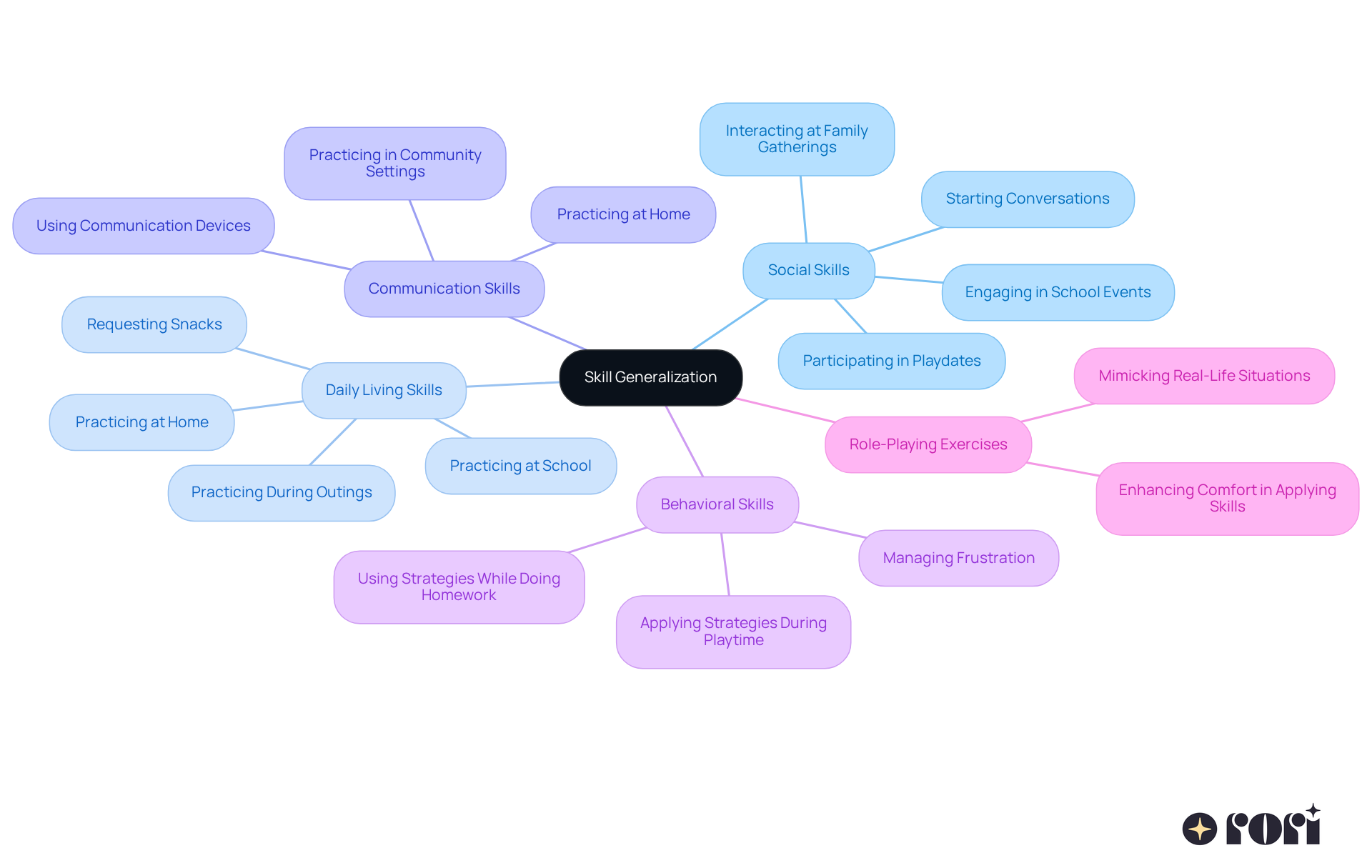
The center represents the main idea of skill generalization, while the branches show different areas where these skills can be applied. Each sub-branch provides specific strategies or examples to help visualize how to implement these skills in real life.

Conclusion

When it comes to children with autism, successful skill generalization is key to turning therapeutic gains into meaningful everyday interactions. Imagine your child applying what they've learned in ABA therapy not just in the clinic, but at home, school, and in the community. This ability can lead to greater independence and improved social skills, helping them navigate the world with confidence.

Throughout this article, we've explored some key strategies to promote skill generalization. Think about the importance of:

  • Practicing in diverse environments
  • Educating caregivers
  • The role of social support

Each of these elements plays a vital part in ensuring that skills are not just learned but truly utilized in real-life situations. By recognizing and tackling common challenges, you can significantly boost your child's ability to transfer what they've learned in therapy to their everyday life.

The journey toward effective skill generalization is a team effort, requiring dedication from both caregivers and professionals. Understanding how crucial this process is can lead to better outcomes for children with autism. So, let’s actively implement these strategies in our daily routines! Embracing this approach not only nurtures individual growth but also enriches family dynamics and community engagement. Together, we can create a more inclusive and supportive environment for everyone.

Let’s explore this together! Your commitment can make a real difference in your child's life.

Frequently Asked Questions

What is skill generalization in ABA therapy?

Skill generalization in ABA therapy refers to a young person's ability to apply skills learned during treatment in various settings, with different people, and outside the therapy room, ensuring that these skills are useful in everyday life.

Why is skill generalization important in autism treatment?

Skill generalization is crucial in autism treatment as it helps children transfer skills to real-life situations, fostering independence and improving social interactions. Children who can generalize their skills tend to perform better in social, educational, and everyday contexts.

How can caregivers support skill generalization?

Caregivers can support skill generalization by practicing skills in various environments, role-playing with family members, and turning everyday situations into learning opportunities. Educating caregivers on ABA principles enhances their ability to provide consistent support at home.

What are some common pitfalls in skill transfer for children with ASD?

Common pitfalls in skill transfer include failing to practice skills in diverse settings or with various people, which can hinder a child's ability to generalize effectively.

How does early intervention impact skill generalization in children with ASD?

Research shows that early intervention and effective strategies for transferring skills to real-life situations significantly improve the chances of successful skill transfer, leading to better developmental outcomes for children with autism.

What role does caregiver education play in the skill generalization process?

Caregiver education is vital as it empowers caregivers with the knowledge and tools necessary to support their child’s behavioral goals, enhancing consistency and complementing professional interventions.

Can you provide an example of skill generalization in practice?

An example of skill generalization is when a child learns to ask for help during therapy and is then able to use that skill in different environments, such as at school or at home.


List of Sources

  1. Define Skill Generalization in ABA Therapy
    • 80 Inspiring Quotes on Autism Awareness and Support - Empower ABA (https://empoweraba.com/80-inspiring-quotes-on-autism-awareness-and-support)
    • 59 Inspirational Quotes About Autism - Hidden Talents ABA (https://hiddentalentsaba.com/autism-quotes)
    • Autism Quotes (https://skillbuildersaba.com/blog/autism-quotes)
    • 10 inspiring quotes from people with autism | Autism Speaks (https://autismspeaks.org/life-spectrum/autism-quotes)
    • How Behavior Analysis Supports Generalization of Learned Skills | Advanced Therapy Clinic (https://advancedtherapyclinic.com/blog/how-behavior-analysis-supports-generalization-of-learned-skills)
  2. Explain the Importance of Skill Generalization in Autism Treatment
    • Improving the Generalization of Skills in Learners with Autism (https://autismspectrumnews.org/improving-the-generalization-of-skills-in-learners-with-autism)
    • 10 inspiring quotes from people with autism | Autism Speaks (https://autismspeaks.org/life-spectrum/autism-quotes)
    • 107 Favorite Quotes About Autism and Aspergers (https://the-art-of-autism.com/favorite-quotes-about-autism-and-aspergers)
    • 80 Inspiring Quotes on Autism Awareness and Support - Empower ABA (https://empoweraba.com/80-inspiring-quotes-on-autism-awareness-and-support)
  3. Implement Strategies to Promote Skill Generalization in ABA Therapy
    • ABA Therapy for Autism Fast Access and Real Progress (https://discoveryaba.com/aba-therapy/how-to-foster-generalization-of-skills-learned-in-aba-therapy)
    • Improving the Generalization of Skills in Learners with Autism (https://autismspectrumnews.org/improving-the-generalization-of-skills-in-learners-with-autism)
    • How to Promote Generalization of ABA Therapy Skills Across Different Settings (https://crossrivertherapy.com/articles/how-to-promote-generalization-of-aba-therapy-skills-across-different-settings)
    • How ABA Therapy Encourages Generalization of Skills | Advanced Therapy Clinic (https://advancedtherapyclinic.com/blog/how-aba-therapy-encourages-generalization-of-skills)
  4. Identify Factors Influencing Successful Skill Generalization
    • Improving the Generalization of Skills in Learners with Autism (https://autismspectrumnews.org/improving-the-generalization-of-skills-in-learners-with-autism)
    • Inspirational ABA and Autism Quotes - Mrs. Moe's Modifications (https://mrsmoesmodifications.com/inspirational-aba-and-autism-quotes)
    • Supporting generalization of academic skills (https://magnetaba.com/blog/supporting-generalization-of-academic-skills)
    • Generalisation in students with autism spectrum disorder: an exploratory study of strategies - ZDM – Mathematics Education (https://link.springer.com/article/10.1007/s11858-022-01415-w)
    • Best ABA Quotes (https://testpreptech.com/post/best-aba-quotes)
  5. Explore Practical Applications and Examples of Skill Generalization
    • Improving the Generalization of Skills in Learners with Autism (https://autismspectrumnews.org/improving-the-generalization-of-skills-in-learners-with-autism)
    • Inspirational Quotes About Autism | Grateful Care ABA (https://gratefulcareaba.com/blog/inspirational-quotes-about-autism)
    • Quotes About Autism - Arms Wide Open ABA Therapy (https://armswideopenaba.com/blog/quotes-about-autism)
    • Autism Quotes | Intellistars - ABA Therapy (https://intellistarsaba.com/blog/autism-quotes)
    • Autism Quotes (https://kidsclubaba.com/autism-quotes)