Introduction
Navigating the world of Applied Behavior Analysis (ABA) therapy can feel overwhelming for parents supporting a child with autism. It’s essential to understand the nuances of this therapy, especially since consistency is a key ingredient for success. When parents maintain a steady approach, it can significantly boost a child’s ability to learn and apply new skills in different settings.
But let’s be real - how can you keep that consistency alive amidst the hustle and bustle of daily life? 🤔 This guide is here to help! We’ll explore practical strategies for:
- Creating a structured routine
- Collaborating with caregivers
- Reinforcing learning at home
Together, we can foster a supportive environment that maximizes the benefits of ABA therapy. Let’s dive in!
Understand the Importance of Consistency in ABA Therapy
The importance of cannot be overstated for a variety of reasons! It helps individuals with autism keep their skills and use them in different places, like home, school, and the community. When parents and therapists for autism, kids are more likely to understand what’s expected of them and respond positively.
For instance, using the same language and reinforcement techniques during therapy and at home can really boost a young person’s ability to generalize what they’ve learned. Research shows that kids who benefit from [consistency in ABA therapy for autism](https://rori.care/post/10-essential-aba-therapy-resources-for-parents-of-children-with-autism) tend to pick up . So, understanding the is the first step in supporting your child’s journey.
Let’s explore this together! Remember, you’re not alone in this - we’re here to help you every step of the way!
Establish a Structured Routine for Therapy Sessions
Creating a systematic schedule for treatment sessions is crucial for maintaining , which boosts the effectiveness of interventions. Let’s break it down step by step to create a supportive environment:
- Identify Essential Activities: Start by jotting down the . Think about specific learning tasks, playtime, and breaks. This way, you can create a well-rounded routine that covers all aspects of their development.
- Set Regular Times: Assign specific times for each activity. For example, the consistency in ABA therapy for autism by scheduling therapy sessions at the same time each day helps , which is key for reducing anxiety and improving focus.
- Use : like charts or picture schedules can really help your child grasp the routine. These schedules not only clarify what’s expected but also empower kids to manage their activities independently, making daily tasks feel a lot easier.
- Be Consistent: It’s crucial that all caregivers stick to the same routine. The consistency in ABA therapy for autism across different settings-home, school, and community-reinforces learning and gives your child a sense of security, making transitions smoother and less stressful.
- Review and Adjust: and make adjustments as needed to better fit your child’s evolving needs. This flexibility is , ensuring the routine stays effective and engaging.
By following these steps, you can set up a that not only supports the consistency in ABA therapy for autism for your child but also enhances their overall learning experience. This promotes independence and emotional regulation. Let’s explore this together!

Collaborate with Caregivers and Therapists for Unified Strategies
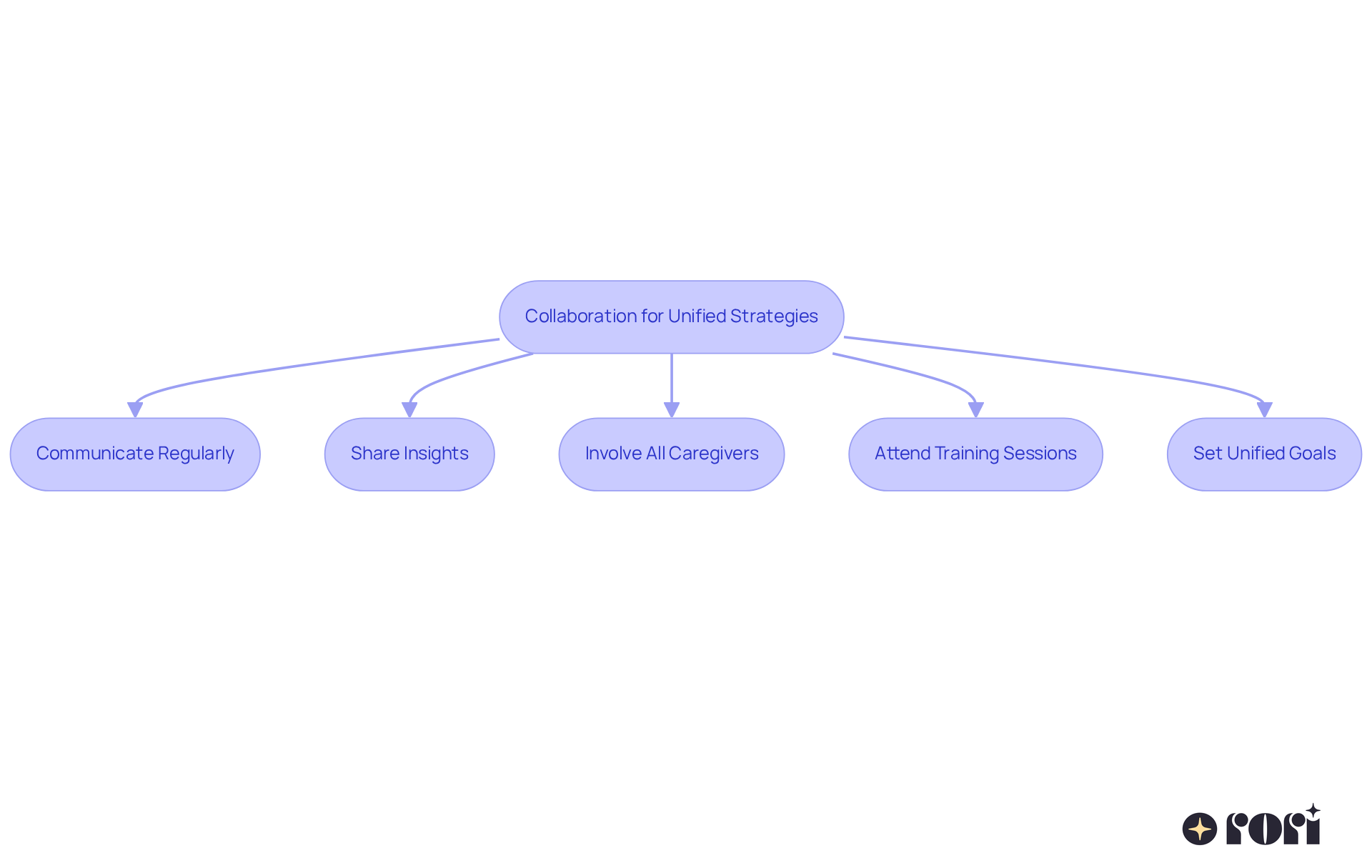
in , which can sometimes feel a bit overwhelming. But don’t worry! Here are some friendly strategies to help :
- : Keep those lines of communication open with your child’s therapist! Regular chats about progress, challenges, and what’s working can make a world of difference in your collaboration.
- Share Insights: Your is invaluable! Let the therapist know which strategies are hitting the mark or need a little tweak. This helps tailor the treatment to fit your child’s unique needs.
- : It’s super important that everyone involved in your child’s care-family members, educators, and more-understands and supports the therapy goals. in ABA therapy for autism.
- Attend Training Sessions: Jump into those ! Learning how to implement ABA strategies at home can empower you and strengthen your skills.
- : Work together with the therapist to set clear, achievable goals that everyone can rally behind. When everyone’s on the same page, it leads to better outcomes for your child.
By working closely with caregivers and therapists, you can that truly enhances your child’s ABA experience. Let’s explore this together!
Reinforce Learning at Home with Consistent Practices
To help your child learn at home, here are some friendly strategies you can try:
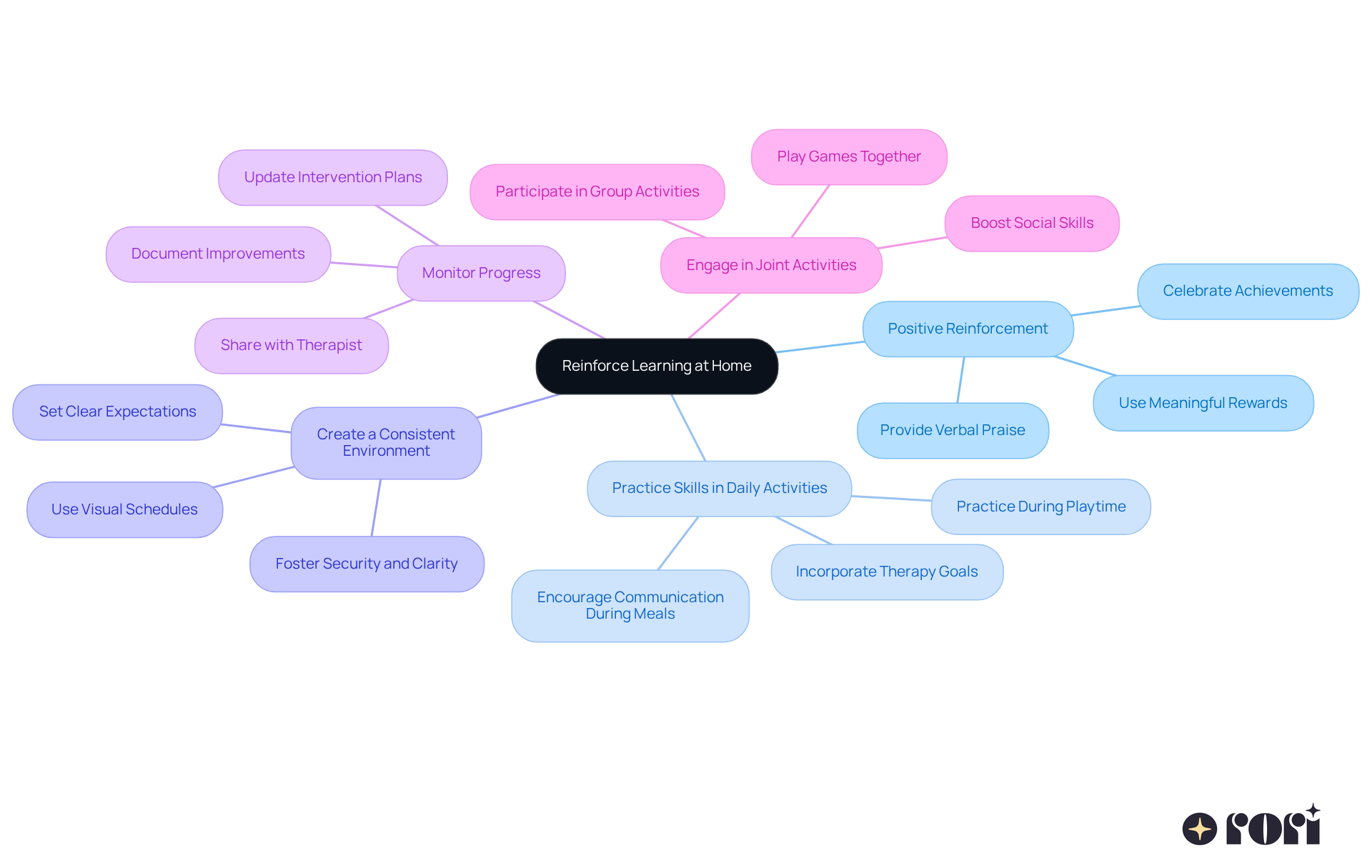
- Use : Celebrate your child's achievements with meaningful rewards like verbal praise, stickers, or small treats. This not only boosts their confidence but also encourages them to repeat those .
- : Try to weave therapy goals into your everyday routines. For example, if your child is working on communication skills, encourage them to ask for things during meals or playtime. This way, they can practice in a natural setting.
- : A structured and predictable home can make a big difference. Use and set clear expectations to help your child understand what’s expected of them. This fosters a sense of security and clarity.
- : Keep an eye on your child's progress at home. Document their improvements and challenges, and share this with their therapist. Rori Care's updates intervention plans based on progress, making this collaboration super important.
- Engage in Joint Activities: Join in on activities that boost , like playing games or participating in group activities with friends. These moments provide great opportunities for your child to practice their skills in a social environment.
By consistently using these practices at home, you can really enhance your child's learning and support their journey with consistency in for autism. Remember, your active involvement is key to achieving lasting behavioral improvements. Plus, understanding ABA principles can empower you to make choices that positively impact your child's growth. Let’s explore this together!
Conclusion
Achieving consistency in ABA therapy for autism is so important for helping your child learn and grow. By setting up a structured routine, working closely with caregivers and therapists, and reinforcing practices at home, you can create a nurturing environment that truly supports your child's development. This unified approach not only helps with skill retention but also empowers your child to use what they've learned in different situations.
Let’s talk about some key strategies! Regular communication with therapists, using visual aids, and weaving therapy goals into daily activities can make a big difference. These methods help build a strong framework that supports your child's journey through ABA therapy, ensuring everyone involved is on the same page and actively participating.
Ultimately, we can’t stress enough how vital consistency is in ABA therapy. By getting involved in these practices, you and your caregivers can have a profound impact on your child's growth and learning. Embracing this journey together not only strengthens the therapeutic process but also enriches your family's overall experience, paving the way for lasting positive outcomes. Let’s explore this together! We’re here to help you every step of the way!
Frequently Asked Questions
Why is consistency important in ABA therapy for autism?
Consistency in ABA therapy is crucial because it helps individuals with autism retain and apply their skills across various environments, such as home, school, and the community.
How does consistency affect a child's understanding of expectations in therapy?
When parents and therapists maintain consistency in ABA therapy, children are more likely to understand what is expected of them and respond positively to the therapy.
What techniques can enhance consistency in ABA therapy?
Using the same language and reinforcement techniques during therapy and at home can significantly improve a child's ability to generalize what they have learned.
What are the benefits of consistency in ABA therapy for children with autism?
Research indicates that children who experience consistency in ABA therapy tend to acquire skills more quickly and achieve better behavioral outcomes.
How can parents support their child's journey in ABA therapy?
Understanding the importance of consistency in ABA therapy is the first step for parents in supporting their child's progress, and they are encouraged to seek help and resources throughout the process.
List of Sources
- Establish a Structured Routine for Therapy Sessions
- The Benefits of Structured Routines in ABA Therapy | Intellistars - ABA Therapy (https://intellistarsaba.com/blog/the-benefits-of-structured-routines-in-aba-therapy)
- The Benefits of Visual Schedules for Children (https://biermanautism.com/resources/blog/visualschedules)
- supportivecareaba.com (https://supportivecareaba.com/statistics/how-aba-therapy-provides-structure-and-routine-for-children-with-autism)
- The use of visual schedules to increase academic-related on-task behaviors of individuals with autism: a literature review (https://tandfonline.com/doi/full/10.1080/20473869.2024.2402124)
- Collaborate with Caregivers and Therapists for Unified Strategies
- Autism Quotes | Intellistars - ABA Therapy (https://intellistarsaba.com/blog/autism-quotes)
- Encouraging Autism Quotes for Positivity (https://besteveraba.com/blog/autism-quotes)
- The Vital Role Caregivers Play in ABA Therapy Success | Step Ahead ABA (https://stepaheadaba.com/blog/how-caregiver-support-enhances-the-effectiveness-of-aba-therapy-interventions)
- Quotes About Autism - Arms Wide Open ABA Therapy (https://armswideopenaba.com/blog/quotes-about-autism)
- Reinforce Learning at Home with Consistent Practices
- Positive Reinforcement and ABA Therapy (https://goldenstepsaba.com/resources/positive-reinforcement-in-aba-therapy)
- cardinalabatherapy.com (https://cardinalabatherapy.com/positive-reinforcement-for-aba-therapy)
- The Impact of Positive Reinforcement on ABA Therapy Outcomes (https://crossrivertherapy.com/articles/the-impact-of-positive-reinforcement-on-aba-therapy-outcomes)
- Autism Quotes | Intellistars - ABA Therapy (https://intellistarsaba.com/blog/autism-quotes)
- Quotes About Autism - Arms Wide Open ABA Therapy (https://armswideopenaba.com/blog/quotes-about-autism)