Build Confidence in Navigating Public Settings with Autism

Build confidence in navigating public settings with autism through effective strategies and support.

Introduction

Navigating public spaces can feel overwhelming for children with autism. Sensory overload, social anxieties, and unexpected challenges often come into play. As caregivers, understanding these hurdles is key to helping your child build confidence and independence.

Let’s dive into some effective strategies that can empower children with autism to thrive in public settings. By transforming potentially overwhelming situations into opportunities for growth and connection, we can make a real difference. How can we create an environment that not only supports our child's unique needs but also boosts their ability to engage confidently with the world around them?

Together, we can explore this journey! 🌟

Understand Autism and Its Challenges in Public Settings

Children with autism often face a variety of challenges in public settings. Think about sensory sensitivities, social interaction difficulties, and anxiety in new environments. Sensory overload can happen when there are bright lights, loud noises, or crowded spaces, which can lead to distress and even meltdowns. To help manage these situations, support providers can use ABA strategies. For instance, creating a sensory toolkit with noise-canceling headphones or fidget toys can really provide comfort during overwhelming experiences.

Practicing social scripts with young individuals can also boost their communication skills and ease anxiety in social situations. Understanding these challenges is the first step in fostering confidence in navigating public settings with autism for both the child and the caregiver. By equipping caregivers with knowledge and skills based on ABA principles, they can actively support their child's behavioral goals.

This active involvement, along with effective data gathering, creates a steady and encouraging atmosphere that maximizes the impact of interventions. Ultimately, this approach promotes youth development and helps build confidence in navigating public settings with autism, thereby enhancing inclusion. Let’s explore this together! We’re here to help you every step of the way!

The central node represents the main topic, while the branches show specific challenges and strategies. Each color-coded branch helps you easily identify different aspects of autism and how to support children effectively.

Prepare Your Child for Public Outings

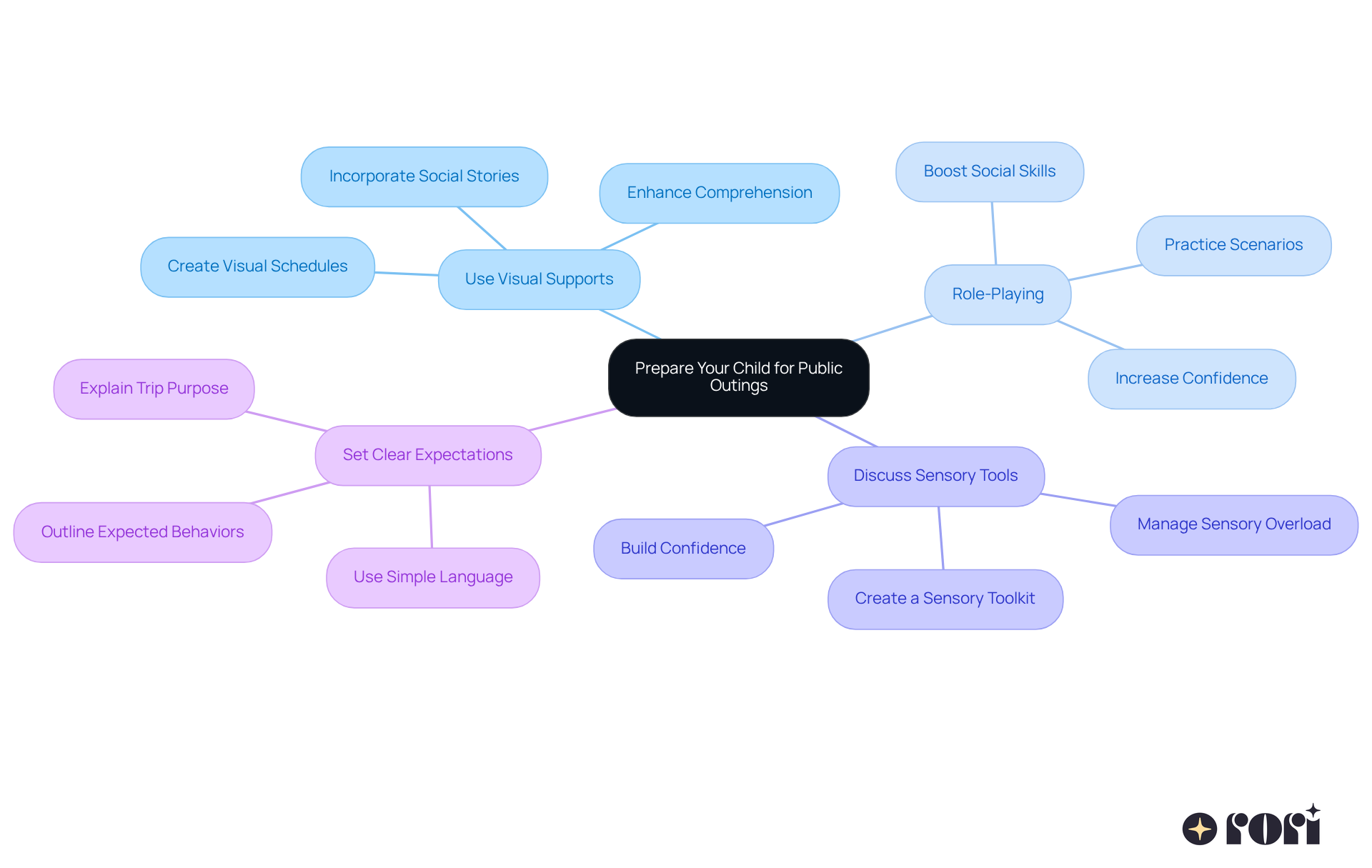
  1. Use Visual Supports: Think about creating visual schedules or social stories that outline what to expect during the event. This can really help your child develop confidence in navigating public settings with autism, allowing them to anticipate what’s coming up and ease any anxiety they might feel. It’s all about making things easier for them, just like in Applied Behavior Analysis (ABA) therapy!

  2. Role-Playing: How about practicing the outing scenario at home? Role-playing different situations, like waiting in line or chatting with new people, can be super helpful. It’s a fun way to boost their learning and social skills, which are crucial for developing confidence in navigating public settings with autism during early intensive behavioral intervention (EIBI).

  3. Discuss Sensory Tools: If your little one is sensitive to sensory input, consider putting together a sensory toolkit. Items like noise-canceling headphones or fidget toys can really help manage sensory overload. Trust me, these tools can help build confidence in navigating public settings with autism, making a world of difference for a smooth trip!

  4. It’s important to set clear expectations by explaining the trip's purpose and the behaviors you expect to help foster confidence in navigating public settings with autism. Use simple language and be clear about what they can do during the event. This reinforces the flexible nature of ABA therapy, which is all about meeting your child’s unique needs.

Let’s explore this together! Your journey as a parent is important, and we’re here to help you every step of the way!

The central node represents the overall goal of preparing your child for outings. Each branch shows a different strategy, and the sub-branches provide details on how to implement each one. This visual helps you see all the options at a glance!

Implement Techniques for Successful Navigation

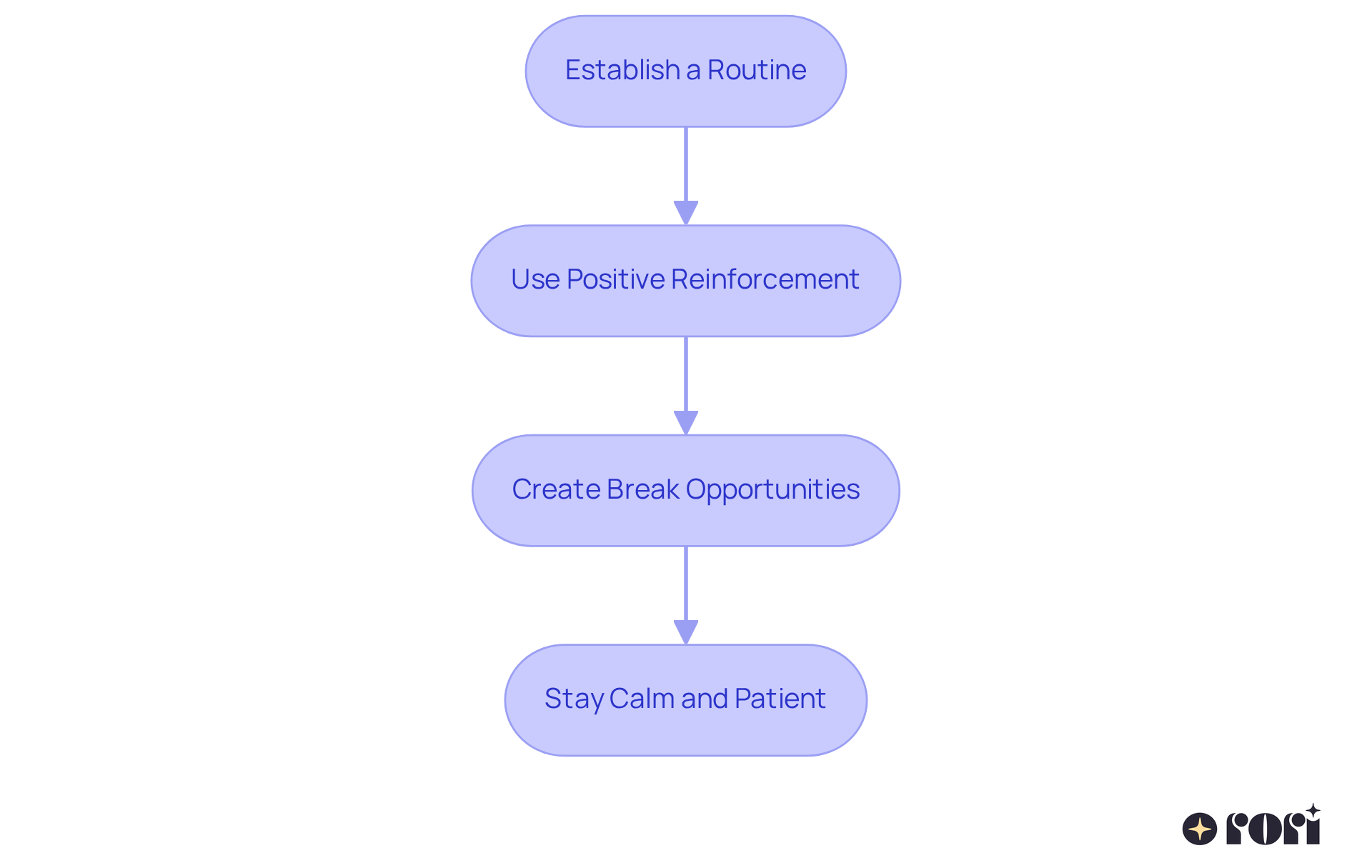
  1. Establish a Routine: Consistency can really help kids feel more secure. Try to stick to a familiar routine during outings, like visiting the same places or following a similar sequence of activities. This approach is especially helpful for kids with Autism Spectrum Disorders and ADHD, as it aligns with ABA therapy principles that emphasize structured environments.

  2. Use Positive Reinforcement: Celebrate your child’s positive behaviors during the outing! A little verbal praise or small rewards for following instructions or managing anxiety can go a long way. Positive reinforcement is a key strategy in ABA therapy, empowering you to support your child’s behavioral growth effectively.

  3. Create Break Opportunities: Don’t forget to schedule some downtime in calmer spots to help your little one recharge. This can really prevent sensory overload and help them manage their emotions. Knowing when to take breaks is crucial for kids facing behavioral challenges, allowing them to regroup and reducing stress during outings.

  4. Stay Calm and Patient: Your demeanor can really influence your child’s behavior. So, keep calm and patient, offering reassurance and support as needed. By showing calmness, you create a supportive atmosphere that’s vital for kids with learning disabilities and behavioral challenges, boosting their confidence in public situations.

Each box represents a technique to help children navigate outings successfully. Follow the arrows to see how these strategies can work together to create a positive experience.

Create a Supportive Environment During Outings

  1. Choose Sensory-Friendly Locations: Think about picking places that are a bit quieter, like parks or cozy cafes. These spots can really help you create a calming environment for your little one, making it easier to apply those ABA principles you know so well.

  2. Prepare Comfort Items: Let your child bring along something that makes them feel safe, like a favorite toy or a soft blanket. When caregivers are equipped with the right knowledge, they can better anticipate their child’s needs, making those outings a lot smoother.

  3. Identify Safe Spaces: Before heading out, find spots where your kid can take a breather if things get overwhelming. It could be a quiet corner in a store or a peaceful area in a park. Knowing these safe spaces can really enhance your child's confidence in navigating public settings with autism, especially when you understand ABA strategies.

  4. Communicate Openly: Encourage your child to express how they’re feeling during the trip. Let them know it’s perfectly okay to say when they need a break or feel a bit uneasy. By fostering open communication, you’re creating an environment that supports their needs and leads to better behavioral outcomes.

Let’s explore this together! Your experiences matter, and we’re here to help you every step of the way!
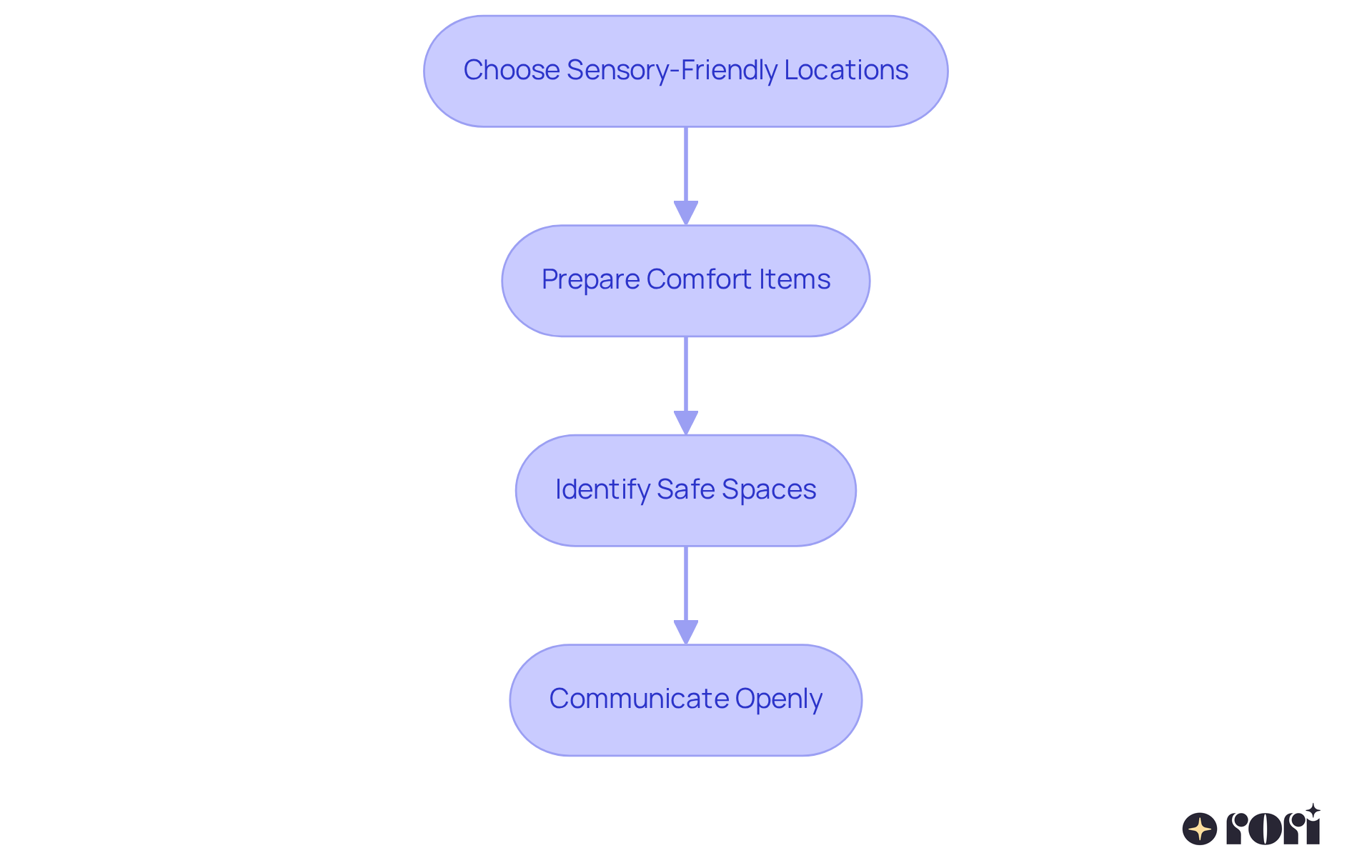
Each box represents a step you can take to help your child feel more comfortable during outings. Follow the arrows to see how each step builds on the previous one.

Use Positive Reinforcement to Build Confidence

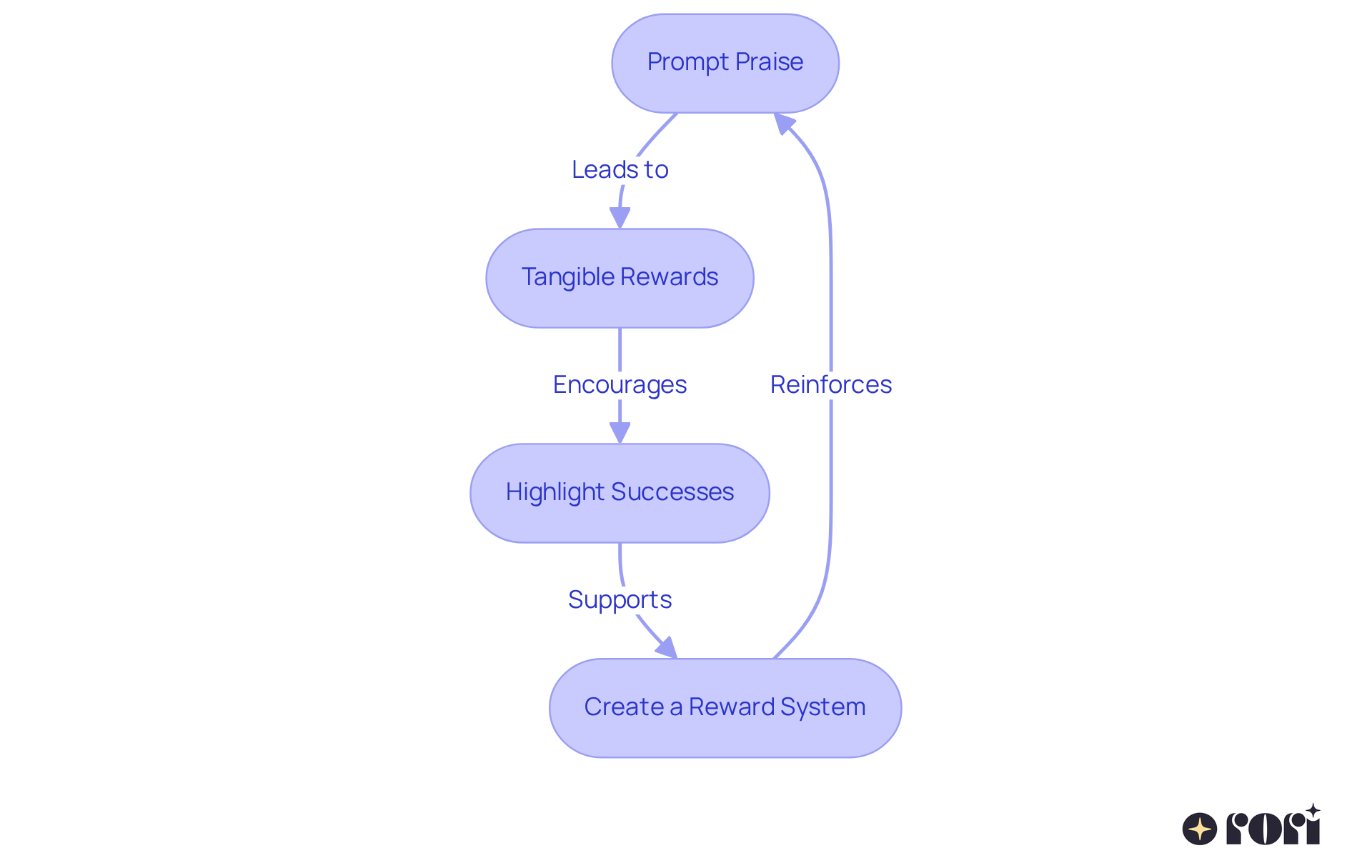
  1. Prompt Praise: When your little one shows off those great behaviors during outings, don’t hold back on the praise! If they’re waiting patiently in line, let them know right away with enthusiastic comments like, ‘Great job waiting!’ This immediate reinforcement is key to keeping their motivation high and encouraging them to repeat those positive behaviors. As you dive deeper into ABA principles, you’ll find yourself making informed choices that can really help your child thrive in these situations, making outings less stressful and family time more enjoyable.

  2. Tangible Rewards: How about setting up a fun reward system? Think small rewards like stickers or tokens that your kid can earn for showing positive behaviors. Research shows that these tangible rewards can really boost motivation and get them engaged in the right actions. For instance, a token economy lets kids trade in their earned tokens for a fun activity or treat, reinforcing their good behavior. With the knowledge you gain, you’ll be empowered to create effective reward systems that fit well with therapeutic strategies and keep things consistent at home.

  3. Highlight Successes: After each outing, take a moment to chat about what went well and celebrate their wins, no matter how small. This practice not only builds their confidence in navigating public settings with autism but also encourages them to participate in future outings. Recognizing their successes helps them develop confidence in navigating public settings with autism. Your active involvement, backed by your education, can lead to better behavioral outcomes as you align your support with therapeutic goals and enhance family dynamics.

  4. Create a Reward System: Let’s talk about setting up a simple reward system where your child can track their successes over time. Visual aids, like a chart with smiley faces or checkmarks, can help them see their progress and feel accomplished. This approach nurtures a sense of independence and motivates them to aim for even more achievements in social situations. As Teka J. Harris, M.A., BCBA, wisely points out, ‘Behavior-specific praise goes one step further, identifying exactly which behavior pleases you,’ highlighting the importance of clarity in praise. And remember, it’s a good idea to gradually reduce physical rewards to help them develop intrinsic motivation over time. The confidence you gain through your education will empower you to support your child better, ultimately improving family dynamics.

Each box represents a strategy to help your child build confidence through positive reinforcement. Follow the arrows to see how each strategy connects and supports the others in creating a positive environment.

Conclusion

Helping children with autism build confidence in public settings is truly a journey filled with understanding, preparation, and support. By recognizing the unique challenges these kids face - like sensory sensitivities and social interaction hurdles - caregivers can create a personalized approach that empowers them. This hands-on involvement not only boosts a child's ability to handle public spaces but also nurtures a sense of belonging and inclusion.

Some key strategies to consider include:

  • Using visual supports and role-playing to prepare children
  • Establishing routines
  • Celebrating successes with positive reinforcement
  • Implementing sensory-friendly practices
  • Crafting supportive environments

These strategies can make a world of difference in a child's comfort and confidence. By actively engaging in these techniques, caregivers can significantly enhance their child's experiences in public, making outings less stressful and more enjoyable for the whole family.

Ultimately, guiding a child with autism through public spaces isn’t just about tackling challenges; it’s about laying down a foundation of confidence that will support them throughout their lives. By embracing these strategies and fostering open communication, caregivers can create a nurturing atmosphere that encourages growth and independence. The importance of equipping children with the skills to thrive in social situations is immense, and with the right support, every outing can turn into an opportunity for success and joy. Let’s explore this together!

Frequently Asked Questions

What challenges do children with autism face in public settings?

Children with autism often face challenges such as sensory sensitivities, difficulties with social interactions, and anxiety in new environments. Sensory overload from bright lights, loud noises, or crowded spaces can lead to distress and meltdowns.

How can support providers help manage sensory overload for children with autism?

Support providers can use ABA strategies to help manage sensory overload. Creating a sensory toolkit with items like noise-canceling headphones or fidget toys can provide comfort during overwhelming experiences.

What role do social scripts play in supporting children with autism?

Practicing social scripts can boost communication skills and ease anxiety in social situations for children with autism, helping them navigate public settings more confidently.

How can caregivers support their child's behavioral goals?

Caregivers can support their child's behavioral goals by being actively involved and equipped with knowledge and skills based on ABA principles. Effective data gathering also creates a supportive environment that maximizes the impact of interventions.

What are some strategies to prepare a child with autism for public outings?

Strategies include using visual supports like schedules or social stories to outline expectations, role-playing different scenarios at home, discussing sensory tools, and setting clear expectations about the trip's purpose and expected behaviors.

What items can be included in a sensory toolkit for children with autism?

A sensory toolkit for children with autism can include items such as noise-canceling headphones and fidget toys to help manage sensory overload during public outings.

Why is it important to set clear expectations before a public outing?

Setting clear expectations helps children understand the trip's purpose and the behaviors expected of them, which can foster their confidence in navigating public settings with autism.