Selecting the right ABA therapy provider for your child with autism requires careful consideration of various factors. From evaluating professional qualifications to assessing therapy settings and teaching methods, each aspect plays a crucial role in determining the effectiveness of the treatment. Additionally, family involvement, the treatment approach and goals, data collection and progress tracking, communication and transparency, additional services and support, accreditations and reputation, as well as insurance coverage and financial considerations, all contribute to finding the best provider for your child's unique needs.
By understanding these key elements and asking the right questions, you can make an informed decision that ensures your child receives high-quality, individualized care from a trusted ABA therapy provider.
Choosing an ABA treatment option necessitates careful consideration of the credentials and expertise of their practitioners, especially when working with individuals on the . It's crucial to prioritize those with a solid educational foundation in psychology or behavioral sciences, as well as certifications such as . Additionally, familiarity with the latest is indicative of a commitment to . With an increase in autism diagnoses, professionals who are adaptable and proactive in embracing diverse patient needs, especially in a growing , are invaluable. Moreover, therapists should be versed in , such as and its adaptations, ensuring they are equipped to address a range of conditions effectively. As the field evolves, so does the understanding of autism, with recent insights suggesting that therapeutic needs for comorbid conditions like anxiety or depression may not differ significantly from the general population. However, the nuanced understanding of autism's spectrum and the ability to build trusting relationships with patients remain pivotal. Hence, when assessing possible ABA professionals, it's advantageous to seek out those who show a readiness to acquire knowledge and adjust to the distinct abilities and difficulties of every person on the .
Choosing the appropriate is a crucial decision for parents of children with autism. Providers should be evaluated not only on their certifications but also on their practical experience and adaptability to current trends in the field. Certification by the ensures that practitioners have met professional standards and are committed to ongoing professional development. Equally important is their track record and approach to treatment. Providers who have embraced flexible work models, such as the mentioned by Doreen Granpeesheh of the Center for Autism and Related Disorders, may offer a contemporary and adaptable approach. This reflects a larger industry shift, as seen with the $75 million funding round for Cortica and the sustainable ABA assets reset by Grace. Such advancements are a reaction to the evolving landscape of , where the has issued new ABA Practice Guidelines to guarantee quality care. This is against a backdrop of increasing autism cases and a more nuanced understanding of the condition. Given these circumstances, individuals who are prepared to customize treatment, taking into account the distinct requirements of the individual as highlighted by Dr. Jan Blacher's remarks on the changing understanding of autism, are vital for successful intervention. Moreover, the professional's ability to establish trust with parents, as highlighted by CASP's guidelines, is essential for a successful therapeutic partnership. Ultimately, the selection of an should be guided by both their and their capacity to adjust to the changing requirements of individuals with autism and their families.
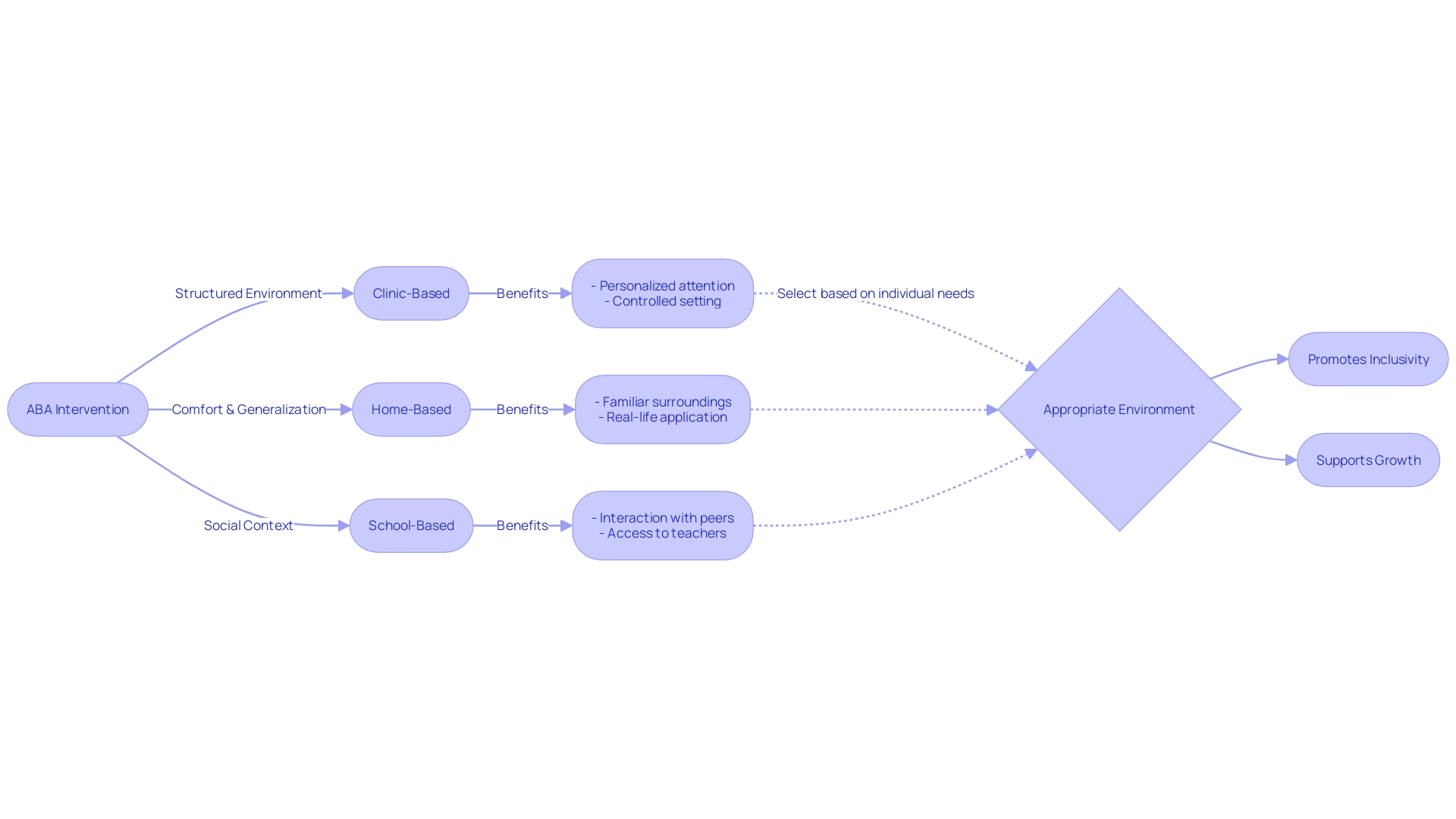
Choosing the appropriate setting for is crucial to a youngster's advancement. It's crucial to evaluate the environments where treatment will occur to guarantee they are not only secure and pleasant but also conducive to learning. This could be in a clinic, at home, or within a school. Each setting offers different benefits. Clinics often provide structured environments where young individuals can learn with fewer distractions. Home-based settings offer the comfort of a familiar environment, which can be particularly advantageous for generalizing skills to daily life. enables the direct application of ABA principles in the social context of peers and teachers. The selection of environment should correspond with the individual requirements and family situations, cultivating an inclusive ambiance where every youngster has the chance to flourish, much like guaranteeing an equitable competition as imagined by Child Psychiatrist Dr. David (Dan) R. Offord. Applying the social model of disability, we recognize that establishing a conducive environment for therapeutic interventions is a shared obligation that surpasses personal constraints and concentrates on societal frameworks that can be adjusted to promote the growth and progress of individuals. This method, in addition to , underscores the importance of top-notch, that address the varied needs of individuals with autism.
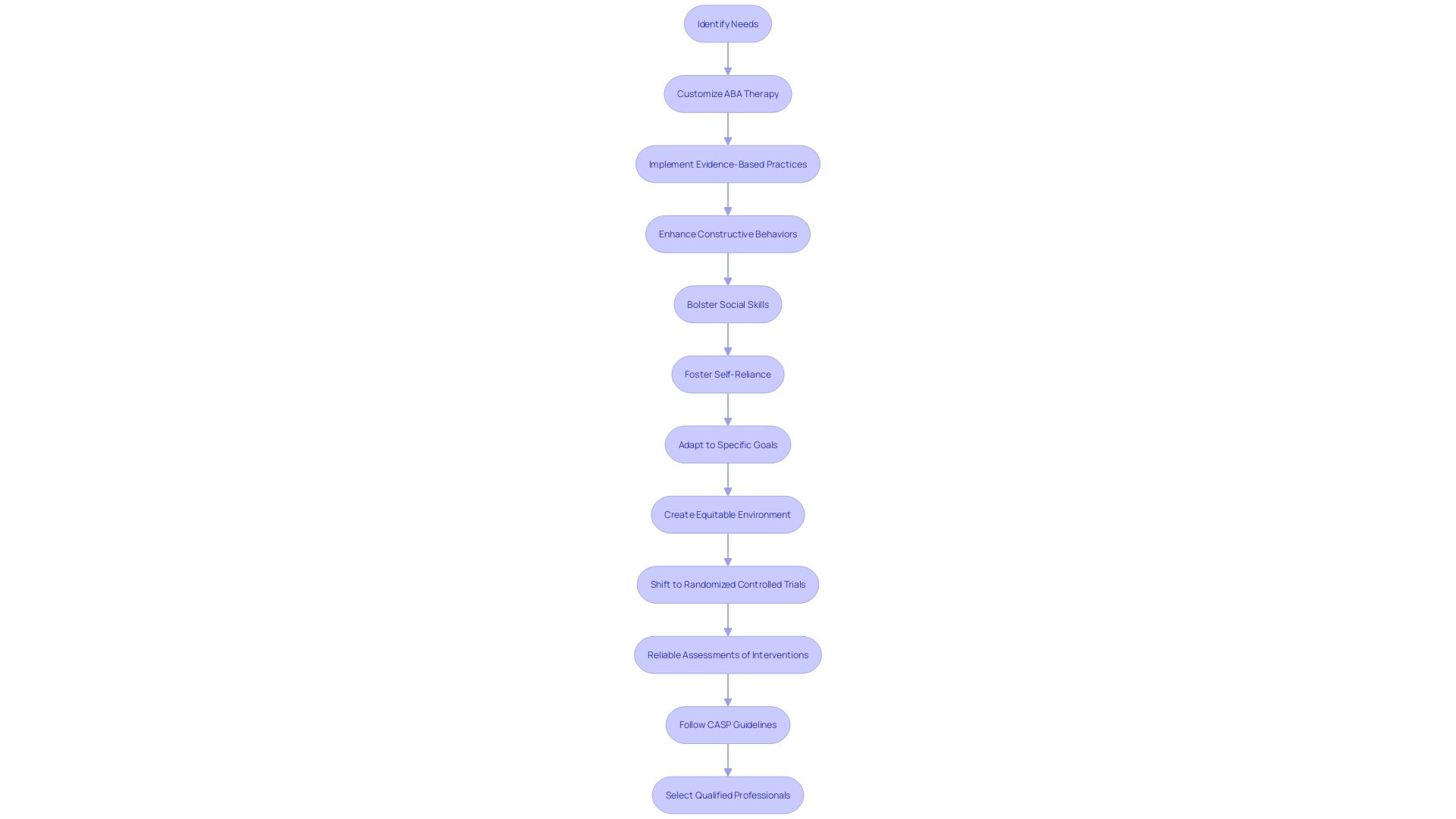
When considering an ABA therapy, it is critical to delve into the specifics of their . A robust ABA program is anchored in that enhance , bolster , and foster self-reliance. Understanding and actively participating in the of the individual you are engaging with is crucial, making sure it is and goals of your loved one. This alignment is at the heart of creating an equitable environment, as emphasized by Dr. David (Dan) R. Offord, who highlighted the importance of fair and supportive participation in all areas of life for children, particularly those with disabilities.
Research has underscored the importance of selecting interventions that are not only effective but also safe, avoiding design flaws that can obscure their impact. Recent shifts in study approaches, including the move from quasi-experimental studies to randomized controlled trials, offer a more reliable assessment of ABA interventions. This is evident in the new guidelines from the Council of Autism Service Providers, which establish the benchmark for , emphasizing the importance of selecting professionals that follow these rigorous, updated practices.
The collaborative engagement of families in ABA therapy is fundamental to its effectiveness. A provider who values and offers enhances the potential for success. Such involvement is not merely supportive—it's transformative, equipping parents with the tools to extend therapeutic strategies into daily life at home. As Dr. David (Dan) R. Offord poignantly observed, a fair race for individuals, including those with disabilities, is one where all participants are supported in every domain of their lives, including at home with their families.
The underscore the necessity of high-quality, . Providers should not only set measurable goals based on thorough assessments by qualified professionals, like , but also maintain to meet the unique needs of each family.
Additionally, the recent U.S. Administration for Children and Families rule, influenced by ABA Center on Children and the Law research, highlights the positive outcomes for young individuals in kinship care. This emphasizes the significance of family in attaining improved behavioral and mental health results for young ones.
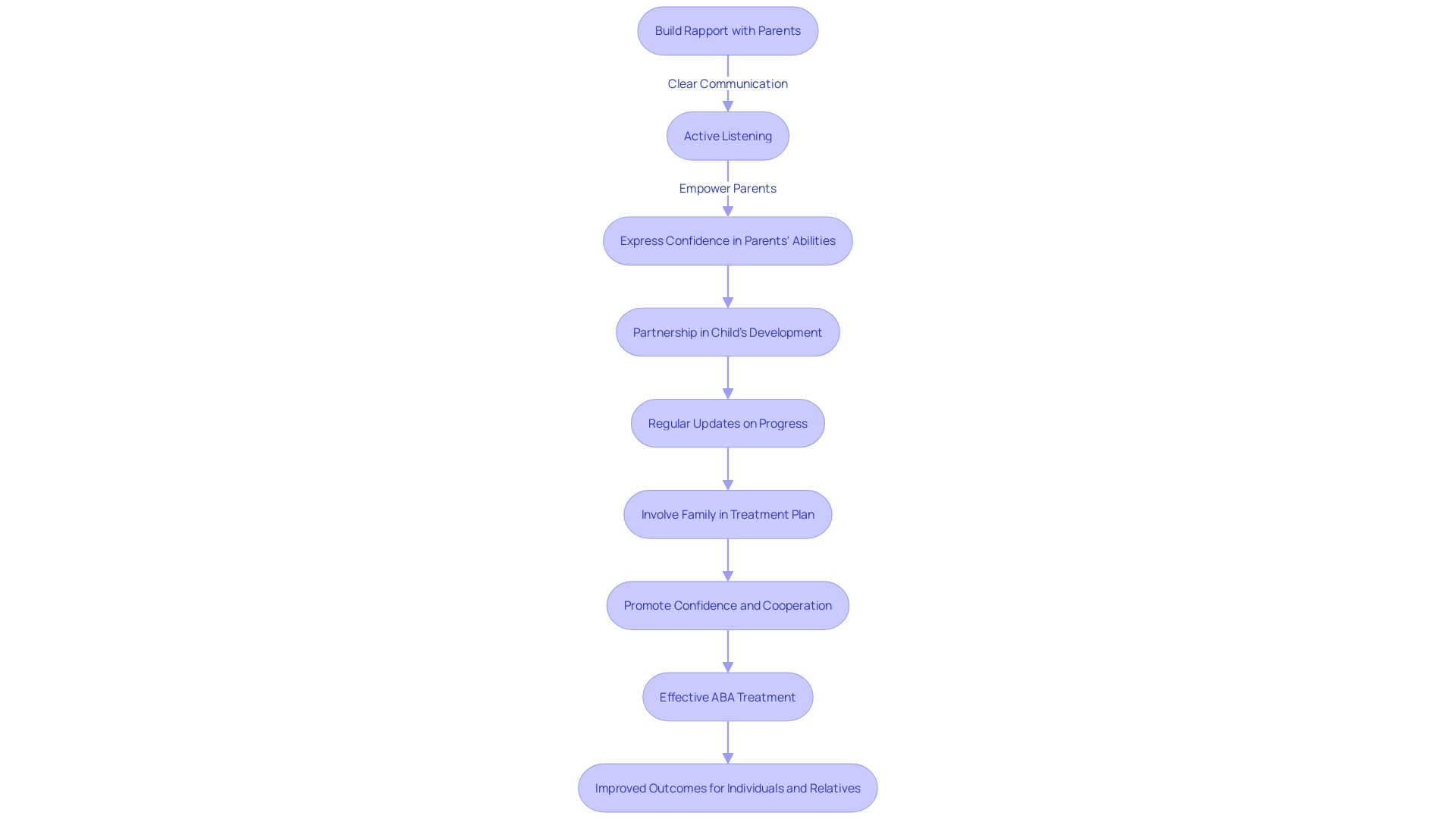
In practice, building a strong rapport with parents, characterized by clear communication and active listening, is crucial. As the occurrence of autism rises, with current statistics indicating that 1 in 36 children are impacted, the role of the family becomes even more important. Providers must acknowledge the diversity of autism and adjust their methods accordingly, ensuring that each individual's treatment is as unique as their needs, promoting their inclusion and participation across all aspects of life.
When assessing the of ABA providers, it's crucial to verify that they are highly tailored and meet the distinct needs of your individual. The curriculum should not be a one-size-fits-all solution but rather a designed to address the specific challenges and enhance the particular strengths of your child. It's equally important that the employed are grounded in the proven principles of (ABA), aiming to foster and encourage positive behavior changes.
is an extensive field that applies behavioral research to practically address complex human behaviors. ABA's versatility allows it to teach new skills, boost performance, and diminish problematic behaviors across various populations, including individuals with disabilities. The core of ABA is its flexibility to meet the unique needs of each person, with the overall goal of enhancing helpful behaviors that promote learning.
To illustrate the effectiveness of tailoring ABA programs, consider the , which views disability through the lens of social, political, and cultural influences. This perspective emphasizes the importance of adapting interventions to each person's context and experience. In the realm of autism, for instance, there is a growing recognition that the condition encompasses a wide spectrum of abilities and challenges, necessitating a shift away from rigid, one-size-fits-all approaches.
Furthermore, the dynamic field of ABA is continually evolving. Leaders in the industry, like Doreen Granpeesheh of the Center for Autism and Related Disorders, acknowledge the necessity of staying responsive to the changing landscape, including adapting work models to attract top talent. Such adaptability and receptiveness in ABA practice not only benefit the professionals involved but also result in more efficient, culturally sensitive, and personalized treatment plans for those receiving intervention.
Ultimately, the curriculum and should be , ethical, and reflect the best practices in the field. They should be crafted with careful consideration of the individual's unique context, incorporating the principles of the to ensure that ABA supports are as effective and respectful as possible.
In the realm of , consistent data collection and meticulous stand as pivotal elements. A provider committed to not only consistently collects accurate data but also evaluates the progress of your offspring with objective metrics. This practice is crucial for assessing the therapy's efficacy and for fine-tuning the treatment strategy to better align with your offspring's evolving needs. The recently updated underscore the importance of for effective autism treatment. Adopting this approach guarantees that every step taken is guided by substantial evidence, thus enhancing the probability of in the lives of individuals with ASD, particularly those encountering supplementary emotional and behavioral obstacles. A dedication to allows for the fair and equitable treatment of all individuals, supporting them in their journey toward engaged and peaceful participation across all aspects of life.

A fundamental aspect of high-quality ABA treatment includes not only the implementation of but also the formation of a partnership rooted in and mutual trust between the practitioner and the family. It's crucial for a provider of to prioritize transparency, actively listening to parents' concerns and aspirations for their offspring, and providing them with confidence in the ahead. To ensure that the treatment is effective and respects the family's perspective, it's essential to on the individual's progress and involve the family in any modifications to the treatment plan.
The recent guidelines released by the Council of Autism Service Providers underscore the importance of maintaining high standards in , which includes the implementation of practices that truly benefit the individual and the family. These guidelines reflect a broader trend in healthcare towards open science and collaboration, as demonstrated in the rapid advancements made during the COVID-19 pandemic when scientific data was shared openly and promptly, leading to unprecedented achievements.
In accordance with these principles, ABA professionals should adopt a care model that not only focuses on the developmental requirements of the individual but also provides support for the entire family unit. Research from the ABA Center on Children and the Law reveals that when care approaches are inclusive and supportive of family dynamics, such as involving kinship caregivers, children experience improved behavioral and mental health outcomes. As we adjust to changing healthcare environments, the flexibility and adaptability demonstrated by ABA professionals, as remarked by industry leaders, will be crucial in attracting and retaining skilled individuals capable of delivering high-quality care.
In summary, effective ABA practitioners are distinguished by their dedication to open, empathetic communication, and the ongoing pursuit of excellence through adherence to updated, evidence-based standards. By promoting confidence and cooperation with families, practitioners guarantee that the treatment is not only scientifically strong but also tailored and attentive to the distinct requirements of every individual and their relatives.
When choosing an , it is important to evaluate if they provide a designed to improve your kid's education and growth. These services often include workshops for social skills, speech support, and occupational assistance, each playing a crucial role in meeting the . A , as emphasized by the latest guidelines from the Council of Autism Service Providers, ensures that ABA intervention is not an isolated measure but part of a coordinated effort to address the individual challenges your child may face. The efficiency of these extra services is strengthened by the fundamental concepts of ABA, which include a by a , the establishment of distinct and measurable objectives, and continuous observation of advancement, adjusting approaches as necessary to enhance results. The incorporation of these services demonstrates an increasing comprehension within the disciplineâechoed by professionals such as Doreen Granpeeshehâthat is about assisting the entire family, emphasizing adaptability and a holistic approach to care.
When looking for an source, it's essential to authenticate their qualifications and status in the field. Accreditation from reputable organizations such as the Council of Autism Service Providers, which sets ABA standards of care, indicates a . The recent updates to the ABA Practice Guidelines highlight the significance of choosing individuals that adhere to current .
Doreen Granpeesheh, a prominent figure in the field, emphasizes the need for ABA services to adapt to changing demands, such as offering to attract skilled practitioners. This approach can be a marker of a progressive company that values both their clients and their staff, potentially leading to higher quality care.
Furthermore, understanding that presents a variety of manifestations is essential. Dr. Jan Blacher's observation of the evolving definition of autism highlights the necessity for . Providers should tailor interventions to the unique needs of each individual, rather than applying a one-size-fits-all approach.
Parents should also consider the experiences of other families with the service. Testimonials can offer insights into the ability to create a positive impact, as well as their responsiveness to the complex and diverse needs of children with autism. Given the recent legal challenges emphasizing the significance of informed consent and customized interventions, it is crucial to select individuals or organizations that prioritize ethical practices and the well-being of their clients.
To sum up, discovering includes investigating their certifications, flexibility to the most recent industry norms, and standing among the autism community. This careful consideration will help ensure that you choose a professional capable of delivering effective, individualized care for your child.
Understanding the financial aspects of is important for families and individuals considering this evidence-based intervention. It's essential to evaluate whether your insurance plan is accepted by the provider and to understand any potential out-of-pocket costs. With the recent release of the third edition of the by the Council of Autism Service Providers (CASP), there is a renewed emphasis on quality care and the role of insurers in facilitating access to these services. As the guidelines suggest, is not only effective but also necessitates adherence to certain standards which can impact and reimbursement.
Financial accessibility remains a concern, highlighted by the statistics showing that in 2020, over half of the adults in the United States with mental illness did not receive treatment due to barriers like cost. As reported by Elise Burley, treatment costs can vary significantly, which is why comprehending your is imperative. In the context of ABA treatment, , as observed with the Center for Autism and Related Disorders' adaptable hybrid work approach, can be a testament to the evolving landscape in healthcare provision, which may also influence the financial aspects of care.
If questions arise regarding or financial considerations for ABA treatment, organizations such as Autism Speaks provide resources and advocacy support to help navigate these complexities. They encourage stakeholders to view autism spectrum disorder as a mental health condition, thus warranting coverage under health insurance plans. In the end, engaging in an open conversation with your ABA treatment provider regarding expenses will guarantee that the intervention is not just successful but also a financially sustainable choice for the future.
When considering for your child, it's crucial to observe sessions and meet with the therapists to ensure their approach aligns with your family's needs. emphasize the significance of . You'll want to ask about , such as and its adaptations, which have been scientifically tested and proven effective.
During your visit, ask about the adaptability of treatment approaches, especially considering the increasing preference for hybrid work environments among professionals in the field. The talent landscape has evolved, with entities such as the Center for Autism and Related Disorders acknowledging the necessity for adaptability to attract and retain qualified therapists.
It's also vital to understand that disability is a social construct, as per the social model of disability, and the therapy should support this perspective. Examine how the individual integrates these concepts into their practice, particularly with the growing diversity in autism presentations, as indicated by Dr. Jan Blacher.
Lastly, feel free to inquire about the practitioner's knowledge of the and how they are implementing them, as this can influence the efficacy of the treatment for your youngster. Choose a provider that demonstrates a commitment to both evidence-based therapy and the individual needs of your child.
In conclusion, selecting the right ABA therapy provider for your child with autism requires careful consideration. Evaluate their qualifications, certifications, and familiarity with the latest guidelines. Look for providers that prioritize family involvement, offer personalized treatment approaches, and track progress through data collection.
Seek transparency, clear communication, and trust in the therapeutic partnership.
Consider therapy settings that align with your child's needs, and providers that offer additional services and support. Verify accreditations and reputation to ensure quality care. Assess insurance coverage and financial considerations to make therapy financially viable.
Schedule a visit and ask questions to observe therapy sessions and understand the provider's approach. Look for evidence-based practices, flexibility in therapy models, and adherence to guidelines.
By considering these factors and asking the right questions, you can find a trusted ABA therapy provider that provides high-quality, individualized care for your child with autism.
What qualifications should I look for in an ABA treatment provider for autism?
When choosing a provider, prioritize those with a solid educational background in psychology or behavioral sciences and certification such as BCBA (Board Certified Behavior Analyst). Experience with ABA Practice Guidelines by CASP and evidence-based approaches like Cognitive Behavior Therapy is also desirable.
What is the significance of certification by the Behavior Analyst Certification Board (BACB)?
Certification by the BACB ensures that practitioners have met professional standards and are committed to ongoing professional development. It is a mark of their expertise and dedication to the field of ABA.
How important are therapy settings and environments for ABA intervention?
The setting is crucial as it should be secure, comfortable, and conducive to learning. Clinics, homes, and schools are common environments, each offering distinct benefits. The setting should align with the individual's needs and family situation.
What should I know about the treatment approach and goals of ABA therapy?
It's essential to understand and participate in the treatment approach, ensuring it is tailored to the specific needs and goals of the individual. Select interventions that are effective, safe, and based on evidence, avoiding design flaws.
Why is family involvement important in ABA therapy?
Family participation is transformative, equipping parents with tools to extend therapeutic strategies at home. High-quality ABA therapy necessitates setting measurable goals and maintaining responsive approaches to meet each family's unique needs.
How should an ABA provider's curriculum and teaching methods be assessed?
Ensure that the curriculum and teaching methods are customized to meet the individual's needs, evidence-based, ethical, and reflect the field's best practices. They should incorporate the principles of the social model of disability for effective support.
What does data collection and progress tracking involve in ABA treatment?
Data collection and progress monitoring are essential for evaluating the therapy's efficacy and fine-tuning the treatment strategy. High-quality implementation is crucial for effective autism treatment.
How important is communication and transparency in ABA treatment?
Transparent communication and trust between the practitioner and family are fundamental. It's important for providers to share updates on progress and involve the family in any treatment plan modifications.
Should additional services and support be considered when choosing an ABA provider?
Yes, evaluate if the provider offers a comprehensive range of services like social skills workshops, speech support, and occupational assistance. A multi-disciplinary approach ensures a coordinated effort to address the individual's challenges.
Why is checking accreditations and reputation important when selecting an ABA therapy source?
Accreditations from organizations like CASP indicate quality and adherence to current best practices. Reputation and testimonials can provide insights into the provider's impact and responsiveness to diverse needs.
What financial considerations should be taken into account for ABA treatment?
Evaluate insurance plan acceptance and understand out-of-pocket costs. Engage in conversations with your provider regarding expenses to ensure the financial sustainability of the treatment.
What are the final steps before starting ABA treatment?
Schedule a visit to observe sessions and meet therapists. Ask about evidence-based approaches, adaptability of treatment, and integration of recent ABA Practice Guidelines to ensure the provider aligns with your family's needs.