Introduction
Managing emotions can feel like a winding road, especially for our little ones with autism. They often experience feelings more intensely than others, which can make emotional regulation a real challenge. But here’s the good news: developing these skills isn’t just helpful; it’s absolutely essential! It can pave the way for better social interactions, reduce behavioral hurdles, and even boost learning outcomes.
So, how can we, as caregivers and professionals, support these amazing kids in mastering their emotions? 🤔 This guide is here to share practical strategies and collaborative approaches that empower children with autism to navigate their emotional landscapes. Together, we can help them build resilience and independence. Let’s explore this journey together!
Define Emotional Regulation and Its Importance for Children with Autism
Managing feelings is all about how we handle and respond to our emotions in a positive and flexible way. For kids with autism, developing is super important because they often feel emotions more intensely and may struggle to process them. Research shows that when kids learn to manage their moods effectively, it can really boost their , reduce , and improve their learning outcomes. For instance, studies have found that children who develop strong emotional control through tend to have better and fewer meltdowns, leading to healthier friendships.
Understanding the helps caregivers and professionals see why specific interventions are needed. Training those who support individuals in ABA principles empowers them to provide consistent help at home, which works hand-in-hand with professional interventions and encourages informed choices. This active involvement can lead to better and less stress for caregivers. Case studies show that individuals who get personalized support in emotional regulation not only manage their feelings more effectively but also enjoy . By nurturing these skills, caregivers can aid in in children with autism, helping them build resilience and paving the way for greater independence and success in social settings.
Let’s explore this together! By focusing on emotional regulation, we can create a supportive environment that helps our kids thrive.

Implement Practical Strategies for Teaching Emotional Regulation
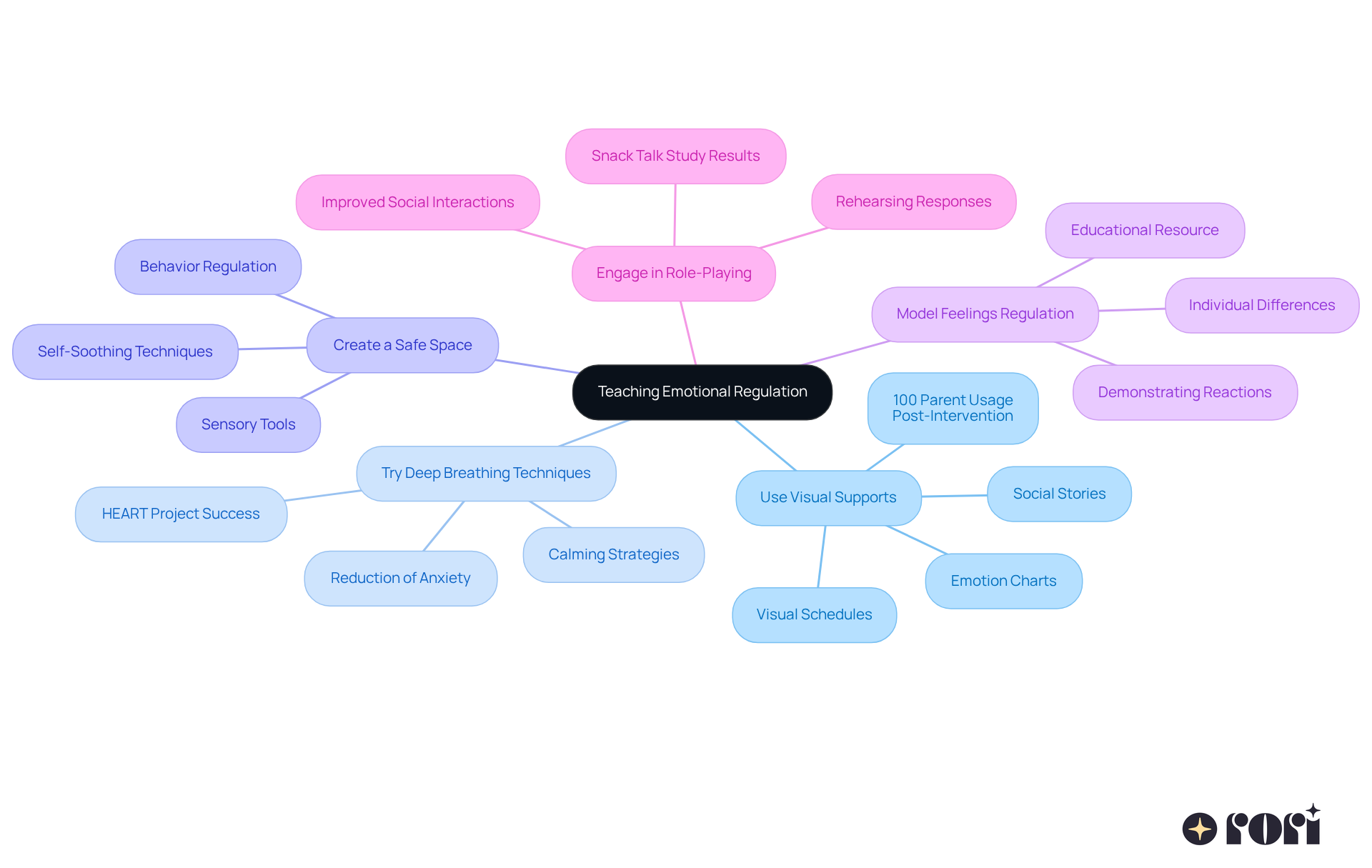
- Use : Let’s talk about how visual aids, like emotion charts and social stories, can really help kids identify and label their feelings. Research shows that these tools can significantly contribute to developing , helping kids manage their emotions better. In fact, after using these supports, 100% of parents reported they were using them at home! This just goes to show how they can be in developing . Plus, it fits right in with the principles of , which focuses on personalized strategies for each child’s unique needs.
- Try : Teaching calming strategies, like deep breathing, can be a game changer. Encourage kids to take a deep breath in through their nose and slowly let it out through their mouth. Studies have shown that these techniques can really help reduce anxiety and emotional distress, thus supporting the process of developing emotional regulation skills in children with autism. The HEART project has successfully used these activities with kids, proving their effectiveness in , which is a key focus of .
- Create a Safe Space: How about setting up a where kids can go when they feel overwhelmed? Fill this space with sensory tools like fidget toys and weighted blankets. These can really help with , which is essential for developing emotional regulation skills in children with autism, showcasing the personalized approach of ABA therapy.
- Model Feelings Regulation: It’s important to show kids how to react in different situations. They learn a lot by watching us! By demonstrating how to handle feelings, we provide a strong educational resource for developing emotional regulation skills in children with autism, which enhances their understanding of responses. As Temple Grandin famously said, "I am different, not less," reminding us of the importance of recognizing and appreciating individual differences in feelings, which is a core principle of ABA.
- Engage in Role-Playing: Let’s practice that let kids rehearse their responses to different situations. This interactive approach aids in developing emotional regulation skills in children with autism by helping them formulate appropriate reactions in real life. During the Snack Talk study, for instance, conversation engagement levels shot up, showing just how effective these interactive strategies can be in improving social interactions, a vital part of EIBI in ABA therapy.
Engage Caregivers and Professionals in the Emotional Regulation Journey
- : Keeping the lines of communication open between guardians and professionals is so important! Regular meetings allow everyone to share observations, updates, and effective strategies tailored just for your child. At Rori Care, we’re here to support your family’s journey with compassionate , making sure that everyone involved is actively engaged in the process.
- : Offering training sessions focused on gives the essential knowledge and skills they need. These workshops help them assist their kids more effectively, fostering a deeper understanding of . When guardians are well-informed, they can make choices that positively impact their children’s development, particularly in developing , which can really ease the stress for parents.
- Establishing steady routines that focus on developing can be a game-changer for young ones. When their environment is predictable, it helps them feel secure, which is beneficial for developing . Caregivers who understand ABA principles can really enhance this structure, promoting consistency at home.
- : It’s so beneficial to foster an environment where and professionals can share . This ongoing dialogue helps improve feelings management techniques, ensuring that the methods used can adapt to the young person’s changing needs. When supporters feel empowered through their active participation and alignment with therapeutic strategies, they often see better behavioral outcomes for their kids.
Let’s explore this together! We’re here to help you every step of the way!

Monitor and Evaluate Progress in Emotional Regulation Skills
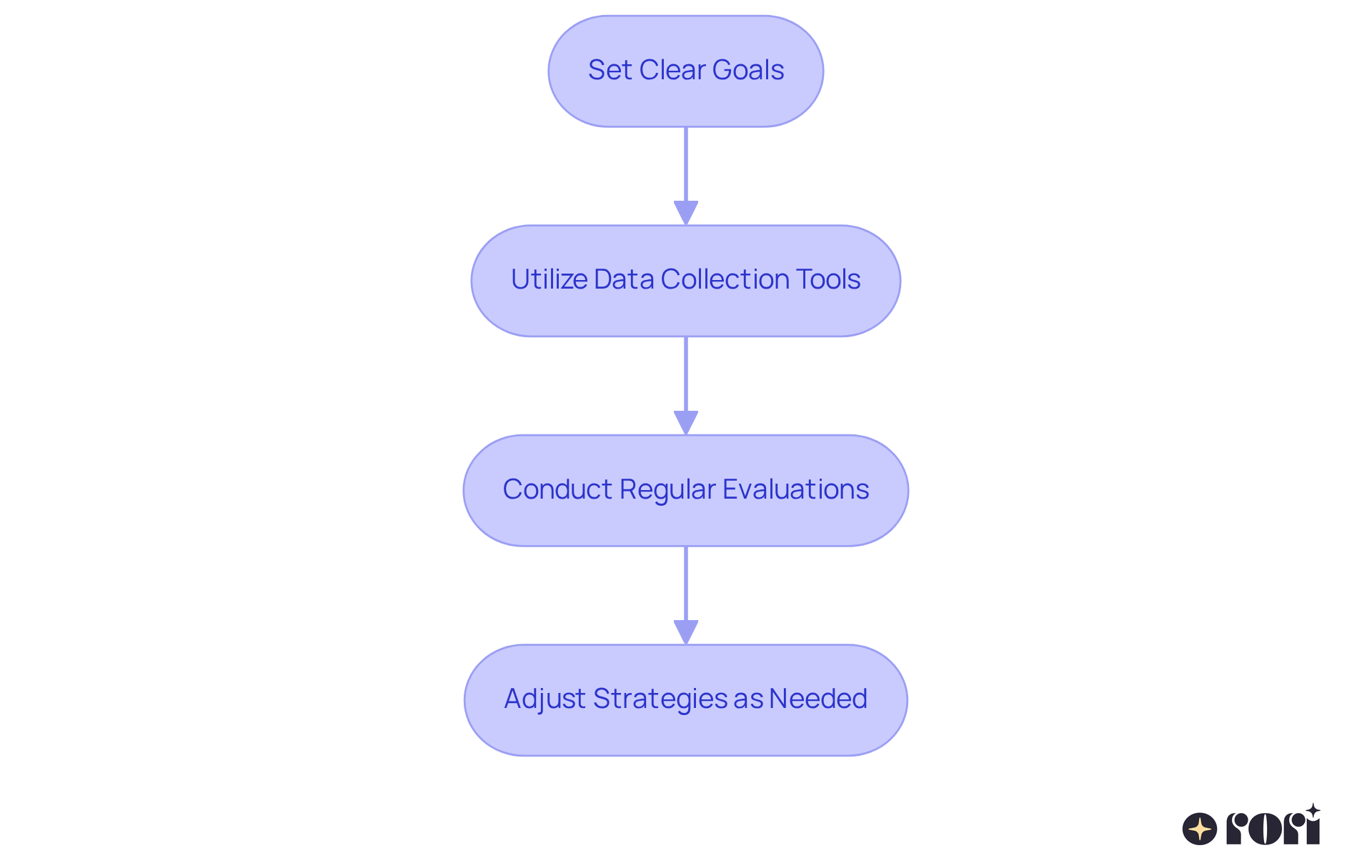
- Set Clear Goals: It’s so important to establish for managing feelings skills. This clarity gives both the young one and caregivers a clear target, fostering a focused approach to development. Let’s make this journey together!
- Utilize : Have you thought about using tools like behavior tracking sheets or specialized apps? They can help you systematically record those moments of mood imbalance and the . These tools are key for gathering information that guides future interventions, allowing for a that meets each individual’s needs. Plus, they support , which updates intervention plans based on progress.
- : are essential for understanding how well the individual is managing their emotions. This could be through observational assessments, parent reports, or standardized measures. It gives a comprehensive view of the young person’s progress and highlights areas that might need a little extra attention. Involving guardians in this process not only improves their understanding of ABA principles but also helps them make that positively impact their child’s development.
- Adjust Strategies as Needed: Based on what you gather from the data, be ready to adjust your strategies and interventions. Flexibility is key as the individual works on developing . It ensures that the support you offer stays effective and relevant. And here’s a little encouragement: 90% of children see significant progress when the recommended hours are fully implemented with active caregiver involvement. Let’s explore this together!
Conclusion
Helping children with autism develop emotional regulation skills is such an important journey! It can truly enhance their quality of life. When kids learn to understand and manage their emotions, they can improve their social interactions, reduce behavioral challenges, and achieve better learning outcomes. Emotional regulation is the foundation for resilience and independence, allowing our children to thrive in different settings.
In this guide, we’ve shared some practical strategies to support emotional regulation in children with autism. Techniques like:
- using visual supports
- practicing deep breathing
- creating safe spaces
- modeling emotional responses
- engaging in role-playing
can really help foster emotional awareness and management. Plus, having caregivers and professionals involved through regular communication and feedback is key to creating a consistent and supportive environment for our kids.
Ultimately, developing emotional regulation skills isn’t just about teaching kids how to manage their feelings; it’s about empowering them to navigate the world with confidence and emotional intelligence. By implementing these strategies and fostering collaboration between caregivers and professionals, we can look forward to a brighter future for children with autism-one filled with meaningful connections and opportunities for growth. Let’s embrace this approach together! It can lead to amazing outcomes, making a real difference in the lives of these children and their families. We’re here to help you every step of the way!
Frequently Asked Questions
What is emotional regulation?
Emotional regulation refers to how we handle and respond to our emotions in a positive and flexible way.
Why is emotional regulation important for children with autism?
Emotional regulation is crucial for children with autism because they often experience emotions more intensely and may struggle to process them. Developing these skills can enhance their social interactions, reduce behavioral issues, and improve learning outcomes.
How does emotional regulation affect social interactions in children with autism?
Children who learn to manage their moods effectively tend to have better social interactions, as they experience fewer meltdowns and can form healthier friendships.
What role does Applied Behavior Analysis (ABA) therapy play in emotional regulation?
ABA therapy helps children develop strong emotional control, leading to improved social interactions and reduced behavioral issues.
How can caregivers support emotional regulation in children with autism?
Caregivers can support emotional regulation by being trained in ABA principles, which allows them to provide consistent help at home, complementing professional interventions.
What are the benefits of personalized support in emotional regulation for children with autism?
Personalized support in emotional regulation can lead to more effective management of feelings, better overall well-being, and greater resilience, paving the way for independence and success in social settings.
How does focusing on emotional regulation create a supportive environment for children with autism?
By prioritizing emotional regulation, caregivers and professionals can create an environment that fosters growth and helps children thrive socially and emotionally.
List of Sources
- Define Emotional Regulation and Its Importance for Children with Autism
- How ABA therapy promotes emotional regulation for children with autism (https://ambitionsaba.com/resources/how-aba-therapy-promotes-emotional-regulation-for-children-with-autism)
- gratefulcareaba.com (https://gratefulcareaba.com/blog/inspirational-quotes-about-autism)
- mastermindbehavior.com (https://mastermindbehavior.com/post/autism-quotes)
- Celebrating Neurodiversity: Inspiring Words on Autism | Step Ahead ABA (https://stepaheadaba.com/blog/autism-quotes)
- Implement Practical Strategies for Teaching Emotional Regulation
- The Role of Visual Supports in Enhancing Learning for Autism | Advanced Autism Services (https://advancedautism.com/post/the-role-of-visual-supports-in-enhancing-learning-for-autism)
- The Power of Breath: Enhancing Student Health and Well-Being With Deep Breathing in Elementary School Classrooms - Julie H. Alexander-Ruff, Sarah A. Ruff, William G. Ruff, 2025 (https://journals.sagepub.com/doi/10.1177/1942602X251341564)
- Piloting a Home Visual Support Intervention with Families of Autistic Children and Children with Related Needs Aged 0–12 - PMC (https://pmc.ncbi.nlm.nih.gov/articles/PMC10001844)
- Inspiring Autism Quotes for Understanding and Acceptance - Kids First (https://kidsfirstservices.com/first-insights/autism-quotes)
- Best Autism Quotes to Raise Awareness and Understanding (https://yellowbusaba.com/post/autism-quotes)
- Engage Caregivers and Professionals in the Emotional Regulation Journey
- 10 inspiring quotes from people with autism | Autism Speaks (https://autismspeaks.org/life-spectrum/autism-quotes)
- Stress study suggests parent training has benefits for caregivers as well as their kids | Autism Speaks (https://autismspeaks.org/science-news/stress-study-suggests-parent-training-has-benefits-caregivers-well-their-kids)
- Emotion regulation training impact on caregivers' mental health - Consensus (https://consensus.app/search/emotion-regulation-training-impact-on-caregivers-m/3PKh_D0IQ4C7P4sl0oQhFg)
- Monitor and Evaluate Progress in Emotional Regulation Skills
- pmc.ncbi.nlm.nih.gov (https://pmc.ncbi.nlm.nih.gov/articles/PMC3830422)
- The Importance of Data Collection in ABA Therapy | Discovery ABA (https://discoveryaba.com/aba-therapy/the-importance-of-data-collection-in-aba-therapy-cec7b)
- Supporting Children with Autism in Developing Self-Regulation Techniques | Advanced Autism Services (https://advancedautism.com/post/supporting-children-with-autism-in-developing-self-regulation-techniques)
- yellowbusaba.com (https://yellowbusaba.com/post/supporting-emotional-regulation-in-children-with-autism-through-aba-therapy)
- aimhigheraba.com (https://aimhigheraba.com/the-importance-of-data-collection-in-aba-therapy)