Applied Behavior Analysis (ABA) therapy is a transformative approach that has been at the forefront of helping individuals with autism spectrum disorder (ASD) enhance their social interactions and learn valuable life skills. Recognized for its evidence-based success, ABA therapy is tailored to each individual, with a focus on positive reinforcement to foster both basic and complex skills, from communication to self-care. At the heart of this intervention is a comprehensive assessment conducted by a Board Certified Behavior Analyst (BCBA), who sets clear, measurable goals for the child.
Monitoring progress is crucial, as it informs the ongoing adaptation of strategies to ensure optimal outcomes. Services offered are diverse, reflecting the unique needs of each family and their schedules, with flexibility being a key component of effective support. Recent statistics from Dr. Jan Blacher, a research professor at UC Riverside, show a staggering increase in autism diagnoses from 1 in 2,500 individuals to 1 in 36, highlighting a shift in the medical community's understanding of ASD.
The diversity of the autism spectrum now recognizes children with high IQs, language skills, and some adaptive abilities, who also benefit from ABA therapy. The Council of Autism Service Providers has released new ABA guidelines, emphasizing the importance of high-quality implementation, according to Lorri Unumb, CEO of CASP. As the prevalence of autism continues to rise, the adaptability and effectiveness of ABA therapy remain critical, ensuring that all individuals on the spectrum receive the personalized support they need to thrive.
Applied Behavior Analysis (ABA) therapy is a transformative approach that has been at the forefront of helping individuals with autism spectrum disorder (ASD) enhance their social interactions and learn valuable life skills. Recognized for its evidence-based success, ABA therapy is tailored to each individual, with a focus on positive reinforcement to foster both basic and complex skills, from communication to self-care. At the heart of this intervention is a comprehensive assessment conducted by a Board Certified Behavior Analyst (BCBA), who sets clear, measurable goals for the child. Monitoring progress is crucial, as it informs the ongoing adaptation of strategies to ensure optimal outcomes. Services offered are diverse, reflecting the unique needs of each family and their schedules, with flexibility being a key component of effective support.
Recent statistics from Dr. Jan Blacher, a research professor at UC Riverside, show a staggering increase in autism diagnoses from 1 in 2,500 individuals to 1 in 36, highlighting a shift in the medical community's understanding of ASD. The diversity of the autism spectrum now recognizes children with high IQs, language skills, and some adaptive abilities, who also . The Council of Autism Service Providers has released new ABA guidelines, emphasizing the importance of high-quality implementation, according to Lorri Unumb, CEO of CASP. As the prevalence of autism continues to rise, the adaptability and effectiveness of ABA therapy remain critical, ensuring that all individuals on the spectrum receive the personalized support they need to thrive.

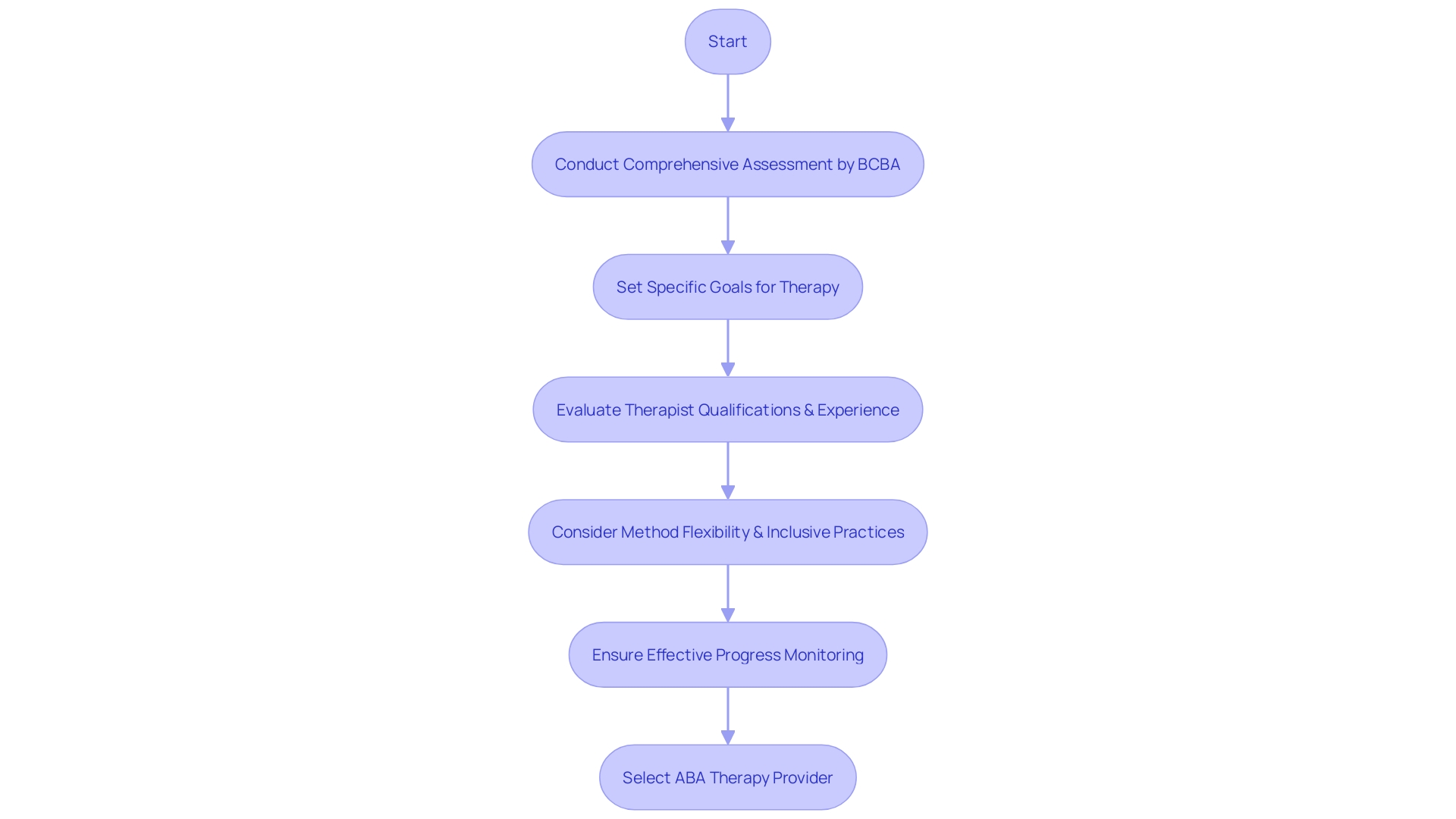
Selecting the right ABA therapy provider for your child is a decision that requires careful consideration of multiple critical elements. It's essential to ensure that the ABA therapy is not only of the highest quality but also fits well with your family's unique needs and lifestyle. One of the first steps in this process involves a comprehensive assessment conducted by a Board Certified Behavior Analyst (BCBA), leading to the development of specific, measurable goals tailored to your child's progress. This close monitoring and adaptability of strategies are crucial in the ever-evolving field of ABA therapy, as underscored by the recent release of new guidelines by the Council of Autism Service Providers. The updated standards reflect a commitment to maintaining the highest quality of care in the treatment of Autism Spectrum Disorder.
Furthermore, the qualifications and experience of the therapists are paramount. The extensive training and expertise required to become a licensed mental health provider, such as a BCBA, highlight the importance of having well-qualified professionals working with your child. The flexibility of the provider's services is another key factor. The modern approach to ABA therapy emphasizes the need for adaptable scheduling and service delivery to accommodate the diverse needs of families, as well as the importance of a supportive environment that extends beyond the child to include family involvement.
In addition, with the recognition of disability as a minority identity, it's essential to choose a provider that adopts a holistic and inclusive approach. This means considering how providers apply the to their practice, ensuring that the therapy supports not just behavioral changes but also addresses broader societal interactions and challenges.
Lastly, the method of data collection and progress tracking is crucial. It's imperative to have a transparent and consistent system that allows for ongoing evaluation and necessary adjustments. The right provider will build a rapport with you as parents, practicing clear communication and active listening to ensure that you are partners in the therapeutic process. The recent advocacy for kinship caregivers and the positive outcomes for children in such arrangements reiterate the importance of family-centered care in achieving success.
In sum, the selection of an ABA therapy provider should be a thoughtful process, integrating considerations of therapist qualifications, method flexibility, inclusive practices, and effective progress monitoring to ensure that your child's therapy is supportive, adaptable, and of the highest standard.
Navigating the financial landscape of ABA therapy for autism is a multifaceted challenge that requires understanding , reimbursement models, and available financial resources. With the prevalence of autism increasing, as noted by Dr. Jan Blacher, who witnessed a dramatic shift from 1 in 2,500 individuals affected to 1 in 36, the demand for effective treatment has never been higher. This surge underscores the importance of comprehensive ABA therapy, which, according to Lorri Unumb of CASP, must be implemented with the highest quality to be truly effective.
The recent third edition of the CASP ABA Practice Guidelines serves as a critical resource, offering standards of care for stakeholders including insurers who play a pivotal role in the therapy's accessibility. While some families encounter barriers due to insurance companies not fully covering recommended holistic treatment programs, others find relief as advocacy efforts push for broader coverage. For instance, a public comment was submitted to the Pennsylvania Insurance Department to include ABA in the Essential Health Benefits Benchmark Plan, recognizing autism as a mental health condition.
Moreover, the landscape of therapy provision is evolving. Organizations like the Center for Autism and Related Disorders have adapted by developing incentives and flexible work models to attract the necessary talent, such as Registered Behavior Technicians (RBTs) and Board Certified Behavior Analysts (BCBAs), who are essential for delivering high-quality ABA therapy.
Parents seeking support for their child's ABA therapy journey can also look to nonprofit organizations and research funds, which offer guidance and may provide financial assistance. As the American Fund and the Manhattan Institute for Policy Research highlight, such donations can be tax-deductible, potentially easing the financial burden for families and supporters of ABA therapy.
In essence, while ABA therapy is a significant investment, by understanding the insurance coverage intricacies, staying informed about new guidelines, and exploring various financial avenues, parents can better navigate the path to securing the necessary support for their child's therapy.
Locating the right ABA therapy services for your child involves more than a simple search; it requires a comprehensive approach to match your child's unique needs with the best possible support. Steps to identify a reputable ABA therapy provider include consulting with healthcare professionals who can offer personalized recommendations based on your child's condition. Additionally, the recent expansion in ABA practice guidelines by the Council of Autism Service Providers ensures that the services you consider adhere to the highest standards of care.
With the now at 1 in 36 children, compared to 1 in 2,500 a few decades ago, the demand for quality ABA therapy has surged. This increase, noted by Dr. Jan Blacher, reflects a broader understanding of autism's spectrum, necessitating tailored approaches to therapy. Organizations are responding by revising their talent acquisition strategies, offering more flexible work models to attract skilled professionals, as reported by Doreen Granpeesheh, CEO of the Center for Autism and Related Disorders.
As you explore ABA therapy options, consider the insights of industry leaders who emphasize the importance of high-quality, individualized care. By taking a strategic approach to your search, leveraging the latest guidelines, and understanding the evolving landscape of ABA therapy, you can secure services that will foster progress and success for your child.

In conclusion, ABA therapy is a transformative approach that helps individuals with autism enhance their social interactions and develop important life skills. Tailored to each person, it uses positive reinforcement to foster a range of abilities. The comprehensive assessment by a BCBA sets measurable goals and monitors progress for optimal outcomes.
The prevalence of autism has increased significantly, and ABA therapy benefits individuals across the spectrum, including those with high IQs and adaptive abilities. The CASP has released new guidelines emphasizing personalized support to adapt to each family's needs.
When selecting an ABA therapy provider, consider the qualifications and experience of therapists, the flexibility of services, and a holistic approach. Transparent data collection and progress tracking are crucial for ongoing evaluation and adjustments.
Navigating the financial aspects of ABA therapy can be challenging, but understanding insurance coverage and exploring available resources is essential. The CASP guidelines provide standards for insurers to ensure accessibility to effective treatment. Advocacy efforts are pushing for broader coverage, and nonprofit organizations can offer guidance and financial assistance.
Finding the right ABA therapy services involves consulting with healthcare professionals, considering guidelines, and understanding the evolving landscape. By following this approach, parents can secure the necessary support for their child's therapy and empower them to thrive. ABA therapy is a highly effective intervention that offers personalized support and fosters crucial skills for individuals with autism.
What is ABA therapy and who can benefit from it?
Applied Behavior Analysis (ABA) therapy is an evidence-based approach designed to help individuals with autism spectrum disorder (ASD) improve social interactions and life skills. It is tailored to each individual and uses positive reinforcement to develop skills from communication to self-care. ABA therapy can benefit a wide range of individuals on the autism spectrum, including those with high IQs and some adaptive abilities.
What does the process of starting ABA therapy involve?
The process begins with a comprehensive assessment by a Board Certified Behavior Analyst (BCBA), who will set clear, measurable goals for the child. This is followed by monitoring the child's progress and adapting strategies as needed to ensure optimal outcomes.
How has the prevalence of autism diagnoses changed over time?
Recent statistics from Dr. Jan Blacher indicate a significant increase in autism diagnoses, shifting from 1 in 2,500 individuals to 1 in 36. This change reflects a broader understanding of ASD within the medical community.
What are the new ABA guidelines released by the Council of Autism Service Providers?
The new ABA guidelines emphasize the need for high-quality implementation of therapy. These standards are designed to ensure that all individuals on the autism spectrum receive personalized and effective support.
What should be considered when choosing an ABA therapy provider?
When selecting an ABA therapy provider, consider the therapist's qualifications and experience, the flexibility of services offered, the provider's approach to inclusivity, and their method of data collection and progress tracking. It's also important to ensure that the provider's approach aligns with your family's needs and values.
What is the role of insurance in covering ABA therapy?
Insurance plays a crucial role in the accessibility of ABA therapy. While some families face challenges with insurance coverage for comprehensive treatment programs, advocacy efforts are pushing for broader coverage. Parents should understand their insurance plans and explore different financial resources, including nonprofit organizations and research funds, which may offer financial assistance.
How has the ABA therapy provision landscape evolved?
Organizations are adapting by offering incentives and flexible work models to attract essential talent, such as Registered Behavior Technicians (RBTs) and BCBAs. This evolution is in response to the growing demand for high-quality ABA therapy due to the increased prevalence of autism.
What steps can parents take to find ABA therapy services near them?
Parents can start by consulting with healthcare professionals for personalized recommendations and ensuring that potential providers adhere to the latest practice guidelines from the Council of Autism Service Providers. It's also important to consider the qualifications of the therapy team and the overall approach to care that the provider offers.